
Guidesmart home automation systemsRevision 1Updated
The Definitive Guide to Smart Home Automation Systems
Modern smart homes are shifting from cloud-dependent gadgets to unified, local-first infrastructure. This guide covers the protocols, hardware, and standards driving reliable home automation.
By Noor Saidi

Share this story
In short
- The smart home industry is moving away from cloud-dependent devices toward local processing hubs that operate instantly and without internet access.
- The Matter protocol allows devices from competing brands to communicate locally, ending the era of closed corporate ecosystems.
- Millimeter-wave radar is replacing traditional motion sensors, enabling systems to detect stationary occupants by monitoring their breathing.
The era of the fragmented, cloud-dependent smart home is ending. Buyers and renovators in 2026 no longer accept a house that requires six different smartphone apps just to turn on the living room lights. The market has shifted toward unified, invisible infrastructure that operates entirely within the home's physical walls.[13]
This transition represents a fundamental maturation of consumer technology. Early smart devices were novelties that relied on remote servers to process basic commands, introducing latency and points of failure. Today, the focus is on resilience, privacy, and systems that continue functioning even when the internet connection drops.[7][13]
Understanding this landscape requires looking past the marketing terminology of individual brands. The true capabilities of a modern smart home are dictated by its underlying radio frequencies, its processing architecture, and its adherence to universal standards. For homeowners, these technical choices determine whether a system feels like a seamless upgrade or a daily frustration.[13]
The Physics of Smart Home Connectivity
Every automated device must communicate, and the physical properties of radio waves dictate how well that happens. The industry is largely split between two frequency bands: the globally standardized 2.4 GHz spectrum and the sub-gigahertz bands around 900 MHz. This distinction is the most critical factor in network reliability.[10][11]
Protocols like Zigbee, Thread, and standard Wi-Fi operate on the 2.4 GHz band. This frequency offers high bandwidth, allowing devices to transmit complex data quickly. However, 2.4 GHz signals struggle to penetrate dense materials like concrete, brick, or heavy timber, which can limit their effective range in older or solidly built homes.[11]
Conversely, Z-Wave operates on sub-gigahertz frequencies, which excel at material penetration. A 900 MHz signal travels further and passes through walls with significantly less signal degradation. This physical advantage makes sub-gigahertz protocols highly reliable for sprawling properties or homes with challenging architectural layouts, though they carry less data than their 2.4 GHz counterparts.[10]
The sub-gigahertz landscape is complicated by strict regional regulations. Because these frequencies overlap with other industrial and medical bands, the exact spectrum varies by country. Devices in North America use 915 MHz, while European hardware operates on 868 MHz, meaning a Z-Wave sensor purchased in Berlin is physically and legally incompatible with a hub in Boston.[10]
To overcome range limitations, both Zigbee and Z-Wave utilize mesh networking. Instead of every device connecting directly to a central router, powered devices act as repeaters, passing signals down the line. As more powered nodes are added to the home, the mesh becomes denser, self-healing around offline devices to ensure commands reach their destination.[10][11]
The Matter Standard and Interoperability
For years, the smart home market was defined by walled gardens. A device built for Apple HomeKit often refused to speak to Amazon Alexa or Google Home, forcing buyers to commit to a single corporate ecosystem. The Connectivity Standards Alliance introduced the Matter protocol to permanently dismantle these barriers.[3]
Matter is an open-source interoperability standard that allows devices from competing manufacturers to communicate locally. If a smart plug carries the Matter logo, it will work across all major platforms simultaneously. This shifts the competitive focus from exclusive hardware lock-in to the quality of the user interface and automation logic.[3][12]
The release of Matter 1.6 in 2026 addressed several lingering friction points in the standard's early iterations. The update introduced zero-power NFC setup, allowing users to commission a new device simply by tapping their phone to it, even before the device is plugged into a power source.[3][12]
Matter 1.6 also formalized the Joint Fabric feature, which streamlines multi-ecosystem sharing. Previously, adding a device to a second platform required generating temporary pairing codes and navigating complex menus. Joint Fabric allows compliant hubs to automatically sync device credentials, making cross-platform management practically invisible to the user.[3][12]
Despite these advancements, Matter is not a wireless protocol itself; it is a language that rides on top of existing networks like Wi-Fi and Thread. A Matter-certified device still requires a robust underlying radio connection to function reliably, meaning the physical network architecture remains the foundation of the smart home.[3][11]
Thread Networks and Mesh Reliability
Thread has emerged as the preferred low-power wireless protocol for modern smart homes. Designed specifically for IoT devices, Thread creates a self-healing IPv6 mesh network that operates independently of the home's primary Wi-Fi. This keeps hundreds of small sensors from congesting the router used for video streaming and computing.[11]
However, the rapid adoption of Thread has exposed edge-case vulnerabilities in complex setups. When smart home hubs from different manufacturers fail to share network credentials properly, they can generate unique Active Operational Datasets. This splinters the home into parallel, non-communicating Thread meshes, destroying the self-healing benefits of a unified network.[11][13]
Another documented issue involves Matter controllers crashing Thread border routers over unmanaged Wi-Fi switches. When a controller sends out aggressive discovery signals to find new devices, basic network switches can convert these into network-wide broadcast floods.[13]
This flood of data overwhelms the low-power radios inside Thread border routers. The routers, designed to handle tiny packets of sensor data, cannot process the massive influx of discovery traffic, causing the entire Thread mesh to temporarily collapse and rendering connected devices unresponsive.[13]
Manufacturers are mitigating these issues through firmware updates that implement better traffic shaping and multicast filtering. For homeowners building expansive systems, utilizing managed network switches with IGMP snooping enabled prevents these broadcast floods from reaching vulnerable low-power radios in the first place.[13]
The Shift to Local Processing
The most significant architectural shift in home automation is the move from cloud dependency to edge computing. Early smart home platforms routed every command through remote servers. Pressing a light switch sent a signal to a data center hundreds of miles away, which then sent a command back to the bulb.[9][13]
This cloud-first approach introduced noticeable latency, often taking a full second or more for a light to turn on. More critically, it meant the home's basic functions failed entirely during an internet outage or when a manufacturer decided to shut down their servers, turning expensive hardware into electronic waste.[9]
Modern systems prioritize local control, utilizing powerful hubs placed inside the home to process automation logic. Platforms like Home Assistant have popularized this approach, executing commands in milliseconds. When a motion sensor detects movement, the local hub turns on the light instantly, entirely independent of the external internet.[9]
Local control also fundamentally changes the privacy equation for smart speaker audio. Instead of streaming continuous audio to the cloud, modern voice assistants utilize local wake word buffers. The device processes ambient sound on its own internal chip, only opening a secure connection to the cloud after it explicitly hears the activation phrase.[13]
By shifting processing to the edge, homeowners retain absolute ownership of their data. Automation schedules, occupancy patterns, and security camera feeds remain confined to the local network, drastically reducing the attack surface for potential cyber threats and ensuring the system outlives any single company's business model.[9][13]
Next-Generation Occupancy Sensing
Automation relies entirely on accurate data, and traditional passive infrared motion sensors have long been the weakest link in the smart home. These sensors detect major changes in heat signatures, which works well for someone walking down a hallway but fails completely when a person is sitting still reading a book.[13]
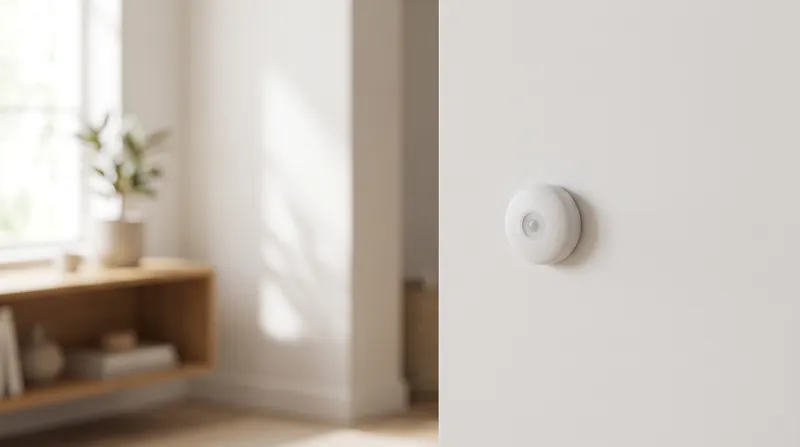
To solve the industry's oldest problem—automated lights turning off on stationary occupants—manufacturers are rapidly adopting millimeter-wave radar. These advanced sensors emit high-frequency radio waves to map a room in real-time, detecting movements as minute as the rise and fall of a human chest during breathing.[13]
This radar technology allows for true presence detection rather than simple motion sensing. A smart home equipped with radar knows exactly how many people are in a room and precisely where they are located, enabling highly contextual automations that adjust lighting and climate control based on specific seating positions.[13]
The transition to radar also enables multi-zone mapping from a single device. Instead of placing five different infrared sensors around an open-concept living space, a single millimeter-wave sensor can divide the room into virtual grids, triggering the kitchen lights when someone approaches the fridge while keeping the television area dim.[13]
While radar sensors require continuous power—making them difficult to run on small batteries—their integration into wired devices like light switches and ceiling fixtures is making true, invisible presence detection a standard feature in new smart home builds.[13]
Power Over Ethernet Lighting
The physical wiring of the home is also undergoing a quiet revolution. In custom builds and major renovations, low-voltage Power over Ethernet is beginning to replace traditional 120V electrical circuits for lighting and motorized shades.[13]
This technology runs both direct current power and high-speed data through a single category cable, such as Cat6. This eliminates the need for high-voltage copper wiring and dedicated electrical circuits for lighting, significantly reducing the fire risk and allowing low-voltage technicians to install the fixtures.[13]
By centralizing power distribution in a dedicated server rack, this lighting offers unparalleled control and efficiency. Every individual bulb receives a dedicated IP address, allowing the smart home hub to manage brightness, color temperature, and energy consumption with absolute precision, without relying on wireless protocols.[13]
This wired approach eliminates the radio interference and range issues that plague wireless smart bulbs. Because the data connection is hardwired, the fixtures respond with zero latency and never drop off the network, providing the ultimate foundation for a reliable, professional-grade automated home.[13]
The upfront cost of this infrastructure remains higher than traditional wiring, largely due to the required centralized networking equipment. However, the long-term energy savings, absolute reliability, and simplified maintenance are making it the gold standard for high-end residential construction and deep retrofits.
Government Security Mandates
As smart homes become more deeply integrated into daily life, the security of these connected devices has become a matter of national infrastructure. Poorly secured IoT devices have historically been hijacked to form massive botnets, prompting regulatory bodies to intervene with strict new standards.[1][8]
The National Institute of Standards and Technology has published extensive guidelines, such as the IoT Core Baseline, detailing the foundational cybersecurity features required for consumer devices. These include mandatory unique passwords out of the box, secure over-the-air firmware updates, and encrypted data transmission.[1][8]
In the United States, the Federal Communications Commission launched a voluntary cybersecurity labeling program for consumer IoT products. As the FCC noted in its regulatory filing, the program aims to "provide consumers with an easy-to-understand, widely recognized mark that provides assurance that a product meets robust cybersecurity standards."[2]
Internationally, the UK's National Cyber Security Centre and the Department for Digital, Culture, Media & Sport have implemented legally binding codes of practice. These regulations ban universal default passwords like "admin" or "1234" and require manufacturers to publicly state exactly how long a device will receive security updates.[4][5]
These government interventions are forcing a baseline of security across the industry. Buyers can now look for standardized trust marks on packaging, shifting the burden of cybersecurity from the homeowner's technical expertise back to the manufacturer's engineering practices.[2][4]
Future-Proofing the Automated Home
Building a resilient smart home requires prioritizing infrastructure over individual gadgets. The most successful deployments treat automation as a permanent utility, much like plumbing or traditional electrical work, rather than a collection of disposable consumer electronics.[13]
Homeowners should prioritize devices that support local control and open standards like Matter and Thread. By avoiding proprietary cloud ecosystems, buyers ensure their hardware will continue functioning even if the original manufacturer changes its business model or ceases operations entirely.[3][9]
Physical installation also matters. Ensuring neutral wires are present in all switch boxes, running Cat6 cable to strategic locations for access points, and utilizing deep electrical junction boxes provides the physical foundation necessary to support future technological advancements.[13]
The ultimate goal of home automation is invisibility. A truly smart home does not require the user to pull out a smartphone or shout voice commands; it anticipates needs based on presence, time of day, and environmental conditions, operating quietly in the background.[6][13]
As local processing power increases and sensing technology like millimeter-wave radar becomes ubiquitous, this vision is becoming a reality. The focus is shifting from remote control to genuine automation, where the house manages its own climate, lighting, and security autonomously.[13]
As local processing power increases and sensing technology like millimeter-wave radar becomes ubiquitous, this vision is becoming a reality.
The transition from fragmented cloud devices to unified, local-first infrastructure marks the maturation of the smart home industry. By understanding the underlying protocols and prioritizing secure, edge-computed systems, homeowners can build environments that are both highly capable and fiercely private.[9][13]
The next decade of residential technology will be defined by this quiet reliability. The deciding factor for buyers will no longer be how many features a system boasts, but how seamlessly it integrates into the physical reality of daily life without requiring constant management.[13]
Comparison
| Protocol | Frequency Band | Topology | Primary Advantage |
|---|---|---|---|
| Z-Wave | Sub-gigahertz (908/868 MHz) | Mesh | Wall penetration and range |
| Thread / Zigbee | 2.4 GHz | Mesh | High bandwidth and open standards |
| Wi-Fi | 2.4 GHz / 5 GHz | Star | Ubiquity and high data throughput |
Key terms
- Edge Computing
- Processing data locally on a hub inside the home rather than sending it to a remote cloud server.
- Mesh Network
- A network topology where each powered device acts as a repeater, passing signals along to extend range and reliability.
- Millimeter-Wave (mmWave)
- A radar technology that detects micro-movements, allowing a system to know if a person is in a room even if they are sitting perfectly still.
- Power over Ethernet (PoE)
- A system that delivers both direct current electricity and network data over a single standard networking cable.
- Joint Fabric
- A Matter protocol feature that allows a single smart device to be controlled by multiple different brand ecosystems simultaneously.
Frequently asked
Do I need an internet connection for a smart home to work?
If you use a local-first hub like Home Assistant or Hubitat, your core automations and lighting will continue to work perfectly without the internet. Cloud-dependent devices, however, will fail during an outage.
Can I mix Z-Wave and Zigbee devices in the same house?
Yes, provided your central smart home hub contains both a Z-Wave and a Zigbee radio. The hub acts as a translator, allowing a Z-Wave motion sensor to trigger a Zigbee light bulb.
What happens to my smart home if I sell the house?
Local-first systems and PoE infrastructure stay with the house and add to its resale value. You simply factory-reset the central hub to hand over local control to the new owners without compromising your personal data.
Are smart speakers always listening to my conversations?
Modern smart speakers use a local wake word buffer. They process ambient audio on the device itself and only open a connection to the cloud after explicitly hearing the activation phrase, though privacy policies vary by manufacturer.
Viewpoints in depth
Local-First Advocates
Argue that smart homes must operate entirely independently of the internet to guarantee privacy, speed, and longevity.
This community, heavily represented by users of open-source platforms like Home Assistant, views cloud dependency as a fundamental flaw in consumer technology. They argue that relying on external servers introduces unacceptable latency and turns expensive hardware into electronic waste the moment a manufacturer decides to shut down its servers. By keeping all processing and data on a local hub, they prioritize absolute ownership of the system's logic and privacy.
Security Regulators
Focus on mitigating the national security risks of botnets by mandating baseline encryption and update lifespans for consumer devices.
Government bodies like NIST and the FCC view the smart home not just as a consumer convenience, but as a potential vector for massive cyberattacks. Because early IoT devices often shipped with universal default passwords, they were easily hijacked to execute distributed denial-of-service attacks. Regulators argue that the burden of securing these devices must shift from the consumer to the manufacturer, enforced through mandatory standards and public trust marks.
Open Standards Consortia
Believe that universal interoperability protocols are the only way to achieve mass consumer adoption of smart home technology.
Organizations like the Connectivity Standards Alliance and the Thread Group maintain that the industry's historical fragmentation stifled growth. They argue that consumers will only invest heavily in home automation when they are guaranteed that a smart plug bought today will work with any hub they choose tomorrow. Their focus is on building robust, shared languages like Matter that allow hardware to compete on quality rather than ecosystem lock-in.
What changed
- · Revision 1Published.
Related explainers
- 900 MHz vs. 2.4 GHz: How Z-Wave and Thread/Zigbee Frequencies Dictate Range and Interference
- Local Smart Home Hubs Replace Cloud Servers to Cut Latency to Milliseconds
- Mismatched Active Operational Datasets Splinter Smart Home Thread Networks into Isolated Radio Meshes
- Matter 1.6 Smart Home Standard Adds NFC Setup and Multi-Ecosystem Sharing
- Why Matter Controllers Crash Thread Routers Over Unmanaged Wi-Fi Switches
- The Transition to Local Control and Open Standards in Smart Home Technology
- The 868 MHz vs. 915 MHz Divide: How Regional Radio Frequencies Dictate Smart Home Compatibility
- Smart Speaker Audio: How Local Wake Word Buffers Prevent Constant Cloud Recording
- Why mmWave Radar is Replacing Passive Infrared in Smart Home Occupancy Sensing
- Low-Voltage Power over Ethernet is Replacing Traditional 120V Circuits in Custom Smart Homes
- HUD Finalizes Most Extensive Overhaul of Manufactured Home Code in 30 Years, Allowing Multi-Unit Homes
- How Matter 1.6 Solves Smart Home Fragmentation with 'Joint Fabric' and NFC Setup
- Local-First Advocates
- Argue that smart homes must operate entirely independently of the internet to guarantee privacy, speed, and longevity.
- Security Regulators
- Focus on mitigating the national security risks of botnets by mandating baseline encryption and update lifespans for consumer devices.
- Open Standards Consortia
- Believe that universal interoperability protocols are the only way to achieve mass consumer adoption of smart home technology.
Perspectives this story doesn't cover
- Renters in multi-unit buildings
- Retrofit electricians
Sources
Source coverage
13 outlets
3 viewpoints surfaced











- [1]National Institute of Standards and TechnologySecurity Regulators
Profile of the IoT Core Baseline for Consumer IoT Products
Read on National Institute of Standards and Technology → - [2]Federal Communications CommissionSecurity Regulators
FCC Adopts Rules for IoT Cybersecurity Labeling Program
Read on Federal Communications Commission → - [3]Connectivity Standards AllianceOpen Standards Consortia
Matter
Read on Connectivity Standards Alliance → - [4]National Cyber Security CentreSecurity Regulators
Smart devices in the home
Read on National Cyber Security Centre → - [5]Department for Digital, Culture, Media & SportSecurity Regulators
Code of Practice for Consumer IoT Security
Read on Department for Digital, Culture, Media & Sport → - [6]Department of Climate Change, Energy, the Environment and Water
Smart homes
Read on Department of Climate Change, Energy, the Environment and Water → - [7]Sensors
An IoT-Based Smart Home Automation System
Read on Sensors → - [8]National Institute of Standards and TechnologySecurity Regulators
IoT Device Cybersecurity Guidance for the Federal Government: Establishing IoT Device Cybersecurity Requirements
Read on National Institute of Standards and Technology → - [9]Home AssistantLocal-First Advocates
Perfect Home Automation
Read on Home Assistant → - [10]Z-Wave AllianceOpen Standards Consortia
About Z-Wave Technology
Read on Z-Wave Alliance → - [11]Thread GroupOpen Standards Consortia
Thread Benefits
Read on Thread Group → - [12]Connectivity Standards AllianceOpen Standards Consortia
Matter Specification
Read on Connectivity Standards Alliance → - [13]Factlen Editorial Team
Synthesis by Factlen editorial team
Read on Factlen Editorial Team →
More in Home
See all →Mesh Networking
Continuous Radio Listening Depletes Coin Cells Within a Day: Why Battery-Powered Zigbee and Thread Sensors Cannot Route Mesh Traffic
8 sources
Radio Frequencies
The 868 MHz vs. 915 MHz Divide: How Regional Radio Frequencies Dictate Smart Home Compatibility
5 sources
Aging in Place
2026 Renovations Combine Segmented Layouts and Smart Tech to Support Aging in Place
8 sources
Smart Home Tech
Why mmWave Radar is Replacing Passive Infrared in Smart Home Occupancy Sensing
8 sources
Comments
Every angle. Every day.
Get Home stories with full source coverage and perspective breakdowns, free every day.