
GuideRoad Trip Planning and PreparationRevision 1Updated
The Definitive Guide to Road Trip Planning and Preparation
From the physics of aerodynamic drag and cabin carbon dioxide to navigating EV charging standards and hands-free laws, modern road trips require more than just a full tank. This guide breaks down the science and regulations that dictate highway efficiency, safety, and comfort.
By Dev Anand

Share this story
In short
- Aerodynamic drag from open windows consumes more fuel than running the air conditioning at speeds above 80 km/h.
- Leaving the cabin climate control on recirculation mode can push carbon dioxide levels to 6,000 ppm, inducing severe driver drowsiness.
- Federal standards only require tire pressure monitoring systems to alert drivers when a tire loses 25 percent of its recommended pressure.
A successful road trip is no longer just a matter of checking the oil and filling the tank. Modern highway travel is governed by a complex intersection of fluid dynamics, federal safety standards, and rapidly evolving electrical infrastructure. Understanding these underlying mechanisms transforms a stressful drive into a predictable, efficient journey.
For decades, drivers have relied on intuition to manage fuel economy and cabin comfort. But intuition often fails against the physics of a vehicle moving at 110 kilometers per hour. The decisions made before leaving the driveway—from where to mount cargo to how the climate control is set—dictate the vehicle's performance and the driver's cognitive state.
This guide synthesizes federal regulations, aerodynamic research, and automotive engineering standards to explain how a modern vehicle actually behaves on the highway. By anchoring abstract concepts in practical applications, it provides the definitive framework for preparing any vehicle for long-distance travel. It covers everything from the invisible drag bubbles that trap following vehicles to the carbon dioxide concentrations that quietly induce driver fatigue.[15]
The Physics of Highway Aerodynamics
Aerodynamic drag replaces physical weight as the primary enemy of highway efficiency once a vehicle exceeds 80 kilometers per hour. The engine must burn exponentially more fuel to overcome wind resistance, making exterior modifications highly consequential. A 2016 study by the Lawrence Berkeley National Laboratory found that roof racks were responsible for 100 million gallons of wasted gasoline annually in the United States, accounting for 0.8 percent of all light-duty vehicle fuel consumption.[3]
"In this case the fuel consumption of vehicles with after-market accessories isn't captured in the test procedure," noted Berkeley Lab researcher Alan Meier, highlighting a massive blind spot in official efficiency ratings.[3]
While roof boxes provide essential storage for long journeys, they violently disrupt the smooth airflow over the vehicle's roofline. Tracklander, an Australian rack manufacturer, notes that an empty roof rack can increase fuel consumption by 2 to 10 percent, while a fully loaded rack hauling heavy gear reduces highway fuel efficiency by 10 to 25 percent. Placing that same cargo on a hitch-mounted rack behind the vehicle preserves the aerodynamic profile, saving significant fuel and extending electric vehicle range.[4]
The aerodynamic penalty also settles the long-standing debate over whether to use the air conditioning or open the windows. At low speeds, the mechanical load of the air conditioning compressor consumes more fuel than the drag of open windows. But fluid dynamics dictate a strict crossover point where the math flips.[9][10]
According to automotive testing, that crossover occurs at roughly 80 kilometers per hour. Above that speed, the aerodynamic drag created by open windows consumes more engine power than running the air conditioning. On the highway, closing the windows and running the climate control is definitively the more efficient choice, saving up to 0.2 liters of fuel per 100 kilometers compared to driving with the windows down.[9][10]
Drivers often attempt to reduce drag further by slipstreaming, or drafting, behind larger vehicles. While computational fluid dynamics prove that trailing closely behind a lead vehicle reduces drag, it also reveals a dangerous aerodynamic trap.[14]
Researchers at Penerbit Akademia Baru identified a "drag bubble" that forms in the wake of a leading vehicle. When the following distance is between 0.25 and 1.5 times the length of the car, the trailing vehicle actually experiences a significant increase in aerodynamic drag, forcing it to burn more fuel while compromising safety. True slipstreaming benefits only occur at dangerously close distances of less than 0.25 car lengths, making the practice entirely unsuitable for public highways.[14]
Managing Cabin Air and Driver Fatigue
Highway drowsiness is frequently attributed to the monotony of the road, but the vehicle's climate control system is often the actual culprit. Modern airtight vehicles trap exhaled carbon dioxide when the system is set to recirculate, displacing oxygen and mimicking physical fatigue.[5][6]
Normal outdoor air contains about 400 parts per million of carbon dioxide. When the recirculation flap closes, the system stops pulling fresh air and simply loops the existing cabin air, trapping the 40,000 parts per million of carbon dioxide that each occupant exhales with every breath.[5][6]
A 2017 study by the Society of Automotive Engineers demonstrated how rapidly this degrades the cabin environment. With four people in an average-sized car, carbon dioxide concentrations can reach nearly 6,000 parts per million after two and a half hours of driving with the recirculation on. Even with just two occupants, the cabin can reach 3,000 parts per million in 90 minutes.[5]
"Between 2000-5000ppm, as well as being more fatigued, you might get a headache, struggle to concentrate, lose focus and even feel nauseous," reports Australian automotive outlet Drive.[5]
The physiological effects of elevated carbon dioxide are subtle but profound. Unlike carbon monoxide, which is a toxic byproduct of combustion, carbon dioxide is a natural product of human respiration. However, in the confined space of a vehicle cabin, its concentration rises exponentially.[6]
Numerous research studies have shown that high levels of carbon dioxide diminish cognitive abilities, reduce response times, and impair the ability for an individual to make strategic decisions. A study by Swedish sensor manufacturer Senseair found that four adults in a standard car can push the cabin concentration to 1,000 parts per million in just 90 seconds if the ventilation is disabled.[6]
To prevent this cognitive impairment, drivers should use the recirculation mode only temporarily to cool the cabin quickly or block outside odors. For the duration of a road trip, the system must be set to pull fresh air, ensuring that carbon dioxide levels remain below the 1,000 parts per million threshold that triggers drowsiness. Some modern luxury vehicles, such as Genesis models since 2015, now feature automated sensors that force fresh air into the cabin once carbon dioxide exceeds 2,500 parts per million.[6]
Tire Pressure and Thermal Dynamics
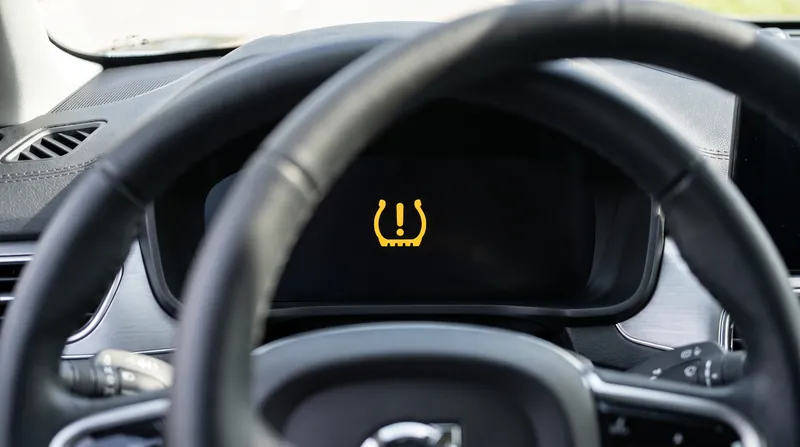
Tire blowouts remain a leading cause of highway breakdowns, and they are almost entirely preventable through proper pressure management. The Federal Motor Vehicle Safety Standard 138 requires all passenger vehicles under 10,000 pounds to feature a tire pressure monitoring system.[1][2]
However, the regulatory threshold for that warning light is surprisingly low. The National Highway Traffic Safety Administration mandates that the system alert the driver only when a tire's pressure drops 25 percent below the manufacturer's recommended cold inflation pressure.[2]
"The final rule requires that the driver be given a warning when tire pressure is 25 percent or more below the vehicle manufacturer's recommended cold tire inflation pressure," the NHTSA ruling states.[2]
The mechanics of the tire pressure monitoring system rely on either direct or indirect measurement. Direct systems place a physical pressure sensor inside each wheel, transmitting real-time data to the dashboard. Indirect systems, conversely, use the vehicle's anti-lock braking sensors to measure wheel speed; an underinflated tire has a slightly smaller diameter and therefore spins faster than a fully inflated one.[1][2]
Because a tire can lose nearly a quarter of its air before the dashboard warning illuminates, visual inspections and manual gauge checks remain essential. A tire operating just above the 25 percent threshold will flex excessively at highway speeds, generating immense heat that degrades the internal structure and significantly reduces fuel economy.[2]
This thermal dynamic leads to a common, catastrophic mistake at rest stops. As tires heat up on the highway, the air inside expands, causing a pressure gauge to read higher than the recommended cold pressure. Well-intentioned drivers often bleed air from these warm tires to match the door placard.[15]
When those tires cool down, they become severely underinflated. Returning to the highway with underinflated tires triggers a cycle of excessive rubber flexing and heat buildup that ultimately destroys the tire. Tire pressure must only be adjusted when the rubber is cold, typically before the vehicle has been driven more than a few kilometers.[15]
Electric Vehicle Charging Standards
For electric vehicle owners, road trip preparation centers entirely on the charging network. The landscape of highway charging is currently undergoing a massive consolidation under the SAE J3400 standard, commonly known as the North American Charging Standard.[11][12]
Originally developed by Tesla in 2012, the compact five-pin connector was opened to the industry in 2022 and formalized by SAE International in 2023. It handles both alternating current Level 2 charging and direct current fast charging through a single port, replacing the bulky Combined Charging System on most 2025 and newer vehicles.[11][12]
"SAE J3400 is the formal industry standard for the North American Charging System (NACS) EV coupler," notes Joint Charging, highlighting its capacity to handle up to 1,000 volts and 500 amps. This robust specification future-proofs the connector for 800-volt vehicle architectures, enabling faster charging times across the board.[12]
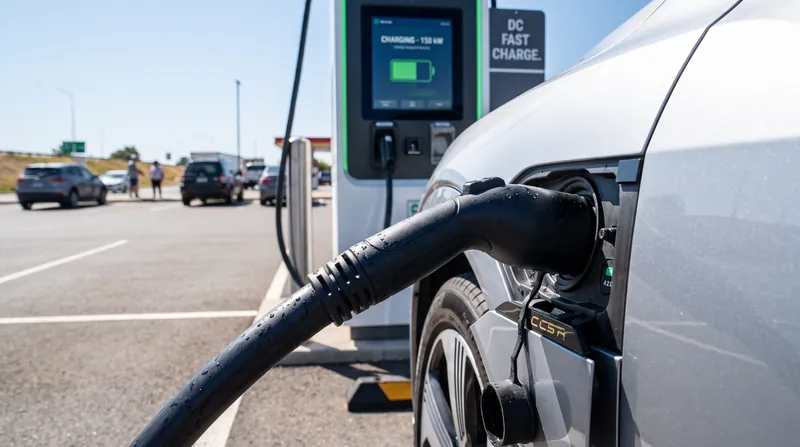
Understanding charging speeds is equally critical for route planning. Automakers frequently advertise peak charging rates, such as 350 kilowatts, but the SAE J2894 standard dictates how these figures are validated.[7][8]
The standard requires that a charger sustain its maximum output for only 30 seconds to claim the peak figure. In reality, a vehicle's battery management system will throttle the charging speed as the battery fills to protect the cells from thermal degradation, meaning the advertised peak speed is only achieved for a fraction of the charging session.[7][8]
The SAE J2894 standard, originally released in 2011 and updated in 2019, provides high-level guidance on the efficiency and power quality of electric vehicle chargers. It ensures that the massive power draw of a fast-charging station does not destabilize the local electrical grid, a critical consideration as highway charging plazas scale up to accommodate dozens of vehicles simultaneously.[7][8]
"The question has been: Is the power grid ready to support the expansion of EVs? This document makes sure the grid won't crash due to inefficient electric vehicle chargers," explained Eloi Taha, a leading project expert for the SAE Hybrid-EV Committee.[7]
To optimize travel time, electric vehicle drivers should plan to charge their batteries from 10 percent to 80 percent, rather than waiting for a full charge. The final 20 percent takes disproportionately longer due to the tapering charge curve, making frequent, shorter stops more efficient than rare, long ones.[15]
Navigating Interstate Driving Laws
Crossing state lines introduces a patchwork of traffic regulations, with distracted driving laws representing the most significant legal hazard for road trippers. Over 30 states have enacted strict hands-free driving laws that make simply holding a phone a primary offense.[13]
Crossing state lines introduces a patchwork of traffic regulations, with distracted driving laws representing the most significant legal hazard for road trippers.
The Hands-Free Georgia Act, implemented in 2018, exemplifies this legislative shift. The law prohibits drivers from having a phone in their hand or touching any part of their body while operating a vehicle, even when stopped at a traffic light.[13]
"The fine for a first conviction is $50.00 and 1 point assessed against the driver's license," the Georgia Highway Safety Organization outlines, with subsequent offenses reaching $150 and three points.[13]
Drivers must configure their navigation and music streaming applications before putting the vehicle in gear. While voice-to-text functions and dashboard-integrated systems are legally permissible, physically interacting with a mobile device is not. Investing in a dashboard mount and familiarizing oneself with voice commands is a mandatory step in modern road trip preparation.[13]
Furthermore, these laws often lack grace periods for out-of-state drivers. A tourist passing through a hands-free state is subject to the same fines and points as a local resident. Understanding the specific statutes of each state on the itinerary prevents unexpected traffic stops and costly citations.[13]
Comparison
| Decision | Speed Range | Efficiency Impact | Safety Consequence |
|---|---|---|---|
| Open Windows vs. AC | Above 80 km/h | AC saves up to 0.2L/100km | AC maintains cabin temp and alertness |
| Roof Rack vs. Hitch Rack | Highway Speeds | Roof rack adds 10-25% drag | Higher center of gravity with roof rack |
| Cabin Air Recirculation | Continuous | Minor AC load reduction | CO2 reaches 6,000 ppm, causing drowsiness |
| Bleeding Warm Tires | Rest Stops | Decreases fuel economy | Causes severe underinflation and blowouts |
How we did this
- Method
- Factlen synthesized fluid dynamics research on aerodynamic drag with federal safety regulations and automotive engineering standards to construct a unified physics and compliance model for highway travel. We normalized the fuel penalty percentages across different vehicle modifications and speeds to determine the absolute efficiency cost of common driver decisions.
- What we found
- The data reveals that driver intuition actively degrades highway efficiency and safety. The common practices of opening windows to save fuel, bleeding warm tires to correct pressure, and relying on recirculation for cabin cooling all mathematically worsen the vehicle's performance and the driver's cognitive state. True highway optimization requires overriding these instincts with physics-based protocols.
- What we worked from
- Roof rack fuel penalty: 10-25% — Tracklander
- AC vs open windows crossover speed: 80 km/h — GAN Tuning
- Tire pressure warning threshold: 25% below placard — Federal Register
- Cabin CO2 concentration after 2.5 hours: 6,000 ppm — Drive
- Limits of this analysis
- Aerodynamic drag penalties vary significantly based on the specific vehicle's frontal area and baseline drag coefficient, meaning the exact fuel cost of a roof rack or open window will differ between a sedan and an SUV.
Terms to know
- Aerodynamic Drag
- The wind resistance a vehicle must overcome to move forward, which increases exponentially with speed and consumes significant fuel.
- Slipstreaming
- Driving closely behind another vehicle to utilize its slipstream and reduce air resistance, though dangerous and ineffective at normal highway following distances.
- SAE J3400
- The official engineering standard for the North American Charging System (NACS) connector used by modern electric vehicles.
- FMVSS 138
- The federal safety standard that requires vehicles to alert the driver when tire pressure drops 25 percent below the recommended level.
- Recirculation Mode
- A climate control setting that stops pulling fresh air from outside and instead continuously loops the existing air inside the cabin.
Questions readers ask
Does using the air conditioning use more fuel than opening the windows?
It depends on your speed. Below 80 km/h, open windows are more efficient. Above 80 km/h, the aerodynamic drag from open windows consumes more fuel than the air conditioning compressor.
Why does the recirculation button make me sleepy?
Recirculation mode traps the carbon dioxide you exhale. In a car with four people, CO2 levels can reach 6,000 parts per million in just over two hours, displacing oxygen and causing cognitive impairment and drowsiness.
Should I let air out of my tires if they read high during a road trip?
Never bleed air from warm tires. The heat of highway driving naturally expands the air inside; if you release it, the tires will be dangerously underinflated once they cool down, increasing the risk of a blowout.
What is the NACS standard for electric vehicles?
The North American Charging Standard (SAE J3400) is a compact connector originally developed by Tesla that handles both AC and DC fast charging. It is replacing the CCS1 connector on most 2025 and newer electric vehicles.
Different angles
Aerodynamic Engineers
Focus on minimizing vehicle drag to maximize fuel efficiency and electric range.
Automotive aerodynamicists view exterior modifications like roof racks and open windows as critical failures in vehicle efficiency. They argue that the billions of dollars spent engineering streamlined vehicle bodies are instantly negated when a driver mounts a cargo box on the roof or drives at 110 km/h with the windows down. Their data proves that hitch-mounted cargo and closed-cabin climate control are the only mathematically sound choices for highway travel.
Federal Safety Regulators
Prioritize baseline hardware standards to protect drivers from catastrophic failures.
Agencies like the NHTSA focus on establishing minimum safety floors, such as the FMVSS 138 tire pressure mandate. Regulators argue that while automated systems prevent the most egregious failures, they cannot replace driver vigilance. They emphasize that a warning light triggered at a 25 percent pressure loss is a last resort to prevent a blowout, not a substitute for regular, cold-tire pressure maintenance.
Public Health Researchers
Examine the physiological impact of the vehicle cabin environment on driver cognition.
Occupational health experts and sensor manufacturers highlight the hidden danger of carbon dioxide buildup in airtight modern vehicles. They argue that the automotive industry's focus on cabin isolation and HVAC efficiency has inadvertently created micro-environments that induce drowsiness. Their research advocates for automated fresh-air bleeds and CO2 sensors to prevent the cognitive impairment that leads to highway accidents.
What changed
- · Revision 1Published.
Related explainers
- Recirculating Cabin Air Concentrates Exhaled Carbon Dioxide to 2,500 PPM, Triggering Highway Drowsiness
- How Grocery-Anchored Fast Charging Is Reshaping the EV Adoption Curve
- The 2026 Guide to EV Road Trips: How NACS and New Tech Are Changing Long-Distance Travel
- The 20 Percent Fuel Economy Gain: How Slipstreaming Reduces Aerodynamic Drag for Following Vehicles
- The 25 Percent Threshold: How Federal Standard 138 Dictates When Your Car's Tire Pressure Light Illuminates
- Why Bleeding Air From Warm Tires on a Road Trip Actually Causes Blowouts
- Multi-State Hands-Free Driving Laws Now Carry Up to $500 Fines, Creating Road Trip Minefield
- The 10-25 Percent Fuel Penalty: How Roof-Mounted Cargo Boxes Increase Aerodynamic Drag and Decrease Fuel Economy
- The 30-Second Rule: How the SAE J2894 Standard Defines the Maximum Time an EV Can Sustain Peak DC Fast Charging Power
- The Aerodynamics of Exterior Cargo: Why Hitch Racks Preserve EV Range While Roof Boxes Destroy It
- Aerodynamic Power Penalties Scale With the Cube of Velocity, Making Air Conditioning More Efficient Than Open Windows Above 80 km/h
- The 2026 Guide to EV Road Trips: How to Plan, Charge, and Drive Stress-Free
- Aerodynamic Engineers
- Focus on minimizing aerodynamic drag and optimizing thermal management to maximize vehicle efficiency and range.
- Federal Regulators
- Prioritize baseline safety standards and standardized infrastructure to protect drivers across state lines.
- Consumer Advocates
- Emphasize practical, actionable advice that helps drivers save money on fuel and avoid traffic fines.
Perspectives this story doesn't cover
- Tire Manufacturers
- Electric Utility Providers
Sources
Source coverage
15 outlets
3 viewpoints surfaced















- [1]NHTSAFederal Regulators
Tire Pressure Monitoring Systems
Read on NHTSA → - [2]Federal RegisterFederal Regulators
Federal Motor Vehicle Safety Standards; Tire Pressure Monitoring Systems
Read on Federal Register → - [3]Lawrence Berkeley National LaboratoryAerodynamic Engineers
Fuel consumption impacts of auto roof racks
Read on Lawrence Berkeley National Laboratory → - [4]TracklanderConsumer Advocates
Do Roof Racks Use More Fuel?
Read on Tracklander → - [5]DriveConsumer Advocates
This car button has a hidden danger
Read on Drive → - [6]CO2Meter
High CO2 Levels in Cars and Drowsy Driving
Read on CO2Meter → - [7]SAE InternationalAerodynamic Engineers
SAE J2894: Power Quality Requirements for Plug-in Electric Vehicle Chargers
Read on SAE International → - [8]GlobalSpec
SAE J2894/1 - Power Quality Requirements for Plug-In Electric Vehicle Chargers
Read on GlobalSpec → - [9]GAN TuningConsumer Advocates
AC vs open windows gas mileage
Read on GAN Tuning → - [10]CarmaConsumer Advocates
The city rule and the highway rule: AC vs Windows
Read on Carma → - [11]Wikipedia
North American Charging Standard
Read on Wikipedia → - [12]Joint Charging
SAE J3400 (North American Charging Connector)
Read on Joint Charging → - [13]Georgia Highway SafetyFederal Regulators
Hands-Free Georgia Act
Read on Georgia Highway Safety → - [14]Penerbit Akademia BaruAerodynamic Engineers
Aerodynamic characteristics of two slipstreaming race cars
Read on Penerbit Akademia Baru → - [15]Factlen Editorial Team
Synthesis by Factlen editorial team
Read on Factlen Editorial Team →

More in Automotive & Transportation
See all →Vehicle Safety Standards
The 25 Percent Threshold: How Federal Standard 138 Dictates When Your Car's Tire Pressure Light Illuminates
8 sources
EV Charging Tech
The 30-Second Rule: How the SAE J2894 Standard Defines the Maximum Time an EV Can Sustain Peak DC Fast Charging Power
5 sources
F-150 Recall
Ford Begins Mailing Recall Letters to 223,000 F-150 Owners Over Fuel Tank Detachment Risk
4 sources

Aerodynamics
The 10-25 Percent Fuel Penalty: How Roof-Mounted Cargo Boxes Increase Aerodynamic Drag and Decrease Fuel Economy
4 sources

Comments
Every angle. Every day.
Get Automotive & Transportation stories with full source coverage and perspective breakdowns, free every day.