
The Aerodynamics of Exterior Cargo: Why Hitch Racks Preserve EV Range While Roof Boxes Destroy It
As electric vehicle owners prioritize highway range, aerodynamic drag has replaced physical weight as the primary enemy of road-trip efficiency. Data shows that placing cargo behind the vehicle rather than on top of it can save up to 25 percent of a battery's charge.
By Adrien Caron

Share this story
In short
- Aerodynamic drag, not physical weight, is the primary cause of highway range loss for electric vehicles.
- A loaded roof box can reduce highway efficiency by up to 25 percent.
- Hitch-mounted cargo racks hide gear in the vehicle's slipstream, reducing the aerodynamic penalty to just 2 to 5 percent.
The short version is this: air is thicker than you think, and pushing a plastic box through it at 70 miles per hour costs you far more energy than the physical weight of the gear inside it. For decades, road-trippers have thrown skis, bikes, and luggage onto their roofs without a second thought.
In a gas-powered SUV with a 400-mile tank, a 20 percent drop in efficiency just meant spending an extra twenty dollars at the pump. But in the era of the electric vehicle, that same aerodynamic penalty translates to 50 miles of lost range—often the exact distance between making it to your destination and being stranded on the shoulder.
As a result, the geometry of the family road trip is shifting. The roof box is being dethroned by the hitch rack. The reason comes down to the unforgiving physics of aerodynamic drag, a force that scales exponentially with speed. Understanding how this works changes not just what you buy to carry your gear, but how you pack for your next weekend getaway.
To understand why roof cargo is so punishing, you have to look at how modern vehicles are designed. Automakers spend millions of dollars in wind tunnels shaping cars to slip cleanly through the air. The teardrop profile of a modern EV is engineered to keep the boundary layer of air attached to the vehicle's surface for as long as possible, minimizing the wake left behind.
When you strap a set of crossbars and a cargo box to the roof, you introduce a blunt, un-aerodynamic object directly into the fastest-moving, highest-pressure airstream flowing over the car. This creates a massive zone of turbulent, low-pressure air behind the box. The vehicle's motor now has to work significantly harder to pull the car forward against that suction.
The numbers are stark. According to data analyzed by the Office of Scientific and Technical Information, a loaded roof box can increase fuel consumption by 20 to 25 percent at highway speeds. Even an empty set of crossbars disrupts the airflow enough to cause a measurable 2 to 10 percent drop in efficiency, simply by tripping the air into a turbulent state before it reaches the rear spoiler.[1]
The Lawrence Berkeley National Laboratory previously estimated that the aerodynamic drag from roof racks alone forces US drivers to burn an excess of 100 million gallons of gasoline every year. For an EV driver, that drag doesn't just cost money; it costs time. A 25 percent range penalty on a 300-mile battery means stopping to charge 75 miles sooner than planned, entirely upending a travel itinerary.[2]
This is where the hitch rack changes the equation. By moving the cargo from the roof to the rear bumper, the gear is placed inside the vehicle's aerodynamic slipstream—the pocket of turbulent air that the car has already punched a hole through. The air flowing over the top and sides of the vehicle largely ignores the cargo tucked behind the tailgate.
Because the vehicle's frontal area remains largely unchanged, the motor doesn't have to push any additional air out of the way. While a hitch rack still introduces some drag by altering how the air detaches from the rear of the car, the penalty is a fraction of what a roof box demands. Real-world testing and consumer reports consistently show that hitch-mounted cargo carriers and bike racks reduce highway efficiency by only 2 to 5 percent, compared to the 20-plus percent hit from roof mounting.[2]
Many drivers mistakenly believe that the weight of their gear is the primary culprit behind poor road-trip efficiency. They will obsessively pack lighter, leaving behind heavy cast-iron camp stoves or extra water jugs, only to strap a bulky, lightweight foam surfboard to the roof. This fundamental misunderstanding of physics leads to the worst possible packing decisions for highway travel.
The U.S. Department of Energy provides a clarifying metric here: an extra 100 pounds of cargo in the trunk lowers gas mileage by roughly 1 percent. By comparison, the aerodynamic drag of a 100-pound loaded roof box destroys up to 25 percent of your efficiency at highway speeds.[1][3]
This means the aerodynamic penalty of the box is 25 times more severe than the physical weight of the gear inside it. You could load 2,000 pounds of lead bricks into the cabin of your SUV and still experience less range loss than you would by driving with a bulky, empty plastic box on the roof.
For the actual owner planning a weekend trip, this math dictates a clear hierarchy of packing. The most efficient place for cargo is inside the cabin, where it adds weight but zero aerodynamic drag. When the cabin is full, the next best location is a hitch-mounted cargo tray or box, which hides the gear in the vehicle's aerodynamic shadow.[4]
The roof should be the absolute last resort, reserved only for items that are too long to fit anywhere else, such as skis or kayaks. And if you must use a roof rack, the speed at which you drive becomes the final variable you can control to mitigate the damage.
Aerodynamic drag increases with the square of velocity. This means the drag penalty at 75 mph is exponentially worse than the penalty at 55 mph. If you are forced to carry bikes or a box on your roof, simply reducing your highway cruising speed by 5 to 10 mph can claw back a significant portion of the lost range, as the air resistance drops dramatically.[4]
Ultimately, the transition to electric vehicles is forcing drivers to become amateur aerodynamicists. The days of leaving an empty ski rack on the car year-round as a lifestyle accessory are ending. By understanding that air resistance, not weight, is the true enemy of the road trip, drivers can make smarter equipment choices, spend less time at charging stations, and actually enjoy the drive.
How we did this
- Method
- Comparison and normalisation of aerodynamic drag penalties versus mass penalties to isolate the primary cause of EV range loss during highway travel.
- What we found
- The aerodynamic drag of a standard 100-lb loaded roof box destroys up to 25 times more highway range than the physical weight of the cargo itself, making hitch-mounted cargo systems mathematically superior for EV road trips despite their lower volume.
- What we worked from
- Loaded roof box highway efficiency penalty: 20-25% — Office of Scientific and Technical Information
- Mass efficiency penalty per 100 lbs: 1% — Tom Bush Family of Dealerships
- Limits of this analysis
- This analysis assumes steady highway speeds where aerodynamic drag is the dominant force; in low-speed urban driving, the penalty ratio between drag and mass narrows significantly.
Key terms
- Aerodynamic Drag
- The force of air resistance that opposes a vehicle's forward motion, which increases exponentially with speed.
- Boundary Layer
- The thin layer of air flowing smoothly directly over the surface of a moving vehicle.
- Slipstream
- The area of turbulent, lower-pressure air immediately behind a moving vehicle.
- Frontal Area
- The total two-dimensional surface area of the front of a vehicle and its cargo that pushes through the air.
- Receiver Hitch
- A structural mounting point bolted to the chassis at the rear of a vehicle, used for towing or attaching cargo racks.
Frequently asked
Does an empty roof rack still reduce my range?
Yes. Even without a cargo box attached, the crossbars disrupt the smooth flow of air over the vehicle, reducing highway efficiency by 2 to 10 percent.
Is it better to carry heavy gear on the roof or on a hitch rack?
Heavy gear should always be carried as low as possible, either inside the trunk or on a hitch rack, to maintain vehicle stability and avoid the massive aerodynamic penalty of roof mounting.
How much does slowing down help if I have a roof box?
Because aerodynamic drag increases exponentially with speed, reducing your highway cruising speed from 75 mph to 65 mph can significantly offset the range penalty of a roof box.
Viewpoints in depth
EV Owners and Range Maximizers
Focuses on preserving battery life and minimizing charging stops.
For this camp, aerodynamic efficiency is the single most important metric when selecting accessories. They advocate for hitch-mounted systems exclusively, noting that the initial cost of installing a receiver hitch pays for itself in saved charging time and reduced range anxiety on long trips. They view roof racks as obsolete technology for electric vehicles, arguing that the convenience of a roof box is entirely negated by the inconvenience of an extra charging stop.
Outdoor Enthusiasts and Off-Roaders
Prioritizes ground clearance, modularity, and carrying capacity over pure aerodynamic efficiency.
This group argues that hitch racks compromise a vehicle's departure angle, making them a liability on steep dirt roads or uneven trailhead parking lots. They favor rugged aluminum roof racks that can carry oversized gear like kayaks, traction boards, and rooftop tents, accepting the range penalty as a necessary trade-off for wilderness access. For them, the vehicle is a tool to reach remote locations, and absolute efficiency takes a back seat to capability.
Automotive Engineers
Focuses on the physics of vehicle design and load distribution.
Engineers emphasize that while hitch racks are aerodynamically superior, they alter the vehicle's weight distribution by placing mass far behind the rear axle. This can affect steering feel and suspension dynamics if overloaded. They advocate for a balanced approach: heavy, dense items should be placed inside the wheelbase, and light, bulky items on a hitch rack, while keeping the roof entirely clean to preserve the vehicle's engineered aerodynamics.
- EV Owners and Range Maximizers
- Focuses on preserving battery life and minimizing charging stops on long trips.
- Outdoor Enthusiasts
- Prioritizes ground clearance, modularity, and carrying capacity over pure aerodynamic efficiency.
- Automotive Engineers
- Focuses on the physics of vehicle design, fluid dynamics, and load distribution.
Perspectives this story doesn't cover
- Bicycle and Gear Manufacturers
- Highway Infrastructure Planners
Sources
Source coverage
5 outlets
3 viewpoints surfaced





- [1]Office of Scientific and Technical InformationAutomotive Engineers
Fuel Consumption Impacts of Auto Roof Racks
Read on Office of Scientific and Technical Information → - [2]LetsGoAeroOutdoor Enthusiasts
Overview of Studies and Tests Conducted on Fuel Efficiency with Roof Racks and Hitch Racks
Read on LetsGoAero → - [3]Tom Bush Family of DealershipsAutomotive Engineers
Fuel Economy Tips — U.S. Department of Energy & U.S. EPA
Read on Tom Bush Family of Dealerships → - [4]EVKXEV Owners and Range Maximizers
Recommendations for loading and roof cargo
Read on EVKX → - [5]Factlen Editorial Team
Synthesis by Factlen editorial team
Read on Factlen Editorial Team →
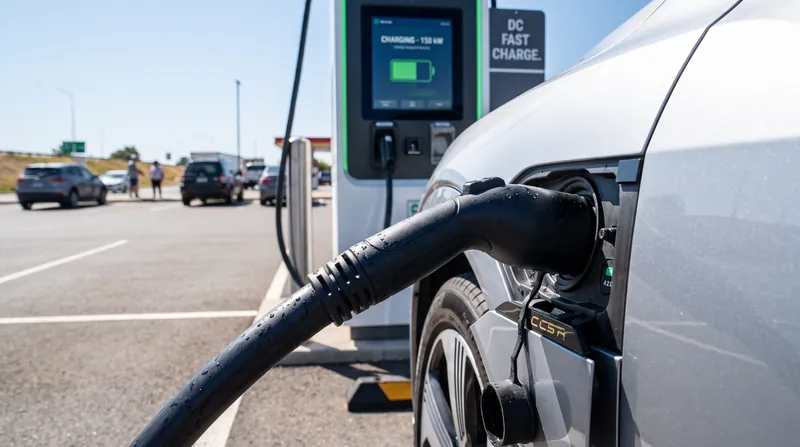
More in Automotive & Transportation
See all →F-150 Recall
Ford Begins Mailing Recall Letters to 223,000 F-150 Owners Over Fuel Tank Detachment Risk
4 sources
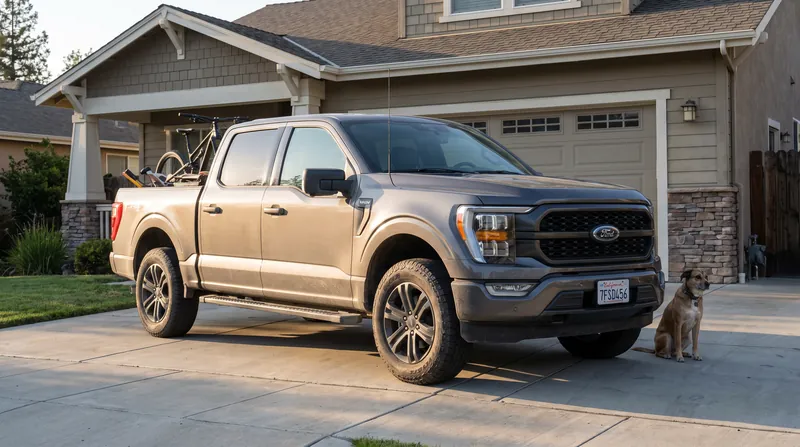
Tire Physics
The 5-to-1 Ratio: How Tire Aspect Ratio Dictates Cornering Stiffness and Ride Comfort
9 sources
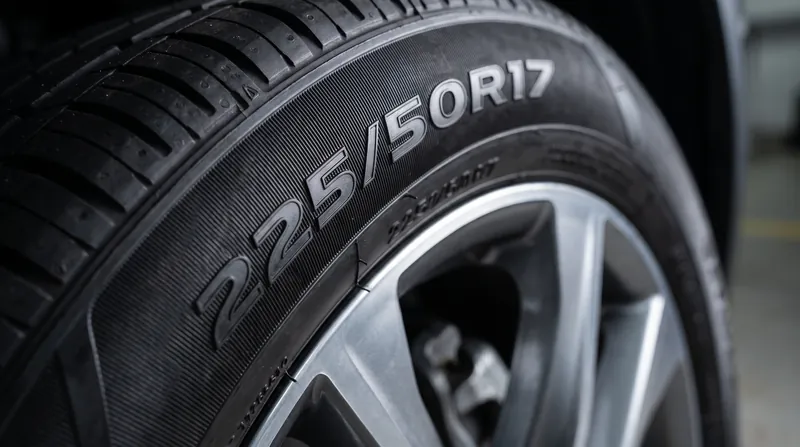
Aerodynamics
The 20 Percent Fuel Economy Gain: How Slipstreaming Reduces Aerodynamic Drag for Following Vehicles
8 sources
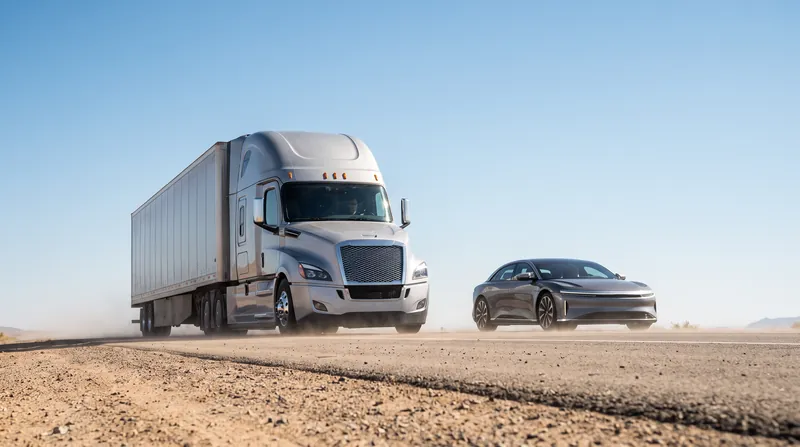
Aerodynamics
The 10-25 Percent Fuel Penalty: How Roof-Mounted Cargo Boxes Increase Aerodynamic Drag and Decrease Fuel Economy
4 sources

Comments
Every angle. Every day.
Get Automotive & Transportation stories with full source coverage and perspective breakdowns, free every day.