
Guidecar maintenanceRevision 1Updated
The Definitive Guide to Car Maintenance: Chemistry, Diagnostics, and Intervals
Modern vehicle reliability is governed by fluid chemistry and sensor data rather than mechanical friction. Understanding these systems allows owners to extend component lifespans and avoid catastrophic failures.

Share this story
In short
- Modern vehicle maintenance relies on time-based chemical degradation rather than mileage-based mechanical wear.
- Synthetic oils resist thermal breakdown, safely extending change intervals up to 15,000 miles.
- Mixing incompatible engine coolants creates an abrasive gel that destroys water pumps and head gaskets.
The era of the 3,000-mile oil change is over. Modern automotive engineering has transformed the vehicle from a mechanical assembly requiring constant friction mitigation into a chemical and electronic system governed by time and thermal management.[15]
For decades, owners tracked odometers to prevent catastrophic engine wear. Today, the most critical maintenance tasks involve managing fluid chemistry and monitoring microsecond sensor data across dozens of integrated control modules.[13][15]
Understanding how these systems operate—from the eutectic properties of engine coolant to the hygroscopic nature of brake fluid—allows owners to make informed decisions. This guide breaks down the science of modern car maintenance.[3][10]
The Modern Maintenance Schedule
The National Highway Traffic Safety Administration (NHTSA) and AAA have established baseline maintenance schedules that reflect the durability of modern components. While the owner's manual remains the ultimate authority, the industry standard has shifted toward longer intervals.[1]
Routine services like oil changes and tire rotations now typically fall between 5,000 and 10,000 miles. Major services are clustered around the 30,000, 60,000, and 90,000-mile marks, encompassing transmission fluid, spark plugs, and timing belts.[1]
However, many critical components degrade based on age rather than mileage. Tires must be replaced at six to ten years regardless of tread depth, while brake fluid and batteries require attention every two to three years due to chemical breakdown.[1][2]
Drivers must also account for "severe usage" conditions, which can cut factory intervals in half. Repeated short trips under five miles, stop-and-go city traffic, heavy towing, and extreme summer heat place disproportionate stress on fluids and filters.[2]
Synthetic Oil and the 3,000-Mile Myth
The persistent belief that engine oil must be changed every 3,000 miles is a relic of the conventional oil era. The California EPA has actively campaigned against this "3,000-mile myth," urging drivers to follow manufacturer intervals.
Modern synthetic oils use highly refined base stocks that resist thermal breakdown and oxidation far better than conventional petroleum. This chemical stability allows synthetic lubricants to maintain their viscosity and protective properties for 7,500 to 15,000 miles.
Independent tribology data confirms that frequent servicing offers no measurable benefit to engine longevity. Synthetic oils contain advanced detergents and dispersants that actively prevent sludge and varnish buildup, keeping complex oil galleries clean over extended intervals.
Viscosity stability is particularly crucial for modern engines equipped with variable valve timing. These systems rely on precise oil pressure to calibrate valve timing; degraded or excessively thick oil can alter this pressure, throwing the engine's timing out of specification.[15]
Coolant Chemistry and Eutectic Mixtures
Automotive cooling systems rely on precise chemical formulations to manage extreme temperatures. Pure 100 percent ethylene glycol actually freezes at a relatively mild minus 13 degrees Celsius (8.6 degrees Fahrenheit), making it unsuitable for winter protection on its own.[3]
When diluted with water, ethylene glycol forms a eutectic mixture that depresses the freezing point significantly. A 50/50 blend of ethylene glycol and water can achieve freeze protection down to minus 37 degrees Celsius, ensuring the engine block remains safe in severe climates.[3]
Beyond freeze protection, coolants contain inhibitor packages to prevent internal corrosion. Inorganic Acid Technology (IAT) uses silicates and phosphates to rapidly coat metal surfaces, but these minerals deplete quickly, requiring changes every two years or 30,000 miles.[4]
The Danger of Mixing Coolant Types
Modern vehicles predominantly use Organic Acid Technology (OAT) coolants, which employ carboxylates to protect specific corrosion sites. OAT coolants are free of silicates and can last up to five years or 150,000 miles, making them ideal for aluminum-heavy engines.[4][5]
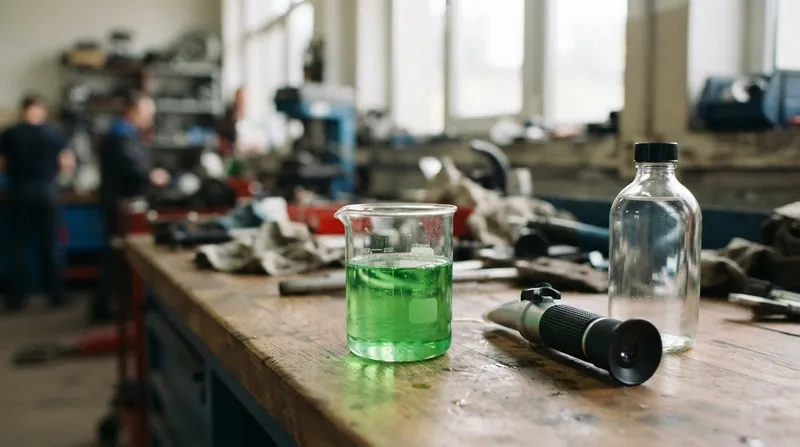
Mixing incompatible coolants—specifically traditional green IAT with modern orange or red OAT—triggers a destructive chemical reaction. The silicates in the IAT react with the organic acids, causing the inhibitors to drop out of solution.[5]
This reaction forms an abrasive, thick gel that clogs radiators, heater cores, and narrow cooling passages. The resulting sludge systematically destroys water pump seals and head gaskets, leading to catastrophic engine overheating and expensive repairs.[5]
Color is not a reliable indicator of coolant chemistry, as dyes are added purely for visual identification. Two coolants of identical translucent orange can rely on completely incompatible chemical platforms, making it essential to verify the specific technology required by the manufacturer.[4]
Fuel Pump Thermal Management
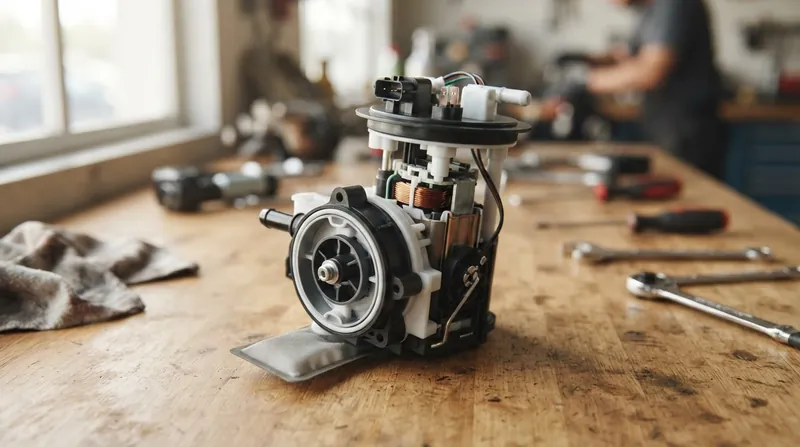
The electric fuel pump inside a modern gas tank is designed to operate completely submerged in gasoline. The fuel acts as both a vital lubricant for the moving parts and a liquid cooling jacket for the electric motor.[6][7]
Consistently driving with a low fuel tank exposes the pump to air, stripping away its primary cooling mechanism. The pump must also work harder to generate pressure, causing the internal copper windings to run significantly hotter.[6][7]
Repeated exposure to high temperatures weakens the electric motor over time, dramatically increasing the risk of premature failure. Mechanics universally recommend keeping the fuel tank at least a quarter full to ensure the pump remains adequately submerged and cooled.[6][7]
Low fuel levels also increase the risk of drawing sediment from the bottom of the tank into the fuel lines. Furthermore, empty space in the tank promotes condensation during temperature swings, introducing water into the fuel system that can cause sputtering and corrosion.[6]
Spark Plug Heat Ranges
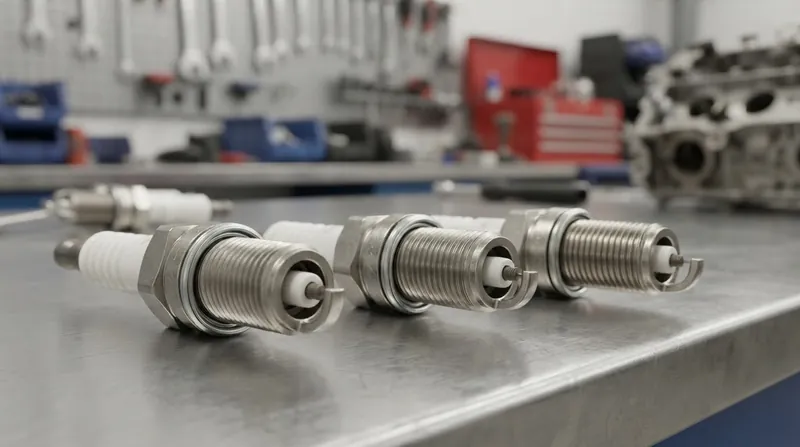
A spark plug's primary function is to ignite the air-fuel mixture, but it also acts as a critical heat exchanger. The spark plug must pull unwanted thermal energy away from the combustion chamber and transfer it into the cylinder head.[8]
The "heat range" of a spark plug dictates how rapidly it transfers this heat, not the temperature of its electrical arc. This rate is determined primarily by the length of the ceramic insulator nose surrounding the center electrode.[8]
A hotter plug features a longer ceramic nose, forcing the heat to travel further before dissipating, which keeps the firing tip hotter. If a plug is too hot, the tip temperature can exceed 800 degrees Celsius, causing the ceramic to glow and ignite the fuel prematurely.[8][9]
This pre-ignition dramatically raises cylinder pressure and can melt pistons. Conversely, if the plug is too cold, it will not reach the 475-degree Celsius self-cleaning temperature, allowing conductive carbon deposits to foul the electrode and cause misfires.[8][9]
Brake Fluid Hygroscopy
Brake fluid is the hydraulic lifeblood of a vehicle's stopping power, but it possesses a critical vulnerability: it is highly hygroscopic. The fluid actively absorbs moisture from the atmosphere through microscopic pores in rubber hoses and past reservoir seals.[10]
Fresh DOT 3 brake fluid boasts a dry boiling point of approximately 401 degrees Fahrenheit. However, as it absorbs water over time, this thermal threshold plummets. After absorbing just 3.7 percent water, the wet boiling point drops to around 284 degrees Fahrenheit.[10]
When heavy braking generates friction heat exceeding this lowered boiling point, the trapped water vaporizes into steam. Unlike liquid, gas is compressible, resulting in a spongy brake pedal and a terrifying loss of stopping power known as brake fade.[10]
Beyond boiling risks, moisture contamination accelerates the internal corrosion of expensive metal components. Water in the brake system rusts calipers, master cylinders, and anti-lock braking system (ABS) control valves, necessitating fluid replacement every two years regardless of mileage.[10]
Battery State of Charge
A standard automotive lead-acid battery is comprised of six individual cells connected in a series. Each healthy cell produces roughly 2.1 volts of electrical potential, meaning a fully charged 12-volt battery actually possesses a resting voltage of 12.6 volts.[11]
Measuring this open-circuit voltage after the vehicle has rested for several hours provides an accurate state of charge. A reading of 12.4 volts indicates the battery is at 75 percent capacity, while a drop to 12.2 volts means it is critically low at 50 percent.[11]
If the resting voltage falls to 12.0 volts or lower, the battery is effectively dead and has likely suffered internal sulfation damage. Once the engine is running, the alternator takes over, pushing the system voltage between 13.7 and 14.7 volts to recharge the cells.[11]
A fully charged battery may still fail to start a car if its overall health has deteriorated. While voltage indicates the state of charge, a professional conductance load test is required to verify that the battery can still deliver its rated Cold Cranking Amps.[11][15]
OBD-II Diagnostic Framework
When a modern vehicle detects a fault, it generates a five-character alphanumeric Diagnostic Trouble Code (DTC) defined by the SAE J2012 standard. The first character immediately isolates the issue to one of four primary physical domains.[12]
Codes beginning with "P" indicate powertrain issues, encompassing the engine, transmission, and emissions systems. "B" codes relate to the body, including airbags and climate control, while "C" codes cover the chassis, such as anti-lock brakes and stability control.[12]
The "U" prefix designates network and wiring faults, signaling a breakdown in communication between the vehicle's various electronic control modules. Understanding this standardized prefix system allows owners to quickly categorize a dashboard warning before visiting a mechanic.[12]
The second character of the code indicates whether the fault is generic or manufacturer-specific. A "0" denotes a generic code that applies universally across all brands, while a "1" signifies a proprietary code defined by the specific automaker.[12]
Microsecond Misfire Detection
Engine control modules do not rely on microphones to detect cylinder misfires; they use complex time-of-flight mathematics. The system monitors a high-resolution magnetic crankshaft position sensor to measure the exact microseconds it takes for the crankshaft to rotate between firing intervals.[13]
A healthy combustion event violently accelerates the crankshaft. If a cylinder misfires, it fails to contribute torque, causing a microscopic deceleration during that specific crank angle window.[13]
When this deceleration falls outside the computer's hardcoded tolerances, the module instantly flags a misfire. It can then isolate the exact failing cylinder, cut fuel to that injector to protect the catalytic converter, and illuminate the check engine light before the driver even feels a hesitation.[13]
In high-horsepower engines, this sensitive detection method can sometimes trigger false misfire codes. Massive torque outputs can cause the forged steel crankshaft to twist and flex, creating harmonics that disrupt the sensor's timing calculations even when combustion is perfect.[13][15]
In high-horsepower engines, this sensitive detection method can sometimes trigger false misfire codes.
EV Battery Degradation
The transition to electric vehicles has introduced new maintenance paradigms, primarily centered on high-voltage battery health. Early concerns about rapid capacity loss have been largely debunked by massive telematics studies tracking thousands of EVs in real-world conditions.[14]
Data from fleet analytics company Geotab reveals that modern liquid-cooled EV batteries degrade at an average rate of just 1.8 to 2.3 percent per year. Vehicles in the eight-to-nine-year-old cohort consistently retain approximately 85 percent of their original factory capacity.[14]
Degradation is not strictly linear; batteries typically experience an initial drop before stabilizing for years. While extreme heat and frequent DC fast charging can accelerate this wear, the vast majority of modern EV battery packs are engineered to outlast the vehicle's chassis.[14]
To maximize battery lifespan, experts recommend keeping the state of charge between 20 and 80 percent for daily driving. High resting charge levels stress the positive electrode, while very low charge levels stress the negative electrode, making extreme states detrimental to long-term health.[14]
Comparison
| Chemistry | Primary Inhibitors | Service Life | Best For |
|---|---|---|---|
| Inorganic Acid Technology (IAT) | Silicates and Phosphates | 2 years / 30,000 miles | Older cast-iron engines |
| Organic Acid Technology (OAT) | Carboxylates | 5 years / 150,000 miles | Modern aluminum engines |
| Hybrid Organic Acid Technology (HOAT) | Organic acids + low silicates | 5 years / 150,000 miles | Mixed-metal European/Asian engines |
How we did this
- Method
- Factlen synthesized fluid degradation rates and EV battery telematics data against traditional mileage schedules to isolate the primary driver of modern vehicle component failure.
- What we found
- The analysis reveals that modern automotive maintenance has fundamentally decoupled from mileage. Across both internal combustion and electric platforms, the primary failure modes are now driven by time-dependent chemical degradation rather than mechanical friction.
- What we worked from
- Brake fluid wet boiling point drop (3.7% water): 284°F — Phoenix Systems
- EV battery capacity retention after 8-9 years: 85% — EV Database
- Lead-acid battery critical discharge threshold: 12.2 Volts — Yauneidak
- Limits of this analysis
- This analysis applies to modern vehicles utilizing synthetic fluids and advanced electronics; older vehicles with conventional oils and IAT coolants remain highly sensitive to mechanical wear and mileage-based intervals.
Definitions
- Hygroscopic
- The physical property of a substance, such as brake fluid, to actively absorb moisture from the surrounding atmosphere.
- Eutectic Mixture
- A precise blend of substances, like ethylene glycol and water, that freezes at a lower temperature than any of its individual components.
- Tribology
- The science of interacting surfaces in relative motion, focusing on friction, wear, and lubrication in engines.
- State of Charge
- The current capacity of a battery expressed as a percentage, directly correlated to its resting open-circuit voltage.
- Carboxylates
- Organic acids used in modern OAT coolants that selectively bond to microscopic corrosion sites to protect metal surfaces.
Questions & answers
Why does my fuel pump need a quarter tank of gas?
The electric motor relies on being submerged in gasoline for liquid cooling and lubrication. Running low exposes it to air, causing overheating and premature failure.
Can I mix green and orange engine coolant?
No. Mixing traditional green IAT coolant with modern orange OAT coolant causes the silicates to drop out of solution, forming an abrasive gel that clogs the system.
What does a 12.2-volt battery reading mean?
A resting voltage of 12.2 volts indicates the lead-acid battery is critically low at 50 percent capacity and needs immediate recharging to prevent sulfation damage.
How do engine computers detect a misfire?
The engine control module measures the microsecond acceleration of the crankshaft. If a cylinder misfires, the crankshaft momentarily decelerates, triggering a fault code.
Do EV batteries need to be replaced frequently?
No. Telematics data shows modern liquid-cooled EV batteries degrade by only about 2 percent per year, retaining 85 percent capacity after eight to nine years.
What changed
- · Revision 1Published.
Related explainers
- Pure Ethylene Glycol Freezes at Minus 13 Celsius: How Water Creates a Eutectic Mixture
- Why Driving on an Empty Tank Burns Out Your Car's Fuel Pump
- The P, B, C, and U Framework: How the First Digit of a Diagnostic Trouble Code Identifies the Vehicle System
- Brake Fluid Hygroscopy: How Water Absorption Lowers the Boiling Point and Causes Pedal Fade
- Engine Control Modules Use Crankshaft Speed Fluctuations to Pinpoint Cylinder Misfires
- How Spark Plug Heat Ranges Use Ceramic Insulator Length to Prevent Engine Pre-Ignition and Carbon Fouling
- Synthetic vs. Conventional Engine Oil: What the Evidence Says About Change Intervals and Engine Longevity
- The 12.6 Volt Minimum: How Open-Circuit Voltage Indicates a Lead-Acid Battery's State of Charge
- Why Modern EV Batteries Retain Over 85% Capacity After Nine Years
- Silicate vs. Organic Acid Technology: Why Mixing Coolant Types Destroys Water Pumps and Head Gaskets
- Automotive Engineers
- Focus on thermal management, chemical stability, and sensor tolerances in modern vehicle design.
- Fleet Managers
- Prioritize telematics data, extended service intervals, and predictive maintenance to reduce vehicle downtime.
- DIY Mechanics
- Value standardized diagnostics like OBD-II codes and accessible maintenance schedules to perform home repairs.
Perspectives this story doesn't cover
- Independent repair shop owners
- Used car buyers
Sources
Source coverage
15 outlets
3 viewpoints surfaced














- [1]Caro Maintenance AppDIY Mechanics
Car Maintenance Schedule by Mileage
Read on Caro Maintenance App → - [2]James Hodge Hyundai
Monthly Car Maintenance Checklist: 12 Things to Check
Read on James Hodge Hyundai → - [3]Alliance ChemicalAutomotive Engineers
The Engineer's Guide to Ethylene Glycol for Heat Transfer Systems
Read on Alliance Chemical → - [4]GAF LEDPFleet Managers
Coolant Chemistry: Why Additive Packages Clash
Read on GAF LEDP → - [5]AutoZoneDIY Mechanics
What Happens If You Mix Incompatible Coolant Types?
Read on AutoZone → - [6]Three Suns Auto Care
Fuel Pumps Rely on Gas for Cooling
Read on Three Suns Auto Care → - [7]Blue Springs Ford Parts
Causes of Fuel Pump Failure
Read on Blue Springs Ford Parts → - [8]Brisk USAAutomotive Engineers
Spark Plug Heat Range Explained
Read on Brisk USA → - [9]NGK Spark PlugsAutomotive Engineers
Spark Plug Basics and Pre-Ignition
Read on NGK Spark Plugs → - [10]Phoenix Systems
Brake Fluid Boiling Point and Hygroscopy
Read on Phoenix Systems → - [11]Yauneidak
Lead-Acid Battery State of Charge and Resting Voltage
Read on Yauneidak → - [12]SteerDIY Mechanics
OBD-II Diagnostic Trouble Codes (DTCs)
Read on Steer → - [13]PatSnap
Crankshaft Angular Velocity Analysis for Misfire Detection
Read on PatSnap → - [14]EV DatabaseFleet Managers
EV Battery Degradation and Telematics Data
Read on EV Database → - [15]Factlen Editorial Team
Synthesis by Factlen editorial team
Read on Factlen Editorial Team →

More in Automotive & Transportation
See all →Vehicle Autonomy
The Definitive Guide to Autonomous Driving Technology
10 sources

Automotive Engineering
Why Driving on an Empty Tank Burns Out Your Car's Fuel Pump
3 sources
Fluid Dynamics
Pure Ethylene Glycol Freezes at Minus 13 Celsius: How Water Creates a Eutectic Mixture
6 sources
Engine Tuning
How Spark Plug Heat Ranges Use Ceramic Insulator Length to Prevent Engine Pre-Ignition and Carbon Fouling
4 sources
Comments
Every angle. Every day.
Get Automotive & Transportation stories with full source coverage and perspective breakdowns, free every day.