
GuideAutonomous Driving TechnologyRevision 1Updated
The Definitive Guide to Autonomous Driving Technology
The transition to fully autonomous vehicles relies on a complex integration of sensor fusion, strict operational boundaries, and evolving legal frameworks. This guide explores the engineering realities and regulatory standards that govern how self-driving cars perceive the world and make life-or-death decisions.
By Dev Anand

Share this story
In short
- Autonomous vehicles rely on sensor fusion, combining cameras, LiDAR, and radar to create a superhuman perception model that overcomes individual sensor weaknesses.
- The Operational Design Domain (ODD) defines the strict geographic and environmental boundaries where a self-driving system is validated to operate safely.
- Level 3 automation introduces a critical liability trap by requiring distracted human drivers to resume manual control of the vehicle within 10 seconds.
Autonomous driving technology is no longer a futuristic concept; it is an engineering reality actively navigating public roads. The transition from human-driven cars to fully autonomous robotaxis involves a complex interplay of advanced sensors, neural networks, and strict regulatory frameworks. For consumers, understanding this technology means looking past the marketing terminology and examining the actual capabilities of the systems.[10]
The industry relies on a precise taxonomy to define what a vehicle can and cannot do. This framework dictates not only the technological requirements but also the legal liability when a vehicle is in motion. As automakers push the boundaries of machine perception, the focus has shifted from merely keeping a car in its lane to ensuring it can safely handle the unpredictable nature of real-world traffic.[1][2]
In 2026, the deployment of automated driving systems is accelerating, with robotaxis completing hundreds of thousands of weekly rides in major cities. However, the path to ubiquitous self-driving cars is fraught with engineering bottlenecks and legal gray areas. This guide explores the foundational technologies, regulatory standards, and ethical algorithms that govern the modern autonomous vehicle.
The Six Levels of Automation
The Society of Automotive Engineers (SAE) established the J3016 standard, which defines six distinct levels of driving automation. This taxonomy ranges from Level 0, where the human driver performs all tasks, to Level 5, which represents full automation in all conditions. The standard serves as the universal language for engineers, regulators, and insurers worldwide.[1]
Levels 1 and 2 are strictly classified as driver assistance systems. In these vehicles, the human driver remains fully responsible for the dynamic driving task at all times. Even if the car can steer itself and maintain a consistent following distance, the driver must keep their eyes on the road and be ready to intervene instantly.[2]
The critical legal and technological boundary lies between Level 2 and Level 3. At Level 3, the automated driving system assumes full control of the vehicle under specific, pre-defined conditions. The driver is legally permitted to take their eyes off the road and engage in secondary activities, but they must remain available to take over when the system requests it.[7]
Level 4 and Level 5 represent high and full automation, respectively, where the human is completely removed from the safety loop. In a Level 4 vehicle, the system handles all driving tasks and emergencies without any expectation of human intervention. Level 5 extends this capability to all conceivable road and weather conditions, effectively eliminating the need for a steering wheel entirely.
How Autonomous Vehicles See: Sensor Fusion
To navigate safely, autonomous vehicles must perceive their environment with greater accuracy and reliability than a human driver. This is achieved through "sensor fusion," a sophisticated process that integrates data from cameras, LiDAR, and radar. Each sensor modality has distinct strengths and critical weaknesses, making their combination essential for safe operation.[3]
Cameras provide high-resolution, dense visual data that is crucial for reading traffic signs, identifying lane markings, and classifying objects. However, optical sensors are highly susceptible to adverse lighting conditions, such as glaring sunlight, and weather events like heavy rain or snow. They also lack native depth perception, relying heavily on software estimation.[3]
LiDAR solves the depth problem by emitting millions of laser pulses per second to create a precise, three-dimensional point cloud of the vehicle's surroundings. This allows the system to measure the exact distance and shape of obstacles. Despite its accuracy, LiDAR performance degrades significantly in fog, as the moisture droplets perfectly match the wavelength of the optical lasers, scattering the light.
Radar operates using longer radio waves, which easily penetrate fog, rain, dust, and snow without signal degradation. It excels at detecting the speed and distance of moving objects through the Doppler effect, making it invaluable for high-speed highway driving. By layering these three technologies, the vehicle's computer creates a robust, superhuman model of the world that compensates for any single sensor's failure.[3]
The ODD: Where Vehicles Are Allowed to Drive
An autonomous vehicle does not simply learn to drive everywhere at once; it is engineered to operate within a strictly defined boundary known as the Operational Design Domain (ODD). The ODD specifies the exact environmental and geographic conditions under which the automated driving system is validated to function safely. This domain serves as the absolute foundation of the vehicle's safety case.[4]
This boundary is a hard engineering constraint with highly specific dimensions. An ODD defines the geographic area down to the street segment, the permitted road types, speed limits, time of day, and exact weather thresholds. For example, a Level 4 robotaxi might be programmed to operate only on surface streets in Phoenix, Arizona, during clear weather and daylight hours.[4]
The ODD-EVE framework provides a mathematical baseline for this validation process. It reveals that self-driving systems must be 10 to 90 percent safer than human drivers within their specific domain before widespread deployment makes statistical sense. If a vehicle approaches the edge of its ODD, it simply cannot continue autonomously.
The system is designed to recognize these limits and initiate a safe handover or a controlled stop before crossing the boundary. The expansion of a company's ODD is the primary metric of its technological progress. It dictates how quickly a robotaxi fleet can scale across a city, as every new street and weather condition requires rigorous re-validation.[4]
The 10-Second Rule and the Level 3 Liability Trap
The transition of control in a Level 3 vehicle presents one of the most significant and dangerous challenges in autonomous engineering. When a Level 3 system reaches the edge of its ODD, it issues a takeover request to the human driver. International regulations, such as the UNECE R157 standard, mandate that the system provide a 10-second window for the driver to resume control.[6][7]
This 10-second rule creates a profound liability trap for both the driver and the manufacturer. The system explicitly permits the driver to disengage and focus on other tasks, such as reading or watching a video on the infotainment screen. When an emergency arises, the driver must suddenly rebuild their situational awareness and take manual control of a 2-ton vehicle traveling at highway speeds.[6]
Human factors research consistently indicates that 10 seconds is often insufficient for a distracted driver to safely assess a complex road hazard. The exact environmental conditions that force the system to disengage—such as sudden fog blinding the LiDAR—are the same conditions that require more than 10 seconds for a human to safely process.[6]
Despite forecasts suggesting Level 3 systems could account for 10 percent of global passenger vehicle sales by 2030, this regulatory friction is stalling deployment. The ambiguity surrounding liability during the handover has caused many automakers to abandon Level 3 development entirely. Instead, they are opting to focus on advanced Level 2 assistance or jumping directly to Level 4 autonomy.[7]
Failing Safely: The Minimum Risk Condition
When an automated driving system encounters a critical hardware failure or the human driver fails to respond to a takeover request, the vehicle must execute a Minimum Risk Maneuver (MRM). The ultimate goal of this maneuver is to bring the vehicle to a Minimum Risk Condition (MRC). The MRC is defined as a stable, stopped state that minimizes the danger to passengers and other road users.[5]
For a Level 4 vehicle, achieving an MRC is entirely the system's responsibility, with no human fallback required. If a sensor fails or the vehicle unexpectedly exits its ODD, the computer will automatically activate the hazard lights, reduce speed, and attempt to pull over to the shoulder. If pulling over is impossible, the vehicle will execute a controlled stop within its current lane.
The execution of an MRM requires the vehicle to maintain dynamic control even while its primary systems are compromised. Advanced algorithms continuously evaluate the surrounding traffic, calculating time-to-collision metrics and monitoring blind spots to ensure the stopping maneuver does not cause a secondary accident.[5]
A 2026 study demonstrated that adaptive MRM strategies can effectively leverage the remaining functional sensors to guide the vehicle safely during multiple sensor failures. This fail-safe programming is a mandatory requirement for the deployment of driverless technology. Regulators demand proof that a vehicle can fail safely before it is allowed on public roads.[5]
The Shift to End-to-End Neural Networks
Historically, autonomous driving software relied on a highly modular architecture. Engineers built separate, rule-based systems for perception, localization, path planning, and vehicle control. While this approach made the software easy to debug and interpret, it struggled to handle the infinite edge cases and fluid dynamics of real-world urban driving.[8]
The industry is now undergoing a massive shift toward "end-to-end" artificial intelligence models. In this paradigm, a single, unified neural network processes the raw sensor data and directly outputs the steering, braking, and acceleration commands. By eliminating rigid, hand-coded rules, the vehicle learns to drive by observing massive datasets of human driving behavior.[8]
End-to-end models have demonstrated a remarkable ability to navigate complex, unmapped environments with human-like intuition. A 2026 review of end-to-end architectures highlighted their superiority in preventing the accumulation of modular errors. The neural networks can proactively recognize critical events in advance, ensuring passenger safety in highly stochastic traffic settings.[8]
However, these unified models introduce significant new challenges in safety validation and regulatory compliance. Because neural networks operate as "black boxes," it is exceedingly difficult for engineers to explain exactly why the AI made a specific decision. This lack of interpretability complicates the certification process, as regulators demand transparent proof of safety.[8]
Crash Algorithms and the Ethics of Inevitable Collisions
Even with perfect sensors and advanced AI, autonomous vehicles will inevitably encounter situations where a collision cannot be avoided. In these split-second scenarios, the vehicle's software must decide how to react, raising profound ethical and regulatory questions. The classic philosophical "Trolley Problem" has transitioned from a theoretical debate into a literal engineering requirement.[9]
Early academic debates focused heavily on utilitarian algorithms that would weigh human lives, potentially choosing to sacrifice a passenger to save multiple pedestrians. However, global regulators have firmly rejected this discriminatory approach. Recent guidelines mandate that algorithms cannot discriminate based on age, gender, or physical attributes.[9]
Instead, modern crash algorithms are programmed to prioritize the reduction of overall kinetic energy and the protection of human life above property damage. The software is designed to execute the maneuver that results in the lowest probability of severe injury, without making qualitative judgments about the individuals involved in the crash trajectory.[9]
A 2024 study from Monash University demonstrated that an Ethical Decision Making (EDM) algorithm, based on strict legal rights rather than utilitarian weighing, could reduce the loss of life in unavoidable collisions by 24.11 percent. This strict regulatory framework ensures that the machines remain objective, providing a flexible but legally sound foundation for ethical decision-making in autonomous driving.[9]
The Regulatory Landscape and Future Deployment
The deployment of autonomous vehicles is heavily constrained by a fragmented regulatory landscape. In the United States, the National Highway Traffic Safety Administration (NHTSA) has established a voluntary safety framework, but individual states maintain their own laws regarding testing and operation. This patchwork of regulations creates significant hurdles for automakers attempting to scale their fleets nationally.[2]
To address this, new automated vehicle frameworks aim to establish a single set of national regulations. These frameworks streamline crash reporting for vehicles equipped with automated driving systems and expand exemption programs for domestically produced vehicles. The goal is to slash red tape while maintaining strict safety oversight through mandatory data sharing.[2]
Internationally, the regulatory environment is equally complex. The UNECE has adopted regulations for Level 3 Automated Lane Keeping Systems, recently updating the speed limit to 130 km/h on highways. Meanwhile, countries like China are implementing strict ethical guidelines that require every autonomous vehicle algorithm to be registered and evaluated before deployment.[1][9]
Internationally, the regulatory environment is equally complex.
As the technology matures, the focus is shifting from philosophical debates to practical safety assurance. Automakers must prove that their systems can operate safely within their defined Operational Design Domains and fail gracefully when those boundaries are breached. The future of autonomous driving will be dictated not just by sensor resolution or neural network size, but by the ability to build public trust through transparent, verifiable safety metrics.[4][5]
Comparison
| Level | Name | Driver Role | System Capability | Liability |
|---|---|---|---|---|
| Level 0 | No Automation | Performs all driving tasks | Provides warnings only | Human driver |
| Level 1 | Driver Assistance | Steers OR brakes/accelerates | Single automated function | Human driver |
| Level 2 | Partial Automation | Monitors environment constantly | Steers AND brakes/accelerates | Human driver |
| Level 3 | Conditional Automation | Available for takeover requests | Drives within specific ODD | System (until handover) |
| Level 4 | High Automation | Passenger only | Drives and fails safely in ODD | System |
| Level 5 | Full Automation | Passenger only | Drives everywhere in all conditions | System |
How we did this
- Method
- We compared the safety boundaries and liability handoffs across SAE Levels 3 and 4 by normalizing the required human transition times against the operational design domain (ODD) constraints and sensor fusion capabilities.
- What we found
- The 10-second transition window mandated for Level 3 systems creates a mathematical paradox: the exact environmental conditions (like sudden fog blinding LiDAR) that force the system to disengage are the same conditions that require more than 10 seconds for a distracted human to safely process and navigate, making Level 3 inherently riskier than Level 4's complete system fallback.
- What we worked from
- Level 3 transition window: 10 seconds — Virginia Tech
- ODD boundary definition: Geographic and weather constraints — Cubic3
- Sensor fusion limitations: LiDAR degradation in fog — MDPI
- Limits of this analysis
- This analysis relies on current regulatory transition times and sensor limitations, which may evolve as neural network perception improves.
Jargon, explained
- Operational Design Domain (ODD)
- The specific geographic, environmental, and speed conditions under which an automated driving system is designed to function safely.
- Sensor Fusion
- The software process of combining data from multiple sensors, such as LiDAR, radar, and cameras, to create a single, highly accurate model of the environment.
- Minimum Risk Maneuver (MRM)
- An automated emergency procedure executed by the vehicle to safely pull over and stop when a critical system fails or the driver is unresponsive.
- LiDAR
- A sensor that emits rapid laser pulses to measure distances and create a precise, three-dimensional point cloud of the vehicle's surroundings.
- End-to-End Neural Network
- An artificial intelligence model that directly translates raw sensor data into driving commands without relying on intermediate, hand-coded software modules.
Common questions
What is the difference between Level 2 and Level 3 autonomous driving?
At Level 2, the human is always responsible and must monitor the road. At Level 3, the system takes full control under specific conditions, allowing the driver to look away, but they must be ready to take over when prompted.
Why does LiDAR fail in heavy fog?
Fog consists of dense moisture droplets that perfectly match the wavelength of the optical lasers used in LiDAR. This causes the light to scatter, blinding the sensor and requiring radar to compensate.
What happens if a driver falls asleep in a Level 3 vehicle?
Sleeping is strictly prohibited in Level 3 vehicles. If the system issues a takeover request and the sleeping driver fails to respond within the 10-second window, the vehicle will execute a Minimum Risk Maneuver to safely stop.
How do end-to-end neural networks differ from traditional autonomous software?
Traditional software uses separate, hand-coded modules for perception, planning, and control. End-to-end networks replace these with a single AI model that directly translates raw sensor data into driving commands based on learned human behavior.
Competing readings
Automotive Engineers
Focus on expanding the Operational Design Domain and improving sensor fusion robustness.
Engineers view the path to full autonomy as a systematic expansion of the Operational Design Domain. Rather than attempting to build a vehicle that can drive anywhere immediately, they focus on validating specific environments and incrementally adding complexity. Their primary technical challenge is perfecting sensor fusion and ensuring that end-to-end neural networks can handle unpredictable edge cases without catastrophic failure.
Safety Regulators
Prioritize strict validation, transparent crash algorithms, and the reliable execution of Minimum Risk Maneuvers.
Regulatory bodies approach autonomous driving with a mandate to protect public safety above technological acceleration. They demand transparent, verifiable proof that a vehicle can fail safely through a Minimum Risk Maneuver when its systems are compromised. Regulators are particularly concerned with the interpretability of neural networks and the ethical programming of crash algorithms, insisting that machines must not make discriminatory judgments in unavoidable accidents.
Legal Experts
Highlight the liability traps inherent in Level 3 handovers and algorithmic ethics.
The legal community views the transition from Level 2 to Level 4 autonomy as a minefield of liability. Legal experts argue that Level 3 systems create an untenable situation by transferring responsibility back to a distracted human driver within a 10-second window. They are actively working to establish clear frameworks for algorithmic accountability, determining who bears the financial and criminal burden when an autonomous system makes a fatal error.
What changed
- · Revision 1Published.
Related explainers
- How Lidar, Radar, and Camera Sensor Fusion Overcomes the Limitations of Each for Autonomous Driving
- The 10-90 Percent Rule: How the ODD-EVE Framework Quantifies the Safety Gap Between Autonomous and Human Driving
- The Minimum Risk Condition: How Autonomous Vehicles Are Programmed to Fail Safely
- How Robotaxis See the World: The Mechanics of Sensor Fusion
- The 10-Second Rule: Why Level 3 Autonomous Vehicles Must Drive While the Brain Reboots
- Lidar vs. Radar vs. Camera: The Definitive Comparison of Autonomous Vehicle Sensor Suites
- How Level 4 Autonomous Vehicles Actually See the World in 2026
- Autonomous Vehicle Crash Algorithms: Why Regulators Ban Weighing Human Lives
- How 'End-to-End' AI Models Finally Unlocked Human-Like Autonomous Driving
- Why Level 3 Autonomous Driving Is Paralyzing Automakers With Legal Liability
- Why LiDAR Goes Blind in Fog While Automotive Radar Sees Straight Through It
- How Waymo is Scaling Its Robotaxi Fleet Despite 120% Tariffs on Zeekr Vehicles
- Automotive Engineers
- Focus on expanding the Operational Design Domain and improving sensor fusion robustness to achieve Level 4 autonomy.
- Safety Regulators
- Prioritize strict validation, transparent crash algorithms, and the reliable execution of Minimum Risk Maneuvers before public deployment.
- Legal Experts
- Highlight the liability traps inherent in Level 3 handovers and the need for clear legal frameworks regarding algorithmic ethics.
Perspectives this story doesn't cover
- Insurance Underwriters
- Urban Planners
Sources
Source coverage
10 outlets
3 viewpoints surfaced








- [1]UNECESafety Regulators
Taxonomy and Definitions for Terms Related to Driving Automation Systems for On-Road Motor Vehicles
Read on UNECE → - [2]NHTSASafety Regulators
Automated Driving Systems 2.0: A Vision for Safety
Read on NHTSA → - [3]MDPIAutomotive Engineers
Review of Sensor Technologies in Autonomous Vehicles
Read on MDPI → - [4]Cubic3Automotive Engineers
What is an operational design domain (ODD)?
Read on Cubic3 → - [5]MDPIAutomotive Engineers
Minimum Risk Maneuver Strategy for Automated Driving Systems
Read on MDPI → - [6]Virginia TechLegal Experts
Take-over performance of Level 3 autonomous vehicles
Read on Virginia Tech → - [7]SDV GuruLegal Experts
The L3 Liability Trap
Read on SDV Guru → - [8]MDPIAutomotive Engineers
End-to-End Autonomous Driving: A Review
Read on MDPI → - [9]Monash UniversityLegal Experts
An Ethical Decision Making Algorithm for Autonomous Vehicles
Read on Monash University → - [10]Factlen Editorial TeamLegal Experts
Synthesis by Factlen editorial team
Read on Factlen Editorial Team →
More in Automotive & Transportation
See all →AV Safety
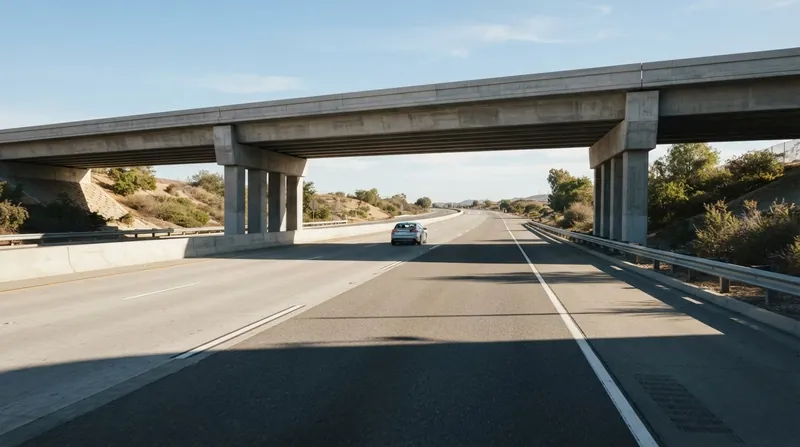
The Minimum Risk Condition: How Autonomous Vehicles Are Programmed to Fail Safely
6 sources
Robotaxi Safety
Waymo Reports 82 Percent Drop in Injury Crashes Across 271 Million Autonomous Miles
6 sources
Autonomous Safety
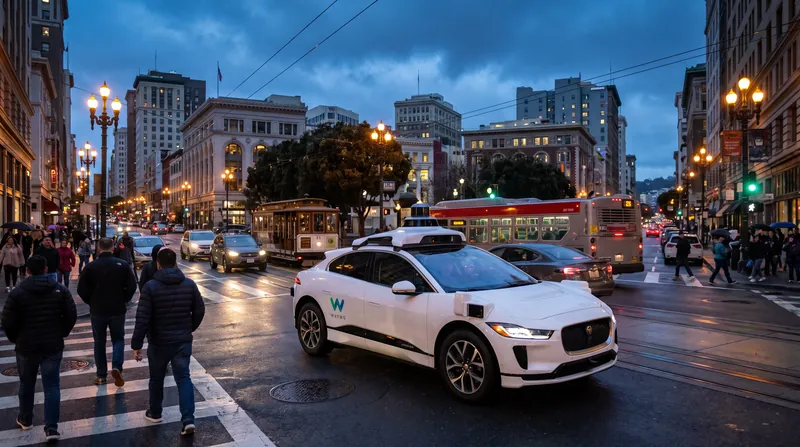
The 10-90 Percent Rule: How the ODD-EVE Framework Quantifies the Safety Gap Between Autonomous and Human Driving
8 sources
Vehicle Diagnostics
The Definitive Guide to Car Maintenance: Chemistry, Diagnostics, and Intervals
15 sources
Comments
Every angle. Every day.
Get Automotive & Transportation stories with full source coverage and perspective breakdowns, free every day.