
GuideClimate Change and Environmental SustainabilityRevision 1Updated
Climate Change and Environmental Sustainability
A comprehensive overview of the physical science, economic metrics, legal frameworks, and technological solutions driving the global response to the climate crisis.

Share this story
In short
- Human activity has pushed the Earth system beyond six of its nine critical safe operating boundaries.
- The 100-Year Global Warming Potential metric standardizes the climate impact of different greenhouse gases relative to carbon dioxide.
- The EPA's 2009 Endangerment Finding serves as the legal foundation for federal climate policy and emissions regulation in the United States.
Climate change and environmental sustainability represent the defining systemic challenge of the twenty-first century. As global industrial activity continues to alter the atmospheric chemistry of the planet, the consequences have cascaded across every major Earth system. Understanding this crisis requires navigating a complex web of physical science, economic valuation, and regulatory law.[15]
The physical reality of the crisis is written in the temperature record. The World Meteorological Organization and NASA have consistently documented unprecedented thermal anomalies, with recent years shattering historical baselines. These rising temperatures are not isolated anomalies; they represent a fundamental shift in the energy balance of the Earth system.[3][9]
This guide serves as a comprehensive foundation for understanding the mechanics of environmental sustainability. It examines how greenhouse gases are measured, how their economic damages are calculated, and how legal frameworks attempt to constrain them. It also explores the emerging technological solutions designed to reconcile human development with ecological limits.[15]
The Physical Reality of a Warming Climate
The stability of the Holocene epoch, which allowed human civilization to flourish, is actively degrading. Researchers have established a framework of nine planetary boundaries that regulate the stability of the Earth system. According to recent assessments, human activity has now pushed the planet beyond six of these critical safe operating limits.[4]
The most visible consequence of crossing these boundaries is the rapid accumulation of thermal energy in the lower atmosphere. The National Oceanic and Atmospheric Administration tracks this global temperature rise, noting that the rate of warming has accelerated significantly since the late twentieth century. This excess heat drives extreme weather events and disrupts established precipitation patterns.[8]
The human toll of this physical shift is already measurable. The Lancet Countdown on health and climate change reports that delayed action is exposing populations to record-breaking health threats. From heat-related mortality to the expanded geographic range of vector-borne diseases, the physiological limits of human endurance are being tested by the changing climate.[6]
Measuring this shift accurately is complicated by shifting baselines. Meteorological agencies traditionally use a rolling thirty-year standard normal period to define average temperatures. As this thirty-year window moves forward in time, it absorbs decades of anthropogenic warming, which can inadvertently mask the true rate of climate change by making current extremes appear statistically closer to average.[1]
Global Trajectories and the Emissions Gap
The international community established a target to limit global warming to 1.5 degrees Celsius above pre-industrial levels. However, the United Nations Environment Programme warns that current national climate pledges fall structurally short of this goal. Their annual emissions gap analysis highlights a vast discrepancy between diplomatic promises and actual atmospheric outcomes.[2]
While the absolute volume of emissions continues to grow, the historical rate of that expansion has begun to plateau. Data tracking global carbon dioxide and greenhouse gas emissions shows that the deployment of renewable energy has successfully decoupled economic growth from emissions growth in several major economies. Yet, the aggregate global trajectory remains misaligned with the Paris Agreement.[7]
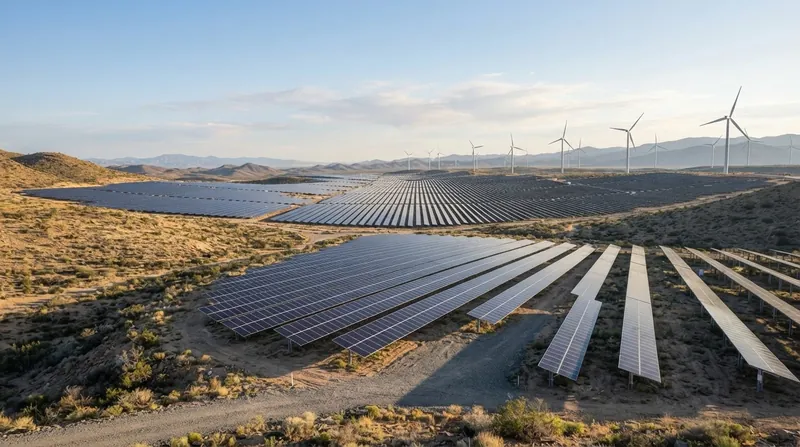
The International Energy Agency projects that the global energy transition is accelerating, driven by the rapid cost deflation of solar and wind technologies. Their modeling suggests that while fossil fuel demand may peak before 2030, the subsequent decline must be aggressively steep to avert severe climate disruption. The transition requires a wholesale rewiring of the global economy.[5]
"We need global mobilization on a scale and pace never seen before," the United Nations Environment Programme stated in its recent assessment. The report emphasizes that incremental policy adjustments are no longer sufficient. Achieving the necessary decarbonization requires immediate, systemic interventions across the power, transportation, and agricultural sectors.[2]
Standardizing the Climate Impact of Gases
Not all greenhouse gases trap heat equally, making direct comparisons difficult. To solve this, the Intergovernmental Panel on Climate Change established the Global Warming Potential metric. This index measures how much energy the emission of one ton of a gas will absorb over a given period, relative to one ton of carbon dioxide.[1][10]
Carbon dioxide serves as the baseline, possessing a Global Warming Potential of exactly one. Because it remains in the climate system for thousands of years, it dictates the long-term trajectory of global warming. Other gases are measured against this baseline to calculate their carbon dioxide equivalent, allowing regulators to aggregate different pollutants into a single carbon footprint.[10]
The timeframe chosen for this calculation fundamentally alters the perceived impact of short-lived pollutants. The Environmental Protection Agency notes that methane has a Global Warming Potential of 27 to 30 over a century. However, because methane degrades in about twelve years, its twenty-year potential is roughly 81 to 83, making it a critical target for near-term climate action.[10]
At the extreme end of the spectrum are synthetic fluorinated gases. Sulfur hexafluoride, an artificial gas used as an electrical insulator in high-voltage grid equipment, is exceptionally potent. Its unique molecular structure and 3,200-year atmospheric lifetime give it a 100-year Global Warming Potential of roughly 23,500, making it the most powerful greenhouse gas ever evaluated.[10]
The Legal Foundation of Emissions Control
In the United States, the regulatory apparatus governing these gases rests on a single administrative pillar. The Endangerment Finding is a formal determination issued by the Environmental Protection Agency in 2009. It concluded that greenhouse gases endanger the public health and welfare of current and future generations, triggering a statutory obligation to regulate them.[13]
This determination did not occur in a vacuum. It was compelled by the 2007 Supreme Court decision in Massachusetts v. EPA, which ruled that greenhouse gases unambiguously qualify as air pollutants under the Clean Air Act. Once the agency confirmed the scientific reality of the danger, the law required the federal government to establish emissions standards.[13]
For nearly two decades, the Endangerment Finding has served as the legal backbone for federal climate policy. It provided the authority for vehicle fuel efficiency standards, power plant emissions caps, and methane leak regulations. Because it bridges the gap between atmospheric science and administrative law, it remains the most consequential environmental document in modern American history.[13]
Consequently, the finding is subject to intense political volatility. Administrations hostile to climate action have repeatedly targeted the Endangerment Finding for rescission, arguing that the agency lacks the authority to regulate global pollutants under statutes designed for local smog. The survival of this finding dictates the capacity of the United States to enforce decarbonization.[13]
Calculating the Economic Damage of Pollution
While the Endangerment Finding provides the legal mandate to regulate, the stringency of those regulations depends on economic valuation. The Social Cost of Carbon is a metric that estimates the long-term economic damage caused by emitting one additional ton of carbon dioxide. It translates physical climate hazards into a monetary cost used in cost-benefit analyses.[14]
To calculate this figure, economists use integrated assessment models that simulate the global economy and the climate system. These models project how a ton of carbon dioxide alters temperatures, and how those temperatures subsequently depress agricultural yields, damage coastal property, and reduce labor productivity. The resulting damages are then discounted back to their present value.[14]
The choice of the discount rate is the most fiercely debated variable in this calculation. A higher discount rate implies that society places less value on the welfare of future generations, resulting in a lower carbon cost. Conversely, a lower discount rate treats future climate damages with greater urgency, justifying far more aggressive regulatory interventions today.[14]
This metric dictates the ambition of federal policy. When the estimated cost shifts from a domestic-only valuation of a few dollars per ton to a global valuation approaching $190 per ton, the regulatory math changes entirely. A high Social Cost of Carbon allows agencies to justify the massive capital expenditures required to transition the national energy grid.[14]
Lifecycle Assessments and Material Footprints
Beyond macroeconomic policy, sustainability requires granular accounting of industrial supply chains. A Life Cycle Assessment is a standardized methodology used to evaluate the environmental impacts of a product from cradle to grave. It tallies the ecological debt incurred during raw material extraction, manufacturing, distribution, consumer use, and final disposal.[11]
The International Organization for Standardization defines this process through the ISO 14040 framework. According to the standard, an assessment "studies the environmental aspects and potential impacts throughout a product's life cycle." This holistic approach prevents companies from claiming a product is sustainable merely because it is recyclable, forcing them to account for the energy burned to create it.[11]
Packaging materials provide a classic example of this complexity. While glass is infinitely recyclable and chemically inert, a comprehensive lifecycle assessment often reveals a heavy carbon footprint. The extreme 1,500-degree Celsius heat required to forge glass, combined with the fossil fuels burned to transport its heavy mass, frequently gives single-use glass higher lifecycle emissions than aluminum.[11]
Aluminum cans present their own trade-offs. While they are significantly lighter to transport and highly recyclable, extracting raw bauxite and smelting virgin aluminum is incredibly energy-intensive. Lifecycle assessments allow sustainability engineers to navigate these compromises, proving that the most environmentally friendly material is often the one that utilizes the highest percentage of post-consumer recycled content.[11]
Agrivoltaics and the Dual Use of Land
As the energy transition accelerates, the physical footprint of renewable infrastructure is colliding with agricultural needs. Utility-scale solar farms require vast tracts of open land, frequently placing clean energy developers in direct competition with farmers. This land-use conflict threatens to stall solar deployment in rural communities concerned about food security and local economies.[12]
Agrivoltaics offers a structural solution to this bottleneck. Also known as dual-use solar, agrivoltaics is the practice of co-locating agricultural production and solar photovoltaic panels on the same plot of land. By elevating the solar arrays on tall rack mounts, farmers can cultivate shade-tolerant crops or graze livestock directly beneath the active energy infrastructure.[12]
This symbiotic relationship yields surprising agronomic benefits. The solar panels create a controlled microclimate that shields crops from extreme heat and heavy rain. The partial shade reduces soil evaporation, allowing farmers to cut crop water consumption by up to 29 percent in arid regions. Simultaneously, the evapotranspiration from the plants cools the solar panels, increasing their electrical efficiency.[12]
Agrivoltaic systems represent the frontier of the food-energy-water nexus. By transforming solar arrays into water-saving agricultural microclimates, developers can maximize the land-use efficiency of a single acre. This dual-revenue model provides farmers with a stable income stream from electricity generation while preserving the agricultural heritage of the land.[12]
Infrastructure Vulnerability and Adaptation
Even as society deploys new renewable infrastructure, existing legacy systems are failing under the stress of the changing climate. The physical manifestations of global warming are exposing severe vulnerabilities in the global energy grid. Power plants designed for the climate of the twentieth century are increasingly incompatible with the hydrological realities of the twenty-first.[1][15]
Thermal power generation, including nuclear and coal facilities, relies heavily on vast quantities of river water for cooling. As climate-driven droughts become more frequent and severe, river levels are dropping below critical operational thresholds. In recent years, record-low water levels in major European rivers have forced the emergency shutdown of massive nuclear installations, severing baseline power supplies.[15]
These cascading failures highlight the urgent need for climate adaptation. Decarbonization efforts must be paired with infrastructure hardening to ensure that the grid can withstand the extreme weather events that are already locked into the climate system. The transition is no longer just about preventing future warming; it is about surviving the warming that has already occurred.[1][15]
Corporate Accountability and Liability
The legal landscape of climate change is also shifting from regulatory compliance to direct corporate liability. As the physical damages of climate change mount, affected communities and municipalities are increasingly turning to the courts. They seek to hold major fossil fuel producers financially responsible for the localized costs of sea-level rise, infrastructure repair, and extreme weather adaptation.[15]
This wave of climate litigation relies heavily on attribution science, which can now link specific extreme weather events to anthropogenic greenhouse gas emissions. By utilizing the same integrated assessment models that calculate the Social Cost of Carbon, plaintiffs attempt to quantify the exact financial liability of individual corporations based on their historical emissions profiles.[14][15]
In response to this existential legal threat, some jurisdictions are preemptively altering their liability frameworks. For example, legislative efforts in nations like New Zealand have explored shielding companies from civil liability for climate-related emissions damage. These controversial legal maneuvers attempt to retroactively block corporate accountability cases, setting complex global precedents for environmental justice.[15]
The tension between corporate liability and legislative immunity represents the next frontier of climate policy. As the financial toll of the crisis escalates, the question of who pays for the damage—the taxpayer, the consumer, or the emitter—will dominate the political discourse. The resolution of these legal battles will fundamentally reshape the risk profile of the global fossil fuel industry.[15]
The tension between corporate liability and legislative immunity represents the next frontier of climate policy.
The path to environmental sustainability is not a single technological breakthrough, but a comprehensive rewiring of human systems. It requires the legal teeth of the Endangerment Finding, the economic honesty of the Social Cost of Carbon, and the physical ingenuity of agrivoltaics. As the window to avert catastrophic warming narrows, these interconnected disciplines provide the blueprint for a viable future.[15]
Comparison
| Greenhouse Gas | Atmospheric Lifetime | 100-Year GWP | Primary Anthropogenic Source |
|---|---|---|---|
| Carbon Dioxide (CO2) | Thousands of years | 1 | Fossil fuel combustion |
| Methane (CH4) | 12 years | 27–30 | Agriculture and fossil fuel extraction |
| Nitrous Oxide (N2O) | 109 years | 273 | Agricultural soil management |
| Sulfur Hexafluoride (SF6) | 3,200 years | 23,500 | Electrical transmission equipment |
Definitions
- Global Warming Potential (GWP)
- A metric that measures how much heat a greenhouse gas traps in the atmosphere over a specific timeframe relative to carbon dioxide.
- Social Cost of Carbon (SCC)
- An economic estimate of the long-term financial damage caused by emitting one additional ton of carbon dioxide into the atmosphere.
- Agrivoltaics
- The simultaneous use of areas of land for both solar photovoltaic power generation and agricultural production.
- Life Cycle Assessment (LCA)
- A standardized methodology for evaluating the total environmental impacts of a product from raw material extraction through to final disposal.
- Endangerment Finding
- A legal determination by the EPA that greenhouse gases threaten public health, triggering a statutory obligation to regulate emissions.
Questions & answers
What is the difference between Scope 1, 2, and 3 emissions?
Scope 1 covers direct emissions from owned sources, Scope 2 covers indirect emissions from purchased electricity, and Scope 3 covers all other indirect emissions in a company's value chain.
Why do scientists use a 100-year timeframe for Global Warming Potential?
The 100-year window balances the impacts of short-lived gases like methane with long-lived gases like carbon dioxide, aligning with the timeframe for long-term climate policy.
How does the Social Cost of Carbon affect everyday consumers?
It influences federal regulations on vehicle efficiency and power plant emissions, which can shift the consumer market toward cleaner technologies by pricing in the long-term damage of fossil fuels.
What makes sulfur hexafluoride (SF6) so dangerous to the climate?
SF6 is an extremely effective electrical insulator used in power grids, but its unique molecular structure traps heat 23,500 times more effectively than carbon dioxide over a century.
Analysis by camp
Climate Scientists & Researchers
Argue that physical planetary boundaries are being crossed and demand immediate, structural reductions in absolute emissions.
The scientific community emphasizes that the Earth system is rapidly approaching irreversible tipping points. Researchers point to the crossing of six out of nine planetary boundaries as evidence that incremental policy adjustments are no longer sufficient to maintain a stable Holocene-like environment. They argue that the structural shortfall between diplomatic climate pledges and actual atmospheric outcomes requires an unprecedented global mobilization to rapidly phase out fossil fuels. This perspective relies heavily on empirical data from organizations like the World Meteorological Organization and the Intergovernmental Panel on Climate Change. Scientists stress that the accumulation of thermal energy in the atmosphere is already driving extreme weather events, and that masking these trends with shifting 30-year meteorological baselines risks downplaying the true severity of the crisis.
Environmental Regulators
Focus on translating scientific consensus into enforceable legal frameworks and standardized economic metrics like the Social Cost of Carbon.
Regulatory agencies view the climate crisis through the lens of administrative law and economic valuation. For regulators, the primary challenge is establishing the legal authority to act, such as the EPA's Endangerment Finding, and then justifying those actions through rigorous cost-benefit analyses. They rely on metrics like the Social Cost of Carbon to translate physical climate damages into dollar figures that can withstand judicial scrutiny and political opposition. This viewpoint often finds itself caught between the urgency demanded by climate scientists and the economic constraints pushed by industry. Regulators argue that standardizing metrics—such as the 100-Year Global Warming Potential—is essential for creating a predictable, enforceable framework that allows markets to internalize the true cost of greenhouse gas pollution.
Industrial & Agricultural Sectors
Emphasize the need for practical transition technologies, such as agrivoltaics and lifecycle assessments, to balance economic output with decarbonization.
The industrial and agricultural sectors approach sustainability as a complex optimization problem involving supply chains, land use, and energy costs. They argue that the transition to a low-carbon economy must be managed carefully to avoid disrupting food security or causing severe economic shocks. This perspective champions technological solutions like agrivoltaics, which allow for the dual use of land, generating renewable energy without sacrificing agricultural productivity. Furthermore, industry leaders stress the importance of comprehensive Life Cycle Assessments (LCAs) to avoid unintended environmental consequences. They point out that materials often perceived as sustainable, such as glass, can actually have higher lifecycle emissions than alternatives like aluminum due to the massive energy required for manufacturing and transport. For this camp, sustainability is achieved through efficiency and innovation rather than pure restriction.
What changed
- · Revision 1Published.
Related explainers
- The EPA's Endangerment Finding: How a 2009 Ruling Shaped—and Reshaped—US Climate Law
- Updated Climate Pledges Cut Projected Emissions Growth Rate by 63 Percent
- US Agrivoltaics Expansion Turns Solar Arrays Into Water-Saving Agricultural Microclimates
- The 100-Year Global Warming Potential: How the GWP Metric Compares the Climate Impact of Methane, N2O, and CO2
- Climate-Driven Drought Forces Shutdown of Hungary's Largest Nuclear Plant, Cutting 40% of National Power
- Heavy Freight Weight and 1,500°C Furnaces Give Single-Use Glass Higher Lifecycle Emissions Than Aluminium or PET
- The $51 to $190 Shift: How the Social Cost of Carbon Translates Future Climate Damage into Current Regulatory Policy
- New Zealand Passes Law Shielding Companies from Civil Liability for Climate-Related Emissions Damage
- How Agrivoltaics Reconciles the Conflict Between Solar Expansion and Food Security
- The 30-Year Rule: How the IPCC's Standard Normal Period Masks the True Rate of Climate Change
- The 3.2°C Warming Gap: Why Current National Climate Pledges Fail to Meet the Paris Agreement's 1.5°C Target
- The 300-Year Half-Life: How the Radiative Forcing of Sulfur Hexafluoride Makes It the Most Potent Greenhouse Gas
- Climate Scientists & Researchers
- Argue that physical planetary boundaries are being crossed and demand immediate, structural reductions in absolute emissions.
- Environmental Regulators
- Focus on translating scientific consensus into enforceable legal frameworks and standardized economic metrics like the Social Cost of Carbon.
- Industrial & Agricultural Sectors
- Emphasize the need for practical transition technologies, such as agrivoltaics and lifecycle assessments, to balance economic output with decarbonization.
Perspectives this story doesn't cover
- Local communities hosting utility-scale renewable infrastructure
- Fossil fuel industry representatives facing direct climate liability
- Developing nations disproportionately affected by historical emissions
Sources
Source coverage
15 outlets
3 viewpoints surfaced












- [1]Intergovernmental Panel on Climate ChangeClimate Scientists & Researchers
AR6 Synthesis Report: Climate Change 2023
Read on Intergovernmental Panel on Climate Change → - [2]United Nations Environment ProgrammeEnvironmental Regulators
Emissions Gap Report 2024: No more hot air … please!
Read on United Nations Environment Programme → - [3]World Meteorological OrganizationClimate Scientists & Researchers
State of the Global Climate 2024
Read on World Meteorological Organization → - [4]Science AdvancesClimate Scientists & Researchers
Earth beyond six of nine planetary boundaries
Read on Science Advances → - [5]International Energy AgencyIndustrial & Agricultural Sectors
World Energy Outlook 2024
Read on International Energy Agency → - [6]The Lancet
The 2024 report of the Lancet Countdown on health and climate change: facing record-breaking threats from delayed action
Read on The Lancet → - [7]Our World in Data
CO₂ and Greenhouse Gas Emissions
Read on Our World in Data → - [8]NOAA Climate.gov
Climate Change: Global Temperature
Read on NOAA Climate.gov → - [9]NASA Global Climate Change
Global Temperature
Read on NASA Global Climate Change → - [10]Environmental Protection AgencyEnvironmental Regulators
Understanding Global Warming Potentials
Read on Environmental Protection Agency → - [11]Wikipedia
Life-cycle assessment
Read on Wikipedia → - [12]Wikipedia
Agrivoltaics
Read on Wikipedia → - [13]Wikipedia
Endangerment finding
Read on Wikipedia → - [14]Wikipedia
Social cost of carbon
Read on Wikipedia → - [15]Factlen Editorial Team
Synthesis by Factlen editorial team
Read on Factlen Editorial Team →

More in Environment
See all →Methane Regulations
Trump Administration Terminates Biden-Era Methane Regulations Ahead of Midterms
5 sources

Climate Policy
Analysis Warns of Irrevocable Temperature Overshoot as COP31 Targets Rapid Electrification
6 sources

Disaster Resilience
Natural Disasters: The Complete Guide to Hazards, Risk, and Resilience
15 sources

Emissions Tracking
China Records 3.1% Drop in Quarterly Carbon Emissions Following Hormuz Disruption
4 sources
Comments
Every angle. Every day.
Get Environment stories with full source coverage and perspective breakdowns, free every day.