
The 3.2°C Warming Gap: Why Current National Climate Pledges Fail to Meet the Paris Agreement's 1.5°C Target
Despite a decade of international diplomacy, the structural shortfall between national emission pledges and actual policies has made a breach of the 1.5°C warming limit unavoidable.
By Marina Lopez

Share this story
In short
- The 'emissions gap' represents the shortfall between national climate pledges and the reductions required to limit global warming to 1.5°C.
- In 2019, the UN warned that existing pledges put the world on track for a catastrophic 3.2°C temperature increase by 2100.
- Updated pledges have since lowered the theoretical projection to 2.5°C, but actual implemented policies currently track toward 2.8°C.
On September 4, 2026, the International Union for Conservation of Nature (IUCN) issued a stark assessment of the global climate trajectory: exceeding the 1.5°C warming threshold is now "unavoidable." The declaration followed the latest United Nations Environment Programme (UNEP) overshoot modeling, which concluded that the window to prevent a breach of the Paris Agreement's primary target has effectively closed.[5][6]
The announcement marks a shift in international climate diplomacy, moving the consensus from prevention to damage control. For nearly a decade, the 1.5°C limit has anchored global climate policy, driving national pledges and corporate net-zero targets. Now, institutions are pivoting to an "overshoot, peak, and decline" framework, acknowledging that global temperatures will cross the threshold before any potential stabilization later in the century.[5][8]
This outcome was not sudden; it is the mathematical result of a structural deficit built into the Paris Agreement itself. The framework relies on Nationally Determined Contributions (NDCs)—voluntary emission reduction targets submitted by each of the 193 participating countries. While the treaty is legally binding, the specific targets within the NDCs are not, creating a persistent gap between the collective goal and individual national commitments.[3]
The scale of this deficit first became glaringly apparent in 2019. That year, UNEP's annual Emissions Gap Report revealed that even if every nation fully implemented its existing climate pledges, the world remained on track for a catastrophic 3.2°C temperature spike by 2100. The 2019 baseline established the "emissions gap" as the central metric of climate failure: the difference between where greenhouse gas emissions are headed and where they need to be.[1][4]
"The summary findings are bleak," the UN noted in 2019, warning that emissions needed to fall by 7.6 percent annually over the 2020s to keep the 1.5°C goal alive. Instead, global emissions continued to rise, pausing only briefly during the 2020 pandemic before rebounding to record highs.[4]
To understand why the gap persists, it is necessary to separate the "ambition gap" from the "implementation gap." The ambition gap is the shortfall in the pledges themselves. According to the Intergovernmental Panel on Climate Change (IPCC), limiting warming to 1.5°C requires global greenhouse gas emissions to peak before 2025 and drop by 43 percent by 2030 compared to 2019 levels.
Yet, when the UNFCCC synthesized the latest round of updated NDCs in 2023, the math did not align. The combined pledges of all nations would only reduce emissions by a fraction of the required amount, leaving billions of tons of carbon dioxide equivalent unaccounted for. The pledges simply lacked the ambition required by the physics of the atmosphere.[7]
The implementation gap compounds the problem. This is the difference between what a country promises in its NDC and what its actual domestic policies achieve. Climate Action Tracker, an independent scientific analysis consortium, continuously monitors this divergence. Their historical progress data shows that while many nations have set ambitious 2050 net-zero targets, their near-term policies—such as continued fossil fuel subsidies and slow renewable energy deployment—leave them far off track from their own intermediate 2030 goals.[2]
By 2025, the UNEP Emissions Gap Report quantified the slight progress made since the 3.2°C warning of 2019. Full implementation of the latest NDCs would now result in a 2.3°C to 2.5°C temperature rise by the end of the century. However, based on current, real-world policies rather than promises, the trajectory remains stubbornly high at 2.8°C.[6]
While a shift from 3.2°C to 2.8°C represents gigatons of avoided emissions and billions of dollars in averted damages, it remains nearly double the 1.5°C target. The 2025 UNEP analysis noted that to align with a 1.5°C pathway, nations would now need to cut annual emissions by 55 percent by 2035—a logistical and political near-impossibility given the current energy infrastructure.[6]
This arithmetic is what prompted the IUCN's September 2026 declaration. "Species lost to climate change and irreversibly damaged ecosystems will not return when temperatures come back down," warned IUCN President Razan Khalifa Al Mubarak, emphasizing that the focus must now shift to minimizing the duration and magnitude of the overshoot.[5]
The overshoot scenario assumes that temperatures will exceed 1.5°C in the coming decades, peak, and eventually decline by 2100. However, this decline relies heavily on the future deployment of carbon dioxide removal (CDR) technologies at a planetary scale. These technologies, ranging from direct air capture to massive afforestation, remain largely unproven at the necessary scale and carry their own ecological risks.[8]
The reliance on future, theoretical carbon removal to balance today's emissions ledger is a primary criticism of current national strategies. The IPCC's 2022 mitigation report explicitly warned against over-reliance on CDR, noting that immediate and deep emissions reductions across all sectors are the only reliable mechanism to limit peak warming.
As the international community prepares for the next round of NDC submissions, the framing has fundamentally changed. The question is no longer how to prevent a breach of 1.5°C, but how to manage the consequences of the overshoot, finance adaptation for the most vulnerable nations, and ensure the gap does not widen further.[5][7][8]
Terms to know
- Nationally Determined Contributions (NDCs)
- Voluntary climate action plans submitted by countries under the Paris Agreement, detailing their targets for reducing greenhouse gas emissions.
- Emissions Gap
- The quantitative shortfall between what countries have pledged to do to reduce emissions and what is scientifically required to meet global temperature targets.
- Climate Overshoot
- A trajectory where global average temperatures temporarily exceed a specific target, such as 1.5°C, before theoretically cooling back down in the future.
- Carbon Dioxide Removal (CDR)
- A range of theoretical and emerging technologies or natural processes designed to extract carbon dioxide directly from the atmosphere to lower global temperatures.
Questions readers ask
What is the emissions gap?
The emissions gap is the difference between the projected level of global greenhouse gas emissions under current national pledges and the lower level required to limit warming to 1.5°C or 2°C.
Are national climate pledges legally binding?
While the Paris Agreement itself is a legally binding international treaty, the specific emission reduction targets within each country's Nationally Determined Contribution (NDC) are voluntary and not legally enforceable.
What does a climate overshoot mean?
An overshoot scenario occurs when global temperatures temporarily exceed the 1.5°C target for several decades before eventually declining by the end of the century, usually relying on the future removal of carbon dioxide from the atmosphere.
Why did projections drop from 3.2°C to 2.5°C?
Since 2019, many countries have updated their NDCs with more ambitious targets and net-zero commitments, which mathematically lowered the end-of-century temperature projections, even though actual policy implementation still lags behind.
Different angles
Climate Scientists and Modellers
Researchers focused on the physical carbon budget and the mathematical necessity of immediate, steep emissions cuts.
This camp, anchored by institutions like the IPCC and UNEP, views the climate challenge primarily as an arithmetic problem that current policies are failing to solve. They argue that the reliance on future carbon dioxide removal technologies is a dangerous gamble, emphasizing that only immediate, cross-sectoral reductions in fossil fuel use can reliably limit peak warming. Their models consistently show that every fraction of a degree of overshoot exponentially increases the risk of triggering irreversible climate tipping points.
Conservation and Adaptation Advocates
Organizations prioritizing the ecological damage of an overshoot and the urgent need for adaptation funding.
Groups like the IUCN argue that focusing solely on end-of-century temperature targets obscures the permanent damage that will occur during the overshoot period. They emphasize that species extinction and ecosystem collapse cannot be reversed even if temperatures eventually decline. Consequently, this perspective demands that international climate finance pivot heavily toward adaptation measures, helping vulnerable communities and ecosystems survive the unavoidable near-term impacts of crossing the 1.5°C threshold.
The Diplomatic Framework
International negotiators focused on the iterative, consensus-based process of ratcheting up national commitments.
Operating through the UNFCCC, this perspective defends the Paris Agreement's structure despite the current emissions gap. They argue that the 'ratchet mechanism'—where countries must submit increasingly ambitious NDCs every five years—is working, pointing to the reduction in projected warming from 3.2°C in 2019 to roughly 2.5°C today. From this viewpoint, the gap is not a failure of the treaty, but a reflection of the complex domestic political and economic realities that dictate the pace of the global energy transition.
- Scientific Consensus
- Focuses on the physical realities of the carbon budget and the necessity of immediate emissions reductions.
- Conservation Advocates
- Emphasizes the irreversible ecological damage of an overshoot and the urgent need for adaptation.
- Diplomatic Framework
- Focuses on the iterative, consensus-based process of international treaties and gradual commitment ratcheting.
Perspectives this story doesn't cover
- Fossil fuel industry executives managing the phase-down of legacy energy assets.
- Local municipal leaders tasked with implementing the infrastructure changes required by national pledges.
Sources
Source coverage
8 outlets
3 viewpoints surfaced





- [1]UNEPScientific Consensus
Visual feature: The Emissions Gap Report 2019
Read on UNEP → - [2]Climate Action TrackerScientific Consensus
Historical Progress
Read on Climate Action Tracker → - [3]UNFCCCDiplomatic Framework
Nationally Determined Contributions (NDCs)
Read on UNFCCC → - [4]UN NewsDiplomatic Framework
UN emissions report: World on course for more than 3 degree spike, even if climate commitments are met
Read on UN News → - [5]IUCNConservation Advocates
Stark findings from UNEP's Overshoot report demand urgent, ambitious climate action
Read on IUCN → - [6]UNEP - UN Environment ProgrammeScientific Consensus
Emissions Gap Report 2025
Read on UNEP - UN Environment Programme → - [7]UNFCCCDiplomatic Framework
2023 NDC Synthesis Report
Read on UNFCCC → - [8]Factlen Editorial TeamScientific Consensus
Synthesis by Factlen editorial team
Read on Factlen Editorial Team →
More in Environment
See all →Food Waste
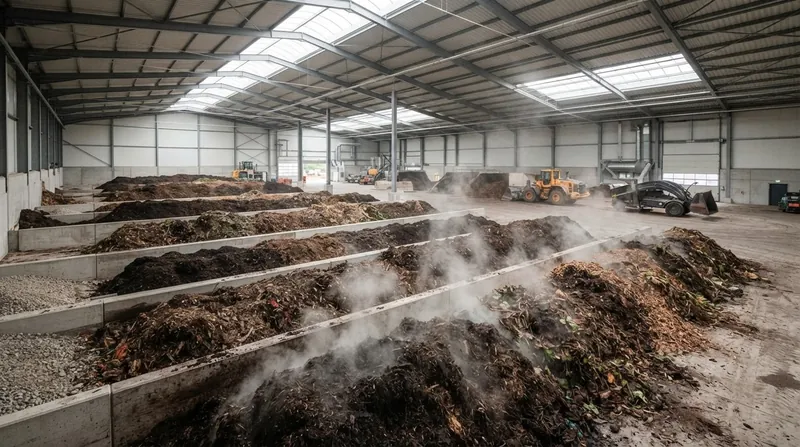
UNEP Warns Rotting Food Waste Produces Up to 10 Percent of Global Emissions, Five Times More Than Aviation
4 sources
Amazon Conservation
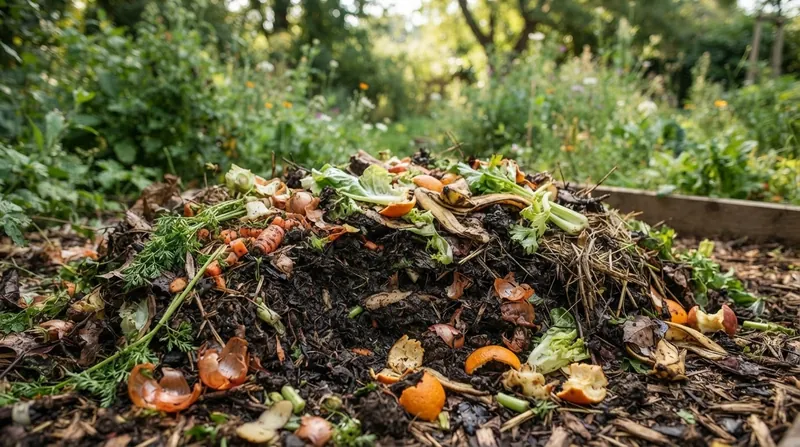
Protecting Existing Amazon Forests Yields Greater Climate and Biodiversity Gains Than Restoration, Study Finds
3 sources
Water Accounting
The Blue, Green, and Grey Water Footprint: How the ISO 14046 Standard Calculates Total Water Use
7 sources
Climate Baselines
The 30-Year Rule: How the IPCC's Standard Normal Period Masks the True Rate of Climate Change
8 sources
Comments
Every angle. Every day.
Get Environment stories with full source coverage and perspective breakdowns, free every day.