
Trump Renames AI 'Super Intelligence' in UN Speech, Rejects Global Regulation
President Trump directed federal agencies to replace the term 'artificial intelligence' with 'super intelligence' while formally rejecting international efforts to regulate the technology.
- U.S. Administration
- Prioritizes rapid, unregulated domestic AI development and rejects international oversight.
- International Community
- Advocates for binding global treaties and pooled resources to manage AI risks.
- AI Safety Advocates
- Warns of existential risks and demands immediate regulatory guardrails from world governments.
Perspectives this story doesn't cover
- Chinese government officials
- Federal agency procurement officers
Why this matters
The administration's refusal to participate in international AI governance leaves the world's primary developer of the technology outside multilateral safety frameworks, while the abrupt terminology shift forces federal agencies to rewrite thousands of active policies and contracts.
The United States government has formally replaced the term "artificial intelligence" with "super intelligence" across all federal documents, a rebranding ordered by President Donald Trump during his September 22, 2026, address to the United Nations General Assembly. The directive, which the president stated takes effect immediately, pairs a cosmetic change with a substantive policy shift: the U.S. will not participate in international frameworks designed to regulate the rapidly advancing technology.[1][2][3]
Speaking to world leaders in New York, the president dismissed global oversight efforts as a "globalist scheme" and argued that the word "artificial" undermines the technology's actual capabilities. "The use of the word artificial makes intelligence sound fake," Trump told the 81st General Assembly. "It is not fake. It's actually amazing. But we have to be careful." He added that from this point forward, U.S. documents would use the abbreviation "SI."[2][5]
The origin of the new nomenclature appears to be informal. Over the weekend preceding the speech, the White House polled users on 2 social media platforms, X and Truth Social, asking them to choose between alternative names for the technology. "Super intelligence" secured roughly 30 percent of the vote in the unscientific poll and was subsequently written into the president's official remarks.[4]
The policy arrives amid escalating anxiety among both international governments and the technology industry's own leadership regarding the trajectory of machine learning. Ahead of the gathering, leaders from more than 20 predominantly European nations endorsed binding safety measures for advanced systems, warning that development could soon outpace human control.[2]
The policy arrives amid escalating anxiety among both international governments and the technology industry's own leadership regarding the trajectory of machine learning.
Trump explicitly rejected those concerns, comparing contemporary warnings from AI safety advocates to past predictions about climate change. "The very same people who said we'll all be dead in 12 years because of global warming... are now saying that AI is going to kill us all, that robots are going to attack us, and that everything is going to be a total disaster," he said.[2][5]
The administration's stance isolates the U.S. from emerging consensus among allied nations and even domestic developers. French President Emmanuel Macron used his own U.N. address to call for pooled investment in open-source models to prevent dependency on a single great power. Meanwhile, OpenAI CEO Sam Altman and Anthropic CEO Dario Amodei—who published a September 12 essay urging a slower pace of development—were scheduled to brief the 15-member U.N. Security Council on Wednesday regarding the necessity of global guardrails.[2][5]
Fact-checkers and industry researchers quickly noted that "superintelligence" already possesses a specific, established definition within computer science. A recent paper from Google's AI lab, DeepMind, defines artificial superintelligence as a system with superhuman abilities across virtually all tasks—a threshold that current models, which still exhibit jagged performance across different contexts, have not yet reached.[5]
The diplomatic fallout was immediate, though largely symbolic. Delegations from Cuba and Iran walked out during the president's broader remarks, which also touched on the administration's robust use of military force. Iranian President Masoud Pezeshkian was traveling to address the assembly on September 23, marking an unusual visit by a leader of a country actively engaged in conflict with the U.S.[4][5]
Moving forward, federal agencies face the logistical task of updating terminology across active policies, procurement contracts, and regulatory frameworks. The international community, meanwhile, must determine how to construct safety protocols for a technology whose leading nation has explicitly opted out of the regulatory process.[1][2]
Key points
- President Trump announced the U.S. will replace the term 'artificial intelligence' with 'super intelligence' in all federal documents.
- During his U.N. address, Trump formally rejected international efforts to regulate the technology, labeling them a 'globalist scheme.'
- The move isolates the U.S. from European allies and AI industry leaders who are actively lobbying the U.N. for binding global safety standards.
- Fact-checkers noted that 'superintelligence' already has a specific scientific definition referring to hypothetical systems that surpass human cognition.
Sources
Source coverage
5 outlets
3 viewpoints surfaced





- [1]Washington TimesU.S. Administration
Trump renames artificial intelligence as 'super intelligence'
Read on Washington Times → - [2]AFPInternational Community
Trump renames AI 'super intelligence' as leaders jostle over dangers
Read on AFP → - [3]AI WeeklyU.S. Administration
Trump Tells UN General Assembly He's Renaming Artificial Intelligence to 'Super Intelligence'
Read on AI Weekly → - [4]The New RepublicAI Safety Advocates
Trump Tells U.N. He's Renaming AI Based on a Social Media Poll
Read on The New Republic → - [5]PBSAI Safety Advocates
Fact-checking Trump's speech to the 2026 United Nations General Assembly
Read on PBS →
Comments
More in News & Politics
See all →Red Sea Security
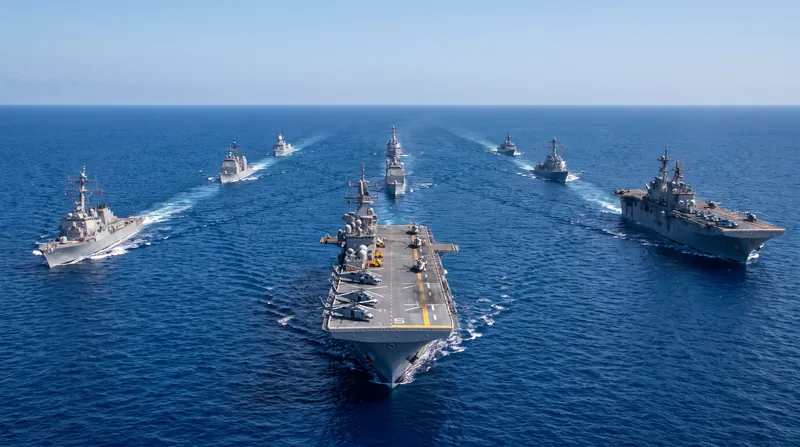
14-Nation Maritime Defense Coalition Reaches Operational Status Ahead of Red Sea Deployment
4 sources
Mediterranean Security
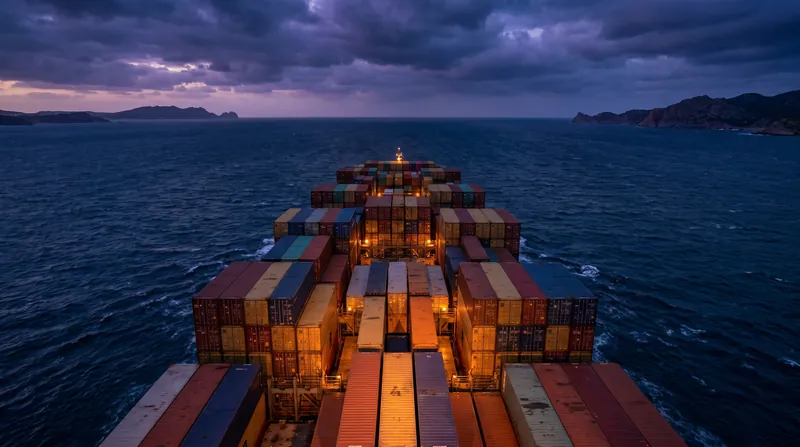
CIA Warns Europe of Russian Plot to Launch Attack Drones from Mediterranean Cargo Ships
5 sources
Nuclear Proliferation
US Intelligence Assesses Saudi Arabia Has Not Ruled Out Developing Nuclear Weapons Program
4 sources
Climate Finance
UN Secretary-General Demands $1.3 Trillion Annual Climate Finance and Major System Overhaul
5 sources
Every angle. Every day.
Get News & Politics stories with full source coverage and perspective breakdowns delivered to your inbox.