
The Evidence Pack: Analyzing the Resumption of US-Iran Strikes and Competing Radar Claims
Following the collapse of a fragile 60-day ceasefire, U.S. forces launched a second wave of strikes against Iranian coastal defenses to enforce a renewed naval blockade. In response, Tehran claimed retaliatory hits on U.S. radar installations in Kuwait and Bahrain, escalating a conflict that has pushed global oil prices to a one-month high.

How this story has developed
This report is part of a developing story — read the earlier chapters below.
- The End of Global Oil Security: How the Strait of Hormuz Conflict Rewrites the Rules of Energy Geopolitics
- U.S. and Iran Weigh Potential Peace Deal to Reopen Strait of Hormuz Amid Conflicting Claims
- US-Iran Ceasefire Falters as Regional Strikes Resume and US House Weighs War Powers Resolution
- One Dead, Dozens Injured After Drone Strike Hits Kuwait International Airport Amid US-Iran Escalation
- US and Iran Exchange Direct Strikes in the Gulf, Shattering Ceasefire Hopes
- U.S. Launches Strikes on Iranian Military Targets Following Downing of Army Helicopter
- Military Strikes Destroy Iranian Water Facilities Near Strait of Hormuz, Prompting War Crime Warnings
- The Stakes of Kharg Island: Why the U.S. is Threatening Iran's Oil Fortress
- Trump Halts Planned Strikes on Iran, Claims Peace Deal is Imminent Despite Tehran's Caution
- Risk the Strait or Wait: The Costly Dilemma Trapping 500 Ships in the Persian Gulf
- Trump Rejects Leaked Iran Ceasefire Terms as 'Fake News' Amid Fragile Negotiations
- US and Iran Reach Final Text for Peace Agreement Following Pakistani Mediation
- Israel Strikes Beirut Suburbs Following Ceasefire Violation as U.S.-Iran Peace Deal Hangs in Balance
- Hegseth Clashes With CBS Over U.S. Munitions Crisis as Iran War Drains Stockpiles
- US and Iran Reach Deal to Reopen Strait of Hormuz, Ending Four-Month Global Trade Blockade
- Economic Rebound in Focus as U.S.-Iran Conflict Winds Down
- US and Iran Sign Preliminary Deal to End 109-Day War: What the MoU Actually Says
- US and Iran Reach Historic Truce to End 2026 War, but Regional Tensions Persist
- Senate Blocks Bid to Limit Trump's War Powers as US-Iran Peace Deal Nears
- Trump Rebukes Netanyahu Over Lebanon Offensive as US-Iran Peace Deal Advances
- From Supply Shock to Oil Glut: How the Iran War is Destroying Global Energy Demand
- U.S. and Iran Agree to 60-Day Ceasefire MOU Featuring Immediate Oil Waivers and $300 Billion Investment Framework
- Vance Rebukes Israeli Critics of U.S.-Iran Peace Agreement, Warning Against Alienating 'Only Powerful Ally'
- Vance Postpones Switzerland Trip for Iran Nuclear Talks Amid Friction with Israel and EU Sanctions Stance
- Vance Delays Switzerland Trip for Iran Talks, Rebukes Israeli Critics of Peace Deal
- Public Support Wanes as Congress Questions the Mounting Costs of the US-Iran Conflict
- Trump's $1.5 Trillion Military Budget Stalls as Congress Balks at Iran War Costs
- U.S. and Iran Postpone High-Stakes Nuclear Talks in Switzerland Amid Regional Tensions
- Iran Closes Strait of Hormuz, Shattering Three-Day-Old Ceasefire Over Lebanon Strikes
- Iran Halts Strait of Hormuz Traffic as Regional Tensions Escalate Over US-Brokered Deal
- Iran Declares Strait of Hormuz Closed Over Lebanon Strikes; U.S. Military Denies Blockade
- US and Iran Open Nuclear Talks in Switzerland Amid Dispute Over Strait of Hormuz
- U.S. and Iran Launch 60-Day Push for New Nuclear and Security Agreement in Switzerland
- US and Iran Claim Progress in Peace Talks as Trump Threats Complicate Vance's Diplomacy
- US Eases Iran Oil Sanctions as Tehran Agrees to Resume Nuclear Inspections
- US and Iran Agree to Lebanon 'De-Confliction Cell' to Salvage Regional Peace Talks
- US Waives Iranian Oil Sanctions and Releases $12 Billion in Exchange for Nuclear Inspections
- US Issues Sweeping Iran Oil Sanctions Waivers, Reshaping Global Energy Markets
- Iran and Oman Advance Plans to Toll the Strait of Hormuz: What It Means for Global Trade
- US-Iran Crisis and Peace Push: Strait of Hormuz Tolls, Nuclear Inspections, and the Senate Vote Explained
- Senate Passes Historic War Powers Resolution on Iran as NATO Praises Ceasefire Deal
- US-Iran Ceasefire Reopens Strait of Hormuz, Easing Global Shipping and Oil Prices
- UN Nuclear Chief Says Inspectors Will Visit Iran Sites Under Fragile War Deal
- Trump Rebukes NATO Over Iran War as White House Seeks $87.6 Billion to Replenish Military
- Iran Strikes Commercial Ship in Strait of Hormuz, Halting UN Evacuation Route
- US Strikes Iranian Missile Sites Following Drone Attack on Cargo Ship, Testing Fragile Ceasefire
- Iran Launches Drone Attack on Bahrain Targeting US Military After Retaliatory US Strikes
- FACT CHECK: Did Iran Request a Meeting With the U.S. in Doha?
- US Warned Iran of Alleged Israeli Plot to Assassinate Negotiators During Ceasefire Talks
- Trump Signs New Iran Executive Orders, Threatens to Decimate Infrastructure by Tomorrow Night
- U.S. Launches Retaliatory Strikes on Iran and Revokes Oil Waivers Following Strait of Hormuz Attacks
- The New Middle East Order: How China Brokered a Ceasefire After U.S. and Israeli Strikes on Iran
- The Collapse of the Islamabad Memorandum: Analyzing the Return to US-Iran Hostilities and the Global Economic Fallout
- Trump Suggests Standing Order to Attack Iran if Assassinated, Leaving Execution to VP Vance
- U.S. Imposes 20% Tariff on Strait of Hormuz Cargo, Reinstates Naval Blockade on Iran
- Senate Democrats Block Must-Pass Defense Bill Over Iran War and Israel Integration
- The Evidence Pack: Analyzing the Resumption of US-Iran Strikes and Competing Radar Claims (this article)
- Global Real Estate Investment Volumes Slip as Iran Conflict Triggers 'State-Altering Shock' and Capital Pullback
- Iran Rejects U.S. Ceasefire Proposal and Threatens Tel Aviv as Trump Weighs 'Massive Attack'
- U.S. General Warns Pentagon of Insufficient Naval Forces to Protect Israel from Iranian Missiles
- Is the Strait of Hormuz Closure a Supply Shock That Has Rendered Central Bank Policy Obsolete?
- US-Iran War Escalates to Second Maritime Front as Houthis Blockade Bab el-Mandeb Strait
- How the Strait of Hormuz Crisis Turned Global Food Security into a Geopolitical Weapon
- $75M Esports World Cup Relocates to Paris Amid Middle East Security Concerns
- Esports Nations Cup Postponed to 2027 Citing 'Regional Uncertainty,' Following EWC Relocation
- AG.AL Wins $7 Million Esports World Cup Club Championship, Denying Team Falcons Third Title
- Esports World Cup 2026 Viewership Jumps 37%, Driven by Kick and 300% Growth in Hindi Broadcasts
- U.S. Defense Establishment
- Emphasizes the necessity of degrading Iran's offensive capabilities to ensure freedom of navigation.
- Iranian Strategic Command
- Focuses on asymmetric retaliation and leveraging geographic control over the Strait of Hormuz.
- Global Market Analysts
- Highlights the severe macroeconomic risks posed by a prolonged disruption of energy supplies.
- Regional Security Observers
- Focuses on the impact on Gulf nations and the human cost of the renewed conflict.
Perspectives this story doesn't cover
- Commercial Shipping Operators
- Civilian Populations in Targeted Areas
The fragile ceasefire that paused the 2026 conflict between the United States and Iran has officially collapsed, giving way to a renewed and intense exchange of military strikes. On Wednesday, the U.S. military initiated a second wave of coordinated attacks against Iranian coastal defenses, while Tehran simultaneously claimed to have destroyed advanced U.S. radar installations in neighboring Gulf states.[1][4]
The escalation marks a definitive end to the Pakistan-mediated memorandum of understanding, which had established a 60-day pause in hostilities. With the diplomatic off-ramp closed, both nations have reverted to kinetic operations aimed at controlling access to the Strait of Hormuz, a critical maritime chokepoint.[3][5]
According to U.S. Central Command (CENTCOM), the second wave of American strikes commenced at 3:00 p.m. Eastern Time on Wednesday. The operation utilized precision munitions to target Iranian command centers, air defense sites, and coastal surveillance facilities.[2][7]
The primary geographic focus of the U.S. offensive included Greater Tunb Island and the port city of Bandar Abbas. CENTCOM reported that a 90-minute wave of strikes successfully degraded cruise missile storage and launch sites that Washington asserts were being used to threaten commercial shipping.[1][2]
In tandem with the airstrikes, the United States has formally reimposed a naval blockade on all Iranian ports. The blockade, which had been temporarily lifted during the ceasefire, authorizes U.S. naval forces to intercept and redirect any unauthorized vessels attempting to transit Iranian waters.[4][7]
The enforcement of this blockade has already resulted in direct maritime confrontations. U.S. forces reported disabling an unladen oil tanker that ignored multiple warnings while attempting to sail toward Iran's Kharg Island, utilizing Hellfire missiles to strike the vessel's smokestack.[1][7]
In response to the U.S. offensive, Iran's Islamic Revolutionary Guard Corps (IRGC) launched what it termed the tenth phase of its retaliatory campaign, dubbed "Operation Lightning." Tehran claims this operation successfully targeted U.S. military infrastructure across the region.[1][3]
Iranian state media and military statements specifically assert that IRGC drones and missiles struck Ali Al Salem Air Base in Kuwait. The claimed targets included C-RAM early warning radar systems, Patriot air defense batteries, and critical fuel storage tanks utilized by U.S. personnel.[3]
Iranian state media and military statements specifically assert that IRGC drones and missiles struck Ali Al Salem Air Base in Kuwait.
Furthermore, Iran claims to have executed a separate drone operation targeting Sheikh Isa Air Base in Bahrain. According to Iranian military statements, this secondary strike focused on U.S. communication nodes and Super Hawk radar installations.[3]
The evidentiary basis for these competing claims varies significantly in transparency. While CENTCOM has released declassified video footage and battle damage assessments confirming its strikes on Iranian infrastructure, independent verification regarding the extent of damage to U.S. bases in Kuwait and Bahrain remains sparse.[2][3]
Defense analysts and unnamed U.S. officials suggest the American strikes serve a dual purpose. Beyond immediate retaliation, the systematic targeting of Iranian radar and air defenses is characterized as "shaping operations"—a military strategy designed to weaken the adversary's defensive posture ahead of potentially more complex and intensive operations.[5]
The geographic targets of the U.S. strikes are strategically vital. Islands such as Greater Tunb form a defensive arc for Iran, providing forward operating positions to monitor maritime traffic and deploy asymmetric naval forces, including one-way attack drones and fast attack craft.[4][6]
The resumption of hostilities has immediately impacted global energy markets. Brent crude oil, the international benchmark, surged to a one-month high of $84.95 a barrel as traders priced in the heightened risk of a prolonged closure of the Strait of Hormuz.[1]
The economic stakes of this waterway cannot be overstated. Prior to the outbreak of the war in February 2026, approximately one-fifth of all global oil and gas shipments transited through the Strait of Hormuz, making its unimpeded operation vital to global macroeconomic stability.[1][5]
The human toll of the renewed conflict is also mounting. Iranian health officials and state television reported that U.S. strikes on an army barracks in Sistan and Baluchestan province resulted in dozens of casualties among conscripts and career soldiers, though exact figures remain contested.[4][6]
Regional actors are increasingly caught in the crossfire. Gulf nations, including Kuwait and Bahrain, have been forced to activate their own air defense networks to intercept incoming projectiles, while the United Nations has warned that a return to full-scale war could severely disrupt the global flow of food and medicine.[4][7]
The collapse of the ceasefire highlights the deep strategic impasse between Washington and Tehran. Critics of the U.S. approach argue that while the military has achieved tactical victories by degrading Iran's conventional forces, it has not secured the strategic concessions necessary to ensure long-term freedom of navigation.[5]
As the conflict enters this new phase, the evidence points to a dangerous equilibrium. The United States possesses the conventional superiority to systematically dismantle Iranian coastal defenses, but Iran retains sufficient asymmetric capabilities—and the geographic advantage of the Strait—to impose severe economic costs on the global economy.[5][6]
How we got here
Feb 2026
Initial conflict erupts between the U.S., Israel, and Iran, leading to the first closure of the Strait of Hormuz.
May 2026
A Pakistan-mediated memorandum of understanding establishes a fragile 60-day ceasefire.
July 14, 2026
The ceasefire officially collapses, and the U.S. reimposes a naval blockade on Iranian ports.
July 15, 2026
The U.S. launches two waves of strikes against Iranian coastal defenses, while Iran claims retaliatory hits on U.S. bases.
Why this matters
The definitive collapse of the U.S.-Iran ceasefire and the resumption of military strikes directly threatens global macroeconomic stability, as the reimposed naval blockade and targeted attacks risk severing a maritime artery that carries one-fifth of the world's oil supply.
Sources
Source coverage
7 outlets
4 viewpoints surfaced







- [1]ReutersGlobal Market Analysts
The U.S. launched two waves of attacks on Iran's coastal defenses and missile sites
Read on Reuters → - [2]U.S. Central CommandU.S. Defense Establishment
U.S. Forces Complete Another Round of Strikes Against Iran
Read on U.S. Central Command → - [3]Anadolu AgencyIranian Strategic Command
Iran says it targeted US military radar and defense systems in Kuwait, Bahrain
Read on Anadolu Agency → - [4]PBS NewsHourRegional Security Observers
U.S. reimposes blockade and steps up strikes as Iran threatens to halt all energy exports
Read on PBS NewsHour → - [5]The Times of IsraelGlobal Market Analysts
US strikes on Iran prepare ground for more intensive operations, officials say
Read on The Times of Israel → - [6]Al JazeeraRegional Security Observers
US attacks kill dozens in Iran as Iranian forces target regional bases
Read on Al Jazeera → - [7]Fox NewsU.S. Defense Establishment
US launches new strikes on Iranian military targets used to attack ships in Strait of Hormuz
Read on Fox News →
Comments

More in Defense & Security
See all →Yemen Conflict
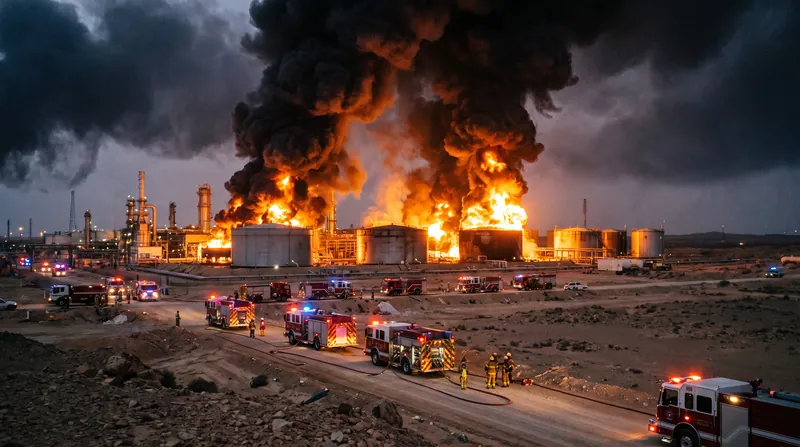
Houthi Attacks Ignite Fires at Saudi Oil Facilities, Shattering Four-Year Truce
3 sources
Nuclear Strategy
The Five Phases of OPLAN 8010: How the U.S. Nuclear War Plan Defines Target Categories and Execution Options
5 sources
Domestic Deployment
The Statutory Boundary Between Military and Civilian Law Enforcement: How the Posse Comitatus Act and the Insurrection Act Interact
9 sources
Acoustic Stealth
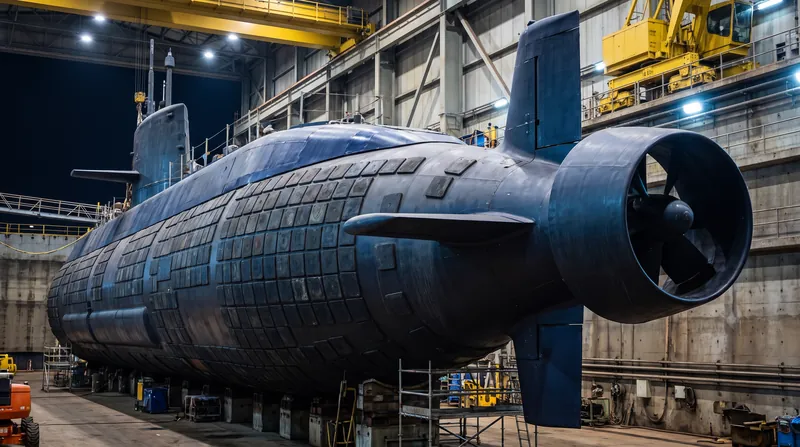
Silencing the Hull: How Anechoic Tiles, Isolation Mounts, and Pump-Jets Suppress Submarine Radiated Noise
9 sources
Every angle. Every day.
Get Defense & Security stories with full source coverage and perspective breakdowns delivered to your inbox.