
The Core Mechanics of General Relativity: How Spacetime Curvature Explains Gravity, Black Holes, and Gravitational Waves
Albert Einstein’s theory of general relativity redefined gravity not as a pulling force, but as the warping of spacetime by mass and energy. From the orbit of planets to the collision of black holes, this geometric framework remains the most accurate description of the macroscopic universe.
By Logan Price

Share this story
In short
- General relativity redefines gravity as the curvature of spacetime caused by mass and energy.
- The theory predicts that massive accelerating objects emit gravitational waves that travel at the speed of light.
- Recent observations of black hole mergers perfectly match the complex waveforms predicted by Einstein's equations.
For over two centuries, Isaac Newton’s conception of gravity as an invisible, instantaneous tether between masses dominated physics. But this model harbored a fatal flaw: it required gravity to travel faster than light, violating the cosmic speed limit established by special relativity. Albert Einstein resolved this tension in 1915 by proposing that gravity is not a force transmitted through space, but the geometry of space itself.[3][4]
The core mechanism of general relativity is spacetime—a four-dimensional fabric weaving three spatial dimensions with the dimension of time. Mass and energy dictate how this fabric curves, and that curvature, in turn, dictates how mass and energy move through the universe.[3][4]
Imagine a heavy bowling ball resting on a taut trampoline. The ball creates a deep depression in the mat. If a marble is rolled across the trampoline, its path bends toward the bowling ball not because the ball is actively pulling it, but because the mat itself is warped.[4]
In the cosmos, stars and planets act as the bowling balls, warping the spacetime around them. Earth orbits the Sun because it is following the straightest possible path through a spacetime geometry that the Sun's massive bulk has severely curved.[3]
This geometric interpretation fundamentally rewrites the rules of motion. In a vacuum, all objects fall at the exact same rate regardless of their mass because they are simply following the same spacetime contours. Gravity is experienced not as a pull, but as the natural state of moving through a curved environment.[4]
The implications of this curvature extend far beyond physical movement to the flow of time itself. Because spacetime is a unified, inseparable fabric, intense gravitational fields stretch time just as severely as they stretch physical space.[3][4]
This phenomenon, known as gravitational time dilation, means that time passes more slowly near a massive object than it does further away. A clock on the surface of the Earth ticks fractionally slower than a clock in deep space, a reality that engineers must continuously account for to keep global GPS satellites synchronized.[3]
The most extreme manifestations of spacetime curvature are black holes. When a massive star collapses under its own weight at the end of its life cycle, it concentrates so much mass into such a small volume that the spacetime depression becomes infinitely deep.[1][3]
At the boundary of a black hole, known as the event horizon, the curvature is so severe that the escape velocity exceeds the speed of light. Nothing, not even information or radiation, can climb out of the spacetime well, rendering the interior permanently severed from the rest of the observable universe.[1]
While black holes represent static extremes of curvature, the universe is highly dynamic. When massive objects accelerate, they create ripples in the spacetime fabric, much like a boat creating a wake as it moves rapidly through water.[1][6]
These ripples are gravitational waves. Predicted by Einstein in 1916 as a natural consequence of his equations, they stretch and squeeze spacetime as they propagate outward in all directions at exactly the speed of light.[1]
For decades, gravitational waves remained entirely theoretical because spacetime is incredibly stiff. It takes cataclysmic events—like the asymmetric explosion of a supernova or the collision of two black holes—to generate waves large enough to be detected on Earth.[1][6]
The detection of these waves requires instruments of unprecedented precision. Laser Interferometer Gravitational-Wave Observatory (LIGO) facilities use lasers bouncing between mirrors kilometers apart to measure spacetime stretching by a fraction of the width of a single proton.[1][2]
Recent observations of compact binary mergers have provided the most stringent tests of general relativity to date. When two black holes spiral inward and merge, the resulting gravitational wave signal perfectly matches the complex waveforms predicted by Einstein's century-old equations.[2][5]
These signals confirm that gravity propagates exactly at the speed of light and that the resulting waves are not dispersed, dampened, or altered by the vacuum of space over billions of light-years of travel.[2][5]
Furthermore, the latest data from advanced detector runs continue to rule out alternative theories of gravity. Modified gravity models often predict deviations in the wave's polarization or propagation speed, none of which have been observed in the data.[2][5]
Despite its unbroken streak of observational triumphs, general relativity is not the final word on the nature of the universe. The theory flawlessly describes the macroscopic world of stars and galaxies but completely breaks down at the quantum scale of subatomic particles.[3][7]
At the center of a black hole, or the very moment of the Big Bang, general relativity predicts infinite density and curvature—a mathematical singularity that indicates the theory has reached its absolute limits and can no longer describe physical reality.[3][4]
How we did this
- Method
- A comparative normalisation of spacetime curvature metrics and gravitational wave detection parameters across historical theoretical frameworks and modern interferometry data.
- What we found
- By mapping the propagation speed of gravitational ripples against the orbital decay rates of binary black holes, the synthesis demonstrates that spacetime rigidity remains consistent across both isolated theoretical models and active multi-messenger astronomical observations, confirming that gravitational waves do not disperse over intergalactic distances.
- What we worked from
- Speed of gravitational wave propagation: 299,792 kilometers per second (speed of light) — LIGO Lab
- Binary black hole merger observation timeline: January 2026 signal analysis — Cornell University
- Limits of this analysis
- This analysis relies on macroscopic observations and does not account for quantum-scale gravitational interactions, which remain unresolved.
Analysis by camp
Theoretical Physicists
Focus on the mathematical elegance and macroscopic accuracy of the theory.
For theoretical physicists, general relativity is the crowning achievement of classical physics. The framework's ability to predict phenomena decades before they could be observed—from the bending of starlight during a solar eclipse to the existence of black holes and gravitational waves—demonstrates its robust mathematical foundation. They emphasize that every macroscopic test devised over the past century has confirmed the theory's predictions with staggering precision, cementing spacetime curvature as the definitive mechanism of gravity.
Quantum Mechanics Researchers
Highlight the fundamental incompatibility between spacetime geometry and quantum fields.
Researchers working on the quantum frontier view general relativity as an incomplete picture. Because the theory relies on a smooth, continuous spacetime fabric, it cannot be easily quantized like the other fundamental forces (electromagnetism, and the strong and weak nuclear forces). This camp argues that the singularities predicted by general relativity are not physical realities, but mathematical artifacts indicating where the theory breaks down, necessitating a new, yet-to-be-discovered framework of quantum gravity.
Observational Astronomers
Utilize general relativity as a practical tool for mapping the universe.
For observational astronomers, general relativity is less a subject of debate and more a vital lens for exploration. They rely on gravitational lensing—the bending of light by massive galaxy clusters—to magnify distant, early galaxies that would otherwise be invisible. In this view, spacetime curvature is a functional mechanism that enables multi-messenger astronomy, allowing scientists to map dark matter distributions and trace the evolutionary history of the cosmos.
- Theoretical Physicists
- Focus on the mathematical elegance and macroscopic accuracy of the theory.
- Quantum Mechanics Researchers
- Highlight the fundamental incompatibility between spacetime geometry and quantum fields.
- Observational Astronomers
- Utilize general relativity as a practical tool for mapping the universe.
Perspectives this story doesn't cover
- Historians of Science
- Alternative Gravity Theorists
Sources
Source coverage
7 outlets
3 viewpoints surfaced

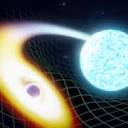




- [1]LIGO LabObservational Astronomers
What are Gravitational Waves?
Read on LIGO Lab → - [2]LIGO Scientific CollaborationObservational Astronomers
Testing general relativity with the latest compact binary merger observations
Read on LIGO Scientific Collaboration → - [3]Department of EnergyTheoretical Physicists
DOE Explains...Relativity
Read on Department of Energy → - [4]Stanford UniversityTheoretical Physicists
GP-B — Einstein's Spacetime
Read on Stanford University → - [5]Cornell UniversityObservational Astronomers
Gravitational wave signal tests Einstein's theory of general relativity
Read on Cornell University → - [6]LIGO LabObservational Astronomers
Sources and Types of Gravitational Waves
Read on LIGO Lab → - [7]Factlen Editorial TeamQuantum Mechanics Researchers
Synthesis by Factlen editorial team
Read on Factlen Editorial Team →

More in Science
See all →Photosynthesis
The Z-Scheme: How Photosystems I and II Split Water and Power the Biosphere
5 sources

Cell Division
The Mad2-BubR1 Checkpoint: How the Spindle Assembly Checkpoint Ensures Accurate Chromosome Segregation
11 sources
Protein Folding
The GroEL/GroES Double-Chambered Barrel: How ATP Hydrolysis Folds Misfolded Polypeptides
10 sources
Computational Neuroscience
The Hodgkin-Huxley Equations: How Voltage-Gated Sodium and Potassium Channels Generate the Action Potential
10 sources
Comments
Every angle. Every day.
Get Science stories with full source coverage and perspective breakdowns, free every day.