
NVIDIA Unveils RTX Spark, Its First ARM-Based 'Superchip' to Redefine Windows Gaming and AI PCs
Nvidia has introduced the RTX Spark, an Arm-based processor combining a 20-core CPU and Blackwell GPU that aims to bring AI supercomputing and high-end gaming to Windows laptops.
By Naina Verma

For decades, the Windows PC ecosystem has operated on a predictable division of labor: Intel or AMD provided the central processor, and Nvidia supplied the graphics muscle. At Computex 2026 in Taipei, Nvidia CEO Jensen Huang shattered that paradigm.
Unveiling the "RTX Spark," Nvidia introduced its first-ever consumer Arm-based processor designed specifically for Windows laptops and compact desktops. Huang declared the launch a moment that would "reinvent the PC," shifting the computer's role from a passive tool to an active, always-on teammate.[2]
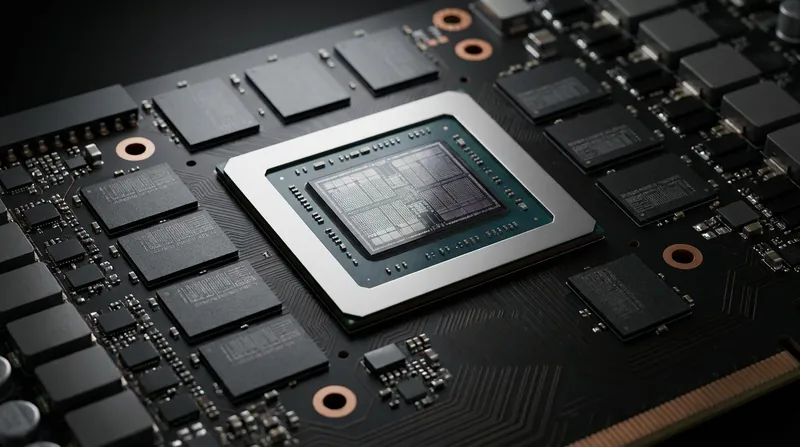
The RTX Spark is not just a new graphics card; it is a "superchip" that fuses a 20-core Nvidia Grace CPU with a next-generation Blackwell RTX GPU. Co-developed with Taiwanese chipmaker MediaTek to optimize power efficiency and connectivity, the silicon represents a direct challenge to the x86 architecture that has dominated personal computing for forty years.[2][3]
At the heart of the Spark's design is its unified memory architecture, a concept popularized by Apple's M-series silicon. The chip supports up to 128GB of LPDDR5X memory that is shared instantly between the CPU and the GPU.[1][3]
This massive pool of shared memory is the key to the RTX Spark's primary mission: local artificial intelligence. By eliminating the bottleneck of transferring data back and forth between separate processor and graphics memory banks, the chip can run massive AI models directly on the device.
Nvidia claims the RTX Spark delivers up to 1 petaflop of AI compute performance. In practical terms, this allows users to run 120-billion-parameter large language models locally, without relying on cloud servers or paying subscription fees to companies like OpenAI.[1][2]
For creative professionals, the implications are staggering. Software makers like Adobe are already rearchitecting applications like Premiere and Photoshop from the ground up to leverage the Spark's architecture. The massive memory pool allows 3D artists to render 90-gigabyte scenes entirely in RAM, a feat previously reserved for massive desktop workstations.[2]
But Nvidia is not abandoning its core demographic: gamers. The Blackwell GPU integrated into the Spark features 6,144 CUDA cores and fifth-generation Tensor Cores. Nvidia promises the chip can run modern AAA games at 1440p resolution at over 100 frames per second, all within the thermal constraints of a thin-and-light laptop.[2][3]
The gaming promise, however, hinges on software translation. Because the RTX Spark uses the Arm instruction set rather than the traditional x86 architecture used by most PC games, it relies on Microsoft's Windows 11 Prism emulator to translate the code in real-time.
Emulation historically introduces performance penalties, but Nvidia engineers claim the Spark's unique design mitigates this. Because the graphics processor handles the heavy lifting in games, the 20-core CPU has ample free cycles to manage the Prism emulation overhead without dropping frame rates.
The transition to a unified "superchip" does come with a significant consumer trade-off: the end of modular upgrades. Because the RAM is baked directly into the silicon package to achieve its blistering speeds, buyers must configure their memory at the time of purchase.[1]
If a user buys a 32GB model and later decides they need more memory for complex AI workflows, they cannot simply open the laptop and slot in a new RAM stick. Given the current premium on high-speed memory, configuring a laptop with the maximum 128GB is expected to be prohibitively expensive for average consumers.[1]
Despite these concerns, the PC industry is rallying behind the new standard. The first wave of RTX Spark devices is slated to arrive this fall. Major manufacturers including Asus, Dell, HP, Lenovo, and MSI have all committed to the platform, alongside Microsoft's own flagship Surface Laptop Ultra.[1][2]
For Microsoft, the partnership with Nvidia represents the culmination of a years-long effort to make Windows on Arm a viable alternative to Apple's dominant MacBook lineup. While Qualcomm laid the groundwork with its Snapdragon chips, Nvidia brings the undeniable gravity of its RTX branding and developer ecosystem.
As the first devices prepare to hit store shelves, the stakes for the broader semiconductor industry are immense. If Nvidia successfully proves that Arm-based superchips can handle both elite gaming and heavy-duty AI without the battery drain of traditional x86 systems, the definition of a high-performance PC will be permanently rewritten.
Viewpoints in depth
Creative Professionals & Developers
Eager for the massive unified memory and local AI compute to run heavy workloads without cloud dependency.
For 3D artists, video editors, and AI researchers, the RTX Spark represents a paradigm shift in mobile computing. By offering up to 128GB of unified memory, the platform allows creators to load massive 90-gigabyte 3D scenes or run 120-billion-parameter AI models entirely in local RAM. This eliminates the need to rely on expensive cloud computing subscriptions or tether to a massive desktop workstation, effectively turning a thin-and-light laptop into a portable render farm.
Hardware Enthusiasts & Gamers
Excited by the graphical power but skeptical about the lack of upgradability and reliance on emulation for legacy games.
While PC gamers are intrigued by the promise of 1440p AAA gaming at over 100 frames per second on an Arm-based chip, significant reservations remain. The primary concern is the shift toward unified memory, which permanently locks the system's RAM configuration at the time of purchase and kills the traditional PC upgrade path. Additionally, purists remain cautious about Microsoft's Prism emulator, waiting for independent benchmarks to verify Nvidia's claims that translating legacy x86 games won't introduce micro-stutters or input lag.
Industry Analysts
View this as a historic disruption to the Intel and AMD x86 duopoly and a major win for the Windows on Arm ecosystem.
Market watchers see the RTX Spark as the moment Windows on Arm finally achieves parity with Apple Silicon. While Qualcomm spent years laying the groundwork for Arm-based Windows machines, analysts argue that Nvidia brings the undeniable gravity of its RTX branding and deep developer ecosystem. By selling the entire compute identity of the machine—CPU, GPU, and AI acceleration—Nvidia is transitioning from a component supplier to a platform architect, directly threatening Intel and AMD's core laptop business.
Key points
- Nvidia unveiled the RTX Spark, an Arm-based superchip combining a 20-core CPU and Blackwell GPU.
- The chip features up to 128GB of unified memory, allowing it to run massive 120-billion-parameter AI models locally.
- It promises to run AAA games at 1440p and over 100 frames per second using Windows 11's Prism emulator.
- The unified memory architecture means users will not be able to upgrade their RAM after purchase.
What we don’t know
- How the Windows 11 Prism emulator will actually perform in real-world AAA gaming scenarios outside of controlled demos.
- The exact retail pricing for fully maxed-out 128GB configurations.
- How significantly the emulation layer will impact overall battery life during heavy workloads.
How we got here
Oct 2023
Reports emerge that Nvidia is developing Arm-based CPUs for Windows laptops.
Jan 2025
Nvidia announces the DGX Spark, an AI-oriented computer based on similar Grace Blackwell silicon.
May 2026
Nvidia officially unveils the consumer RTX Spark superchip at Computex Taipei.
Fall 2026
The first wave of RTX Spark laptops is scheduled to hit the consumer market.
- Creative Professionals & Developers
- Eager for the massive unified memory and local AI compute to run heavy workloads without cloud dependency.
- Hardware Enthusiasts & Gamers
- Excited by the graphical power but skeptical about the lack of upgradability and reliance on emulation for legacy games.
- Industry Analysts
- View this as a historic disruption to the Intel and AMD x86 duopoly and a major win for the Windows on Arm ecosystem.
Perspectives this story doesn't cover
- Budget-Conscious Consumers
- Traditional x86 Chipmakers
Sources
Source coverage
3 outlets
3 viewpoints surfaced



- [1]MediumHardware Enthusiasts & Gamers
The RTX Spark is NVIDIA's new ARM-based 'superchip.' Here is why it matters.
Read on Medium → - [2]Nvidia NewsroomCreative Professionals & Developers
NVIDIA Unveils RTX Spark, Reinventing Windows PCs for the Era of Personal AI
Read on Nvidia Newsroom → - [3]Wikipedia
Nvidia RTX Spark
Read on Wikipedia →
More in Technology
See all →Digital Ownership
Sony Sets 2028 End Date for Physical PlayStation Discs as Xbox Tests 'Disc-to-Digital' Conversion
3 sources

Hardware Emulation
Open-Source ZLUDA v6 Breaks NVIDIA Lock, Enabling 3x Performance Boost for PhysX Games on AMD Radeon
2 sources
Game Engines
Epic Games Unveils Unreal Engine 6, Bypassing UE5 for Rocket League's Next Era
2 sources

Xbox Strategy
Microsoft Weighs Xbox Spin-Off to Accelerate Game Development as Studio Head Departs
4 sources

Comments
Every angle. Every day.
Get Technology stories with full source coverage and perspective breakdowns, free every day.