
How Surface Dimples Cut Golf Ball Aerodynamic Drag by Half
A perfectly smooth golf ball would fall out of the sky after just 130 yards due to a massive low-pressure wake. By intentionally tripping the boundary layer into turbulence, surface dimples delay flow separation and double the ball's carry distance.
By Ivan Smirnov

In short
- A perfectly smooth golf ball separates from the air too early, creating a massive low-pressure wake that cuts its flight distance in half.
- Surface dimples act as microscopic tripwires, forcing the boundary layer into a turbulent state that clings to the ball's curvature much longer.
- This engineered turbulence shrinks the trailing wake and triggers a drag crisis, reducing aerodynamic resistance by roughly 50 percent.
For a driven golf ball to remain airborne across 280 yards of fairway, the airflow wrapping around its surface must stay attached as long as possible before breaking away. This aerodynamic adhesion is the binding constraint of long-distance flight, and a perfectly smooth sphere fails it entirely. Without surface texture, the air separates early, creating a massive low-pressure wake that acts like a parachute.
To solve this, golf balls rely on a fluid dynamics phenomenon known as the drag crisis. Surface dimples intentionally trip the thin layer of air clinging to the ball into a chaotic, turbulent state. This turbulence injects kinetic energy into the boundary layer, allowing it to resist separation and hug the ball's curvature much further toward the rear.
By shrinking the wake, this engineered roughness cuts aerodynamic drag in half. A professional golfer swinging a driver at 115 miles per hour would see a smooth ball fall out of the sky after just 130 yards. With a dimpled urethane cover, that exact same swing produces a 280-yard carry, fundamentally altering the geometry of the sport.
The problem with a smooth sphere
The physics of flight dictate that any object moving through a fluid experiences two types of air resistance: skin friction and pressure drag. Skin friction is the literal rubbing of air molecules against the object's surface, while pressure drag is dictated by the size of the turbulent wake left behind. For a blunt object like a sphere, pressure drag is the overwhelming dominant force.
When air encounters the front of a smooth sphere, it flows cleanly in parallel layers, a state fluid dynamicists call laminar flow. This laminar boundary layer is highly unstable and lacks the internal momentum required to navigate the ball's curving geometry. As the air reaches the widest part of the sphere, it encounters an adverse pressure gradient that forces it to detach.
Because it cannot follow the curvature, the smooth airflow separates from the surface near the ball's equator, or about 90 degrees from the front stagnation point. This early detachment leaves a massive, chaotic pocket of low pressure trailing directly behind the sphere. That low-pressure zone exerts a powerful backward suction, effectively anchoring the ball to the air behind it.
"That golf ball is going to fall out of the sky," says Courtney Engle, Manager of Mechanical Engineering at Acushnet Company, describing a dimple-free design. The resulting form drag is so severe that it overwhelms the initial kinetic energy imparted by the clubhead. No amount of swing speed can overcome the aerodynamic penalty of a large wake.[3]
The gutta-percha accident
The aerodynamic advantage of a roughened surface was discovered entirely by accident during the mid-19th century. Golfers of the era played with gutta-percha balls, which were molded from smooth, natural rubber sap. Players quickly noticed a counterintuitive trend: older, heavily scuffed balls flew significantly further and straighter than brand-new, perfectly smooth ones.[1]
Golfers began intentionally scarring their new gutta-percha balls with knives and hammers to improve their flight characteristics. This crude texturing altered the airflow dynamics, inadvertently reducing drag and improving lift. The accidental finding inspired formal experimentation with surface patterns, moving the industry away from smooth spheres forever.[1]
In 1905, English engineer William Taylor secured the first patent for a dimpled golf ball, setting the foundation for modern aerodynamic design. Taylor realized that evenly spaced, spherical indentations provided a more consistent flight than random scuff marks. Over the next century, manufacturers refined this dimple optimization to balance drag, lift, and spin control.[1]
The transition from smooth rubber to engineered dimples revolutionized course architecture. As players suddenly gained dozens of yards off the tee, golf courses had to be lengthened and redesigned to accommodate the new aerodynamic reality. The simple addition of surface texture fundamentally changed how the game was played on a global scale.
Tripping the boundary layer
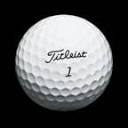
To defeat pressure drag, modern aerodynamicists use dimples as microscopic tripwires. A standard golf ball features between 300 and 500 spherical or hexagonal indentations, averaging roughly 0.010 inches in depth. As the ball accelerates past 100 miles per hour, these cavities disrupt the smooth laminar flow, forcing the boundary layer into immediate turbulence.
While turbulence generally increases skin friction, it provides a massive structural advantage to the boundary layer itself. A turbulent layer mixes rapidly, pulling high-speed air from the free stream closer to the ball's surface. This added kinetic energy allows the airflow to fight against the adverse pressure gradient at the rear of the sphere.
"What golf ball dimples do is create a turbulent flow so that air hits the front edge of the golf ball and the dimples energize that air which reduces the drag force," explains Mike Madson, Vice President of Golf Ball R&D at Acushnet Company. Because the energized air can follow the ball's curvature longer, the separation point is pushed back to roughly 120 degrees.[3]
Delaying flow separation by just 30 degrees dramatically shrinks the cross-sectional area of the trailing wake. According to NASA aerodynamic models, this smaller wake reduces the overall drag coefficient by nearly 50 percent compared to a smooth sphere. The trade-off of slightly higher skin friction is entirely eclipsed by the massive reduction in pressure drag.[2]
The drag crisis and Reynolds numbers
In fluid mechanics, this sudden plummet in air resistance is formally known as the drag crisis. The phenomenon is mapped using the Reynolds number, a dimensionless metric that compares inertial forces to viscous forces in a fluid. For a smooth sphere, the drag crisis does not naturally occur until the Reynolds number exceeds 300,000, which requires speeds far beyond a standard golf drive.[2]
Dimples artificially force this aerodynamic transition to happen much earlier in the flight. By roughening the surface, manufacturers shift the drag crisis down to a Reynolds number of roughly 100,000. This perfectly aligns with the 160-mile-per-hour ball speeds generated by modern titanium drivers, ensuring the ball experiences minimum drag precisely when it needs to carry the furthest.[2]
The concept was first formally quantified in a landmark 1976 study by aerodynamicists P.W. Bearman and J.K. Harvey. They demonstrated that dimples are uniquely effective at tripping boundary layers without causing the layer itself to thicken excessively. Their wind tunnel data proved that the drag coefficient drops sharply and remains low throughout the ball's high-speed flight.[1]
However, the drag crisis is not a permanent state during a single shot. As the ball reaches the apex of its trajectory, its velocity drops, lowering the Reynolds number and pushing the ball out of the optimal drag regime. The ball then begins its descent, relying on a different aerodynamic force to maintain its glide path and land softly on the green.
The Magnus effect multiplier
While dimples halve the drag, they also double the effectiveness of the ball's backspin. A well-struck drive leaves the clubface spinning backward at roughly 2,500 to 3,500 revolutions per minute. As the textured surface rotates, it grabs the turbulent boundary layer and drags it along the ball's rotation axis.
This rotation accelerates the airflow over the top of the ball while slowing the airflow underneath it. According to Bernoulli's principle, the faster-moving air creates a zone of low pressure above the ball, generating an upward force known as the Magnus effect. Dimples amplify this lift by ensuring the air grips the surface tightly enough to be redirected.
Without dimples, a spinning smooth ball generates erratic, unstable lift that causes the trajectory to wander unpredictably. The turbulent boundary layer created by the indentations stabilizes the pressure differential, producing a smooth, repeatable flight path. This aerodynamic lift accounts for roughly half of a modern golf ball's total carry distance.
Wind tunnel data confirms that this lift generation is highly sensitive to the ball's orientation. Because the dimples are arranged in specific geometric patterns, the aerodynamic forces remain consistent regardless of how the ball is teed up. This uniform lift ensures that a properly struck shot will hold its line even in heavy crosswinds.
Manufacturing tolerances
Because the boundary layer is incredibly thin, the physical dimensions of the dimples must be controlled with microscopic precision. Titleist R&D teams test thousands of configurations, adjusting dimple counts, edge angles, and shapes. In 2021, engineers tested over 60 different versions of a 388-dimple tetrahedral pattern before finalizing the Pro V1 design.[3]
The most critical variable in this optimization process is dimple depth. Shallower dimples produce a higher overall trajectory, while deeper dimples keep the ball flight lower and more piercing. During prototyping, engineers alter these depths by increments of just 2/10,000ths of an inch, a measurement roughly equivalent to the width of a human red blood cell.[3]
"Our research has shown that a golf ball with uneven dimple depths, off by as little as the width of a human hair, can turn a good swing into a bad shot, and cause your ball to fly offline," Madson notes. This extreme sensitivity explains why premium manufacturers refuse to share dimple patterns across different ball models.[3]
To achieve different flight profiles, scientists are in constant pursuit of new dimple configurations. For the Pro V1x, which requires a slightly different launch window, researchers experimented with 35 different versions of a 348-dimple design. Every single indentation is mapped to ensure the aerodynamic forces remain perfectly balanced as the ball rotates in the air.[3]
Ultimately, the modern golf ball is a triumph of applied fluid dynamics. By intentionally introducing chaos into the boundary layer, engineers have harnessed turbulence to defeat drag. It is a rare instance in physics where making a surface rougher is the only way to make it fly smoothly.[4]
Key terms
- Boundary layer
- The extremely thin layer of air that clings directly to the surface of a moving object.
- Drag crisis
- A sudden, dramatic drop in aerodynamic drag that occurs when a fluid flow transitions from smooth to turbulent.
- Reynolds number
- A mathematical value used in fluid dynamics to predict whether flow will be smooth (laminar) or chaotic (turbulent).
- Laminar flow
- Smooth, uninterrupted airflow that moves in parallel layers without mixing.
- Magnus effect
- The upward lift force generated by a spinning object as it drags air along its rotation, creating a pressure difference.
- Pressure drag
- The aerodynamic resistance caused by the low-pressure wake trailing behind a moving object.
Reader questions
Why don't commercial airplanes have dimpled surfaces?
Airplanes operate at much higher speeds and Reynolds numbers where the boundary layer is already turbulent. Adding dimples would only increase skin friction without providing any additional drag-reduction benefit.
Do deeper dimples make a golf ball travel further?
Not necessarily. Deeper dimples lower the ball's trajectory, while shallower dimples raise it. The optimal depth depends entirely on the golfer's swing speed and desired launch angle.
Why are some golf ball dimples hexagonal instead of round?
Hexagonal dimples can be packed more tightly together on the ball's surface than circles. This reduces the amount of smooth surface area between the indentations, further optimizing the aerodynamic drag reduction.
Where opinion splits
Aerodynamics Researchers
Focuses on the fluid dynamics of the boundary layer and the mathematical modeling of the drag crisis.
For fluid dynamicists, the golf ball is a classic demonstration of boundary layer manipulation. Researchers focus on how the Reynolds number dictates the transition from laminar to turbulent flow, using wind tunnels and computational fluid dynamics (CFD) to map the exact angle of flow separation. Their primary interest lies in the universal physics of the drag crisis, which applies to everything from sports balls to aerospace engineering.
Equipment Manufacturers
Focuses on proprietary dimple patterns, manufacturing tolerances, and optimizing ball flight for different swing speeds.
Companies like Titleist and Acushnet view aerodynamics as a highly guarded competitive advantage. Their engineering teams test thousands of microscopic variations in dimple depth, edge angle, and geometric arrangement to fine-tune trajectory. For manufacturers, the goal is not just reducing drag, but creating a stable, predictable flight path that performs consistently across different weather conditions and player skill levels.
Professional Golfers
Focuses on the practical application of aerodynamics, specifically spin control and wind resistance on the course.
For touring professionals, the physics of dimples translates directly into shot shaping and distance control. Players rely on the Magnus effect generated by the dimpled surface to hold greens on approach shots and cut through heavy crosswinds. Their perspective is entirely experiential: they need the ball's aerodynamic profile to perfectly match their specific launch angle and backspin rate to maximize carry distance.
- Aerodynamics Researchers
- Focuses on the fluid dynamics of the boundary layer and the mathematical modeling of the drag crisis.
- Equipment Manufacturers
- Focuses on proprietary dimple patterns, manufacturing tolerances, and optimizing ball flight for different swing speeds.
- Professional Golfers
- Focuses on the practical application of aerodynamics, specifically spin control and wind resistance on the course.
Perspectives this story doesn't cover
- Amateur golfers with slower swing speeds
- Environmental scientists studying urethane degradation
Sources
Source coverage
4 outlets
3 viewpoints surfaced



- [1]WikipediaAerodynamics Researchers
Golf ball - Aerodynamics and History
Read on Wikipedia → - [2]NASAAerodynamics Researchers
Experimental Observations of Reynolds Number and Drag
Read on NASA → - [3]TitleistEquipment Manufacturers
The Physics Behind Ball Flight: Dimples and Their Role
Read on Titleist → - [4]Factlen Editorial Team
Synthesis by Factlen editorial team
Read on Factlen Editorial Team →
More in Guides
See all →Optical Physics
Front-to-Back Coordinate Inversion: Why Mirrors Appear to Flip Left and Right
4 sources

Household Physics
Why Your Freezer Door Clamps Shut After You Close It
5 sources

Optical Physics
Why Wet Fabric and Pavement Look Darker When Water is Transparent
7 sources
Mechanical Engineering
Traction Elevators Size Counterweights to Tare Plus 45 Percent Capacity to Halve Peak Motor Torque
6 sources
Comments
Every angle. Every day.
Get Guides stories with full source coverage and perspective breakdowns, free every day.