
China's CXMT Commits to HBM3E AI Memory Production Despite 20 Percent Yield Deficits
ChangXin Memory Technologies is pushing forward with mass production of advanced AI memory chips by late 2026, absorbing massive manufacturing losses to secure China's domestic supply chain.

Share this story
ChangXin Memory Technologies (CXMT) is committing to the mass production of HBM3E memory chips by the end of 2026, despite achieving viable yields on only 20 to 30 percent of its silicon wafers. The decision marks a costly but strategic escalation in Beijing's push to build a self-sufficient artificial intelligence supply chain.[1][2]
High-bandwidth memory is the critical bottleneck for modern AI accelerators, feeding data to processors at massive speeds to prevent computational stalling. Global leaders like SK Hynix and Micron typically require yields above 70 percent before declaring a memory node commercially viable. CXMT is bypassing that standard entirely to meet urgent domestic demand.[3]
According to industry reports this week, the Chinese memory champion has already shipped HBM3E samples to domestic clients for qualification testing. The company now plans to initiate limited commercial production within the next two months, absorbing the massive financial losses associated with discarding up to 80 percent of its output.[2][4]
Operating at a 20 percent yield means the cost per functional chip is astronomically high, effectively destroying standard profit margins. Industry analysts note that CXMT can only sustain this production model through substantial state subsidies, treating the manufacturing losses as a strategic national investment rather than a commercial failure.[3][5]
The Complexity of Vertical Silicon
Manufacturing HBM3E involves stacking multiple dynamic random-access memory (DRAM) dies vertically, typically eight or twelve layers deep. These layers are connected with microscopic through-silicon vias (TSVs), which act as vertical electrical conduits passing directly through the silicon substrate to enable massive data bandwidth.[1]
The packaging process is incredibly delicate. A single defect in one DRAM layer, or a microscopic misalignment during the thermal compression bonding of the TSVs, can ruin the entire expensive stack. Because the errors compound with each added layer, high yields are notoriously difficult to achieve.[4]
Even established industry veterans like Samsung have struggled with HBM3E qualification and yield optimization over the past year. For CXMT, which is attempting to leapfrog older HBM2 and HBM3 generations to target the 3E standard directly, the technical hurdles are significantly steeper and the margin for error is nonexistent.[4]
CXMT's yield struggles are exacerbated by strict international restrictions on importing advanced semiconductor manufacturing equipment. Without access to the latest extreme ultraviolet (EUV) lithography machines from Dutch firm ASML, Chinese fabricators must rely on older, less efficient multi-patterning techniques that inherently introduce more defects into the silicon.[3]
Semiconductor manufacturing is an iterative process, and yields typically improve as engineers identify and eliminate defect sources over thousands of wafer runs. However, climbing from 30 percent to a sustainable 70 percent could take years of refinement, requiring continuous capital injection to keep the fabrication lines running during the learning phase.[5]
Bypassing the Export Blockade
The aggressive production timeline is driven entirely by tightening United States export controls, which restrict the sale of advanced AI hardware to Chinese firms. With foreign HBM supplies increasingly constrained by Washington's regulatory net, domestic AI developers desperately need a local alternative to power next-generation foundation models.[3]
The primary beneficiaries of this domestic supply will likely be Chinese technology giants like Huawei, Baidu, and Alibaba. These companies are developing proprietary AI accelerators, such as Huawei's Ascend 910 series, but have struggled to secure the high-performance memory required to make them competitive with Nvidia's flagship offerings.[2]
South Korean giants SK Hynix and Samsung currently dominate the global HBM market, supplying the memory that powers the vast majority of the world's AI infrastructure. CXMT's entry, even at low volumes and terrible unit economics, signals China's intent to break that oligopoly for its internal market.[1][4]
The willingness to produce at a loss demonstrates a fundamental divergence between Chinese and Western semiconductor strategies. Where Western firms prioritize gross margin and shareholder return, Beijing prioritizes supply chain resilience and technological sovereignty at almost any cost, shielding critical suppliers from market realities to ensure continuous operation.[5]
Scaling Toward 2027
This development follows a turbulent year for CXMT, which recently saw its shares drop 7.8 percent despite returning to profitability on the broader consumer memory boom. The pivot to HBM3E represents a high-stakes gamble to capture the premium segment of the market before domestic competitors can catch up.[1]
Beyond the technical challenges of the memory chips themselves, CXMT must also coordinate with domestic packaging firms to integrate the HBM3E alongside logic processors. Advanced packaging capacity, particularly the 2.5D integration required for AI accelerators, remains another significant bottleneck in China's domestic semiconductor supply chain.[2]
If CXMT can successfully integrate its HBM3E into domestic AI accelerators by 2027, it will mark a significant milestone in semiconductor decoupling. The focus now shifts to whether the company can scale production fast enough to meet the surging demand from Chinese data centers building out massive AI training clusters.[4]
In the short term, CXMT's low-yield production will not disrupt the global HBM market or threaten the commercial dominance of SK Hynix and Micron. The volumes produced at a 20 percent yield will remain relatively small, strictly allocated to strategic domestic projects rather than competing on the open market.[2][3]
Industry observers note that while a 20 percent yield is commercially unviable in a free market, it still produces functional chips. For a nation facing a total embargo on critical technology, paying five times the normal production cost for a functional AI accelerator is considered an acceptable strategic premium.[5]
Key points
- CXMT plans to begin limited commercial production of HBM3E memory within two months.
- The company is proceeding despite achieving viable yields on only 20 to 30 percent of its wafers.
- The move is driven by US export controls restricting China's access to foreign AI memory.
- Massive state subsidies are likely required to offset the astronomical cost of the discarded silicon.
What we don’t know
- How much state funding CXMT is receiving to subsidize the 70 to 80 percent wafer loss rate.
- Which specific Chinese AI accelerators will be the first to integrate CXMT's HBM3E chips.
- Whether CXMT and its partners can secure enough advanced packaging capacity to assemble the final AI modules at scale.
How we got here
Oct 2022
The United States implements sweeping export controls on advanced semiconductors and manufacturing equipment to China.
Aug 2023
Huawei launches the Mate 60 Pro, demonstrating domestic 7nm chip capabilities despite sanctions.
Early 2026
CXMT returns to profitability on the back of a broader consumer memory boom, though its shares remain volatile.
Oct 2026
CXMT ships HBM3E samples and commits to commercial production despite severe 20 to 30 percent yield deficits.
- Strategic Sovereignty Advocates
- Argue that securing a domestic supply of critical AI components justifies any financial cost or manufacturing inefficiency.
- Semiconductor Market Analysts
- Emphasize the astronomical cost of low-yield production and the long timeline required to reach commercial sustainability.
- Global Trade Regulators
- View the development as a direct response to export controls, highlighting the difficulty of completely cutting off technological advancement.
Perspectives this story doesn't cover
- Chinese AI hardware developers relying on the chips
- Western semiconductor equipment manufacturers
Sources
Source coverage
5 outlets
3 viewpoints surfaced





- [1]TechPowerUpStrategic Sovereignty Advocates
CXMT to Start HBM3E Mass Production by the End of 2026
Read on TechPowerUp → - [2]TrendForceSemiconductor Market Analysts
[News] CXMT Reportedly Ships HBM3E Samples, Eyes Production Within 2 Months Despite 20–30% Yields
Read on TrendForce → - [3]The Next WebGlobal Trade Regulators
China's CXMT will make AI memory despite yields as low as 20%, Reuters says
Read on The Next Web → - [4]TweakTownStrategic Sovereignty Advocates
CXMT reportedly plans limited HBM3E production despite yields of just 20% to 30%, with products using its memory possible in 2027
Read on TweakTown → - [5]AI WeeklySemiconductor Market Analysts
China's CXMT to Start HBM3E Memory Output at 20
Read on AI Weekly →
More in Technology
See all →Semiconductor Supply Chain
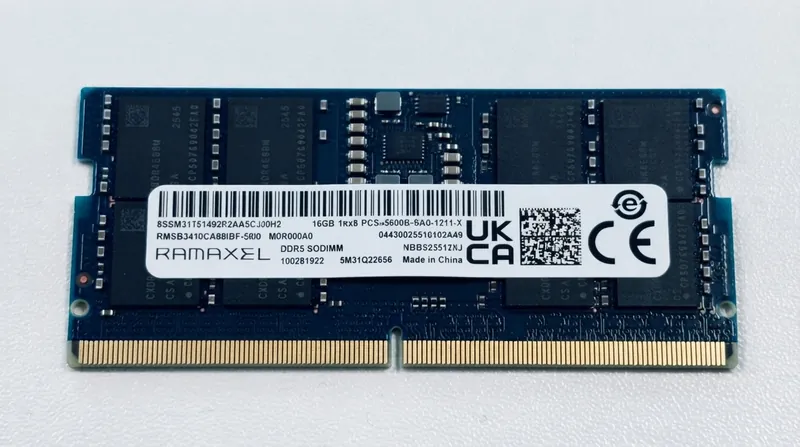
China's CXMT Begins Mass Production of 12nm-Class DRAM Using Multi-Patterning
5 sources
AI Hardware
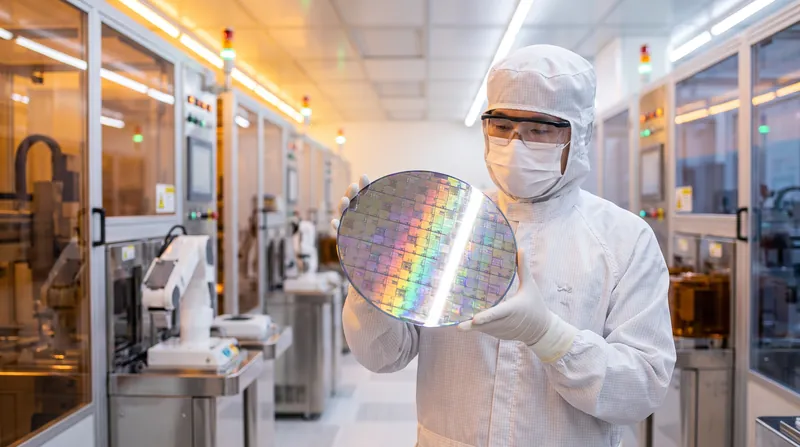
Nvidia Mandates TSMC 3nm Process for Next-Generation HBM Base Dies
4 sources
Storage Tech
SK Hynix Engineers SSD Controllers Housing Over 100 Specialized Cores
6 sources
EUV Lithography
Matching Tin Plasma Emission to Molybdenum-Silicon Bragg Mirrors: Why Extreme Ultraviolet Lithography Operates at 13.5 Nanometers
5 sources
Comments
Every angle. Every day.
Get Technology stories with full source coverage and perspective breakdowns, free every day.