
Earth Manufactured Its Own Oceans During Formation, New Experiments Show
Laboratory simulations reveal that dry rocky pebbles falling through a primordial hydrogen atmosphere can spontaneously generate massive volumes of water. The findings challenge the long-standing theory that Earth's oceans were primarily delivered by late-stage comet impacts.

Share this story
Earth's oceans may have been forged in the hellish atmosphere of the young planet itself, rather than delivered by icy comets billions of years later. A new experimental study demonstrates that dry rocky pebbles falling through a primordial hydrogen envelope can spontaneously generate massive volumes of water.[1][6]
The findings, published in the journal Nature Geoscience, challenge the long-standing assumption that Earth was born dry and required late-stage bombardments to become habitable. Researchers at the University of New Mexico showed that the necessary chemical reactions take only minutes under the right conditions.[1][6]
"Previous ideas about the source of water to Earth rely on an external source, such as comets or meteorites," said Zachary Sharp, director of the university's Center for Stable Isotopes. "Here we show that virtually any Earth-sized planet should have water by this newly identified mechanism."[1][3]
Recreating a primordial atmosphere
The research team focused on a planetary formation model known as pebble accretion. In this scenario, young terrestrial planets grow rapidly by sweeping up millimeter- to centimeter-sized rocky particles from the surrounding solar nebula, rather than relying solely on collisions with larger planetesimals.[1][6]
As a protoplanet reaches sufficient mass, its gravity captures a dense, high-pressure atmosphere composed primarily of hydrogen gas. The research team hypothesized that as iron-rich silicate pebbles descended through this hot envelope, they would undergo a rapid chemical reduction before striking the surface.[1][6]
To test the theory, graduate student Susmita Garai led a series of high-temperature laboratory simulations. The team heated anhydrous silicate rock samples to temperatures between 1,200 and 1,400 degrees Celsius, exposing them to continuous streams of hydrogen gas to mimic the primordial atmosphere.[1][2]
The results were immediate and striking. Within 15 minutes to three hours, the hydrogen stripped oxygen from the iron oxide within the rock, leaving behind metallic iron and releasing the displaced oxygen as water vapor.[1][2]
"Garai's efforts paid off mightily, as she found that water is produced in just minutes in the high-temperature environment of the early Earth's atmosphere," Sharp noted. Control experiments using helium produced no such reaction, confirming hydrogen's essential role in the transformation.[1]
Hundreds of oceans from dry rock
The efficiency of the chemical conversion surprised the research team. In the hydrogen-rich experimental environment, nearly 80 percent of the iron oxide present in the silicate samples was successfully converted into metallic iron, releasing a proportional amount of water vapor.[2][6]
Scaling these laboratory conversion rates to the mass of a growing planet suggests an enormous potential yield. The researchers calculate that this endogenous process could have generated enough water to fill hundreds of Earth-sized oceans during the planet's formative years.[1][3]
"Looking out over a large body of water, it is hard to imagine that that water may have been produced 4.5 billion years ago in a hell-like atmosphere, but it very well may have," Sharp said. The sheer volume of water produced in the models exceeded the team's initial expectations.[1][3]
The metallic iron produced by the reaction would have subsequently sunk to form the planet's core. This mechanism neatly explains why Earth's primitive mantle is relatively depleted of certain elements, resolving a secondary geochemical mystery that has long puzzled planetary scientists.[6]
A shifting consensus on comets
For decades, the dominant paradigm held that the inner solar system was too hot for volatile compounds to survive planetary accretion. Water, the theory went, must have arrived later via a "late veneer" of comets and water-rich meteorites striking the cooled surface.[1][3]
However, recent isotopic analyses have consistently complicated the comet-delivery model. Probes visiting modern comets have found that their water carries a significantly higher ratio of deuterium—a heavy isotope of hydrogen—than the water currently filling Earth's oceans, suggesting a different primary source.[1]
The shift away from comet delivery extends beyond water. Separate studies published this week suggest that comets likely struck the early Earth with too much speed and at too sharp an angle to successfully deliver intact organic molecules, further diminishing their role in seeding life.[4][5]
While meteorites from the outer solar system likely still contributed some fraction of Earth's volatile inventory, the new findings suggest they were not the primary source. The planet was likely born wet, manufacturing its own oceans as it assembled from dry dust.[1][6]
Implications for exoplanet habitability
If rocky planets can synthesize their own water during formation, the implications for the search for extraterrestrial life are profound. The mechanism relies only on common silicate rocks and a primordial hydrogen envelope, both of which are ubiquitous in young star systems.[1][3]
"The idea of pebble accretion is still relatively new," Sharp explained. "But it seems to solve many problems that exist with the existing paradigm for planet formation, and now we see that it also can explain why our planet is habitable."[1]
Astronomers observing distant protoplanetary disks have already detected water vapor around young stars. The new experimental data provides a concrete physical model for how that water becomes permanently incorporated into terrestrial worlds before their primordial atmospheres dissipate into space.[6]
Key points
- Earth likely manufactured its own water during formation rather than relying on late-stage comet impacts, according to new laboratory simulations.
- Dry silicate pebbles falling through a primordial hydrogen atmosphere can spontaneously generate water vapor and metallic iron in a matter of minutes.
- The chemical reaction is highly efficient, converting nearly 80 percent of iron oxide into metal and potentially producing hundreds of oceans worth of water.
- The findings suggest that homegrown oceans may be a standard feature of rocky planet formation, increasing the odds of finding habitable exoplanets.
Unanswered questions
- Exactly what percentage of Earth's total water inventory was produced internally versus delivered by later meteorite impacts.
- Whether the primordial hydrogen atmospheres of other rocky planets persist long enough to generate comparable ocean volumes.
How we got here
4.5 billion years ago
Earth begins to form via pebble accretion, capturing a dense hydrogen atmosphere.
First few million years
Silicate pebbles react with the hydrogen envelope, generating massive volumes of water vapor.
1986
The Giotto probe measures Halley's Comet, revealing a deuterium ratio that challenges the comet-delivery theory.
October 2026
Researchers demonstrate that dry rock and hydrogen can spontaneously generate water in minutes.
- Endogenous Formation Advocates
- Argue that Earth manufactured the vast majority of its own water through chemical reactions during its initial accretion.
- Late Delivery Proponents
- Maintain that volatile-rich meteorites and comets from the outer solar system were still required to deliver key elements to the early Earth.
Perspectives this story doesn't cover
- Astrobiologists studying exoplanet atmospheres
- Researchers modeling the Moon-forming impact's effect on early oceans
Sources
Source coverage
6 outlets
2 viewpoints surfaced






- [1]UNM NewsroomEndogenous Formation Advocates
UNM research suggests Earth may have formed much of its water as the planet grew
Read on UNM Newsroom → - [2]TechNews 科技新報Endogenous Formation Advocates
地球的水不是早期小行星帶來,新實驗:水是地球形成過程就地製造
Read on TechNews 科技新報 → - [3]Mirage NewsEndogenous Formation Advocates
Earth may have produced much of its water during the planet's formation
Read on Mirage News → - [4]Phys.orgLate Delivery Proponents
Comets probably didn't seed life on Earth after all, new study suggests
Read on Phys.org → - [5]Science NewsLate Delivery Proponents
Comets probably didn’t deliver life’s building blocks to Earth
Read on Science News → - [6]Nature GeoscienceEndogenous Formation Advocates
Experimental simulation of water formation on Earth from dry pebble rain
Read on Nature Geoscience →
More in Science
See all →Star Formation
Astronomers Resolve 'Dragon Egg' Core, Capturing Massive Star Formation in Its Earliest Phase
5 sources

Comet Discoveries
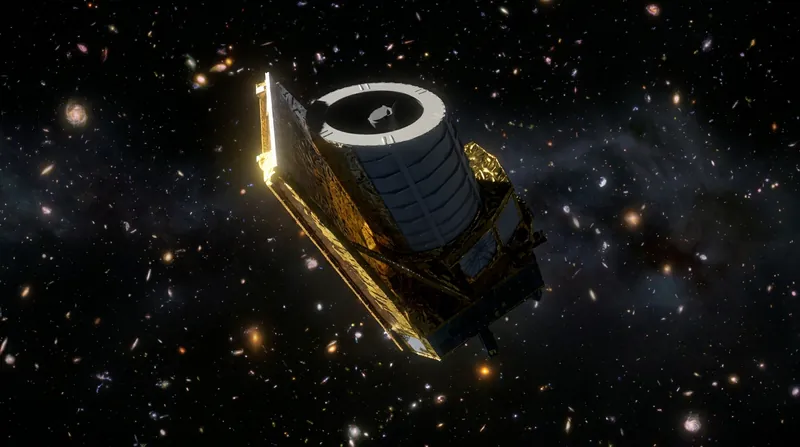
Euclid Space Telescope Identifies Previously Unknown Comet in Deep Outer Solar System
5 sources
Cosmology
Why Finite Cosmic Lifespans and Metric Expansion Prevent the Night Sky From Saturated Brightness
4 sources

Atmospheric Optics
The Geometry of Scintillation: Why Atmospheric Turbulence Causes Stars to Twinkle While Planets Maintain a Steady Glow
10 sources

Comments
Every angle. Every day.
Get Science stories with full source coverage and perspective breakdowns, free every day.