
Pentagon Estimates U.S. Spending on Iran Conflict Has Exceeded $47 Billion
The U.S. military has spent at least $47.1 billion on the conflict with Iran since February, according to new Central Command data provided to Congress. The figure marks a 25 percent increase from July projections, driven heavily by the cost of replacing expended munitions.

Share this story
During the height of the counter-ISIS campaign a decade ago, the United States expended thousands of precision munitions, but the financial burn rate remained relatively contained. The current conflict with Iran differs in one critical respect: the sheer volume of multimillion-dollar interceptors required to defend against incoming ballistic missiles and drones.[1][3]
That defensive requirement has pushed the cost of the eight-month war to at least $47.1 billion as of mid-October, according to a newly disclosed estimate from U.S. Central Command. The figure, provided to lawmakers this week, represents a 25 percent increase over the Defense Department's July projections.[2][4]
The escalating price tag underscores the logistical and financial strain of maintaining a heavy force posture in the Middle East. The military has been forced to shift billions of dollars within its existing budget to cover operational shortfalls, delaying modernization efforts in other theaters.[1][6]
"The bulk of the war's price tag is the cost of replacing expended munitions, which CENTCOM pegged at around $29 billion," CBS News reported, citing the document provided to Congress. That figure accounts for both offensive strikes and the continuous defensive umbrella maintained over regional shipping lanes.[3]
Munitions and platform losses
Beyond the $29 billion required to replenish missile and bomb stockpiles, the Pentagon estimates it has incurred $6.1 billion in platform losses. This category covers the destruction of military equipment, including fighter jets and surveillance drones lost during combat operations since February.[1][4]
An additional $11.9 billion has been absorbed by incremental operational costs. These expenses include flight operations, cyber support, and the logistical requirements of sustaining thousands of deployed American service members across the region for extended, unplanned tours.[3][6]
The financial burden is distributed unevenly across the military branches, reflecting the air- and sea-heavy nature of the campaign. The Air Force has absorbed the largest share, spending approximately $7.6 billion to sustain its continuous combat air patrols and strike missions.[1][4]
The Army and Navy have recorded $2 billion and $1.45 billion in direct costs, respectively. The Navy's figure represents a slight decrease from earlier September estimates, though the service continues to maintain two aircraft carrier strike groups—the USS George Washington and the USS George H.W. Bush—in the region.[1][4]
Uncounted damages and future projections
Notably, the $47.1 billion total does not represent the complete financial footprint of the conflict. The Central Command estimate explicitly excludes the cost of repairing damage to U.S. military bases in the Middle East, many of which have been struck by Iranian drones and ballistic missiles.[1][3]
Defense Secretary Pete Hegseth previously estimated the war's cost at $37.5 billion in July, a figure that also omitted infrastructure repairs. By early September, internal projections had already climbed to $43.6 billion, reflecting a $3.5 billion jump in just over a month of operations.[3][4]
The Congressional Budget Office warned last month that the war could continue to cost taxpayers between $2 billion and $3 billion per month. That projection assumes a steady state of operations, driven largely by the ongoing need to replace expensive air-defense interceptors.[3]
The Army's Patriot and THAAD systems rely on interceptors that cost millions of dollars each, creating a stark cost asymmetry when used against inexpensive Iranian drones. The Pentagon's inspector general recently warned of "strategic inventory shortfalls" resulting from this dynamic, prompting efforts to accelerate production.[3][4]
Political and strategic fallout
The disclosure of the rising costs arrives as lawmakers debate a historic $1.5 trillion military budget proposal. The White House has also requested a $95 billion supplemental package to help fund the Iran conflict and replenish depleted stockpiles, a measure that has faced political headwinds.[4]
The financial strain has prompted scrutiny from both sides of the aisle, particularly regarding the sustainability of the current strategy. The ongoing naval blockade of Iranian ports requires a massive, continuous deployment of ships and aircraft that degrades readiness for potential conflicts in the Indo-Pacific.[2][7]
Despite the halt in major kinetic exchanges in recent weeks, the U.S. military maintains a significant force posture to enforce the blockade. A third aircraft carrier and thousands of additional troops are currently making their way to the region to reinforce the existing deployment.[4]
The Defense Department has not publicly commented on the leaked Central Command figures. However, defense officials speaking anonymously to Reuters indicated that the Pentagon is actively planning for the possibility of renewed heavy fighting if ordered to escalate operations in the coming months.[2][7]
Industrial base constraints
The rapid expenditure of precision munitions has exposed limitations in the U.S. defense industrial base. Defense contractors are struggling to surge production lines for complex weapons like the Standard Missile-3 and Patriot PAC-3, which require long lead times and specialized components.[3][4]
To bridge the gap, the Pentagon has increasingly relied on older, unguided gravity bombs—such as air-launched JDAMs—where possible. However, the proliferation of deeply buried Iranian storage facilities has forced commanders to continue relying on high-end, expensive bunker-busting munitions.[2]
The economic ripple effects of the conflict extend beyond direct military spending. The ongoing naval blockade and the threat to regional shipping lanes have introduced volatility into global energy markets, indirectly taxing consumers through fluctuating oil prices.[2][4]
The $47.1 billion figure represents only the immediate operational ledger. The long-term costs of resetting the force, replacing lost platforms, and repairing regional infrastructure will likely push the final financial toll significantly higher, regardless of whether active hostilities resume in the coming months.[1][3]
Key points
- U.S. Central Command estimates the eight-month conflict with Iran has cost taxpayers $47.1 billion as of mid-October.
- The replacement of expended munitions accounts for $29 billion of the total, driven by the heavy use of defensive interceptors.
- The Air Force has absorbed the largest share of the financial burden, spending $7.6 billion on sustained combat operations.
- The estimate excludes the cost of repairing regional U.S. military bases damaged by Iranian drones and ballistic missiles.
Open questions
- The total cost required to repair U.S. military bases in the Middle East damaged by Iranian strikes.
- How quickly the U.S. defense industrial base can replenish the $29 billion in expended munitions.
- Whether the current naval blockade will escalate back into heavy kinetic fighting.
Timeline
February 2026
The United States and Israel launch joint military operations against Iran.
July 2026
Defense Secretary Pete Hegseth estimates the conflict's cost at $37.5 billion.
Early September 2026
Internal Pentagon projections show the war's cost rising to $43.6 billion.
Mid-October 2026
U.S. Central Command updates the total expenditure to $47.1 billion, excluding base repairs.
- Defense Planners
- Focus on force protection and the necessity of intercepting threats regardless of the cost asymmetry.
- Fiscal Hawks
- Highlight the unsustainable burn rate and the impact on broader military readiness and modernization.
- Defense Industry Analysts
- Emphasize the strain on production lines and the long lead times required to replace expended munitions.
Perspectives this story doesn't cover
- Iranian officials detailing the economic impact of the U.S. naval blockade
- Regional allies hosting U.S. forces who bear the collateral risks of the conflict
Sources
Source coverage
7 outlets
3 viewpoints surfaced







- [1]The Washington PostDefense Planners
Iran war costs rise to $47 billion, U.S. military estimates
Read on The Washington Post → - [2]The New York TimesDefense Industry Analysts
Iran War Cost Rises to $47.1 Billion, Pentagon Told Lawmakers
Read on The New York Times → - [3]CBS NewsDefense Planners
Iran war has cost $47 billion, U.S. military says
Read on CBS News → - [4]PBS NewsFiscal Hawks
American taxpayers' bill for Iran war grows to estimated $47.1 billion
Read on PBS News → - [5]The HillFiscal Hawks
Iran war cost increases to $47 billion
Read on The Hill → - [6]The Media LineDefense Industry Analysts
Pentagon Puts US Iran War Costs at $47.1 Billion, Up More Than 25% Since July
Read on The Media Line → - [7]Internazionale
US costs of Iran war rise to over $47 billion, according to Pentagon estimate
Read on Internazionale →

More in Defense & Security
See all →Nuclear Modernization
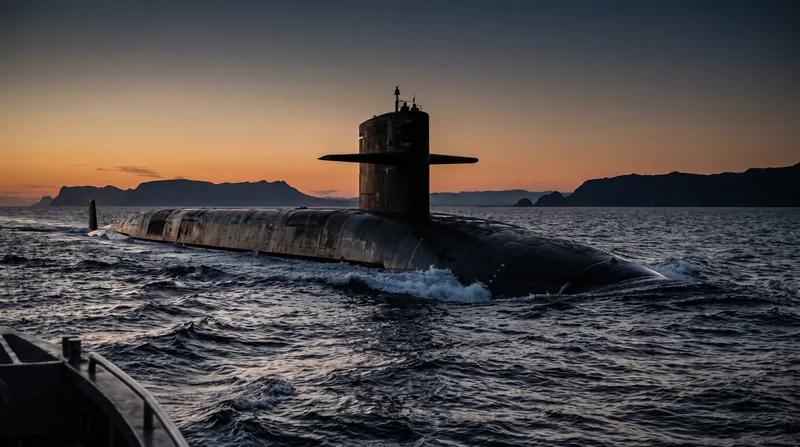
US Navy Advances W93 Nuclear Warhead into Full-Scale Engineering Development
4 sources
Defense Procurement
Ethiopia Receives 12 Russian Su-35 Fighters Ahead of Schedule, Eyes S-400 Missile Batteries
6 sources

Air Defense Logistics
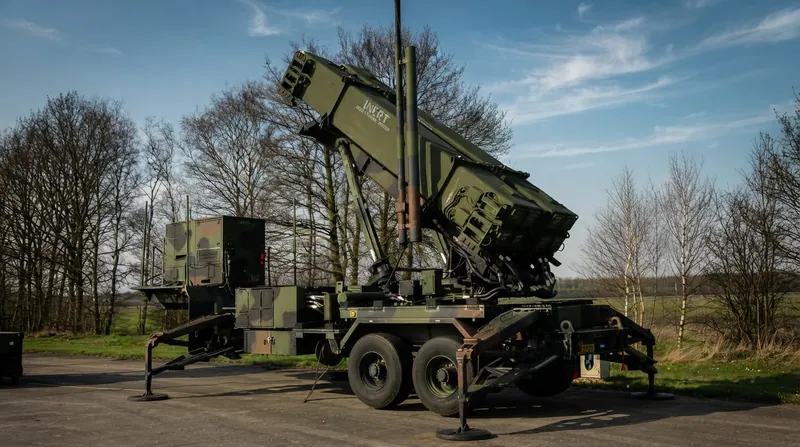
US Selects Poland to Host $253 Million European Patriot Missile Maintenance Hub
8 sources
AUKUS Alliance
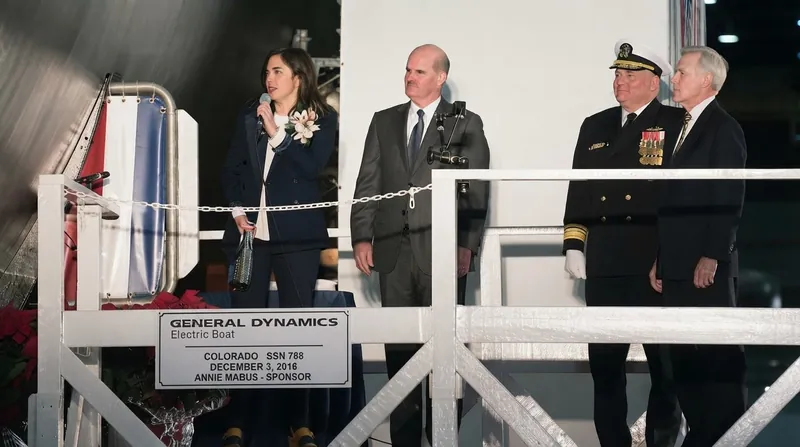
U.S. Navy Selects USS Colorado as First Nuclear Submarine for Australia's AUKUS Rotational Force
7 sources
Comments
Every angle. Every day.
Get Defense & Security stories with full source coverage and perspective breakdowns, free every day.