
Dolores Huerta, Pioneer of Farmworker Movement and Civil Rights Icon, Dies at 96
The labor leader who co-founded the United Farm Workers and coined the rallying cry 'Sí, se puede' passed away Wednesday in California following a battle with cancer.
By Javier Cruz

Share this story
Dolores Huerta, the trailblazing labor organizer who transformed the American agricultural landscape and coined the enduring slogan "Sí, se puede," died Wednesday morning at her home in Bakersfield, California. She was 96. Her family announced her passing in a social media statement, noting they were "deeply saddened" by the loss.[3]
Family spokesperson Erik Olvera confirmed that Huerta had been battling cancer, though he declined to specify the type in accordance with the family's wishes. California Governor Gavin Newsom ordered flags across the state to be flown at half-staff, calling her a resolute spirit who fought for the overlooked and forgotten.[3][4]
"California — and the United States — would not be what we are today without her resolute spirit, her passion for justice and fairness, and her commitment to those overlooked and forgotten," Newsom said in a statement. Los Angeles Mayor Karen Bass described her legacy as proof of what ordinary people can accomplish.[4]
From the classroom to the fields
Born Dolores Clara Fernandez on April 10, 1930, in Dawson, New Mexico, Huerta was raised in Stockton, California, where she witnessed widespread agricultural poverty. She initially pursued a career as an elementary school teacher in the farm-rich San Joaquin Valley, but the severe deprivation she saw quickly altered her trajectory.[3]
"I couldn't stand seeing kids come to class hungry and needing shoes," Huerta explained in a 2017 documentary. "I thought I could do more by organizing farmworkers than by trying to teach their hungry children." That realization prompted her to leave the classroom and turn to grassroots organizing.[4]
In 1962, Huerta joined forces with Cesar Chavez to establish the National Farm Workers Association, which later evolved into the United Farm Workers. Together, they orchestrated the historic Delano grape strike, a multi-year effort that ultimately secured collective bargaining rights and better working conditions for thousands of agricultural laborers.[3]
Her relentless advocacy helped pave the way for the passage of the 1975 Agricultural Labor Relations Act in California, a landmark piece of legislation that granted farmworkers the right to unionize. It was during these grueling early campaigns that Huerta coined the rallying cry "Sí, se puede," or "Yes, we can."[3]
A lifetime of civil disobedience
Huerta's commitment to the labor movement frequently placed her in direct physical and legal jeopardy. Over the course of her seven-decade career, she was arrested more than two dozen times for participating in nonviolent civil disobedience, protests, and strikes on behalf of marginalized workers.
Her activism did not slow with age. In August 2019, at 89 years old, Huerta was arrested in Fresno, California, while protesting alongside home care workers who were demanding a wage increase from $12 an hour. She was cited for failing to disperse and released with a misdemeanor charge.
She also faced severe police violence. In September 1988, San Francisco police officers brutally beat Huerta with batons during a peaceful protest outside a fundraiser for then-Vice President George H.W. Bush. The assault left her with two fractured ribs and a ruptured spleen that required emergency surgical removal.[3]
The incident triggered widespread outrage and ultimately resulted in an $825,000 settlement from the San Francisco Police Commission. The severe injuries she sustained also forced the San Francisco Police Department to implement sweeping changes to its crowd control and officer discipline policies.
Despite the physical toll, her work garnered the nation's highest accolades. In 2012, President Barack Obama awarded Huerta the Presidential Medal of Freedom, recognizing her as one of the most influential labor leaders and feminist activists of the twentieth century.[3]
Breaking a decades-long silence
Huerta's death comes just seven months after a bombshell revelation that fundamentally reshaped the historical narrative of the farmworker movement. In March 2026, she publicly disclosed to the New York Times that Chavez had sexually abused her, breaking a silence she had maintained for 60 years.[3]
Huerta revealed that Chavez had raped her in a vehicle in a secluded California grape field during the winter of 1966. She was 36 at the time of the assault, but chose not to report it due to authorities' hostility toward the union and a fear that nobody would believe her.
"I never talked about it to anybody and the reason I didn't is because I just didn't want to hurt the movement," Huerta explained earlier this year. She noted that she kept the abuse secret to protect the fragile organizing efforts they were building together in the Central Valley.[3]
Despite the complex and painful legacy of her partnership with Chavez, Huerta's individual impact on American civil rights and labor organizing remains unparalleled. Lawmakers and union leaders across the country emphasized her enduring influence on modern progressive movements following the announcement of her death.
Former House Speaker Nancy Pelosi remembered Huerta as a dear friend who led with unwavering courage and determination. "We all responded to her rallying cry, 'Sí se puede,' which inspired generations of Americans to believe in the power of collective action," Pelosi stated on Wednesday.[4]
The United Farm Workers and her family's foundation are expected to announce public memorial arrangements in the coming days. For now, the agricultural communities she spent her life defending are mourning the loss of the woman who forced the nation to recognize their labor.
Key points
- Dolores Huerta died at age 96 in Bakersfield, California, surrounded by her family following a battle with cancer.
- She co-founded the National Farm Workers Association in 1962 alongside Cesar Chavez, fundamentally transforming American agricultural labor rights.
- Her relentless grassroots advocacy was instrumental in securing California's landmark 1975 Agricultural Labor Relations Act.
- In March 2026, she publicly disclosed enduring sexual abuse by Chavez, breaking a 60-year silence to protect the movement.
- Labor & Agricultural Workers
- Emphasizes Huerta's foundational role in securing collective bargaining, better wages, and humane working conditions for the nation's most exploited laborers.
- Feminist & Civil Rights Advocates
- Highlights her intersectional approach to activism, her fight for women's representation, and her courage in breaking a 60-year silence regarding sexual abuse.
- Political Leaders
- Focuses on her broader impact on American legislation, civic engagement, and her ability to inspire generations of progressive political action.
Perspectives this story doesn't cover
- Agricultural Growers and Corporate Farm Owners
- San Francisco Police Department Representatives
Sources
Source coverage
6 outlets
3 viewpoints surfaced






- [1]TIMELabor & Agricultural Workers
Dolores Huerta, Labor Leader and Civil Rights Icon, Dies at 96
Read on TIME → - [2]The Texas TribunePolitical Leaders
Dolores Huerta, trailblazing advocate for migrant farmworkers, dies at 96
Read on The Texas Tribune → - [3]SFGATEFeminist & Civil Rights Advocates
California labor icon Dolores Huerta dies at 96 after cancer battle
Read on SFGATE → - [4]CBS NewsPolitical Leaders
Dolores Huerta, labor activist and civil rights icon, dies at age 96
Read on CBS News → - [5]AxiosFeminist & Civil Rights Advocates
Dolores Huerta, pioneering labor activist, dies at 96
Read on Axios → - [6]Pasadena NowLabor & Agricultural Workers
United Farm Workers Co-Founder Dolores Huerta Dies at 96
Read on Pasadena Now →
More in News & Politics
See all →DOJ Independence
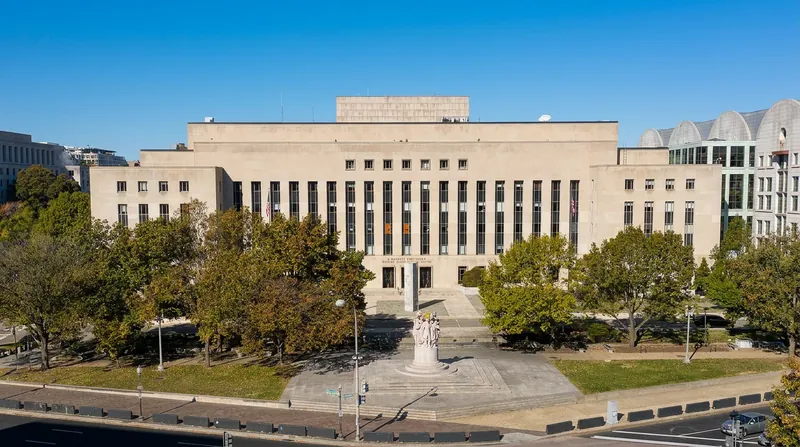
Federal Judge Rules Trump Administration Unlawfully Fired Prosecutor Maurene Comey
9 sources
Campaign Rhetoric
Trump Invokes 9/11 in Escalating Attacks on Michigan Senate Candidate Abdul El-Sayed
6 sources

Campus Security
At least 12 Injured in Shooting Near Florida A&M University Stadium During Homecoming
8 sources
Auto Industry Tariffs
Audi Commits $4 Billion for First US Manufacturing Plant in Georgia Following Trump Tariffs
5 sources
Comments
Every angle. Every day.
Get News & Politics stories with full source coverage and perspective breakdowns, free every day.