
California Becomes First State to Ban 'Sell By' Dates, Mandating New 'Use By' and 'Best By' Labels
A new California law eliminates confusing 'sell by' dates on packaged foods, replacing them with a standardized two-tier system to distinguish between peak quality and food safety.
By Kabir Mehra

You are standing in the cold draft of your open refrigerator, holding a carton of milk or a half-eaten tub of yogurt. The date stamped on the plastic passed two days ago. Is it perfectly safe to eat, or a one-way ticket to a ruined weekend? For decades, that tension has forced American home cooks to play a guessing game, relying on the unreliable 'sniff test' while staring down a chaotic jumble of dates.[1]
That ambiguity has a steep cost, leading households to throw away billions of dollars of perfectly wholesome food just to err on the side of caution. But the era of pantry paranoia is coming to an end. California has officially stepped in to resolve the confusion, becoming the first state in the nation to ban consumer-facing 'sell by' dates and mandate a clear, standardized labeling system.[2][3]
Under Assembly Bill 660, which officially took effect on July 1, 2026, the guesswork is being stripped out of the grocery aisle. The legislation forces food manufacturers to abandon the Wild West of packaging—where over 50 different phrases like 'expires on,' 'freshest by,' and 'please enjoy by' previously competed for your attention. Instead, the state now requires a strict, two-tier system that tells you exactly what you need to know.[1][2]
The new rules force brands to choose between communicating peak freshness or actual food safety, drawing a hard, usable line between a stale cracker and spoiled deli meat. For shelf-stable items where time merely degrades the flavor or texture—think boxed cereal, canned beans, or crackers—the label must now read 'Best if Used by' or 'Best if Used or Frozen by.' This is the 'quality' tier, a gentle suggestion that the food might not taste quite as vibrant, but won't make you sick.[3][6]
The second tier is strictly for safety. For highly perishable items that carry a genuine risk of foodborne illness as they age, the packaging must explicitly state 'Use by' or 'Use by or Freeze by.' When you see this label, the state is telling you that the window for safe consumption is actually closing, and the product should be handled with greater caution or tossed.[1][3][6]
The most significant casualty of this new culinary landscape is the long-familiar 'sell by' date. Historically, this phrase was never meant for the shopper at all; it was an internal inventory management tool designed to help grocery store clerks rotate stock and keep displays looking fresh. Yet, because it was stamped prominently on the packaging, consumers routinely interpreted it as a hard expiration date.[2][3][4][6]
The result of that misunderstanding has been staggering. Shoppers have routinely tossed wholesome food into the trash simply because the store's optimal display window had closed. Nationally, Americans discard an estimated $19.2 billion worth of edible food annually, largely because the labels on the package sent the wrong signal.[4][6]
The environmental stakes of this kitchen-level confusion are just as massive. In California alone, residents discard nearly 6 million tons of food each year. As that organic waste decomposes in landfills, it accounts for 41% of the state's point-source methane emissions—a greenhouse gas that heats the climate 84 times more powerfully than carbon dioxide. By clarifying the labels, the state hopes to keep 2.5 billion meals' worth of unspoiled food out of the trash and on the table.[4][5]
The transition to these cleaner, clearer labels won't happen overnight. The mandate applies specifically to products manufactured on or after July 1, 2026. This means that older inventory will remain on grocery store shelves during a natural sell-through period, and you might still spot a rogue 'sell by' date on a can of soup tucked in the back of your pantry for a few more months.[1][2][3]
Retailers aren't entirely losing their inventory tools, either. The law still allows for coded 'sell by' information to help clerks manage stock, provided the code is not easily readable by consumers and strips out the confusing 'sell by' phrasing entirely.[3][6]
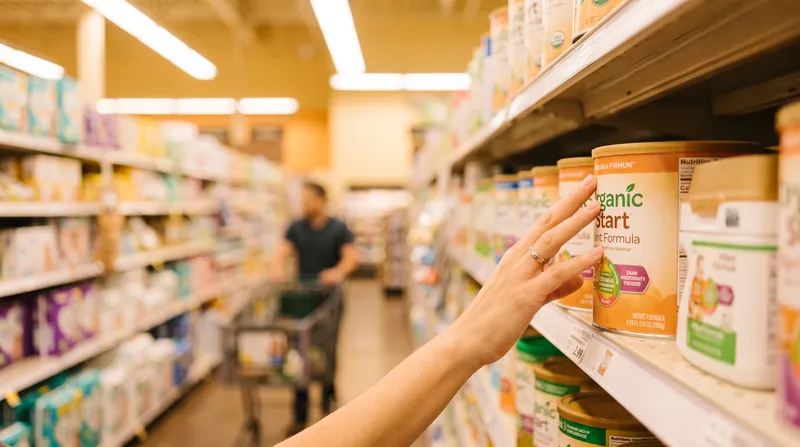
There are a few notable exceptions to the new rules. Infant formula, eggs, and certain alcoholic beverages like beer, wine, and distilled spirits are exempt from AB 660, as they are already governed by separate, pre-existing federal or state safety regulations. But for the vast majority of your grocery haul, the new language will be the law of the land.[2][3]
While the mandate is technically limited to California, its impact will almost certainly reshape your kitchen no matter where you live. Because of the state's massive economic footprint, food manufacturers are highly unlikely to take on the logistical nightmare and added cost of printing two distinct sets of labels for different parts of the country. Industry experts expect these standardized phrases to quickly become the de facto national standard.[2][6]
Federal agencies have long recognized the problem. The FDA and USDA previously encouraged voluntary standardization, noting that date label confusion accounts for roughly 20% of all food waste in the home. However, voluntary compliance hovered around 40%, prompting California lawmakers to finally make the system mandatory.[3]
As these new, streamlined labels filter into refrigerators and pantries across the country, the daily ritual of the 'sniff test' might not disappear entirely. But the anxiety surrounding it—and the guilt of throwing away perfectly good food—should finally begin to fade, leaving home cooks with a lot more confidence and a little more cash in their pockets.[1][2]
Key points
- California's AB 660, effective July 1, 2026, bans consumer-facing 'sell by' dates on packaged foods to reduce waste and confusion.
- The law mandates a two-tier system: 'Best if Used by' for peak quality and 'Use by' for actual food safety.
- 'Sell by' dates were originally designed for store inventory management, but consumers frequently mistook them for expiration dates.
- Confusion over date labels accounts for roughly 20% of home food waste, costing Americans billions of dollars annually.
Unanswered questions
- How strictly the state will enforce the new labeling rules on smaller, independent food manufacturers during the initial rollout.
- Whether the federal government will formally adopt California's exact language as a mandatory national standard.
How we got here
2017
California passes AB 954, encouraging food manufacturers to voluntarily adopt standardized date labels.
September 2024
Governor Gavin Newsom signs AB 660 into law, moving the state from voluntary guidance to mandatory rules.
July 1, 2026
AB 660 officially takes effect, banning consumer-facing 'sell by' dates on all newly manufactured packaged foods.
Late 2026
Older inventory carrying the banned 'sell by' labels gradually clears out of grocery stores during the sell-through period.
- Environmental Advocates
- Focus on the massive reduction in organic waste and methane emissions.
- Food Manufacturers & Retailers
- Navigating the logistical hurdles of compliance and national packaging harmonization.
- Consumer Protection Groups
- Emphasizing household savings and the end of deceptive or confusing marketing.
Perspectives this story doesn't cover
- Federal Regulators
- Food Bank Operators
Sources
Source coverage
6 outlets
3 viewpoints surfaced






- [1]Los Angeles TimesConsumer Protection Groups
New California law standardizes food date labels to reduce waste
Read on Los Angeles Times → - [2]NewsweekConsumer Protection Groups
California is taking the lead in overhauling the way food is labeled
Read on Newsweek → - [3]Law CommentaryFood Manufacturers & Retailers
California Bans “Sell By” Food Labels in Push to Cut Waste and Consumer Confusion
Read on Law Commentary → - [4]Resource RecyclingEnvironmental Advocates
CA mandates uniform food labels starting July 1
Read on Resource Recycling → - [5]California Department of Food and AgricultureEnvironmental Advocates
AB 660: Standardized Food Date Labeling
Read on California Department of Food and Agriculture → - [6]EAS Consulting GroupFood Manufacturers & Retailers
California Standardizes Food Date Labels Beginning July 1
Read on EAS Consulting Group →
More in Food & Drink
See all →Food Safety
How the USDA's New Heavy Metal Testing Rules Will Change Processed Meats
4 sources

Thermal Dynamics
The 15-PSI Threshold: How Trapped Steam Pushes Water to 250°F and Rewrites Cooking Times
8 sources

Food Science
How Precision Temperature Control Defines Sous Vide Cooking
4 sources
Food Preservation
The Science of Freezing and Thawing: How Ice Crystal Formation Affects Food Quality and the Safest Methods for Defrosting
10 sources

Comments
Every angle. Every day.
Get Food & Drink stories with full source coverage and perspective breakdowns, free every day.