
Alberta Proposes Strict Land and Water Limits on AI Data Center Development
Provincial lawmakers have tabled Bill 42 to establish strict environmental and zoning boundaries for new hyperscale computing facilities. The framework mandates near-zero water cooling and forces developers to fund their own power infrastructure to shield local ratepayers.
By Sergei Orlov

Share this story
Alberta has introduced sweeping legislation to restrict where massive artificial intelligence data centers can be built, drawing a hard line between the province's tech ambitions and its natural resources. The new rules target facilities drawing 10 megawatts or more, barring them from prime agricultural land and residential areas.[1]
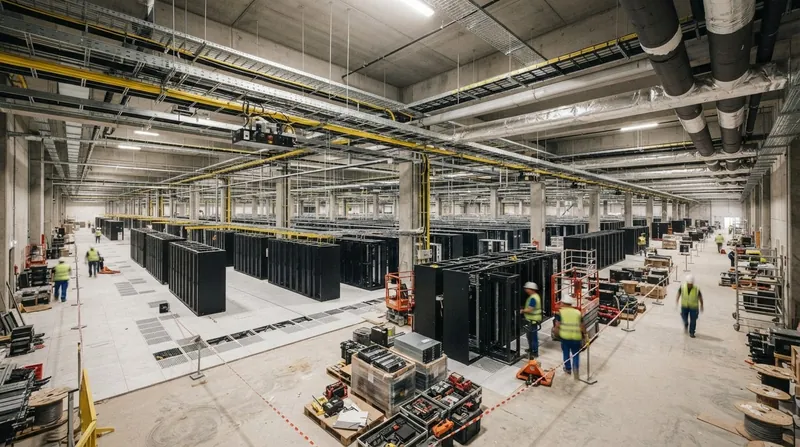
The proposed rules arrive as Western Canada experiences an unprecedented surge in hyperscale compute investments. While developers frequently market these campuses as clean engines of digital innovation, the facilities are fundamentally heavy industrial sites that require massive, continuous inputs of electricity and water.[2]
That reality has sparked intense pushback from rural communities and agricultural producers. Residents have raised alarms at government town halls over strained local water supplies, persistent noise pollution from industrial cooling fans, and the permanent paving of generational farmland.[1][3]
Under the Energy, Environment and Utilities Statutes Amendment Act, large data centers must maintain a minimum setback of 600 meters from the nearest home. The Alberta Utilities Commission will serve as the primary regulator for these facilities, shifting oversight to a provincial body equipped for large-scale industrial impacts.[1]
Municipalities retain the ability to request alternative setbacks from the commission if local planning supports compatible development. Nonetheless, the 600-meter baseline serves as a strict default buffer, designed to shield rural homeowners from the continuous hum of server farms and their massive cooling infrastructure.
Protecting Prime Farmland
The legislation places uncompromising limits on agricultural impacts, reflecting the foundational role of farming in Alberta's economy. Large data centers are flatly prohibited on irrigated land, a restriction the government attributes to the massive public and private investment required to bring water to those specific fields.[1][3]
The bill also shields approximately 14 million acres of the province's highest-quality soil from digital infrastructure development. This includes all Class 1 and 2 farmland, as well as Class 3 land in municipalities that lack the higher-grade soils, ensuring prime agricultural capacity is not permanently paved over.[1]
"Albertans told us what matters most: their communities, farmland and water," said Nate Glubish, Alberta's Minister of Technology and Innovation. He emphasized that the proposed rules are designed to ensure the sector grows on the province's terms, providing clear boundaries for developers.[1]
The restrictions on land use directly address the friction that derailed recent mega-projects. In September 2025, the 1,120-acre Rocky View Technology Park northeast of Calgary, which would have connected to 240-kilovolt transmission lines, was rejected by county councilors after local farmers opposed the industrialization.[4]
By codifying these protections into provincial law, the government aims to prevent similar protracted zoning battles. Developers will now have a clear map of where they can build, directing future investments toward designated industrial zones, brownfield sites, and existing power generation facilities.
Water and Cooling Mandates
Beyond land use, water consumption represents the second major front in the new regulatory framework. Artificial intelligence data centers operate at much higher power densities than traditional facilities, generating immense heat that requires robust thermal management systems.[2]
To protect the province's watersheds, the bill mandates that new data centers use close to zero water for cooling. This requirement effectively outlaws the cheapest evaporative cooling setups, forcing developers to adopt expensive closed-loop liquid cooling or advanced air-cooling technologies.[1]
The legislation also requires facilities to recover waste heat wherever feasible, redirecting it for use by nearby greenhouses, industrial operations, or residential heating networks. This circular approach aims to extract actual local utility from the massive energy footprint of artificial intelligence infrastructure.[1]
Water usage has become a highly sensitive issue in regions like southern Alberta, which has faced ongoing water shortages and municipal restrictions. By neutralizing the water demands of new data centers, the province hopes to decouple digital growth from its most constrained natural resource.[3]
Shielding the Power Grid
Electricity consumption remains the most complex challenge in scaling digital infrastructure. The demand from proposed data center projects in Alberta currently exceeds the grid's peak capacity, raising fears that rapid development could destabilize the system or drive up costs for everyday consumers.[1][2]
To shield residents from rising utility bills, Bill 42 introduces a new data center designation that requires developers to pay for their own power generation and transmission infrastructure. Proponents will be legally barred from passing these capital costs onto Alberta ratepayers.[1]
The legislation builds on existing rules that require facilities to prove they will not strain the provincial grid before they are approved. In the event of a grid emergency or supply shortfall, data centers will be required to curb their electricity usage first.[1]
Mark Daley, chief artificial intelligence officer at Western University, told CBC News the regulations are reasonable. He noted that the provisions requiring operators to shoulder their own power infrastructure costs are a critical protection for the public.[1]
The province estimates that approximately 30 percent of current data center proposals will likely be affected by the new framework. However, projects that are already underway, such as Meta's $13 billion campus in Sturgeon County which broke ground in 2024, are exempt from the rules.[1]
Environmental Accountability
The omnibus bill also introduces much tougher penalties for illegal dumping and environmental contamination. Corporations, including data center operators, could face maximum fines of $6 million for serious environmental breaches, significantly raising the stakes for corporate negligence.[1]
These fines are levied in addition to existing cleanup and remediation obligations. The government intends for the steep penalties to serve as a powerful deterrent, ensuring that multinational technology companies adhere strictly to provincial environmental standards.[1]
Separately, the legislation eliminates an unenforced 100-million-metric-tonne cap on oil sands emissions from 2016, while proposing new standards for oil and gas companies to clean up their own wells. Energy firms will be required to open a dedicated account and build up financial security tied to each new well over time.[1]
This measure aims to reduce the strain on Alberta's chronically underfunded orphan well cleanup program, ensuring that the industry remains responsible for remediation even if an asset is sold. While distinct from the data center rules, it reflects a broader provincial push for industrial accountability.[1]
As the global race to build artificial intelligence infrastructure accelerates, Alberta's legislation represents one of the most comprehensive regulatory frameworks in North America. The province is attempting to thread the needle between attracting billions in private investment and preserving its rural character.[2]
For technology giants shopping for cheap prairie land, the map has been fundamentally redrawn. The ultimate impact of Bill 42 will depend on how strictly the Alberta Utilities Commission enforces the new boundaries, and whether the added costs of sustainable cooling deter future hyperscale investments.[2][3]
Key points
- Alberta's Bill 42 restricts data centers drawing 10 megawatts or more from operating within 600 meters of homes.
- The legislation prohibits large facilities on irrigated land and protects roughly 14 million acres of prime farmland.
- Data center developers will be required to cover their own power infrastructure costs to protect provincial ratepayers.
- The rules mandate near-zero water use for cooling and require facilities to curb electricity use during grid emergencies.
What we don’t know
- How strictly the Alberta Utilities Commission will enforce the 600-meter setback when municipalities request exemptions for specific projects.
- Whether the added costs of independent power generation and advanced liquid cooling will drive hyperscale developers to neighboring provinces.
- The exact number of current data center proposals that will be forced to relocate or redesign to meet the new standards.
How we got here
September 2025
Rocky View County councilors reject the 1,120-acre Rocky View Technology Park over agricultural and water concerns.
July 2026
Meta announces a $13 billion data center campus in Sturgeon County, accelerating the province's hyperscale boom.
November 18, 2026
The Alberta government introduces Bill 42, proposing strict land, water, and power restrictions on new data centers.
- Provincial Government
- Alberta aims to set the highest standards in North America for responsible data center development.
- Agricultural Communities
- Rural residents prioritize the protection of prime farmland and local water supplies over industrial expansion.
- Technology Developers
- Infrastructure firms face higher capital costs and stricter design constraints under the new framework.
Perspectives this story doesn't cover
- Environmental advocacy groups evaluating the impact of removing the oil sands emissions cap.
- Ratepayer advocates assessing whether the power infrastructure cost-sharing provisions go far enough.
Sources
Source coverage
4 outlets
3 viewpoints surfaced




- [1]CBC NewsProvincial Government
Alberta government proposing more restrictions on upcoming data centre projects
Read on CBC News → - [2]Calgary HeraldTechnology Developers
Varcoe: With new rules on AI data centres, 'a moratorium isn't necessary,' says Alberta technology minister
Read on Calgary Herald → - [3]Global NewsAgricultural Communities
Alberta proposes data centre buffer zone near homes, some farms and irrigated land
Read on Global News → - [4]Rocky View Technology ParkAgricultural Communities
Rocky View Technology Park - Delivering power for a sustainable future

More in Technology
See all →AI Infrastructure
Nscale Amasses $5.5 Billion Debt and Warns of Cash Gap Ahead of $35 Billion IPO
8 sources
Digital Infrastructure
Italy's Poste Italiane Launches €600 Million Data Center Investment Fund
8 sources

AI Infrastructure
Google Acquires Pre-Developed Wyoming Data Center Site From Crusoe
6 sources

Hyperscaler Strategy
Microsoft Terminates Oracle AI Cloud Lease Amid Broader Infrastructure Reassessment
8 sources
Comments
Every angle. Every day.
Get Technology stories with full source coverage and perspective breakdowns, free every day.