
Microsoft Terminates Oracle AI Cloud Lease Amid Broader Infrastructure Reassessment
Microsoft is winding down a multibillion-dollar agreement to rent artificial intelligence computing capacity from Oracle, citing a shift away from older-generation Nvidia chips. The move triggered a sharp drop in Oracle's stock and signals a broader recalibration of hyperscaler cloud partnerships.
By Wei Zhang

Share this story
Microsoft has officially begun winding down a massive agreement to rent artificial intelligence computing capacity from Oracle. The decision marks the end of a high-profile partnership that was originally forged to support the rapid expansion of Microsoft's AI-assisted Bing search engine in 2023.[3][4]
The termination is part of a broader reassessment of Microsoft's multibillion-dollar cloud infrastructure partnerships. As the initial frenzy to secure any available graphics processing unit subsides, the company is taking a more calculated approach to its external hardware dependencies.[1][8]
At the center of the cancellation is the hardware itself. The Oracle Cloud Infrastructure servers leased by Microsoft relied on an older generation of Nvidia chips, which have steadily lost their appeal as newer, vastly more efficient architectures enter the market.[3][5]
Over recent months, Microsoft simply stopped renewing the capacity blocks as they expired. The rented computing power became less valuable over time, failing to meet the evolving demands of the company's increasingly complex artificial intelligence workloads.[1][6]
The financial fallout was immediate. Shares of Oracle dropped more than 4 percent in afternoon trading on November 6, 2026, touching a two-year low as investors digested the loss of a marquee tenant for its cloud division.[2][5]
Shifting Silicon Priorities
The artificial intelligence industry is currently undergoing a brutal hardware transition. During the initial generative AI boom in 2023 and 2024, companies scrambled to secure whatever compute they could find, regardless of the specific chip's vintage or its overall efficiency profile.[7]
That era of indiscriminate hoarding appears to be ending. Microsoft's decision to walk away from the Oracle lease underscores a growing divide between legacy hardware and the state-of-the-art silicon required to train and serve next-generation models.[5][8]
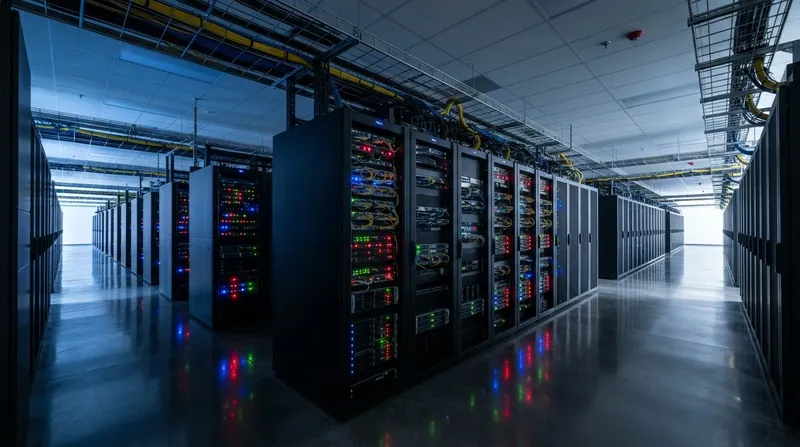
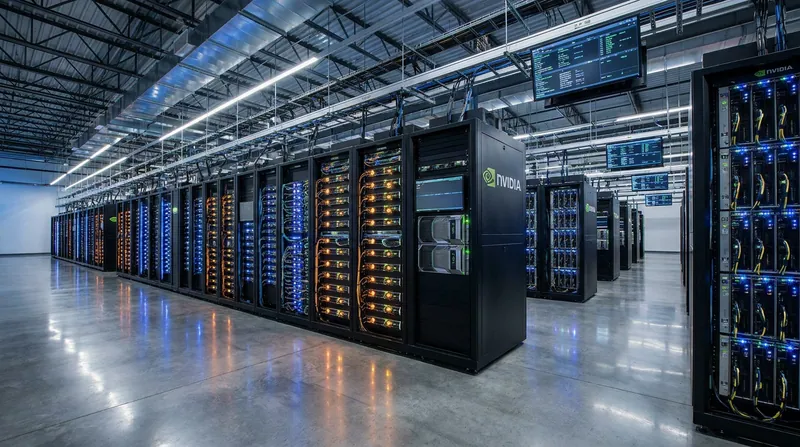
Older Nvidia architectures consume significantly more power per calculation than their modern successors. For a hyperscaler operating at Microsoft's immense scale, the electricity and cooling costs associated with running outdated rented servers quickly erode any economic benefit.[3]
"Demand for OCI's AI infrastructure remains strong, including for earlier-generation GPUs," an Oracle spokesperson told Reuters following the initial Bloomberg report. The company maintains that other enterprise customers are still eager to utilize the capacity that Microsoft is leaving behind.[3]
However, the market reaction suggests investors are skeptical about how easily Oracle can replace a tenant of Microsoft's size. The original 2023 deal was viewed as a major validation of Oracle's pivot toward becoming a premier artificial intelligence infrastructure provider.[2][7]
The Hyperscaler Recalibration
Microsoft's infrastructure strategy is rapidly shifting inward. The company has spent the last two years aggressively building out its own global data center footprint, reducing its reliance on third-party cloud providers to handle overflow capacity.[4][8]
This internal expansion includes the widespread deployment of Microsoft's custom-designed Maia artificial intelligence accelerators. By shifting workloads to proprietary silicon rather than rented hardware, the company can tightly control both the underlying architecture and the associated operating margins.[1][7]
Renting capacity from a rival cloud provider was always designed as a stopgap measure. The Oracle agreement provided Microsoft with immediate compute power during a period of severe global chip shortages, allowing it to launch consumer features without waiting for its own facilities to come online.[3][6]
Now that supply chains have normalized and newer Nvidia chips are flowing into Microsoft's own Azure data centers, the economic rationale for the Oracle partnership has evaporated. Paying a premium to rent older hardware from a competitor no longer aligns with the company's strict margin targets.[5][8]
The reassessment extends beyond just Oracle's facilities. Microsoft is reportedly tightening its oversight of several other data center projects run by smaller neocloud providers, heavily scrutinizing construction delays and rising costs across its entire external infrastructure portfolio.[3][7]
Oracle's Cloud Ambitions Tested
For Oracle, the loss of the Microsoft lease presents a significant narrative challenge. The company has aggressively positioned its Oracle Cloud Infrastructure division as a specialized, high-performance alternative to industry giants like Amazon Web Services and Google Cloud.[2][4]
Securing Microsoft as a tenant in 2023 was a cornerstone of that specific sales pitch. It demonstrated to the broader market that even the world's largest software company trusted Oracle's network architecture to handle mission-critical artificial intelligence workloads.[3][7]
Without that anchor tenant, Oracle must now prove that its cloud division can sustain its growth trajectory through standard enterprise adoption. The company is betting that mid-sized businesses and traditional corporate clients will gladly absorb the older-generation compute capacity.[1][5]
These enterprise customers often run smaller, less demanding inference workloads that do not require the absolute bleeding edge of silicon performance. For them, the immediate availability and lower pricing of earlier-generation Nvidia chips might actually represent a competitive advantage.[3][8]
Still, the stock market's sharp reaction reflects the reality that hyperscalers drive the vast bulk of infrastructure spending. Losing a multibillion-dollar commitment from a primary driver of the artificial intelligence boom is a material setback for Oracle's near-term revenue projections.[2][5]
Maturing Infrastructure Markets
The Microsoft-Oracle split serves as a leading indicator for the broader cloud computing sector. It signals that the market for artificial intelligence infrastructure is maturing from a phase of frantic accumulation into a period of strict, cost-conscious optimization.[6][7]
Cloud providers that stockpiled older graphics processing units during the 2023 and 2024 shortages may soon find themselves holding rapidly depreciating assets. As newer architectures offer dramatic improvements in processing speed and energy efficiency, the secondary market for legacy compute will likely soften.[5][8]
This dynamic places immense pressure on infrastructure providers to continuously upgrade their server fleets. The capital expenditure required to stay relevant in the artificial intelligence race is staggering, and the useful economic lifespan of the hardware is proving to be remarkably short.[1][2]
Microsoft's move also highlights the immense leverage that top-tier hyperscalers hold over the rest of the technology ecosystem. When a company with Microsoft's capital decides to change its hardware strategy, the ripple effects can instantly revalue billions of dollars in competitor assets.[4][7]
The Silicon Supply Chain
The shift away from legacy hardware also carries implications for Nvidia and the broader semiconductor supply chain. As hyperscalers refuse to renew leases on older chips, the pressure intensifies on manufacturers to deliver next-generation architectures without production delays.[3][5]
Microsoft's refusal to settle for outdated performance metrics shows that buyers are becoming far more discerning. The days of accepting any available graphics processing unit are over, replaced by a strict demand for the highest possible compute density per watt.[1][8]
This transition accelerates the obsolescence cycle for data center hardware across the globe. Facilities that were cutting-edge just two years ago now require massive capital injections to rip out older servers and install the liquid-cooling systems demanded by modern silicon.[2][7]
The termination of the lease points toward a healthy, rationalizing market environment. It demonstrates that the artificial intelligence industry is beginning to prioritize unit economics and architectural efficiency over the sheer volume of available servers.[4][6]
The termination of the lease points toward a healthy, rationalizing market environment.
Key points
- Microsoft is phasing out its 2023 agreement to rent artificial intelligence computing capacity from Oracle Cloud Infrastructure.
- The decision stems from the declining value of older-generation Nvidia chips that no longer meet Microsoft's evolving workload demands.
- Oracle shares fell more than 4 percent to a two-year low following reports of the terminated lease.
- The move reflects a broader industry shift as hyperscalers prioritize newer silicon architectures and internal capacity over legacy hardware rentals.
Open questions
- The exact financial value of the terminated lease blocks, as neither Microsoft nor Oracle publicly disclosed the specific terms of the original 2023 contract.
- How much of the vacated older-generation Nvidia capacity Oracle has successfully re-leased to other enterprise customers.
Timeline
2023
Microsoft and Oracle announce a multi-year agreement to power the AI-assisted Bing search engine using Oracle Cloud Infrastructure.
2024 - 2025
Microsoft aggressively expands its internal Azure data center footprint and begins deploying its custom Maia AI accelerators.
November 2026
Microsoft declines to renew expiring capacity blocks, effectively winding down the Oracle lease and triggering a sharp drop in Oracle's stock.
- Hyperscaler Cloud Providers
- Prioritizing internal capacity and custom silicon over third-party rentals to control margins and power efficiency.
- Alternative Cloud Vendors
- Arguing that earlier-generation hardware remains highly viable and cost-effective for enterprise inference workloads.
- Infrastructure Investors
- Expressing concern over the rapid depreciation of AI hardware and the capital expenditure required to refresh server fleets.
Perspectives this story doesn't cover
- Mid-sized enterprise customers who might benefit from cheaper, older-generation compute capacity.
Sources
Source coverage
8 outlets
3 viewpoints surfaced








- [1]Seeking AlphaHyperscaler Cloud Providers
Microsoft winds down rented AI computing capacity from Oracle: report
Read on Seeking Alpha → - [2]Investing.comInfrastructure Investors
Oracle falls 4% as Microsoft reportedly winds down AI cloud capacity deal
Read on Investing.com → - [3]CNAAlternative Cloud Vendors
Microsoft is winding down Oracle deal to rent AI cloud capacity, Bloomberg News reports
Read on CNA → - [4]The Economic TimesHyperscaler Cloud Providers
Microsoft is winding down Oracle deal to rent AI cloud capacity: Bloomberg
Read on The Economic Times → - [5]TradingKeyInfrastructure Investors
Oracle Shares Drop Over 4% to Two-Year Low as Microsoft Reportedly Declines to Renew Older-Chip AI Compute Lease
Read on TradingKey → - [6]MarketScreenerAlternative Cloud Vendors
Microsoft to Conclude Deal With Oracle for Renting AI Compute
Read on MarketScreener → - [7]Global Banking & Finance Review
Microsoft is winding down Oracle deal to rent AI cloud capacity, Bloomberg News reports
Read on Global Banking & Finance Review → - [8]Traders Union
Microsoft winds down Oracle AI cloud capacity deal amid partnership review
Read on Traders Union →
More in Technology
See all →AI Hardware
OpenAI Negotiates Google TPU Purchases to Diversify AI Infrastructure
7 sources

AI Hardware
Oracle to Add Cerebras Wafer-Scale AI Chips to Cloud Infrastructure by 2027
6 sources

AI Infrastructure
Nscale Faces Investor Pushback on $30 Billion IPO Valuation After Microsoft Cancels UK Data Center
5 sources
Export Controls
Nvidia Instructs Cloud Partners to Cap Chinese Client Access at 49 Percent
6 sources
Comments
Every angle. Every day.
Get Technology stories with full source coverage and perspective breakdowns, free every day.