
The Science of Searing Meat: Why You Don't Need to 'Seal in the Juices'
For over a century, cooks have been told that searing meat at high temperatures locks in moisture. Food science proves the exact opposite is true—but searing remains essential for an entirely different reason.
By Lan Xu

In short
- Searing meat does not seal in juices; high heat actually causes more moisture loss.
- The true purpose of searing is to trigger the Maillard reaction, which creates complex flavors and a brown crust.
- Meat juiciness is determined entirely by its final internal temperature and how long it rests.
Everyone who has ever stood over a hot stove has heard the golden rule of cooking meat: you must sear it first to "seal in the juices." It sounds perfectly logical. As the raw meat hits the smoking-hot cast iron, it sizzles and forms a thick, browned crust. It is incredibly easy to imagine that this crust acts as a waterproof barrier, trapping all the savory moisture inside the steak so it doesn't bleed out into the pan.
This piece of kitchen wisdom is passed down from generation to generation, printed in countless cookbooks, and repeated by professional chefs on television. It traces its origins back to 1847, when a prominent German chemist named Justus von Liebig theorized that high heat quickly coagulates the proteins on the surface of meat, forming a juice-trapping shell. The legendary French chef Auguste Escoffier adopted the theory, and it became culinary gospel.[6]
There is only one problem with the theory: it is completely, demonstrably false. Food scientist Harold McGee, author of the seminal book *On Food and Cooking*, has spent decades trying to debunk what he calls "the biggest myth in cooking." The crust that forms on a seared piece of meat is not waterproof. In fact, it is highly porous, and searing actually does the exact opposite of what we have been told.
The physics of moisture loss were famously demonstrated by Alton Brown on the Food Network show *Good Eats*. In a controlled experiment, Brown took two identical steaks of the same weight. He seared one in a hot skillet before roasting it, and he put the other straight into the oven without searing. When both steaks reached an internal temperature of 140 degrees Fahrenheit, he weighed them again. The unseared steak lost 13 percent of its raw weight. The seared steak lost 19 percent.[5]
To understand why high heat is the enemy of moisture, you have to look at the structure of the meat itself. Raw meat is roughly 70 percent water, and most of that water is held within long-strand muscle fibers. When you apply heat to those fibers, they begin to contract and shrink.
Think of those muscle fibers like a soaking wet towel. If you twist the towel gently, a little bit of water drips out. If you twist it violently, water pours out. High heat acts like a violent twist. When a steak hits a 500-degree pan, the muscle fibers on the surface contract rapidly and forcefully, physically squeezing the water out of the meat. That is the sizzling sound you hear—it is the sound of your steak's moisture boiling away into the air.[6]
If searing actually dries meat out, why do we bother doing it at all? The answer lies in a chemical process called the Maillard reaction. Named after the French chemist Louis-Camille Maillard, this reaction occurs when amino acids and reducing sugars are subjected to high heat—typically above 300 degrees Fahrenheit.
When meat hits a hot pan, the Maillard reaction kicks into overdrive. It breaks down the simple proteins and sugars on the surface and recombines them into hundreds of entirely new, highly complex flavor compounds. It is the exact same chemical process that turns pale dough into a golden loaf of bread, and green coffee beans into rich, dark roasts.[6]
Searing is not about building a waterproof seal; it is about building a flavor factory. That deeply browned, caramelized crust provides the savory, umami-rich taste and the satisfying textural crunch that separates a great steak from a mediocre one. You sear for flavor, not for moisture.
So how do you actually keep a piece of meat juicy? The science is clear: juiciness is determined almost entirely by the meat's final internal temperature. The higher the internal temperature climbs, the more the muscle fibers contract, and the more water is expelled. If you want a juicy steak, the most important thing you can do is use a meat thermometer and pull the beef off the heat before it crosses 140 degrees Fahrenheit.[2]
The second key to juiciness is patience. As meat cooks, the intense heat on the outside forces the juices toward the cooler center. If you slice into a steak the moment it comes off the grill, those concentrated juices will immediately flood out onto your cutting board. By letting the meat rest for five to ten minutes, the temperature equalizes, the muscle fibers relax, and the liquid is reabsorbed evenly throughout the cut.[3][4]
Armed with this scientific understanding, modern recipe developers have completely flipped the traditional cooking script. J. Kenji López-Alt popularized a technique known as the "reverse sear," which is now widely considered the ultimate way to cook a thick steak or roast.[1]
Instead of starting with a screaming-hot pan, the reverse sear begins in a very low oven—around 250 degrees Fahrenheit. The meat slowly and gently comes up to temperature. Because the heat is so low, the muscle fibers do not contract violently, meaning the meat retains far more of its internal moisture.[1][2]
While the inside is cooking gently, the dry heat of the oven is slowly evaporating the surface moisture on the outside of the steak. This is the secret weapon of the reverse sear. When you finally take the meat out of the oven and place it in a blazing-hot skillet for just one minute per side, the completely dry surface undergoes the Maillard reaction instantly.[1]
Because the sear happens so fast on a dry surface, the extreme heat doesn't have time to penetrate deep into the meat. The result is a steak that is perfectly pink from edge to edge, with no overcooked gray band beneath the surface, maximum internal juiciness, and a spectacular, flavorful crust. It is a triumph of kitchen science over culinary myth.[1][6]
Jargon, explained
- Maillard Reaction
- A chemical reaction between amino acids and reducing sugars at high temperatures that gives browned food its distinctive flavor.
- Reverse Sear
- A cooking method where meat is cooked at a low temperature until nearly done, then finished with a high-heat sear.
- Carryover Cooking
- The phenomenon where meat continues to rise in internal temperature after being removed from the heat source.
- Fond
- The browned, caramelized bits of meat and juices stuck to the bottom of a pan after searing, used as a base for sauces.
Common questions
Does searing meat lock in the juices?
No. High heat causes muscle fibers to contract and squeeze out moisture. Searing actually causes more moisture loss than low-temperature cooking.
Why should I sear meat if it doesn't keep it juicy?
Searing triggers the Maillard reaction, which creates hundreds of new flavor compounds and the delicious brown crust on the outside of the meat.
What is the best way to keep a steak juicy?
Cook it to a precise internal temperature (never above 140°F for beef) and let it rest for five to ten minutes before slicing so the muscle fibers can reabsorb the juices.
What is the reverse sear method?
It involves cooking the meat in a low oven (around 250°F) until it is just below your target temperature, then searing it in a screaming hot pan for a minute on each side to create a crust.
Competing readings
The Food Science Consensus
High heat physically forces moisture out of muscle fibers, making searing the enemy of juiciness.
Food scientists and chemists approach cooking through thermodynamics. They point out that meat is roughly 70 percent water, held within long-strand muscle fibers. When exposed to the intense heat of a searing pan, these fibers contract violently—much like wringing out a wet towel. The higher the heat, the tighter the contraction, and the more water is expelled. This is why controlled experiments consistently show that meat subjected to an initial high-heat sear loses measurably more weight in water than meat cooked gently.
The Modernist Approach
Techniques like the reverse sear decouple the cooking process from the browning process.
For modernist cooks and recipe developers, the goal is to achieve the Maillard reaction without sacrificing the interior moisture. By adopting the 'reverse sear'—bringing the meat up to its target temperature in a very low oven before applying a brief, screaming-hot sear at the very end—they solve the thermodynamic problem. The low-temperature phase gently cooks the interior without violently contracting the fibers, while simultaneously drying out the exterior. A dry surface browns instantly when it finally hits the hot pan, minimizing the time the meat spends exposed to extreme heat.
The Traditionalist Defense
The classic sear-first method remains valuable for building pan sauces, even if it doesn't retain moisture.
While the 'sealing in the juices' myth has been thoroughly debunked, traditional culinary arts still rely heavily on the sear-first method. In a fast-paced restaurant kitchen, searing a steak and throwing it into a hot oven is highly efficient. More importantly, searing raw meat leaves behind 'fond'—the caramelized, browned bits stuck to the bottom of the pan. Deglazing this fond with wine or stock forms the foundation of classic French pan sauces, a technique that is much harder to execute when the meat is reverse-seared and leaves little residue behind.
- Food Scientists
- Focus on the thermodynamics and chemistry of cooking, proving through controlled experiments that high heat expels moisture.
- Modernist Cooks
- Adopt techniques like the reverse sear to decouple the gentle cooking process from the high-heat browning process.
- Traditional Culinary Arts
- Value the classic sear-first method for its efficiency and its ability to build fond for complex pan sauces.
Perspectives this story doesn't cover
- Vegetarian and vegan chefs adapting the Maillard reaction for plant-based proteins
- Commercial restaurant operators balancing scientific perfection with the speed required for dinner service
Sources
Source coverage
6 outlets
3 viewpoints surfaced





- [1]Serious EatsModernist Cooks
The Reverse Sear Is the Best Way to Cook a Steak, Period
Read on Serious Eats → - [2]AmazingRibs.comModernist Cooks
Cooking Temps: When To Cook Hot & Fast, When To Cook Low & Slow
Read on AmazingRibs.com → - [3]Serious EatsModernist Cooks
The Science of Resting Meat
Read on Serious Eats → - [4]BBQ Champs AcademyModernist Cooks
The Science Behind Resting Meat
Read on BBQ Champs Academy → - [5]Allison Cooks Good EatsFood Scientists
Episode 119 – “Myth Smashers”
Read on Allison Cooks Good Eats → - [6]Factlen Editorial TeamTraditional Culinary Arts
Synthesis by Factlen editorial team
Read on Factlen Editorial Team →

More in Food & Drink
See all →Kitchen Chemistry
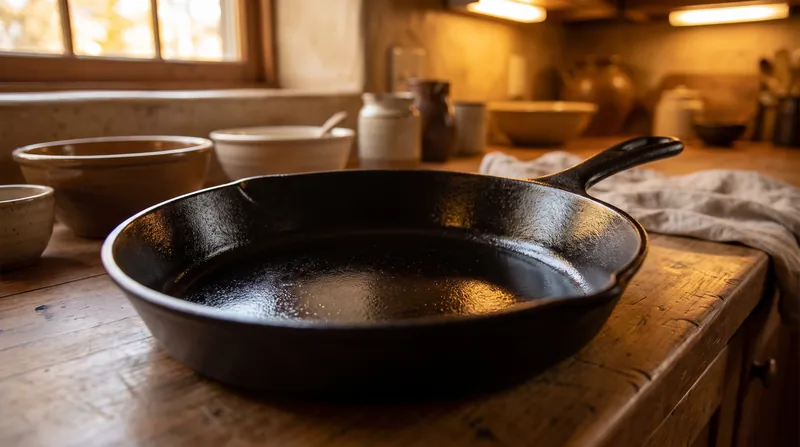
The Polymerization of Triglycerides: How Heat and Oxygen Create a Durable, Non-Stick Surface on Cast Iron
5 sources
Food Chemistry
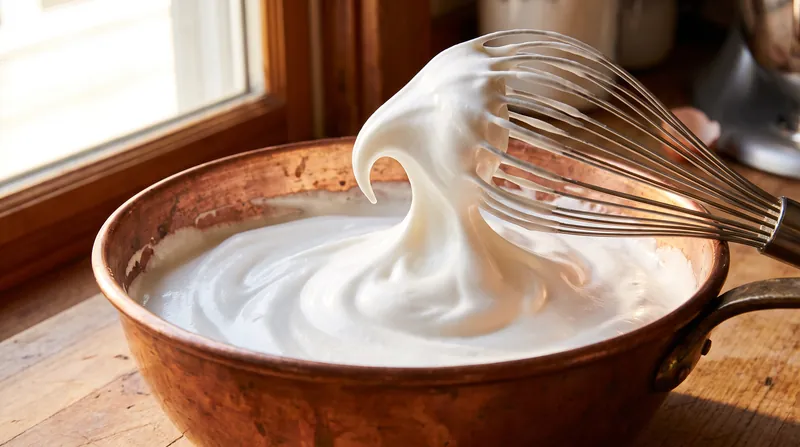
How Potassium Bitartrate Prevents Disulfide Bonds from Forming in Egg White Foam
6 sources
Thermal Dynamics
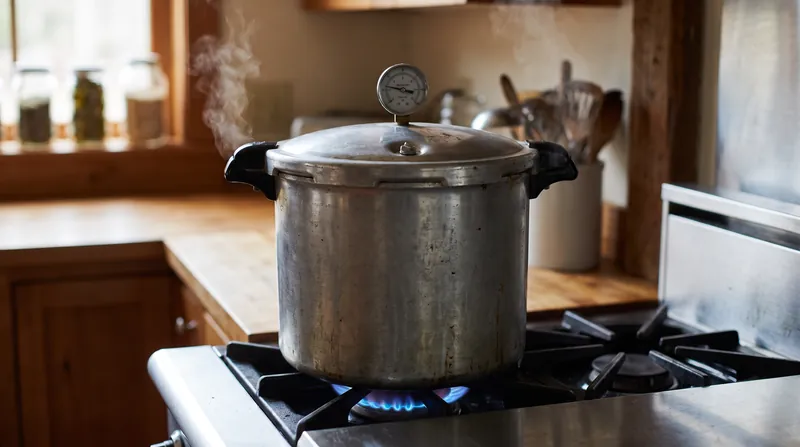
The 15-PSI Threshold: How Trapped Steam Pushes Water to 250°F and Rewrites Cooking Times
8 sources
Food Science
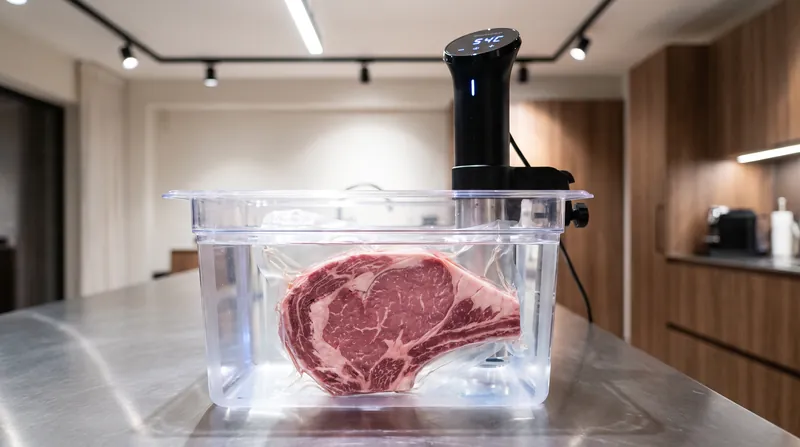
How Precision Temperature Control Defines Sous Vide Cooking
4 sources
Comments
Every angle. Every day.
Get Food & Drink stories with full source coverage and perspective breakdowns, free every day.