
The Science of L-Theanine: How Tea Delivers Calm Focus Without the Caffeine Crash
The unique amino acid L-theanine works synergistically with caffeine in tea to produce a state of relaxed alertness, smoothing out energy spikes and enhancing cognitive performance.

- Clinical Researchers
- Focus on the measurable cognitive and neurological benefits of the amino acid.
- Tea Industry
- Emphasize the cultivation methods and the flavor profile that L-theanine imparts.
- General Science
- Provide foundational context on the chemical structure and history of the compound.
Perspectives this story doesn't cover
- Dietitians evaluating L-theanine supplements versus whole-tea consumption.
- Coffee industry professionals responding to the shift toward tea for sustained energy.
Summary
- L-theanine is a unique amino acid found almost exclusively in the tea plant.
- It promotes relaxation by increasing GABA levels and alpha brain waves.
- When combined with caffeine, L-theanine smooths out energy spikes and prevents crashes.
- Shade-grown teas like matcha and gyokuro contain the highest levels of L-theanine.
- Clinical studies show the combination improves accuracy and focus during cognitive tasks.
Tea wakes you up differently than coffee because of a single, powerful amino acid: L-theanine. While a strong cup of coffee delivers a sharp spike of energy followed by an inevitable crash, tea offers a sustained, gentle lift. It is a quiet balance of energy without urgency, and understanding how it works is the key to managing your daily focus.[4]
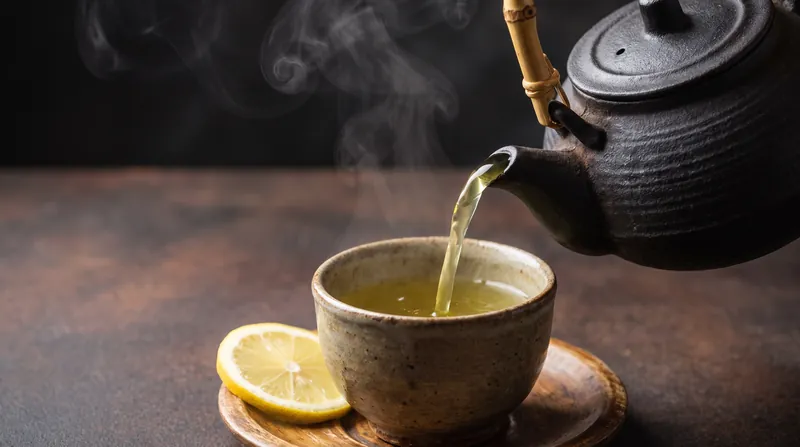
Imagine sitting with a warm cup of matcha or a delicate, shade-grown green tea. The steam rises, carrying a sweet, slightly brothy aroma. As you take your first sip, you do not feel a sudden jolt to your nervous system. Instead, over the next thirty minutes, a quiet clarity settles over your mind. You are alert, yet entirely relaxed.
This distinct feeling is not a placebo or a romanticized ritual; it is the result of a precise chemical synergy. L-theanine, first identified by Japanese researchers in 1949, is a non-proteinogenic amino acid found almost exclusively in the leaves of the Camellia sinensis plant, alongside a few rare mushrooms.[3]
Before it even reaches your brain, L-theanine shapes the physical experience of drinking tea. It is the primary source of umami—the savory, rich, and sweet notes that balance the natural bitterness of caffeine and polyphenols.[2]
The highest concentrations of this amino acid are found in shade-grown teas like Japanese matcha and gyokuro. Weeks before harvest, farmers cover the tea bushes with dark netting. Deprived of direct sunlight, the plant slows the conversion of L-theanine into bitter catechins, hoarding the sweet amino acid in its young leaves.[3]
Once consumed, L-theanine crosses the blood-brain barrier within an hour. Inside the brain, it acts as a neurological modulator. It increases the production of GABA, a neurotransmitter that promotes relaxation, while simultaneously boosting alpha brain waves.
Alpha waves are the electrical patterns associated with a state of wakeful relaxation, similar to what one experiences during deep meditation or the moments just before falling asleep. However, L-theanine achieves this without acting as a sedative; it softens mental tension while keeping the mind entirely clear.
However, L-theanine achieves this without acting as a sedative; it softens mental tension while keeping the mind entirely clear.
But the true magic of L-theanine reveals itself when it pairs with caffeine. Tea naturally contains both compounds, and they act as perfect chemical counterweights. Caffeine blocks adenosine receptors to prevent tiredness, which can often lead to jitteriness and a rapid heart rate.[1]
L-theanine binds to glutamate receptors, effectively smoothing out caffeine's jagged edges. It slows the absorption of the stimulant, stretching a typical caffeine spike into a steady, hours-long plateau of usable energy.
The cognitive benefits of this pairing are well-documented in clinical literature. A landmark 2010 study published in the journal Nutritional Neuroscience found that a combination of 97 milligrams of L-theanine and 40 milligrams of caffeine significantly improved accuracy during task-switching.[1]
The same study noted that participants experienced increased self-reported alertness and reduced tiredness, outperforming those who consumed caffeine alone. The synergy of the two compounds creates a state of focus that neither can achieve independently.[1]
Subsequent research has consistently shown that this specific ratio—often naturally occurring in high-quality green teas at roughly two parts theanine to one part caffeine—enhances working memory and reaction times while reducing the physical tremors associated with heavy coffee consumption.[2][4]
However, the science is not entirely settled on the magnitude of these effects for every individual. While clinical trials demonstrate clear cognitive improvements in controlled settings, neurologists caution that factors like individual caffeine tolerance, sleep debt, and the specific brewing method can wildly alter the actual dosage of L-theanine in a single cup.[4]
To maximize this calming focus in your own routine, temperature and time are your best tools. Cold-brewing green tea, for instance, extracts L-theanine efficiently while leaving behind many of the bitter tannins that require hot water to dissolve, resulting in an exceptionally smooth, sweet beverage.[2][4]
Ultimately, the chemistry of tea offers a compelling alternative to the modern cycle of overstimulation and exhaustion. By leaning on the natural synergy of L-theanine and caffeine, you can cultivate a daily ritual that sharpens the mind while soothing the nervous system—one mindful sip at a time.[4]
Definitions
- L-theanine
- A non-protein amino acid found primarily in tea leaves that promotes relaxation and focus.
- Alpha Brain Waves
- Electrical patterns in the brain associated with a state of wakeful relaxation and calm alertness.
- GABA
- A neurotransmitter that blocks impulses between nerve cells in the brain, reducing anxiety and stress.
- Catechins
- Antioxidant compounds in tea that provide astringency and bitterness, which L-theanine converts into when exposed to sunlight.
- Umami
- One of the five basic tastes, characterized by a savory, rich, or brothy flavor profile.
Questions & answers
Does L-theanine make you sleepy?
No. While it promotes relaxation and reduces stress, L-theanine does not act as a sedative. It creates a state of 'calm focus' without causing drowsiness.
Which teas have the most L-theanine?
Shade-grown Japanese green teas, such as matcha and gyokuro, have the highest concentrations because the lack of sunlight prevents the amino acid from breaking down.
Can I get L-theanine from coffee?
No. L-theanine is found almost exclusively in the Camellia sinensis tea plant and a few rare species of mushrooms. Coffee contains caffeine, but lacks this moderating amino acid.
How long does it take for L-theanine to work?
L-theanine typically crosses the blood-brain barrier and begins to take effect within 30 to 60 minutes after consumption.
Significance
Understanding the chemical synergy in tea allows you to manage your daily energy and focus more effectively, offering a natural alternative to the anxiety and crashes often caused by coffee.
Sources
Source coverage
4 outlets
3 viewpoints surfaced




- [1]National Institutes of HealthClinical Researchers
The combination of L-theanine and caffeine improves cognitive performance and increases subjective alertness
Read on National Institutes of Health → - [2]Frontiers in NutritionClinical Researchers
L-Theanine: A Unique Functional Amino Acid in Tea
Read on Frontiers in Nutrition → - [3]WikipediaGeneral Science
Theanine
Read on Wikipedia → - [4]Factlen Editorial TeamGeneral Science
Synthesis by Factlen editorial team
Read on Factlen Editorial Team →
Comments

More in Food & Drink
See all →Flavor Chemistry
The Strecker Degradation Pathway: How Amino Acids Decompose to Form Key Aromatics in Cooked Food
8 sources
EGCG Metabolism
The 0.1 to 0.3 Percent Oral Bioavailability: Why Green Tea's Primary Antioxidant Fails to Reach the Bloodstream
10 sources
Sodium Limits
The 140 Milligrams Per Serving Maximum: How the FDA Defines a 'Low Sodium' Food
8 sources

Lipid Science
The 80 Percent Endogenous Production: Why Dietary Cholesterol Has a Minimal Impact on Serum LDL for Most People
8 sources

Every angle. Every day.
Get Food & Drink stories with full source coverage and perspective breakdowns delivered to your inbox.