
The Safety Trade-Off: How New CPSC Regulations on Infant Loungers Force a Redesign to Eliminate Suffocation Hazards
A mandatory CPSC safety standard has effectively banned plush infant loungers, forcing manufacturers to adopt firm, flat designs. While the redesign eliminates severe suffocation risks, parents face a trade-off between absolute safety and the loss of a highly effective soothing tool.
By Ivan Smirnov

- Child Safety Regulators
- Argues that strict firmness and geometry rules are non-negotiable to eliminate suffocation and entrapment hazards.
- Consumer Safety Advocates
- Focuses on educating parents about the hidden dangers of legacy products and the importance of the new standards.
- Parents and Caregivers
- Balances the need for absolute infant safety with the practical challenges of losing highly effective soothing tools.
Perspectives this story doesn't cover
- Second-hand marketplace operators struggling to moderate banned legacy products.
- Pediatric physical therapists evaluating the impact of firmer surfaces on infant motor development.
The era of the plush, nest-like infant lounger is officially over. Following years of investigations and tragic fatalities, the U.S. Consumer Product Safety Commission (CPSC) implemented a sweeping mandatory safety standard in May 2025 that forced a total redesign of infant support cushions.[1][2]
For over a decade, parents relied on deeply contoured, heavily padded loungers to soothe their newborns. However, the very features that made these products effective at keeping babies asleep—soft sidewalls and a hammock-like incline—also made them uniquely dangerous.[3][5]
The regulatory overhaul, codified in 16 CFR 1243, fundamentally changes how these products are engineered. Manufacturers are now required to pass strict third-party firmness testing on every surface a baby might contact, ensuring the material cannot conform to an infant's face and block their airway.[2][7]
Furthermore, the new rules mandate that the angle between any sidewall and the occupant surface must be greater than 90 degrees. This specific geometry prevents a baby's face from becoming trapped in a crevice if they happen to roll over while resting.[1][6]
The standard also caps the maximum allowable incline at 10 degrees, aligning with the Safe Sleep for Babies Act. This effectively limits the side height to slightly less than two inches, providing a visual cue to parents that the product is a flat mat rather than a deep nest.[1][7]
When evaluating the new CPSC-compliant loungers, the case for adoption is rooted in absolute physiological safety. The evidence is stark: federal investigators recorded 79 infant deaths and 124 injuries between 2010 and 2022 tied to the older, unregulated support cushions.[1][3]
The vast majority of these fatalities involved positional asphyxiation, which occurs when an incline forces a baby's chin to their chest, cutting off their airway, or when a baby rolls into a plush sidewall and suffocates. The redesigned, firmer models mathematically eliminate the geometry that causes these specific hazards.[4][5]
The redesigned, firmer models mathematically eliminate the geometry that causes these specific hazards.
Another major shift in the redesign is the complete ban on restraints, such as straps or harnesses, attached to the loungers. The CPSC determined that restraints give caregivers a false sense of security, falsely suggesting that an infant can be safely strapped in and left unattended.[1][6]
Conversely, the argument against the redesigned loungers centers on a loss of soothing efficacy and parental convenience. The evidence from consumer behavior shows that babies are inherently less likely to remain settled on a firm, flat surface than in the plush, womb-like contours of legacy products.[3][4]
This creates a significant friction point for exhausted caregivers. Deprived of a highly effective soothing tool, some parents report frustration that the new compliant models function more like standard playmats than the cozy nests they were accustomed to using for quick breaks.[4][7]
This frustration has fueled a dangerous secondary market. Despite aggressive recall efforts—such as the 2021 recall of the Boppy Newborn Lounger following eight fatalities—many parents still seek out banned, non-compliant plush loungers at yard sales or on resale platforms.[3][5]
The trade-off of seeking out these older models is a drastically increased risk of suffocation and entrapment. Safety advocates stress that any short-term gain in soothing a fussy baby is entirely eclipsed by the life-threatening hazards posed by unregulated plush designs.[3][6]
Ultimately, navigating this safety trade-off requires strict conditional use and a shift in parental expectations. The new generation of firm, flat loungers fits well when caregivers need a temporary, floor-level space for an awake and supervised infant, such as during a quick household chore or guided tummy time.[4][7]
In these specific scenarios, the compliant loungers provide a structurally safe environment, provided the caregiver remains in the room and actively monitors the child. The low sidewalls and firm base ensure that even if the baby shifts, their airway remains clear.[4][6]
However, this product category does not fit when a parent is seeking a sleep solution, when the infant will be left entirely unmonitored, or when the caregiver intends to place the cushion on a raised surface like a sofa or adult bed.[1][4]
In those high-risk scenarios, the only appropriate choice remains a bare, CPSC-approved crib or bassinet. The 2025 redesign represents a fundamental shift in baby gear—prioritizing absolute, uncompromising safety over convenience, and requiring parents to rethink how and where they set their babies down.[3][7]
Key points
- The CPSC's mandatory safety standard for infant support cushions took full effect in May 2025, forcing a market-wide redesign.
- New loungers must feature a maximum 10-degree incline, strict firmness, and sidewalls angled greater than 90 degrees.
- The regulations aim to eliminate the suffocation and entrapment hazards that caused 79 infant deaths between 2010 and 2022.
- The redesign trades the soothing convenience of plush, womb-like contours for absolute physiological safety.
- Compliant loungers are strictly for awake, supervised use on the floor and should never be used for infant sleep.
Viewpoints in depth
The Regulatory View
Prioritizing structural safety over consumer convenience to eliminate fatal hazards.
For the CPSC and child safety advocates, the redesign of infant loungers is a long-overdue correction to an unregulated market. By strictly enforcing a maximum 10-degree incline and mandating firmness testing, regulators aim to mathematically eliminate the geometry that leads to positional asphyxiation. From this perspective, the loss of a product's 'soothing' capability is an acceptable and necessary trade-off to prevent the dozens of fatalities recorded over the past decade.
The Caregiver's View
Navigating the practical challenges of soothing infants without legacy plush products.
While parents universally prioritize safety, the transition to firmer, flatter loungers introduces significant friction into daily caregiving. Legacy plush loungers were highly effective at keeping infants settled due to their womb-like contours. Caregivers now face the challenge of finding new, safe ways to soothe fussy babies during awake time, while resisting the temptation to purchase banned, unregulated models on the secondary market.
Why this matters
For parents and caregivers, this regulatory shift fundamentally changes how you can safely put your baby down during the day. Understanding the strict limitations of the new designs—and the lethal risks of seeking out older, unregulated models—is critical to preventing sleep-related infant fatalities.
How we got here
2010–2022
79 infant deaths and 124 injuries are linked to unregulated infant support cushions.
September 2021
The CPSC recalls the Boppy Newborn Lounger after it is linked to eight infant suffocation deaths.
October 2024
The CPSC unanimously approves a new mandatory federal safety standard for infant support cushions.
May 5, 2025
The new CPSC regulations officially take effect, requiring all new loungers to meet strict firmness and geometry rules.
Sources
Source coverage
7 outlets
3 viewpoints surfaced







- [1]U.S. Consumer Product Safety CommissionChild Safety Regulators
CPSC Approves New Federal Safety Standard for Infant Support Cushions to Prevent Infant Deaths and Serious Injuries
Read on U.S. Consumer Product Safety Commission → - [2]Federal RegisterChild Safety Regulators
Safety Standard for Infant Support Cushions
Read on Federal Register → - [3]MotherlyParents and Caregivers
New federal safety rules for infant loungers: What parents need to know
Read on Motherly → - [4]BabylistParents and Caregivers
How to Use Infant Loungers Safely Under the New 2025 Guidelines
Read on Babylist → - [5]Consumer NoticeConsumer Safety Advocates
Boppy Newborn Lounger Recalled After Infant Deaths
Read on Consumer Notice → - [6]Feldman ShepherdConsumer Safety Advocates
Mandatory Safety Standard for Infant Loungers and 'Support Cushions' Is Now in Effect
Read on Feldman Shepherd → - [7]My Parenting BookParents and Caregivers
What does the 2025 federal lounger standard actually require?
Read on My Parenting Book →
Comments

More in Shopping & Reviews
See all →Video Codecs
The 50% Storage Reduction: How H.265 (HEVC) Halves Video File Size Compared to H.264 at the Same Quality, and the Processing Power Trade-off
6 sources

USB-C Standards
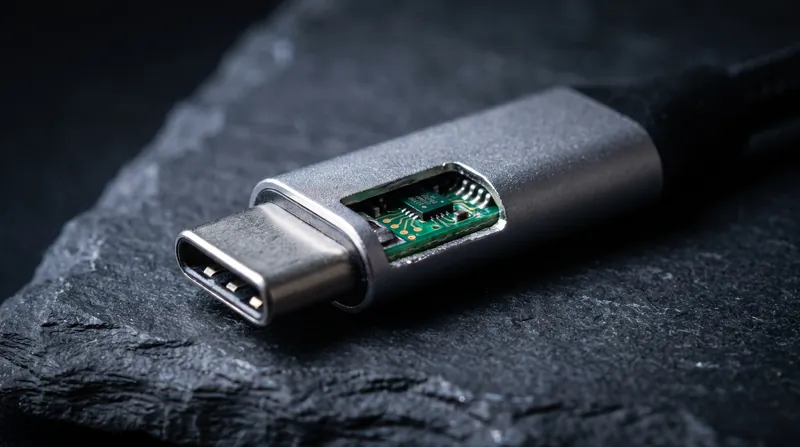
E-Marker Chip Data vs. Cable Length: How Two Factors Dictate a USB-C Cable's Maximum Power Delivery and Data Rate
9 sources
Hard Drive Tech
Shingled Magnetic Recording vs. Conventional Magnetic Recording: The Trade-Off Between Hard Drive Density and Sustained Write Speed
6 sources

Display Tech
The 18 Gbps vs. 48 Gbps Difference: How HDMI 2.1 Bandwidth Dictates 4K/120Hz and Variable Refresh Rate Support
10 sources
Every angle. Every day.
Get Shopping & Reviews stories with full source coverage and perspective breakdowns delivered to your inbox.