
The Hydrofoil Revolution: How Electric Boats Finally Solved Range Anxiety
By borrowing technology from the aerospace industry, a new generation of electric boats is lifting hulls out of the water to slash drag and triple their range. The breakthrough is transforming coastal commuting and recreational boating with silent, zero-emission vessels.
By Noor Saidi

Water is roughly 800 times denser than air. For the marine industry, that single fact of physics has served as an impenetrable wall blocking the transition to electric power.
While electric cars can coast down highways using minimal energy, boats must constantly fight hydrodynamic drag. Pushing a hull through water requires a continuous, massive expenditure of energy.
For years, the solution was simply to add more batteries. But batteries are heavy. A heavier boat sits deeper in the water, displacing more volume and creating even more drag—a vicious cycle that kept the range of electric boats stubbornly low and their utility limited.
Now, a breakthrough borrowed from the aerospace industry is rewriting the rules of marine engineering. By equipping electric boats with hydrofoils, manufacturers have found a way to bypass the water almost entirely.
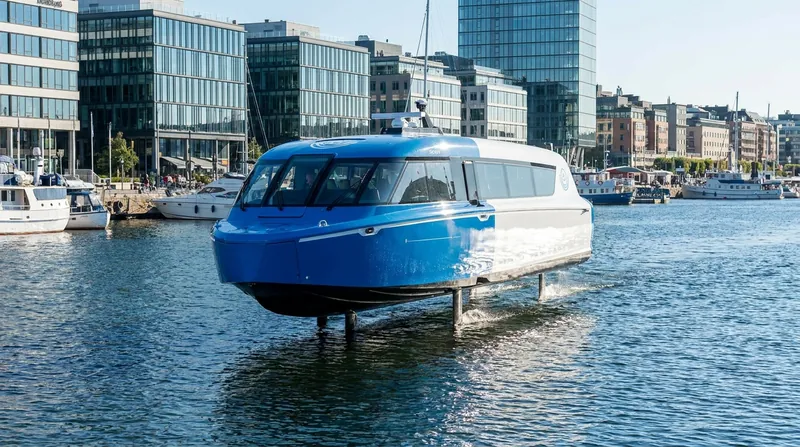
A hydrofoil is essentially an underwater wing attached to struts beneath the boat's hull. As the vessel accelerates, water flows over the curved surface of the foil.
Just like an airplane wing slicing through the air, this movement creates a pressure difference that generates upward lift. Once the boat reaches a certain speed, the entire hull rises above the surface of the water.
The result is a staggering 80 percent reduction in energy consumption. The battery no longer has to push a heavy hull through a dense liquid; it only has to push an aerodynamic hull through the air and a few slender carbon-fiber struts through the water.
Swedish manufacturer Candela has become the poster child for this technological leap. Their C-8 leisure boat recently made history by completing a 24-nautical-mile intercontinental crossing from Spain to North Africa in just over an hour.
During that voyage, the C-8 used just 40 kilowatt-hours of energy—about $8 worth of electricity. A similarly sized gasoline-powered chase boat burned 50 liters of fuel, costing roughly $90.
The C-8 boasts a range of 57 nautical miles at a cruising speed of 22 knots, drawing a mere 16 kilowatts of power from its battery once it achieves flight. This represents a 95 percent reduction in operating costs compared to fossil-fuel equivalents.
Candela is not the only company pushing the boundaries. In the United Kingdom, the SpiritBARTech35EF recently shattered industry records by traveling 100 nautical miles (115 miles) on a single charge.
Equipped with a custom 120 kWh battery pack and advanced foiling technology, the 35-foot vessel proved that electric boats can now handle long-haul coastal journeys that were previously the exclusive domain of combustion engines.
Meanwhile, San Francisco-based Navier is rolling out the N30, a six-seater electric foiling vessel designed to act as a high-speed water taxi. The company is piloting a program to transport workers across waterways without emitting any carbon.[1]
The magic of these vessels relies heavily on modern software. Flying a boat 50 centimeters above choppy water requires constant, split-second micro-adjustments to maintain stability and prevent the hull from crashing back into the waves.[2]
To achieve this, engineers use flight controllers similar to those found in modern fighter jets or drones. These computers use ultrasonic sensors to scan the water surface ahead, adjusting the angle of the foils up to 100 times per second.[2]
This active stabilization has an unexpected and highly marketable side effect: it effectively cures seasickness. Because the hull flies above the waves rather than slamming through them, the ride is eerily smooth and completely silent.[1]
The commercial applications for this technology are vast. Traditional diesel ferries are notoriously dirty, loud, and expensive to operate.
Companies like New Zealand's Vessev and Candela are now targeting the public transit sector. Candela's P-12 ferry, which carries 30 passengers, aims to cut travel times in half while slashing operating costs for coastal municipalities.[2]
Challenges do remain. Hydrofoil systems are complex, requiring advanced carbon-fiber manufacturing and sophisticated software, which keeps upfront purchase prices high. Furthermore, foiling requires a minimum water depth, and debris strikes at 30 knots can damage the delicate underwater wings.
Despite these hurdles, the marine industry is undergoing a permanent paradigm shift. As battery density improves by roughly 7 percent a year and propulsion systems become increasingly efficient, the dream of silent, limitless, zero-emission boating is no longer anchored by the laws of fluid dynamics.[2]
Key points
- Water's high density has historically limited the range of electric boats by draining batteries quickly.
- Hydrofoil technology lifts the boat's hull completely out of the water, reducing hydrodynamic drag by up to 80%.
- New electric foiling vessels can travel between 57 and 100 nautical miles on a single charge.
- Active flight controllers adjust the underwater wings 100 times per second, eliminating wave impact and seasickness.
What we don’t know
- How quickly charging infrastructure will be deployed at marinas to support long-range electric vessels.
- Whether the high upfront manufacturing costs of carbon-fiber hydrofoils can be reduced for the mass market.
- How regulatory bodies will manage high-speed foiling vessels in crowded, traditional waterways.
How we got here
2016
Candela delivers the first batch of fully electric hydrofoil prototypes, proving the concept of computer-controlled foiling.
2021
The Candela C-8 is introduced, designed for mass production and featuring a 57-nautical-mile range.
2023
The SpiritBARTech35EF shatters records by traveling 100 nautical miles on a single charge.
2024
Navier launches the N30 pilot program to test foiling water taxis in the San Francisco Bay area.
2025
A Candela C-8 completes the first intercontinental electric boat voyage, crossing the Strait of Gibraltar.
- Marine Engineering Sector
- Focuses on the technological leap and the physics of overcoming hydrodynamic drag.
- Commercial Transit Operators
- Focuses on the economic viability, fuel savings, and public ferry applications.
- Recreational Boaters
- Focuses on the silent, smooth ride and the elimination of range anxiety.
Perspectives this story doesn't cover
- Traditional boat manufacturers
- Marina infrastructure developers
Sources
Source coverage
2 outlets
3 viewpoints surfaced


- [1]Trend HunterCommercial Transit Operators
Navier's 'N30' Boat Promises Eco-Friendly Waterway Transportation
Read on Trend Hunter → - [2]Fully Charged ShowCommercial Transit Operators
The First Commercial 100% Electric Hydrofoil
Read on Fully Charged Show →
More in Automotive & Transportation
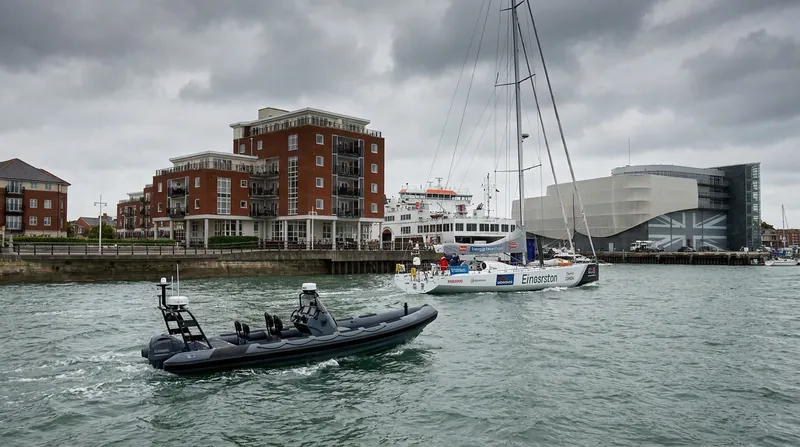
See all →Marine Autonomy
When Algorithms Meet Sailboats: What the Royal Navy's Drone Collision Reveals About Marine Autonomy
6 sources
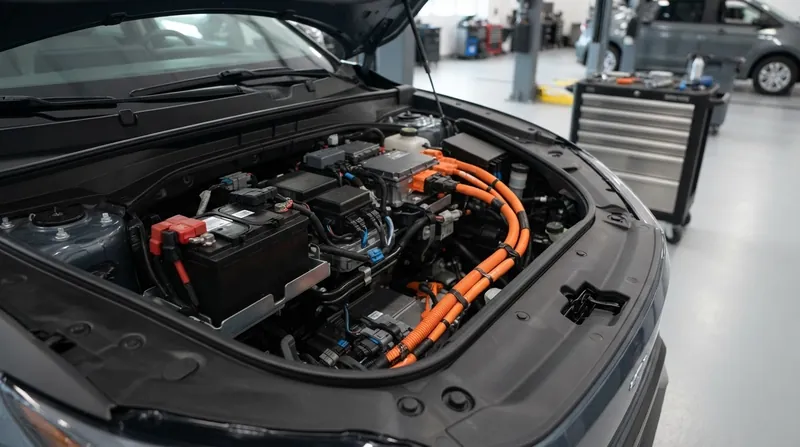
EV Architecture
High-Voltage Isolation Relays Require a 12-Volt Circuit to Close Safely, Immobilizing Electric Vehicles When the Auxiliary Battery Dies
7 sources
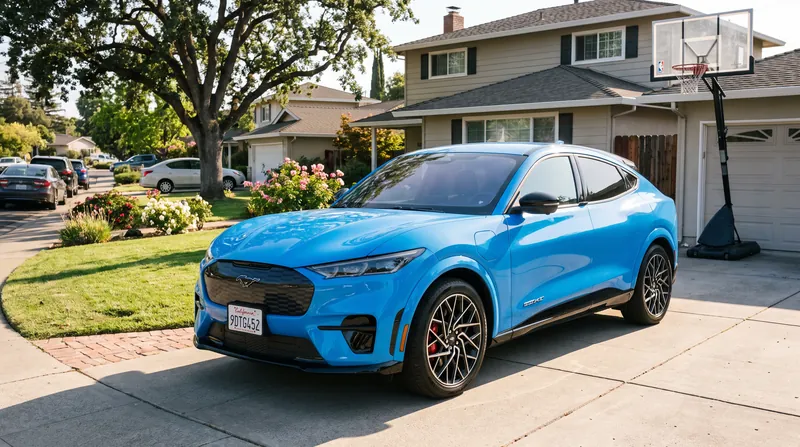
EV Safety Recalls
Ford Recalls 86 Mustang Mach-E EVs Over Battery Software Fire Risk
6 sources
Engine Thermodynamics
The Compression Ratio and the Gamma Term: How the Otto Cycle Defines the Maximum Theoretical Efficiency of a Gasoline Engine
7 sources
Comments
Every angle. Every day.
Get Automotive & Transportation stories with full source coverage and perspective breakdowns, free every day.