
The 10-20% MVC Threshold: How Low-Level Deep Core Activation Maximizes Spinal Stiffness
Clinical biomechanics reveals that activating the transversus abdominis at just 10 to 20 percent of its maximum capacity provides optimal spinal stability while preserving global mobility, dismantling the 'brace as hard as you can' approach to core training.
By Maya Khalil

- Clinical Biomechanists
- Focus on the mechanical efficiency of the spine and the precise measurement of muscle activation.
- Rehabilitation Specialists
- Focus on motor control retraining and breaking the cycle of chronic pain.
- Strength and Conditioning Coaches
- Focus on maximal force production and heavy load management.
Why it matters now
Understanding the 10-20% activation threshold fundamentally changes how we approach core training and back pain, proving that over-bracing actually restricts mobility and increases spinal compression rather than protecting it.
The critical moment in any physical movement—whether lifting a 200-pound barbell or simply reaching for a dropped pen—occurs milliseconds before the visible action begins. This is the feed-forward activation phase, where the central nervous system calculates and deploys the exact amount of tension required to stabilize the lumbar spine. If the brain miscalculates and applies too much tension, the body locks into a rigid block, restricting fluid movement. If it applies too little, the spine is left vulnerable to shear forces. The difference between a resilient, mobile spine and a stiff, painful one comes down to a highly specific threshold: activating the deepest core muscle at just 10 to 20 percent of its maximum voluntary contraction (MVC).[3][5]
Fitness culture has long equated core strength with maximum effort. Cues like "brace for a punch" or "pull your belly button to your spine as hard as you can" dominate group fitness classes and weight rooms. However, clinical biomechanics reveals a different reality. The transversus abdominis (TrA)—the deepest layer of abdominal musculature that wraps horizontally around the torso like a corset—does not require maximum effort to do its job. In fact, research demonstrates that low-level activation is not just sufficient for spinal stability; it is mechanically superior.[2][4]
The architecture of the lumbar spine relies on a dual-system approach to stability. The "local" system, primarily the TrA and the lumbar multifidus, attaches directly to the vertebrae and controls intersegmental motion. The "global" system, which includes the rectus abdominis and the external obliques, spans multiple segments. As noted in a 2010 analysis in the Journal of Orthopaedic & Sports Physical Therapy, "The global muscles generate a large torque across multiple segments and control trunk movement." When the local system functions correctly, it acts as an anchor. The TrA tensions the thoracolumbar fascia and increases intra-abdominal pressure, creating a pressurized cylinder that stiffens the spine from the inside out.[5][6]
The mechanical sweet spot for this internal pressurization is remarkably low. Electromyographic (EMG) analyses show that the TrA can fire independently at just 1 to 2 percent of its MVC. But to provide robust stabilization during functional tasks, the required activation hovers between 10 and 20 percent MVC. At this level, the TrA provides enough stiffness to prevent the vertebrae from buckling under load, while leaving the global muscles relaxed enough to allow for breathing, rotation, and dynamic movement. A 2013 review in the Journal of Bodywork and Movement Therapies highlighted that "with activation of the transverse abdominis muscle there is coactivation of the multifidus, diaphragm and pelvic floor muscles," creating a synergistic stabilizing effect at these low thresholds.[2][4][5]
Pushing past this 20 percent threshold triggers a cascade of biomechanical compromises. When an individual attempts to brace their core at 50 or 100 percent MVC, the nervous system inevitably recruits the global muscles to generate that force. The rectus abdominis and external obliques clamp down. While this does increase overall trunk stiffness, it comes at a severe cost: the global muscles compress the spine, dramatically increasing the compressive load on the intervertebral discs.[1][5]
Pushing past this 20 percent threshold triggers a cascade of biomechanical compromises.
Furthermore, this high-level bracing strategy inhibits global mobility. Because the large torque-producing muscles are locked in an isometric contraction, they cannot efficiently lengthen or shorten to facilitate movement. A runner who over-braces will experience restricted pelvic rotation, forcing the hips and lower back to absorb impact inefficiently. A tennis player will lose the fluid thoracic rotation necessary for a 100-mile-per-hour serve. The body trades dynamic athleticism for static rigidity.[4][7]
This over-activation pattern is not just a performance issue; it is a clinical hallmark of chronic pain. Motor control evaluations consistently show that patients with recurrent low back pain exhibit inefficient muscular stabilization. A foundational 1996 study in Spine demonstrated that instead of relying on the low-level, subconscious firing of the TrA, patients' nervous systems compensate by over-activating the global superficial muscles. This constant, high-threshold bracing creates a vicious cycle of muscle fatigue, increased spinal compression, and further pain.[1][3]
Retraining the nervous system to find the 10 to 20 percent MVC threshold requires a shift from effort to precision. Clinical interventions often utilize the "abdominal hollowing" technique or gentle drawing-in maneuvers to isolate the TrA without triggering the global obliques. The sensation is not one of bearing down, but rather a subtle tensioning—often described as the effort required to stop the flow of urine or to gently pull the lower abdomen away from a tight waistband.[4][6]
Once this low-level activation is established in static positions, the challenge is maintaining it during dynamic movement. Exercises like the quadruped contralateral arm and leg reach (the "bird-dog") are designed specifically to challenge the TrA. Fine-wire intramuscular electrode studies show this exercise can push TrA activation to around 41.8 percent MVC on the working side, teaching the muscle to maintain its hold while the limbs create rotational torque. The goal is to keep the deep anchor set while the rest of the body moves freely around it.[6][7]
The science of spinal stability dismantles the "more is better" paradigm of core training. The transversus abdominis is an endurance muscle, designed for sustained, low-level tension rather than explosive, maximal force. By calibrating core activation to the 10 to 20 percent MVC threshold, individuals can achieve the mechanical stiffness necessary to protect the spine without sacrificing the mobility required to move through the world. The strongest core is not the one that braces the hardest, but the one that activates just enough to let the body work as designed.[2][7]
Different angles
Clinical Biomechanists
Focus on the mechanical efficiency of the spine and the precise measurement of muscle activation.
This camp relies on fine-wire electromyography (EMG) and mathematical modeling to understand spinal stability. They argue that the spine is a mechanical structure that requires just enough guy-wire tension to prevent buckling. From their perspective, the 10-20% MVC threshold is a mathematical reality: any tension beyond this point yields diminishing returns for stability while exponentially increasing the compressive forces that degrade intervertebral discs over time.
Rehabilitation Specialists
Focus on motor control retraining and breaking the cycle of chronic pain.
Physical therapists and clinical Pilates instructors view the 10-20% threshold through the lens of motor learning. They observe that patients with low back pain have often lost the ability to fire the transversus abdominis independently, defaulting to a high-threshold bracing strategy that locks up the global muscles. Their primary clinical goal is "down-training" the overactive superficial muscles and restoring the subtle, subconscious feed-forward activation of the deep core.
Strength and Conditioning Coaches
Focus on maximal force production and heavy load management.
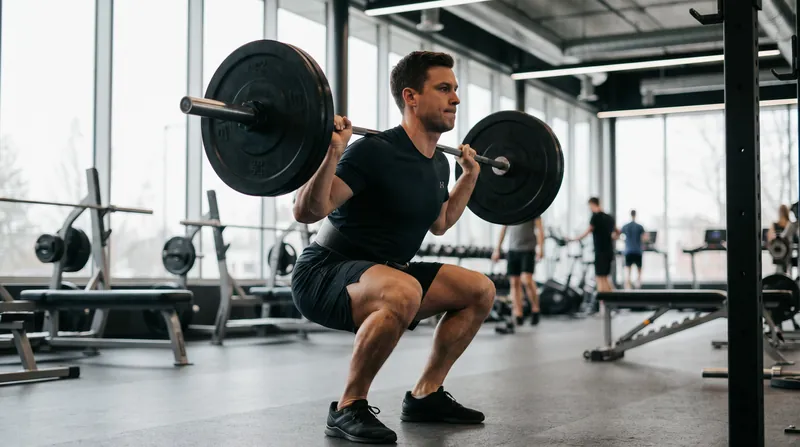
While acknowledging the importance of the transversus abdominis for baseline stability, this camp argues that the 10-20% MVC threshold applies primarily to unloaded or low-load tasks. When an athlete is squatting 400 pounds, they advocate for the Valsalva maneuver and maximal global bracing to create a rigid cylinder that can withstand extreme external forces. They view the low-level activation strategy as a foundational skill that must be scaled up significantly during maximal athletic efforts.
Still unresolved
- Whether the exact 10-20% MVC threshold shifts significantly as individuals age and their connective tissue elasticity naturally decreases.
- The precise long-term impact of chronic over-bracing on the structural integrity of the pelvic floor in asymptomatic individuals.
Sources
Source coverage
7 outlets
3 viewpoints surfaced






- [1]SpineClinical Biomechanists
Inefficient muscular stabilization of the lumbar spine associated with low back pain. A motor control evaluation of transversus abdominis
Read on Spine → - [2]Acta Orthopaedica ScandinavicaClinical Biomechanists
Stability of the lumbar spine. A study in mechanical engineering
Read on Acta Orthopaedica Scandinavica → - [3]BrainRehabilitation Specialists
Reorganization of the motor cortex is associated with postural control deficits in recurrent low back pain
Read on Brain → - [4]Journal of Bodywork and Movement TherapiesRehabilitation Specialists
Contextualising the core
Read on Journal of Bodywork and Movement Therapies → - [5]Clinical BiomechanicsClinical Biomechanists
Abdominal muscle activation increases lumbar spinal stability: analysis of contributions of different muscle groups
Read on Clinical Biomechanics → - [6]Journal of Orthopaedic & Sports Physical TherapyRehabilitation Specialists
Electromyographic Analysis of Transversus Abdominis and Lumbar Multifidus Using Wire Electrodes During Lumbar Stabilization Exercises
Read on Journal of Orthopaedic & Sports Physical Therapy → - [7]Factlen Editorial TeamStrength and Conditioning Coaches
Synthesis by Factlen editorial team
Read on Factlen Editorial Team →
Comments

More in Fitness
See all →Training Volume
The 6-to-8 Weekly Set Sweet Spot: How Low-Volume Training Achieves 80% of Maximum Hypertrophy Gains
5 sources
Strength Mechanics
The 3-to-5 Repetition Range: How Mechanical Tension and Motor Unit Recruitment Drive Strength Gains Independent of Hypertrophy
9 sources

Maximalist Footwear
The 35mm Threshold: How Maximalist Running Shoes Alter Foot Eversion and Hip Stability
7 sources

Metabolic Science
Study Identifies AMPK Enzyme as 'Master Switch' Fueling Muscle Energy During Exercise
7 sources

Every angle. Every day.
Get Fitness stories with full source coverage and perspective breakdowns delivered to your inbox.