
Thawing Permafrost Threatens Swiss Village with Catastrophic Mountain Collapse
The Swiss Alpine village of Kandersteg is facing a potential disaster as the 20-million-cubic-meter Spitze Stei rock formation destabilizes due to rapidly melting permafrost.
By Aarav Khanna

The 1,300 residents of Kandersteg, Switzerland, live calmly beneath a 20-million-cubic-meter rock formation that geologists warn is actively destabilizing. While locals view the falling stones of the Spitze Stei as a familiar, manageable part of Alpine life, climate scientists see a critical structural failure in the mountain's architecture—one driven by the rapid thawing of the permafrost that holds the Alps together.[1][3]
The Spitze Stei looms directly over the quintessential Alpine valley in the Bern canton. For millennia, the structural integrity of this high-altitude landscape has relied on permafrost—frozen soil, sediment, and rock that acts as a subterranean cement. As global temperatures rise, this frozen glue is melting, releasing its grip on the mountainsides and leaving massive rock faces vulnerable to gravity.[1][4]
"In the mountains and in the unconsolidated debris, there is lots of ice," explained Markus Stoffel, a professor of climate change and natural risks at the University of Geneva. "Once this ice is melting, it acts like a cement. These mountain slopes will become increasingly unstable."[1]
The destabilization of the Spitze Stei is not an isolated anomaly, but a node in a broader systemic shift across the European Alps. The region is warming at roughly twice the global average, pushing the zero-degree isotherm higher each summer and fundamentally altering the hydrogeological conditions of the mountains.[4]
The downstream consequences of this thaw were starkly demonstrated last year in the nearby Lötschental valley. In May 2025, a combination of thawing permafrost and glacier dynamics caused a catastrophic collapse of the Birch Glacier.[1][5]
That event sent nine million cubic meters of ice, mud, and rock crashing down onto the village of Blatten. While an early warning system allowed all 300 residents to evacuate, the resulting landslide buried 90 percent of the settlement under brownish sludge and dammed the local Lonza River, creating secondary flood risks.[5][6]
The memory of Blatten—alongside the repeated evacuations of the eastern Swiss village of Brienz over similar rockslide threats—frames the current monitoring efforts in Kandersteg. Authorities have implemented constant surveillance of the Spitze Stei and prepared comprehensive evacuation protocols should the rock movements suddenly accelerate.[1][2]
Despite the immense volume of unstable material, experts currently assess that the Spitze Stei is more likely to break down gradually in smaller rockfalls rather than in a single catastrophic event. This probabilistic assessment provides some reassurance to the valley's inhabitants, who have grown accustomed to the changing landscape.[1]
"You are aware that it's happening, but not afraid," noted Kandersteg resident Brigitte Jüni, emphasizing that authorities have taken all available precautions. Another local resident, Rudolf Isler, echoed this sentiment, pointing out that stones have been falling from the peak for years, though he acknowledged the underlying driver of rising temperatures.[1]
Yet, the long-term viability of these settlements remains an open question as the climate continues to warm. The increasing frequency of landslides, rockfalls, and glacier collapses is forcing European governments to rethink infrastructure planning and flood protection in high-altitude zones.[4]
For some communities, the required adaptations may eventually exceed the limits of engineering. "Maybe even one day we will have to abandon certain valleys or certain villages because it's becoming impossible to live there," warned Nathan Solothurnmann, a climate and energy expert for Greenpeace Switzerland.[1]
Viewpoints in depth
Local Residents
Many inhabitants of Kandersteg remain calm, viewing the geological shifts as a familiar aspect of mountain living.
For the 1,300 residents living directly beneath the Spitze Stei, the threat of falling rock is not a new phenomenon. Generations of Alpine communities have coexisted with the volatile nature of the mountains. Locals emphasize that they are well aware of the risks but choose not to live in fear, placing their trust in the extensive monitoring systems and evacuation plans established by local authorities. While they acknowledge that rising temperatures are changing the landscape, many view the situation as an inherent part of nature that must be managed rather than fled.
Climate Scientists
Researchers view the destabilization as a critical systemic failure driven by global warming.
Geologists and climate experts approach the Spitze Stei not as an isolated hazard, but as a symptom of a broader structural crisis in the Alps. As the region warms at roughly twice the global average, the permafrost that has historically cemented the mountains together is rapidly thawing. Scientists warn that this loss of 'frozen glue' is fundamentally altering the hydrogeological conditions of high-altitude zones, making massive rockfalls and glacier collapses increasingly inevitable. They caution that predictive models struggle to pinpoint exact collapse times, making these systemic shifts highly dangerous.
Emergency Authorities
Officials are prioritizing high-tech surveillance and rapid-response evacuation protocols.
Following the devastating collapse in Blatten and the repeated evacuations of Brienz, Swiss emergency management authorities have shifted to a posture of hyper-vigilance. The Spitze Stei is under constant radar and seismic monitoring to detect even millimeter-scale accelerations in the rock face. Authorities are not only preparing for the immediate impact of a potential landslide but also planning for complex secondary hazards, such as the damming of local rivers and subsequent flash flooding. Their primary goal is to ensure that early warning systems provide enough lead time to evacuate the entire valley before the mountain gives way.
Key points
- The 20-million-cubic-meter Spitze Stei rock formation is actively destabilizing above the Swiss village of Kandersteg.
- Climate scientists attribute the structural failure to rapidly thawing permafrost, which historically cemented the Alpine landscape together.
- The threat follows the devastating 2025 collapse of the Birch Glacier, which buried 90 percent of the nearby village of Blatten.
- Local authorities have implemented constant high-tech monitoring and comprehensive evacuation protocols to protect the 1,300 residents.
- Climate Scientists
- Warn that systemic warming is fundamentally altering the structural integrity of the mountains.
- Local Residents
- View the rockfalls as a manageable part of Alpine life and trust local monitoring systems.
- Emergency Authorities
- Focus on constant surveillance, evacuation protocols, and mitigating downstream flood risks.
Perspectives this story doesn't cover
- Tourism Industry Operators
- Insurance Providers
Sources
Source coverage
6 outlets
3 viewpoints surfaced






- [1]Associated PressLocal Residents
A looming rock collapse threatens a Swiss village as thawing permafrost destabilizes the Alps
Read on Associated Press → - [2]Emirates 24/7Local Residents
A looming rock collapse threatens a Swiss village
Read on Emirates 24/7 → - [3]SFGATEEmergency Authorities
A looming rock collapse threatens a Swiss village as thawing permafrost destabilizes the Alps
Read on SFGATE → - [4]SWI swissinfo.chClimate Scientists
Climate change increases natural hazards
Read on SWI swissinfo.ch → - [5]CBS NewsEmergency Authorities
Glacier collapse buries Swiss village in mud and rocks
Read on CBS News → - [6]NASA Earth ObservatoryClimate Scientists
Glacier Collapse Buries Swiss Village
Read on NASA Earth Observatory →

More in Environment
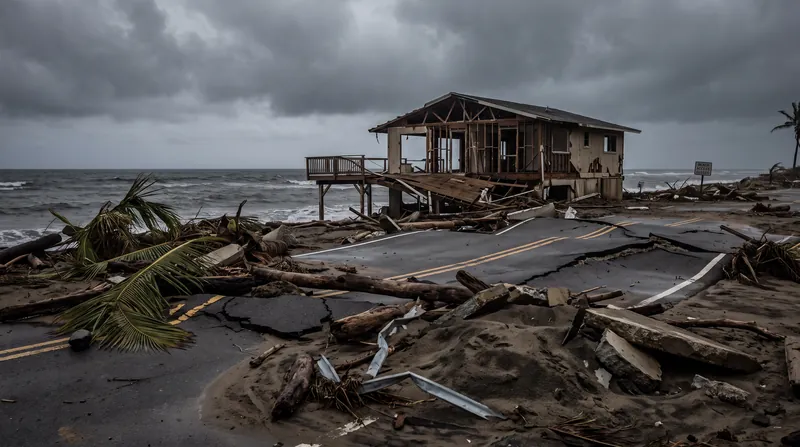
See all →Hurricane Lowell
Hurricane Lowell Damage Assessment Confirms 74 Homes Destroyed on Kauaʻi as Recovery Centers Open
4 sources
Hurricane Watch
Atlantic Hurricane Season Sets Modern Record for Latest First Hurricane
3 sources
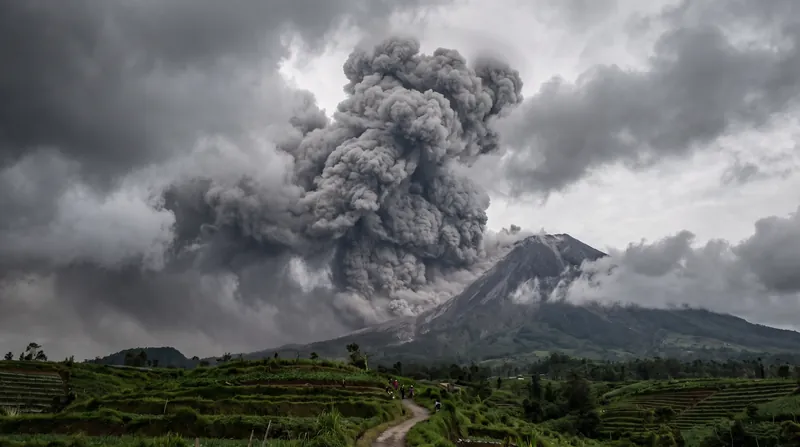
Volcanic Alert
Mount Semeru Erupts Three Times as Heavy Rains Trigger Dangerous Lahar Threats in East Java
5 sources
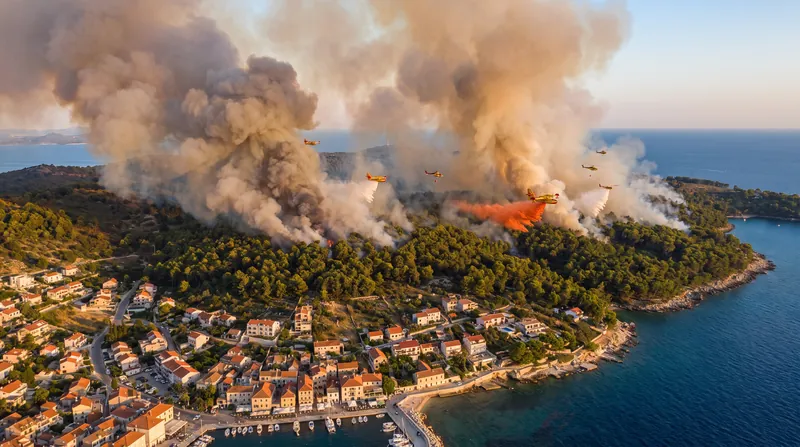
Adriatic Wildfires
Brac Island Wildfire Burns 5,600 Hectares, Forces 700 Evacuations in Croatia
5 sources
Comments
Every angle. Every day.
Get Environment stories with full source coverage and perspective breakdowns, free every day.