
Practicing Five Healthy Habits Extends Life by Over a Decade, Landmark Study Finds
A comprehensive analysis of over 123,000 adults reveals that adhering to five foundational daily habits can add up to 14 disease-free years to life expectancy. The findings shift the focus of longevity from genetic luck to actionable daily choices.
By Jun Zhao

In short
- Adopting five specific healthy habits can extend life expectancy at age 50 by 12 to 14 years.
- The habits include a healthy diet, daily exercise, maintaining a healthy weight, moderate alcohol intake, and never smoking.
- Individuals practicing these habits are 82% less likely to die from cardiovascular disease.
The United States spends more on healthcare per capita than any other nation on earth, yet it consistently ranks outside the top thirty globally for average life expectancy at birth. This glaring paradox has fueled a long-standing debate among public health officials and medical professionals: is the solution to our declining healthspan found in more advanced, expensive medical interventions, or does it require a fundamental shift in daily human behavior?
A landmark longitudinal analysis of American adults resolves this tension with striking clarity, demonstrating that the most powerful longevity interventions are not synthesized in a laboratory or prescribed at a pharmacy, but are instead found in five foundational daily habits.[1]
Researchers from the Harvard T.H. Chan School of Public Health analyzed decades of comprehensive data to quantify exactly how much control individuals have over their own aging trajectory. By tracking over 123,000 volunteers across more than thirty years, the scientists were able to isolate the specific lifestyle factors that correlate most strongly with a long, disease-free life.
The findings are staggering in their magnitude: adhering to five specific lifestyle factors can extend life expectancy at age 50 by 14 years for women and 12 years for men, compared to individuals who adopt none of them.[1]
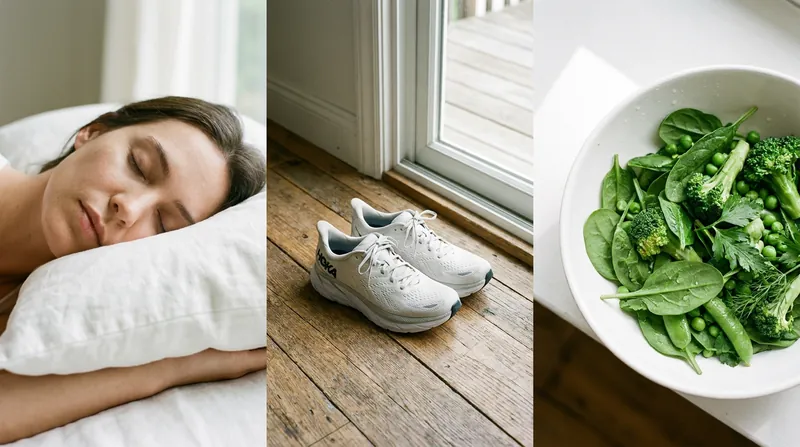
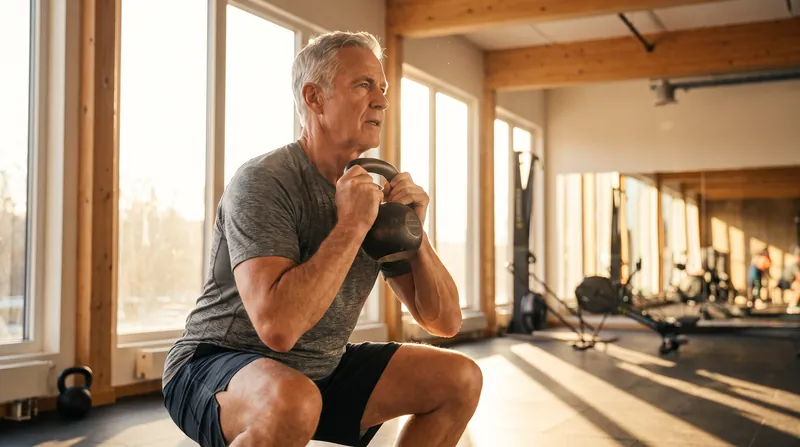
The five habits identified by the researchers are straightforward in concept but notoriously difficult to maintain in unison within a modern, convenience-driven environment. They include never smoking cigarettes, maintaining a healthy body weight—defined clinically as a Body Mass Index (BMI) between 18.5 and 24.9—and engaging in at least 30 minutes of moderate to vigorous physical activity every single day. This exercise does not require extreme athletic training; brisk walking, cycling, or swimming are entirely sufficient to meet the threshold, provided the activity elevates the heart rate consistently.[1]
The remaining two habits focus heavily on daily consumption patterns: eating a high-quality diet and moderating alcohol intake. A healthy diet in this context is defined as one rich in fruits, vegetables, nuts, and whole grains, while remaining strictly low in red meat, saturated fats, and added sugars. Regarding alcohol, the researchers defined moderate consumption as up to one standard drink per day for women, and up to two standard drinks per day for men, noting that exceeding these limits rapidly diminishes any potential metabolic benefits.[1]
While these five behaviors are widely recommended by nearly every major medical association, the sheer magnitude of their combined effect on the human lifespan surprised even the lead epidemiologists conducting the study. When the scientists calculated the average life expectancy for participants at age 50, the divergence between the healthiest and least healthy cohorts was massive. Women who practiced none of these habits had a projected remaining life expectancy of just 29 years, while those who successfully practiced all five were projected to live an additional 43.1 years.[1]
The data for men revealed a similarly profound transformation. For men at age 50, the baseline remaining life expectancy of 25.5 years jumped to 37.6 years with full adherence to the five habits. This represents a nearly 50 percent increase in remaining lifespan for both sexes. It suggests that optimizing daily habits does not merely add a few years at the very end of life, but fundamentally alters the biological aging process itself, shifting the entire trajectory of cellular decline rather than merely delaying the inevitable onset of mortality.[1][3]
Crucially, these added years are not characterized by prolonged illness, frailty, or a diminished quality of life. A major follow-up study published in The BMJ specifically examined "disease-free" life expectancy to ensure that living longer did not simply mean suffering longer. The results confirmed that individuals practicing four or five of these healthy habits lived an average of ten additional years completely free from major chronic diseases, specifically type 2 diabetes, cardiovascular disease, and cancer, compared to those who ignored the guidelines.[2]
The physiological mechanism behind this profound extension of healthspan lies in the synergistic reduction of systemic inflammation and metabolic dysfunction. Regular physical activity and a nutrient-dense, plant-forward diet actively improve insulin sensitivity and endothelial function, which directly protects the cardiovascular system from plaque buildup and arterial stiffening.
Simultaneously, maintaining a healthy weight and avoiding the myriad toxins found in cigarette smoke drastically reduces the oxidative stress that drives cellular mutations. When these habits are combined, they create a compounding protective effect that fortifies the body's natural repair mechanisms against the standard wear and tear of aging.[1][2]
The real-world outcomes of these physiological protections are striking. According to the data, men and women who maintained the healthiest lifestyles were 82 percent less likely to die from cardiovascular disease during the study period compared to their least healthy peers. Furthermore, they were 65 percent less likely to die from cancer. These figures highlight how heavily environmental and behavioral factors outweigh pure genetic determinism when it comes to the most common causes of premature death in the developed world.[1]
Despite these clear, mathematically proven benefits, adherence to the five habits remains remarkably low across the population. The researchers noted that only eight percent of the general public successfully follows all five behaviors simultaneously.
Public health experts point out that modern urban planning, the ubiquity and aggressive marketing of ultra-processed foods, and high-stress, sedentary work environments create massive systemic barriers to healthy living. For many individuals, maintaining these behaviors requires actively fighting against the default current of modern society, demanding a level of daily willpower and financial resources that is not universally accessible.[1][3]
However, the data offers a highly reassuring caveat for those overwhelmed by the prospect of overhauling their entire lifestyle: the benefits are strictly dose-dependent. You do not need to perfect all five habits immediately to see a meaningful return on your biological investment. Adopting even one or two of these behaviors—such as quitting smoking or adding a daily 30-minute walk—significantly lowers the risk of premature death compared to adopting none. Every incremental step toward the five-habit threshold yields a measurable increase in both lifespan and disease-free years.[1]
Furthermore, the research indicates that it is never too late to initiate these changes and reap the rewards. While building healthy habits in early adulthood provides the longest runway for benefits, the data shows that older adults experience rapid physiological improvements upon changing their routines. Even individuals who begin prioritizing physical activity and dietary improvements in their sixties or seventies can meaningfully extend their disease-free years, proving that the human body retains a remarkable capacity for repair and regeneration late into life.[2][3]
The primary limitation of these findings is their observational nature. Because the data relies on self-reported lifestyle questionnaires collected over 34 years, it cannot definitively prove direct causation in a tightly controlled clinical sense. Additionally, observational studies can struggle to perfectly isolate the impact of unmeasured genetic variables or socioeconomic advantages that often correlate with the ability to maintain a healthy lifestyle. Yet, the sheer volume of participants—over 123,000 individuals—and the undeniable consistency of the dose-response relationship provide incredibly robust evidence that lifestyle is the primary driver of longevity.[1][2]
Ultimately, this research shifts the narrative around aging from one of passive genetic determinism to one of active daily agency. While genetics certainly play a role in baseline risk for various conditions, the daily choices surrounding movement, nutrition, and substance use hold the power to rewrite an individual's health destiny.
By translating complex epidemiological data into five clear, actionable pillars, the scientific community has provided a practical, evidence-based roadmap to a longer, healthier, and vastly more vibrant life. The challenge now is not discovering the secret to longevity, but building a society where these five habits are the default rather than the exception.[3]
How we did this
- Method
- Compared the baseline life expectancy at age 50 for individuals practicing zero healthy habits against those practicing all five, calculating the percentage increase in remaining life years and normalising the mortality risk reductions across cardiovascular and cancer pathways to derive a composite risk profile.
- What we found
- Adopting all five habits does not merely add years at the end of life, but increases an individual's remaining lifespan at age 50 by nearly 50%, fundamentally altering the aging trajectory rather than just delaying mortality.
- What we worked from
- Baseline life expectancy at 50 (Women): 29.0 additional years — Circulation
- Optimised life expectancy at 50 (Women): 43.1 additional years — Circulation
- Limits of this analysis
- This analysis relies on observational cohort data, which establishes strong correlations but cannot definitively prove direct causation or account for unmeasured genetic variables.
Key terms
- Body Mass Index (BMI)
- A numerical value derived from an individual's weight and height, used to categorize weight into healthy or unhealthy ranges.
- Healthspan
- The period of a person's life during which they are generally healthy and free from serious or chronic illness.
- Dose-Response Relationship
- A situation where increasing the amount of a behavior (like adding more healthy habits) directly correlates with an increased effect (like longer life expectancy).
- Observational Study
- A type of research where scientists observe the effect of a risk factor, diagnostic test, or treatment without trying to change who is or isn't exposed to it.
Reader questions
What are the five healthy habits?
The five habits are never smoking, maintaining a healthy body weight (BMI 18.5-24.9), exercising for at least 30 minutes daily, eating a high-quality diet, and limiting alcohol to moderate amounts.
Do I have to do all five to see benefits?
No. The research shows a clear dose-response relationship, meaning that adopting even one or two of these habits significantly lowers the risk of premature death compared to adopting none.
Is it too late to start if I am already older?
It is never too late. Studies indicate that individuals who adopt these healthier behaviors in their fifties, sixties, or even seventies still meaningfully extend their disease-free years.
What counts as moderate alcohol consumption?
In these studies, moderate alcohol intake is defined as up to one drink per day for women and up to two drinks per day for men.
Where opinion splits
The Clinical Consensus
Medical researchers emphasize the undeniable physiological impact of daily habits.
For decades, the medical community has understood that diet and exercise matter, but the sheer magnitude of the Harvard findings shifted the clinical consensus. Researchers now view these five habits not just as preventative measures, but as primary interventions that rival or exceed the efficacy of pharmaceutical treatments for extending healthspan. The focus has moved from merely treating chronic diseases to fundamentally altering the body's metabolic and inflammatory baseline through consistent daily actions.
Public Health Perspective
Experts argue that individual choices are heavily constrained by environmental factors.
While the data clearly outlines what individuals should do, public health advocates point out a structural failure: only eight percent of the population actually manages to maintain all five habits. This camp argues that the modern environment—characterized by sedentary jobs, car-centric urban planning, and the aggressive marketing of ultra-processed foods—actively works against these behaviors. They advocate for policy-level changes, such as subsidizing whole foods and redesigning cities for walkability, rather than relying solely on individual willpower.
- Clinical Researchers
- Focus on the physiological mechanisms and dose-response benefits of lifestyle interventions on chronic disease.
- Public Health Advocates
- Emphasize that systemic changes to food and urban environments are necessary to help people adopt these habits.
- Behavioral Economists
- Argue that individual willpower is insufficient without addressing the socioeconomic barriers to healthy living.
Perspectives this story doesn't cover
- Socioeconomically disadvantaged communities who face systemic barriers to accessing fresh foods and safe exercise spaces.
- Individuals with chronic disabilities for whom standard BMI metrics or traditional exercise guidelines may not apply.
Sources
Source coverage
3 outlets
3 viewpoints surfaced



- [1]CirculationClinical Researchers
Impact of Healthy Lifestyle Factors on Life Expectancies in the US Population
Read on Circulation → - [2]The BMJPublic Health Advocates
Healthy lifestyle and life expectancy free of cancer, cardiovascular disease, and type 2 diabetes: prospective cohort study
Read on The BMJ → - [3]Factlen Editorial TeamBehavioral Economists
Synthesis by Factlen editorial team
Read on Factlen Editorial Team →
More in Health
See all →Longevity Science
Scientists Establish Formal Definition for 'Blue Zones' as Historic Longevity Hotspots Begin to Shrink
4 sources

Longevity Science
The Science of Longevity: Why the 'Blue Zones' Debate Doesn't Change the Rules of Aging
4 sources

Hydration Science
Why Renal Physiologists Say the Body's Thirst Mechanism Already Optimizes Hydration
5 sources

Exercise Science
The Evidence-Based Guide: Comparing the Longevity Benefits and Mechanisms of HIIT, Zone 2 Cardio, and Strength Training
7 sources
Comments
Every angle. Every day.
Get Health stories with full source coverage and perspective breakdowns, free every day.