
House Committee Advances First Federal Regulatory Framework for Autonomous Commercial Trucks, Ending State Patchwork
The BUILD America 250 Act establishes a unified national standard for self-driving freight, preempting state laws while mandating U.S.-based remote operators and funding workforce transition grants.

On May 22, 2026, the U.S. House Transportation and Infrastructure Committee quietly pushed through a 62-2 vote that could fundamentally rewire how freight moves across the country. Embedded within the $580 billion BUILD America 250 Act is a highly anticipated provision that establishes the first-ever federal regulatory framework for autonomous commercial motor vehicles.
For a logistics manager planning fleet investments or a route planner looking at the next decade of interstate commerce, this is the moment the regulatory fog begins to lift. The overwhelming bipartisan support signals that Washington is finally ready to treat driverless freight not as a localized science experiment, but as a critical pillar of the national supply chain.[1][2][4]
Until now, the autonomous trucking industry has been stuck in a geographic trap. A fleet operator looking to deploy self-driving rigs has had to navigate a fractured map of 35 different state regulations. Texas and Arizona have rolled out the red carpet with permissive frameworks designed to attract tech companies, while California has mandated that a human safety operator remain behind the wheel at all times.
This patchwork effectively killed the core economic promise of autonomous freight: seamless, uninterrupted interstate long-haul transport. A truck cannot scale its efficiency if it has to pull over at a state line to swap software protocols or pick up a human driver.[1][3]
The new legislation, which incorporates provisions originally championed by Representative Vince Fong as the AMERICA DRIVES Act, aims to bulldoze those state-level roadblocks. By establishing a unified national standard, the bill preempts individual states from banning automated trucking systems or enforcing conflicting operational rules on interstate highways.
For carriers, this means a truck loaded with consumer goods in Phoenix could theoretically drive straight through to Los Angeles without needing to comply with a sudden change in jurisdiction. It provides the regulatory certainty required for companies to confidently invest billions in fleet upgrades.[1][3][7]
However, this framework is not an immediate green light for driverless fleets to flood the interstates tomorrow. The legislation directs the Department of Transportation and the Federal Motor Carrier Safety Administration to develop a comprehensive, performance-based safety standard for Automated Driving Systems over the next two years. Until that rule is finalized, published, and implemented, the current operational realities and state-level pilot programs remain unchanged. The bill essentially starts the clock on a rigorous federal rulemaking process, ensuring that the transition to driverless freight is methodical rather than chaotic.[2][6]
The core mechanism of the new framework relies on a manufacturer-led safety case. Rather than the government dictating the exact engineering of the sensors, lidar arrays, and software algorithms, manufacturers will be required to self-certify that their autonomous vehicles meet federal safety standards before they can cross state lines. This approach shifts the burden of proof onto the developers, requiring them to rigorously document their safety protocols, operational design domains, and failure mitigations. It is a flexible model designed to keep pace with rapid software iterations.[1][8]
This self-certification model has drawn sharp scrutiny from independent driver associations and safety advocates. Organizations representing owner-operators argue that permitting 80,000-pound vehicles to operate based on unverified corporate assertions poses a severe highway risk. They are pushing for mandatory federal verification of these safety cases before any deployment is authorized, highlighting a deep tension between the tech industry's desire for rapid innovation and the public's demand for absolute highway assurance. For a driver sharing the road, the distinction between a verified standard and a self-certified claim is paramount.[8]
To address the operational realities of Level 4 and Level 5 autonomy, the bill sets specific rules for human presence based on the cargo being hauled. Trucks carrying placarded hazardous materials or functioning as school buses will still require a human operator physically onboard, acknowledging that certain high-risk loads require immediate human judgment in an emergency. For standard dry van freight, however, the system can operate entirely driverless, provided the manufacturer's safety case covers the specific route, weather, and traffic conditions.[9]
When a truck does operate without a human in the cab, it is rarely entirely alone. Remote assistants and driverless-operations dispatchers monitor the vehicles from centralized command centers, ready to provide high-level guidance if the software encounters an edge case—like a complex construction zone or an erratic driver—that it cannot safely navigate. A critical provision in the new bill mandates that all remote drivers and dispatchers must be physically located within the United States or its territories.[4][9]
This strict geographic mandate directly addresses growing congressional anxiety over the offshoring of critical safety roles. By legally barring companies from outsourcing remote monitoring to overseas call centers, the framework ensures that the personnel responsible for American highway safety remain under U.S. legal jurisdiction, labor laws, and regulatory oversight. For domestic workers, it guarantees that the high-tech jobs created by autonomous fleets will stay within the local economy, rather than being exported to lower-cost labor markets. It is a protectionist measure that aligns technological advancement with national workforce preservation.[4]
The legislation also recognizes that an autonomous truck is essentially a rolling data center, making cybersecurity a primary safety metric. The bill requires comprehensive cybersecurity planning, mandating that manufacturers implement strict policies to detect, respond to, and mitigate cyberattacks or unauthorized network intrusions. This ensures that a false vehicle-control command cannot be injected into the system from an external source, protecting the freight network from malicious actors who might seek to disrupt supply chains or weaponize heavy vehicles.[1]
Beyond the technology itself, the framework attempts to address the human cost of automation. The trucking industry currently faces a severe driver shortage that is projected to double by the end of the decade, yet the prospect of driverless rigs naturally triggers anxiety among the millions of Americans who currently haul freight for a living. To bridge this gap and prevent mass economic displacement, the bill authorizes $27.5 million for fiscal year 2027 to establish a targeted workforce development grant program aimed directly at the existing labor pool.[3][4]
This funding is specifically designed to help current commercial driver's license holders transition into the autonomous era. Grants will support training programs that teach veteran drivers how to operate, monitor, and maintain trucks equipped with automated driving systems. It also funds apprenticeships for vehicle maintenance technicians, acknowledging that the autonomous fleets of the future will require a massive, highly skilled support network to keep the sensors calibrated and the software updated. The goal is to evolve the truck driver into a logistics technician.[4]
To ensure the rules evolve alongside the technology, the legislation establishes a new cross-stakeholder rulemaking committee. This group will draw representatives from labor unions, the technology industry, law enforcement, insurers, and safety researchers. Their mandate is to recommend ongoing updates to commercial vehicle regulations, including vehicle inspection standards tailored specifically for autonomous rigs that lack traditional mechanical linkages. This collaborative approach ensures that no single interest group can monopolize the regulatory future of the industry.[2][9]
The committee will also tackle complex operational questions, such as determining the maximum number of autonomous trucks a single remote human operator can safely oversee at one time. They will review data collection standards and propose updates to the Federal Motor Carrier Safety Administration's compliance and accountability programs. By embedding this committee into the framework, Congress is building a regulatory apparatus that can remain agile as artificial intelligence capabilities inevitably leap forward.[9]
For the technology sector, the committee's overwhelming bipartisan approval is a massive victory. Industry groups and autonomous developers have spent years lobbying for regulatory certainty, arguing that the United States risks falling behind global competitors if it cannot provide a clear path to commercialization. The unified federal standard allows these companies to confidently project their capital investments over the next decade, knowing that the regulatory ground will not shift beneath them every time they cross a state line.[3][7]
For the technology sector, the committee's overwhelming bipartisan approval is a massive victory.
The BUILD America 250 Act still faces a long legislative journey. It must pass the full House of Representatives, survive Senate negotiations, and potentially merge with broader passenger-vehicle autonomy bills before reaching the President's desk.
Yet, for the first time, the logistics industry has a concrete blueprint of what the driverless future will actually look like. By addressing safety, cybersecurity, and workforce transition in a single package, the framework moves the conversation from theoretical technology to practical, federally regulated freight operations, setting the stage for the next era of American commerce.[1][2]
Key points
- The House Transportation Committee advanced a bill creating the first federal regulatory framework for autonomous commercial trucks.
- The legislation preempts conflicting state laws, allowing for seamless interstate deployment of driverless freight.
- Remote operators and dispatchers must be physically located within the United States, barring offshore outsourcing.
- The bill authorizes $27.5 million in grants to retrain current CDL holders for roles in the autonomous logistics sector.
What we don’t know
- Whether the Senate will attempt to merge this commercial trucking framework with broader passenger-vehicle autonomy legislation.
- How insurance liability will be handled in court when a self-certified autonomous truck is involved in a collision.
- The exact performance metrics the Department of Transportation will require in the final safety standard two years from now.
How we got here
April 2025
The Transportation Secretary announces a new automated vehicle framework prioritizing safety and commercial deployment.
February 2026
The AMERICA DRIVES Act is introduced, proposing a unified national standard for autonomous trucks.
May 22, 2026
The House Transportation and Infrastructure Committee advances the BUILD America 250 Act, incorporating the autonomous trucking framework by a 62-2 vote.
June 2026
Industry groups and independent driver associations begin lobbying over the manufacturer self-certification provisions as the bill heads to the full House.
- Autonomous Technology Developers
- Argues that a unified federal standard is essential to scale operations, attract investment, and maintain U.S. competitiveness against global rivals.
- Independent Truckers & Safety Advocates
- Warns that allowing manufacturers to self-certify the safety of 80,000-pound vehicles poses severe highway risks and demands stricter federal verification.
- Regulatory & Legal Analysts
- Focuses on the mechanics of the rulemaking process, the timeline for implementation, and the liability implications of the new framework.
Perspectives this story doesn't cover
- Local municipal governments concerned about autonomous trucks navigating complex urban environments after exiting the interstate.
- Insurance actuaries tasked with pricing liability for manufacturer-led safety cases.
Sources
Source coverage
9 outlets
3 viewpoints surfaced








- [1]Logistics ViewpointsAutonomous Technology Developers
The BUILD America 250 Act would create the first federal framework for autonomous commercial vehicles
Read on Logistics Viewpoints → - [2]Holland & KnightRegulatory & Legal Analysts
House Passes Autonomous Vehicles Framework for Commercial Motor Vehicles
Read on Holland & Knight → - [3]U.S. House of RepresentativesAutonomous Technology Developers
Fong Autonomous Trucking Framework Provisions Pass Committee
Read on U.S. House of Representatives → - [4]TekediaRegulatory & Legal Analysts
U.S. House Committee Approves Landmark Bill to Regulate Autonomous Commercial Trucks, Addressing Safety, Remote Operations, and Workforce Transition
Read on Tekedia → - [5]Washington ExaminerRegulatory & Legal Analysts
House Committee Advances Federal Autonomous Truck Framework
Read on Washington Examiner → - [6]FreightWavesRegulatory & Legal Analysts
BUILD America 250 Act hands AV trucks a fed framework
Read on FreightWaves → - [7]TechNetAutonomous Technology Developers
TechNet Welcomes House Committee Approval of Key Provisions of AMERICA DRIVES Act
Read on TechNet → - [8]Land Line MediaIndependent Truckers & Safety Advocates
OOIDA voices opposition to SELF DRIVE Act
Read on Land Line Media → - [9]Self Drive NewsRegulatory & Legal Analysts
House Committee Advances Federal Autonomous Truck Framework
Read on Self Drive News →
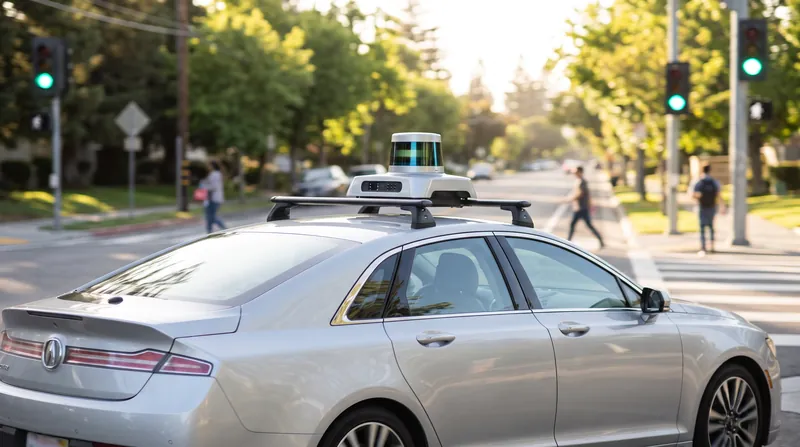
More in Automotive & Transportation
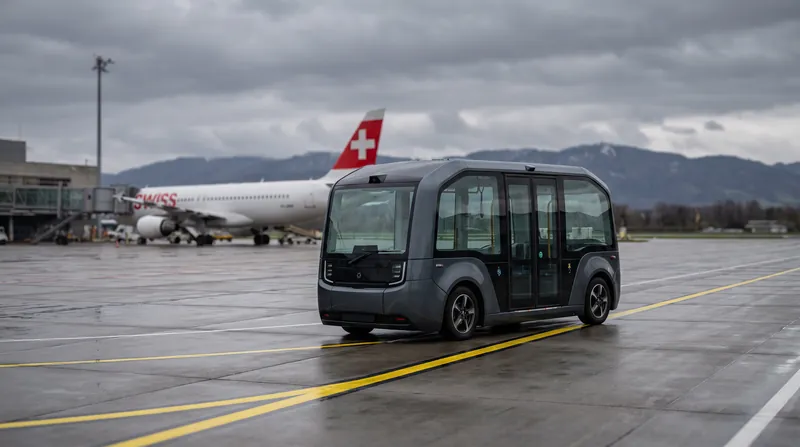
See all →Airport Automation
Zurich Airport Deploys Level 4 Autonomous Shuttles Without Onboard Safety Drivers
6 sources
Sensor Tech
How Lidar, Radar, and Camera Sensor Fusion Overcomes the Limitations of Each for Autonomous Driving
6 sources
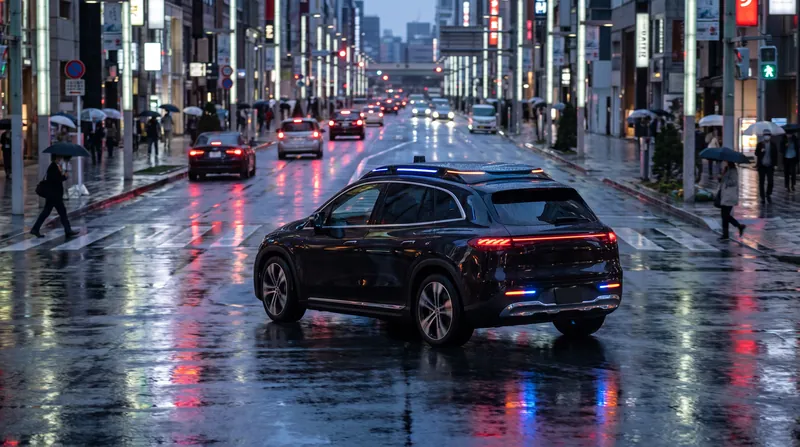
Liability Frameworks
Why Level 3 Autonomous Driving Is Paralyzing Automakers With Legal Liability
7 sources
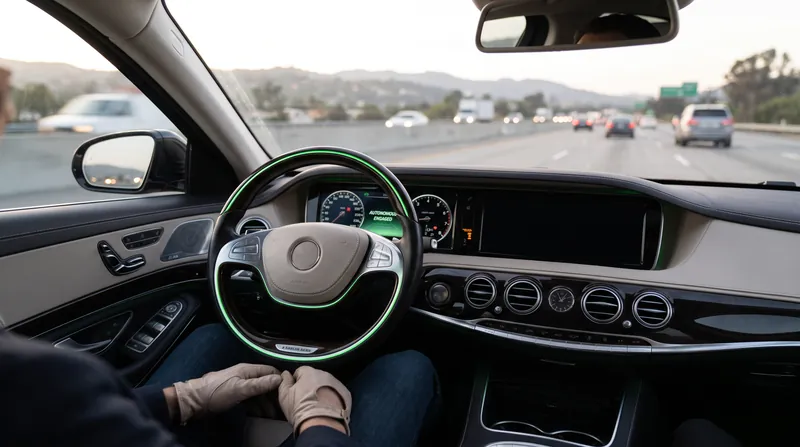
AV Safety Standards
Closing the Autonomous Blind Spot: How ISO 21448 Regulates Vehicles That Function Perfectly but Decide Poorly
10 sources
Comments
Every angle. Every day.
Get Automotive & Transportation stories with full source coverage and perspective breakdowns, free every day.