
Google and NextEra Partner to Revive 615 MW Nuclear Plant for AI Power
NextEra Energy and Google have finalized an agreement to restart Iowa's Duane Arnold nuclear facility by 2029 to provide 24/7 carbon-free baseload power for expanding artificial intelligence data centers.

- Hyperscale Technology Providers
- Tech giants view nuclear energy as the only viable path to power AI infrastructure while meeting zero-carbon pledges.
- Utility Operators & Nuclear Advocates
- Energy companies see the AI boom as a financial lifeline that can reverse the trend of premature nuclear plant closures.
- Regulatory & Environmental Oversight
- Federal and state agencies are balancing the urgent need for clean energy with rigorous safety and environmental standards.
Perspectives this story doesn't cover
- Local Iowa residents living near the Palo facility
- Renewable energy advocates prioritizing wind and solar storage
Key terms
- Baseload Power
- The minimum amount of electric power needed to be supplied to the electrical grid at any given time, typically provided by continuous sources like nuclear or coal.
- Power Purchase Agreement (PPA)
- A long-term contract between an electricity generator and a buyer, securing a fixed price and guaranteeing a market for the power produced.
- Hyperscaler
- Large cloud service providers, such as Google, Amazon, and Microsoft, that operate massive data centers requiring enormous amounts of electricity.
- Derecho
- A widespread, long-lived, straight-line windstorm that is associated with a fast-moving group of severe thunderstorms.
- Dry Cask Storage
- A method for safely storing spent nuclear fuel in steel and concrete containers once it has cooled in a spent fuel pool.
Key points
- Google and NextEra Energy have signed a 25-year agreement to restart the 615-megawatt Duane Arnold nuclear plant in Iowa by early 2029.
- The facility was originally shut down in 2020 after a severe windstorm damaged its cooling towers.
- The Nuclear Regulatory Commission recently issued a draft environmental assessment finding no significant impact, clearing a major hurdle for recommissioning.
- The partnership aims to provide 24/7 carbon-free baseload power to support Google's expanding artificial intelligence and cloud data centers.
The common assumption is that the exponential energy demands of artificial intelligence will inevitably force a return to fossil fuels or overwhelm the existing electrical grid. But the revival of Iowa's Duane Arnold Energy Center reveals a different mechanism at play: technology giants are directly financing the resurrection of dormant nuclear infrastructure to secure their own continuous, carbon-free power. Rather than waiting for new generation capacity to be built from scratch, hyperscale cloud providers are looking to legacy assets that can be brought back online to meet their immediate needs.[1]
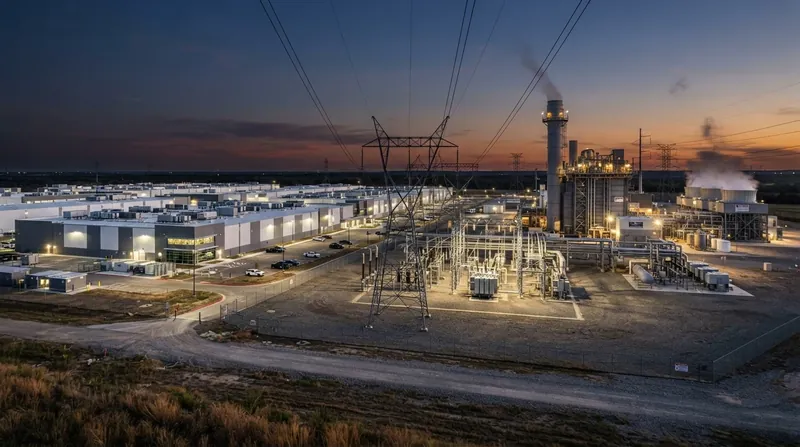
In a landmark shift for the energy sector, Google and NextEra Energy are advancing plans to restart the 615-megawatt nuclear facility near Cedar Rapids, Iowa. The plant, which was shuttered in August 2020 after a severe derecho windstorm damaged its cooling towers, is now on track to return to commercial operation by the first quarter of 2029. The speed at which this partnership has materialized underscores the urgency within the technology sector to secure reliable electricity for energy-intensive AI processing centers.[1][3]
This development represents a critical node in a larger infrastructure chain. Under a 25-year power purchase agreement, Google will acquire the majority of the plant's output to fuel its expanding cloud and artificial intelligence data operations in the state, building upon a recent $7 billion investment in Iowa. Central Iowa Power Cooperative will purchase the remaining share under identical terms, while NextEra consolidates full 100 percent ownership of the facility by buying out minority stakeholders.[4]
The partnership addresses a structural challenge in the clean energy transition. While wind and solar power have expanded rapidly across the Midwest, their intermittent nature cannot support the relentless, round-the-clock power requirements of hyperscale data centers. Nuclear energy provides the necessary baseload generation without emitting greenhouse gases, allowing companies like Google to expand their computational capacity without compromising their ambitious climate and sustainability targets.[1][5]
The regulatory pathway for this unprecedented restart is already clearing. In August 2026, the Nuclear Regulatory Commission issued a draft environmental assessment concluding that reviving the Duane Arnold plant would have no significant environmental impact. This critical finding effectively allows the project to bypass a much lengthier environmental impact statement, significantly accelerating the timeline for recommissioning and providing a clearer roadmap for the utility operator.[2]
The regulatory pathway for this unprecedented restart is already clearing.
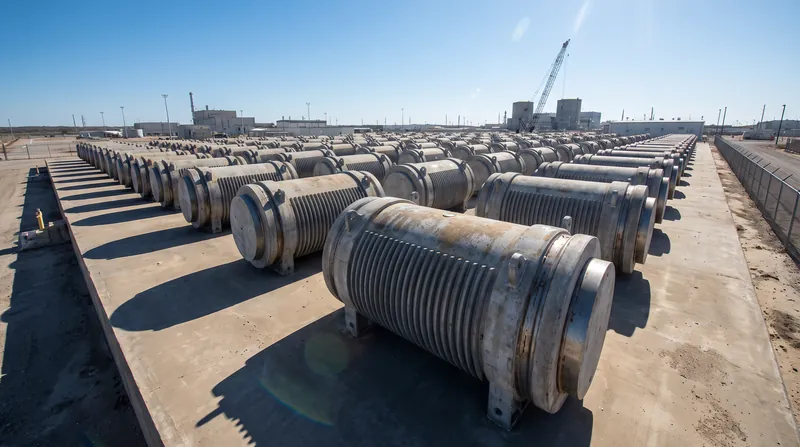
The federal assessment evaluated a comprehensive range of factors, including land use, groundwater resources, ecological impacts, and the long-term management of spent uranium fuel, which is currently housed in dry cask storage on the site. The agency determined that the transition from a decommissioning status back to an operational state could be executed safely. This rigorous review process sets a vital regulatory precedent for other dormant nuclear facilities being considered for revival nationwide.[2][3]
The economic downstream consequences for the region are substantial. The recommissioning process is projected to create over 1,600 direct and indirect jobs during the construction phase and establish approximately 400 permanent, full-time positions once the plant is fully operational. Furthermore, the facility is expected to generate more than $340 million in annual economic output for the state of Iowa, alongside millions in local tax revenue to support schools and emergency services.[5]
Beyond the immediate regional benefits, the Duane Arnold project serves as a proof-of-concept for the broader energy industry. It demonstrates that existing nuclear assets, which were previously deemed uneconomical in an era of cheap natural gas, can be successfully reintegrated into the grid when backed by long-term corporate capital. The guaranteed revenue stream from a 25-year contract effectively de-risks the immense capital expenditure required to repair and upgrade the aging infrastructure.[5]
This model is rapidly gaining traction across the sector. Similar initiatives are underway in other states, with technology companies like Microsoft and Meta partnering with utility operators to revive dormant reactors—such as Three Mile Island in Pennsylvania and the Palisades plant in Michigan—or to secure the dedicated output of existing facilities. The artificial intelligence boom is effectively acting as a financial catalyst, reversing a decade-long trend of premature nuclear plant closures.[2]
The collaboration between Google and NextEra also extends to future innovations. Beyond the immediate restart of the Iowa facility, the companies have signed an agreement to explore the deployment of next-generation nuclear technologies across the United States. This forward-looking approach aims to build a more resilient and scalable clean energy infrastructure, potentially lowering the costs of advanced small modular reactors by providing a guaranteed customer base.[5]
As the Department of Energy considers providing financial assistance to the Duane Arnold restart through its Energy Dominance Financing program, the alignment between federal policy, corporate investment, and utility operations becomes clear. The project exemplifies a systems-minded approach to meeting the unprecedented energy demands of the digital age, treating the electrical grid not as a static resource, but as a dynamic network that can be upgraded through strategic public-private partnerships.[2]
Ultimately, the successful revival of Iowa's only nuclear facility will test the viability of utilizing legacy infrastructure to power the future. If executed according to plan, the Duane Arnold Energy Center will provide a stable, zero-carbon foundation for the continued expansion of artificial intelligence, proving that rapid technological advancement and rigorous environmental stewardship can be mutually reinforcing rather than mutually exclusive.[1]
Sources
Source coverage
5 outlets
3 viewpoints surfaced





- [1]ESG NewsUtility Operators & Nuclear Advocates
Google Backs NextEra in Reviving Iowa Nuclear Plant to Supply 600 MW of Clean Power
Read on ESG News → - [2]American Nuclear SocietyUtility Operators & Nuclear Advocates
NRC issues draft EA, FONSI for Duane Arnold restart
Read on American Nuclear Society → - [3]Iowa Public RadioRegulatory & Environmental Oversight
NextEra Energy aims to have the Duane Arnold Energy Center operational again by early 2029
Read on Iowa Public Radio → - [4]Fox BusinessHyperscale Technology Providers
Google partners with NextEra Energy to restart Iowa's Duane Arnold nuclear power plant
Read on Fox Business → - [5]Sustainability MagHyperscale Technology Providers
Google & NextEra Energy have partnered to revive the Duane Arnold Energy Centre
Read on Sustainability Mag →
Comments
More in Energy
See all →Nuclear Safety
The 0-to-7 Scale That Classifies the Severity of Nuclear Accidents and Incidents
6 sources
Grid Economics
The Merit Order Effect That Determines Which Power Plants Run First
6 sources
Waste Classification
The Low-Level, Intermediate-Level, and High-Level Categories That Define Nuclear Waste Disposal and Isolation
8 sources
Storage Economics
The Capital Cost, Round-Trip Efficiency, and Cycle Life That Determine the Levelized Cost of Storage
8 sources
Every angle. Every day.
Get Energy stories with full source coverage and perspective breakdowns delivered to your inbox.