
Bugatti Unveils 1,775 HP V16 Hybrid Tourbillon, Successor to the Chiron
Bugatti has revealed the Tourbillon, a $4.6 million hybrid hypercar that replaces the Chiron with a naturally aspirated V16 engine and three electric motors.
By Dev Anand

Share this story
For two decades, the Bugatti brand has been synonymous with a single, brutal piece of engineering: the quad-turbocharged W16 engine. That era has officially ended. In its place, the French marque has unveiled the Tourbillon, a $4.6 million hypercar that fundamentally rewrites the company's approach to ultimate performance. By abandoning the forced-induction formula that defined the Veyron and Chiron, Bugatti is signaling a profound shift in its engineering philosophy, proving that the future of the hypercar does not have to rely on turbochargers to achieve mind-bending speed.[2]
When Bugatti merged with Croatian electric vehicle pioneer Rimac in 2021, the automotive industry widely assumed the Chiron's successor would be a pure battery-electric hypercar. Given Rimac's expertise in high-performance EVs, an all-electric Bugatti seemed inevitable. Instead, CEO Mate Rimac steered the company in a radically different direction.
To preserve the visceral emotion and acoustic drama of internal combustion, Bugatti opted for a complex plug-in hybrid architecture that pairs a massive, naturally aspirated engine with cutting-edge electric motors. This decision ensures the new flagship retains a mechanical soul while embracing modern efficiency.
The resulting powertrain delivers a staggering 1,775 combined horsepower. Unlike the forced-induction brute force of the Veyron and Chiron, the Tourbillon relies on an 8.3-liter naturally aspirated V16 engine, which generates 986 horsepower entirely on its own. This combustion core is then augmented by a trio of electric motors—two mounted on the front axle and one at the rear—that contribute an additional 789 horsepower. The seamless integration of these two distinct power sources creates an all-wheel-drive system capable of unprecedented acceleration.[1][2]
The internal combustion engine itself is a masterpiece of modern engineering, developed from a clean sheet in collaboration with British powertrain specialist Cosworth. Stripped of the Chiron's four turbochargers, the new V16 is designed to breathe freely and rev to a screaming 9,000 rpm. Cosworth engineers spent 13 months transforming the initial designs into a functional engine, focusing heavily on reducing mass and managing the immense torsional loads of a 16-cylinder block. The result is an engine that prioritizes sensory engagement and immediate throttle response over sheer turbocharged torque.[1]
Despite its massive 8.3-liter displacement and a crankshaft that measures nearly a meter long, the V16 weighs just 556 pounds. This makes it lighter than many smaller V12 engines, an achievement unlocked through the extensive use of titanium connecting rods and a carbon fiber inlet plenum. The engine utilizes a crossplane crank design, ensuring a distinctive, deep exhaust note that stands in stark contrast to the muted whir of pure electric hypercars. It is a deliberate nod to the golden age of motorsport, engineered for the modern era.[1][2]
The electric side of the Tourbillon's powertrain is equally sophisticated. Operating on an 800-volt architecture, the three electric motors provide instantaneous torque vectoring, filling in the power gaps where a naturally aspirated engine might otherwise lag at lower RPMs. The rear electric motor also serves a dual purpose, acting as the starter motor and generating power to recharge the battery, which eliminates the need for a traditional 12-volt starting system. This level of integration ensures that the electric components actively enhance the combustion engine rather than merely adding passive weight.[2]
Powering these motors is a 24.8 kWh, oil-cooled battery pack centrally mounted within the chassis. This relatively large battery allows the Tourbillon to operate as a genuine plug-in hybrid, offering up to 37 miles of silent, zero-emissions electric driving range.
For a brand historically defined by excess fuel consumption, the ability to run errands or navigate urban emission zones purely on battery power represents a profound philosophical shift. It allows owners to experience the car in two entirely different modes: as a silent luxury cruiser and as a screaming track weapon.[1][2]
The most remarkable engineering feat of the Tourbillon, however, is its weight. Hybrid systems—with their heavy copper motors, inverters, and dense lithium-ion batteries—typically add hundreds of pounds to a vehicle's curb weight. Yet Bugatti claims the Tourbillon actually weighs slightly less than the 4,398-pound Chiron it replaces. Achieving this required engineers to scrutinize every single component of the car, ensuring that the addition of a complex hybrid system did not compromise the vehicle's agility or power-to-weight ratio.[2]
Achieving this weight reduction required a holistic rethinking of the car's architecture. The battery pack is not simply bolted into the car; it is integrated as a structural, load-bearing component of the next-generation T800 carbon composite monocoque. This dual-purpose design enhances the chassis's overall rigidity while simultaneously lowering the vehicle's center of gravity and overall mass. By making the heavy battery pack perform double duty as a structural element, Bugatti effectively neutralized the weight penalty typically associated with plug-in hybrid powertrains.[1]
Further weight savings were found in the Tourbillon's suspension. Bugatti partnered with Divergent Technologies—the parent company of hypercar maker Czinger—to utilize advanced 3D-printed aluminum components. These organically shaped, generative-design suspension parts are 45 percent lighter than traditional forged equivalents, stripping crucial unsprung mass from the vehicle's corners. This manufacturing technique allows engineers to place material only exactly where it is needed to handle stress, resulting in skeletal, almost alien-looking components that offer superior strength at a fraction of the weight.[1]
The culmination of this power and lightweighting is a set of performance metrics that border on the incomprehensible. Bugatti states the Tourbillon will accelerate from zero to 62 mph in a flat 2.0 seconds. The acceleration curve remains relentless as speeds increase: it reaches 124 mph in under 5.0 seconds, and shatters the 186 mph barrier in less than 10 seconds. These figures place the Tourbillon in an elite echelon of hypercars, proving that naturally aspirated engines can still compete with pure EVs when properly hybridized.
For context, the Tourbillon reaches 249 mph in under 25 seconds—a full seven seconds faster than the original Chiron. Top speed is electronically limited to 236 mph for standard driving, but inserting Bugatti's famous speed key unlocks the car's full aerodynamic potential, raising the limiter to 277 mph. While Bugatti has not officially confirmed whether it will pursue a new top-speed world record, the Tourbillon's aerodynamic profile and immense power output suggest it has the capability to push the boundaries of production car physics even further.[2]
Beyond raw speed, the Tourbillon is defined by a deliberate rejection of the digital screens that dominate modern car interiors. The car takes its name from a watchmaking mechanism designed to counter the effects of gravity and increase accuracy. Honoring this analog inspiration, the steering column houses a fully mechanical instrument cluster crafted by Swiss watchmakers. In an era where luxury cars are increasingly defined by the size of their infotainment displays, Bugatti has chosen to celebrate intricate, physical craftsmanship.[1][2]
This intricate gauge cluster is composed of over 600 individual parts, including titanium, sapphire crystal, and ruby bearings. Because the steering wheel hub remains fixed while the rim rotates around it, the driver always has an unobstructed view of the physical dials, reinforcing the car's identity as a timeless mechanical artifact rather than a disposable piece of consumer electronics. The dials are designed to age gracefully, ensuring the interior remains a work of art decades after the underlying technology has evolved.[1]
Aerodynamically, the Tourbillon retains Bugatti's signature design language, including the horseshoe grille and the sweeping C-shaped side line. However, it sits 33 millimeters lower than the Chiron, reducing its frontal area to cut through the air more efficiently. A massive carbon-fiber underbody diffuser manages airflow so effectively that the rear wing remains submerged during high-speed runs, deploying primarily as an airbrake. This allows the car to maintain a sleek, uninterrupted silhouette while still generating the immense downforce required for stability at 277 mph.[1][2]
Bugatti plans to build just 250 examples of the Tourbillon, ensuring its status as an ultra-exclusive collector's item. With deliveries scheduled to begin in late 2026 and a price tag hovering around $4.6 million, the car is already sold out to the brand's most loyal clientele.
The limited production run guarantees that the Tourbillon will remain a rare sight on public roads, preserving its mystique and ensuring its long-term value in the hypercar market. Each unit will be highly customized, allowing owners to tailor the materials and finishes to their exact specifications.[1]
Each unit will be highly customized, allowing owners to tailor the materials and finishes to their exact specifications.
Ultimately, the Tourbillon represents a fascinating counter-narrative in the automotive industry's transition to electrification. Rather than using electric motors to replace the internal combustion engine, Bugatti has used them to perfect it—creating a hybrid hypercar that honors the mechanical theater of the past while delivering the uncompromising performance of the future. By refusing to compromise on emotion, weight, or speed, the Tourbillon secures its place not just as the successor to the Chiron, but as a defining milestone in the history of the automobile.
Key points
- Bugatti's new Tourbillon hypercar replaces the Chiron, ditching the quad-turbo W16 for a naturally aspirated V16 hybrid powertrain.
- The 8.3-liter engine, developed with Cosworth, produces 986 horsepower and revs to 9,000 rpm.
- Three electric motors add 789 horsepower, bringing the total system output to a staggering 1,775 horsepower.
- Despite the addition of a 25 kWh battery and electric motors, the Tourbillon weighs less than its predecessor.
What we don’t know
- Whether Bugatti will attempt to set a new official production car top speed record, surpassing the Chiron Super Sport 300+.
- The exact torque figures for the combined hybrid powertrain, which Bugatti has not yet officially published.
- How the complex integration of a high-revving V16 and three electric motors will hold up to long-term reliability testing.
How we got here
2021
Bugatti merges with Croatian electric vehicle manufacturer Rimac, sparking rumors of an all-electric hypercar.
February 2024
Bugatti releases the first teaser confirming the development of a new V16 engine.
June 2024
The Bugatti Tourbillon is officially unveiled to the public, showcasing its hybrid powertrain and analog interior.
Late 2026
Scheduled start of customer deliveries for the 250 limited-edition units.
- Bugatti Leadership
- Focuses on preserving the emotional resonance of internal combustion while utilizing electric motors for enhancement.
- Automotive Purists
- Celebrates the return of high-revving, naturally aspirated multi-cylinder engines in an era dominated by downsizing.
- Advanced Engineering Advocates
- Focuses on the integration of 3D printing, structural battery packs, and hybrid torque vectoring to offset weight.
Perspectives this story doesn't cover
- Environmental Regulators
- EV-Only Hypercar Competitors
Sources
Source coverage
2 outlets
3 viewpoints surfaced


- [1]AutoblogAdvanced Engineering Advocates
2026 Bugatti Tourbillon Review: A New Hybrid Era
Read on Autoblog → - [2]WikipediaAdvanced Engineering Advocates
Bugatti Tourbillon
Read on Wikipedia →
More in Automotive & Transportation
See all →Hypercar Tech
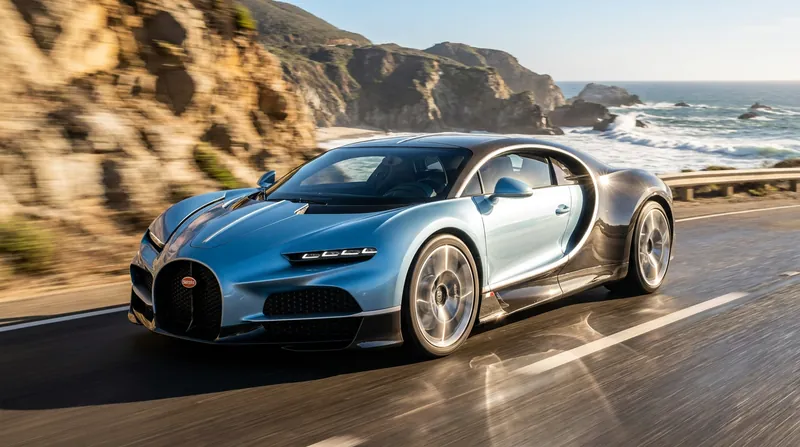
McLaren W1 Revealed: 1,258 HP Hybrid Flagship Is Fastest Road Car Ever From Woking
5 sources
EV Transition
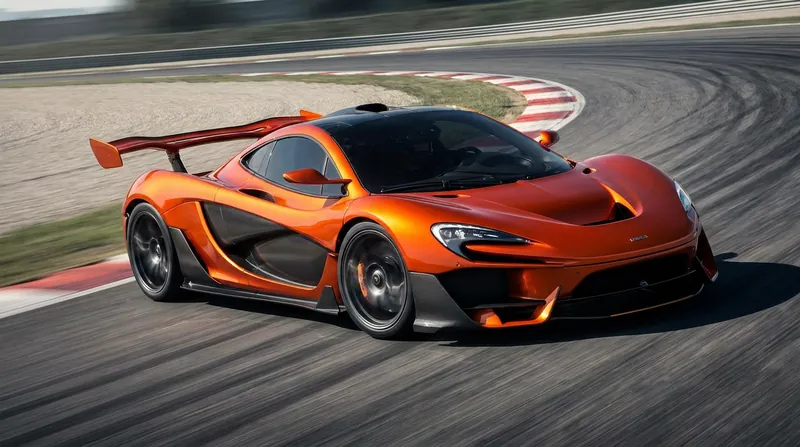
Ferrari Unveils the Luce: Inside the Engineering of Maranello's First EV
5 sources
Electric Hypercars
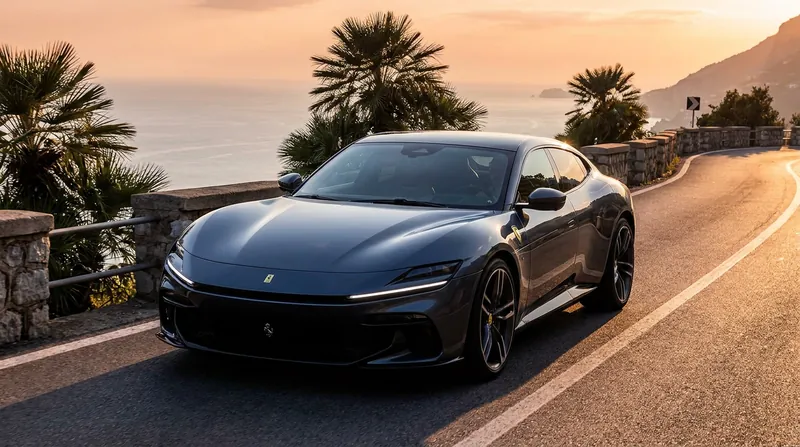
BYD's Denza Z Electric Hypercar Debuts at Goodwood With 1,500 HP and 9-Minute Fast Charging
5 sources
Hypercar Engineering
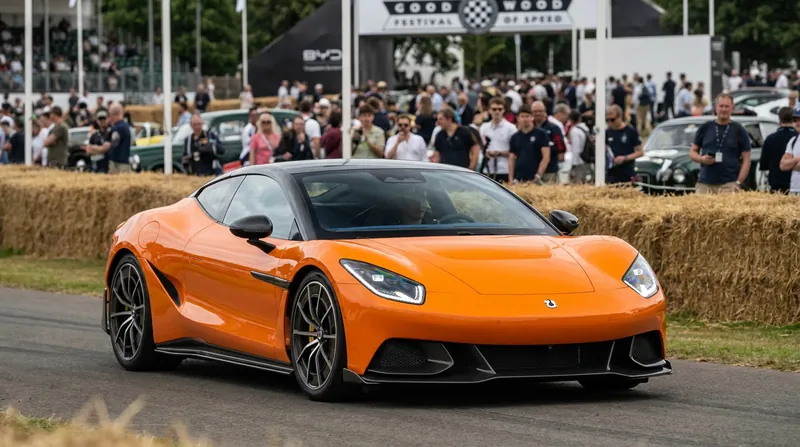
Hennessey Unveils 2,031-Horsepower Venom F5-M, Claiming Title of World's Most Powerful Manual Hypercar
2 sources
Comments
Every angle. Every day.
Get Automotive & Transportation stories with full source coverage and perspective breakdowns, free every day.