
Bonnaroo Cancels 2027 Festival to Let 'The Farm' Recover From Extreme Weather
Organizers of the Tennessee music festival are taking a voluntary fallow year to repair grounds battered by consecutive years of severe storms. The pause highlights a growing industry shift toward prioritizing climate resilience and long-term sustainability over annual revenue.

Instead of pushing through deteriorating conditions, organizers of the massive Tennessee music festival Bonnaroo are hitting pause. The 700-acre Manchester site—affectionately known to attendees as "The Farm"—will be given a full year to heal in 2027. The announcement marks a stark departure from the traditional live entertainment playbook, where the show must go on regardless of the obstacles. By choosing to step away for a season, organizers are prioritizing the long-term health of the land over the immediate financial returns of an annual summer gathering.[1][2]
This decision marks the first time since the festival's inception in 2002 that organizers have voluntarily stepped away from a summer season. While the global COVID-19 pandemic forced a mandatory cancellation in 2020, the 2027 hiatus is a deliberate, strategic choice rooted in land stewardship and climate adaptation. It is an acknowledgment that the sheer scale of modern music festivals places an immense burden on rural environments, and that those environments have a breaking point.[2][7]
The breaking point for The Farm was a string of severe weather events that have relentlessly battered the region over the past few years. In 2025, the festival was forced to cancel midway through the weekend due to torrential rains and severe flooding that made the grounds fundamentally unsafe for camping and performances. Tens of thousands of fans were evacuated, and the site was left heavily scarred by the sudden deluge.[1][5]
Determined to bounce back and prevent a repeat disaster, organizers poured significant capital into fortifying the site ahead of the 2026 event. They installed 4.5 miles of new roadways, overhauled the underground drainage systems, and planted 135 acres of fresh grass to strengthen the venue's resilience against Mother Nature. The goal was to create a climate-resilient infrastructure capable of withstanding the increasingly unpredictable Tennessee summers.[3][4]
Despite those massive infrastructure upgrades, the weather simply refused to cooperate. A heavy rainstorm on the final Sunday of the 2026 festival forced temporary evacuations of the Centeroo area and wiped out several highly anticipated performances. The weekend proved that while engineering and fresh sod can mitigate the damage, they cannot instantly outpace extreme weather when the underlying soil is already compromised.[1][6]
In their official statement, organizers noted that the land simply ran out of time to recuperate from back-to-back years of storms. Soil compaction from tens of thousands of footsteps, combined with the weight of heavy stage machinery and saturated earth, requires a prolonged resting period. A "fallow year" allows the soil to naturally decompress, restoring its structural integrity and allowing deep root systems to firmly establish themselves in the newly planted grass.[2][3]
The concept of a fallow year is well-established in agriculture and has been successfully utilized by other massive outdoor events to maintain ecological balance. The UK's legendary Glastonbury Festival regularly takes scheduled breaks to let the Worthy Farm dairy pastures recover from the immense footprint of its attendees. By adopting this model, Bonnaroo is shifting from a purely extractive relationship with its venue to a regenerative one.[2]
Bonnaroo's hiatus reflects a broader reckoning across the live music industry. As climate change accelerates, outdoor festivals are increasingly vulnerable to unpredictable extremes. In Tennessee alone, the Pilgrimage Music & Culture Festival and the Deep Tropics EDM festival have both recently announced cancellations or pauses to regroup and secure sustainable funding models in the face of rising environmental and logistical costs.[5]
While the pause is a clear win for environmental stewardship, it carries a heavy short-term cost for the local community. Manchester Mayor Joey Hobbs pointed out that the festival is a vital economic engine for the region. Local youth programs and non-profits rely heavily on festival concession stands to fund their annual activities, meaning the 2027 hiatus will leave a significant gap in municipal and charitable budgets.[4]
To mitigate the disappointment, organizers have emphasized that the 2027 break is strictly a pause, not an end. By sacrificing a single year of ticket sales, Live Nation's C3 Presents is effectively betting that a healthier, more resilient venue will guarantee the festival's survival for decades to come. It is a calculated financial risk that values long-term viability over short-term quarterly earnings.[3][4]
The live entertainment sector will be watching this experiment closely. If Bonnaroo's fallow year successfully restores the grounds and prevents future mid-weekend cancellations, it could become a standard operational blueprint for major camping festivals worldwide. Promoters may begin factoring scheduled recovery years into their long-term business models, fundamentally changing how outdoor music is scheduled.[1][5]
For now, the sprawling fields of Manchester will remain quiet next June. But as organizers and fans look toward a hopeful return in 2028, the 2027 hiatus stands as a bold, necessary acknowledgment that the future of outdoor music depends entirely on the health of the ground it stands on. The music will eventually return, but only when the earth is ready to support it.[2][6]
Unanswered questions
- Whether Bonnaroo will officially return to its traditional June slot in 2028, or if organizers will permanently shift the festival to a cooler, drier month.
- How the local Manchester economy will offset the loss of millions of dollars in expected revenue and charitable fundraising in 2027.
- If other major North American camping festivals will proactively adopt the fallow year model before being forced to by severe weather.
- Festival Organizers
- Argues that taking a voluntary fallow year is a necessary, proactive measure to protect the long-term viability of the event.
- Local Manchester Community
- Highlights the immediate economic sting of the cancellation, noting the loss of crucial fundraising opportunities for local non-profits.
- Live Event Industry Analysts
- Views the hiatus as a bellwether for the broader outdoor entertainment sector as climate change forces a shift in the economics of camping festivals.
Sources
Source coverage
7 outlets
3 viewpoints surfaced







- [1]Los Angeles TimesLive Event Industry Analysts
Bonnaroo cancels 2027 festival to recover from extreme weather
Read on Los Angeles Times → - [2]ConsequenceFestival Organizers
Bonnaroo Cancels 2027 Festival
Read on Consequence → - [3]PollstarFestival Organizers
Bonnaroo Taking 'Much-Needed' Time Off In 2027 To Let The Farm 'Rest And Recover'
Read on Pollstar → - [4]American SongwriterLocal Manchester Community
Bonnaroo's 2027 Hiatus Comes With an Unexpected Cost for Its Tennessee Home
Read on American Songwriter → - [5]WPLN NewsLive Event Industry Analysts
Bonnaroo cancels 2027 festival after rocky years — keeps comeback hopes alive
Read on WPLN News → - [6]JamBaseLive Event Industry Analysts
Bonnaroo Cancels 2027 Festival To Let The Farm Recover From Storms
Read on JamBase → - [7]iHeartRadioLive Event Industry Analysts
Bonnaroo Cancels 2027 Festival, Plans 'Much-Needed Year Off'
Read on iHeartRadio →
More in Entertainment
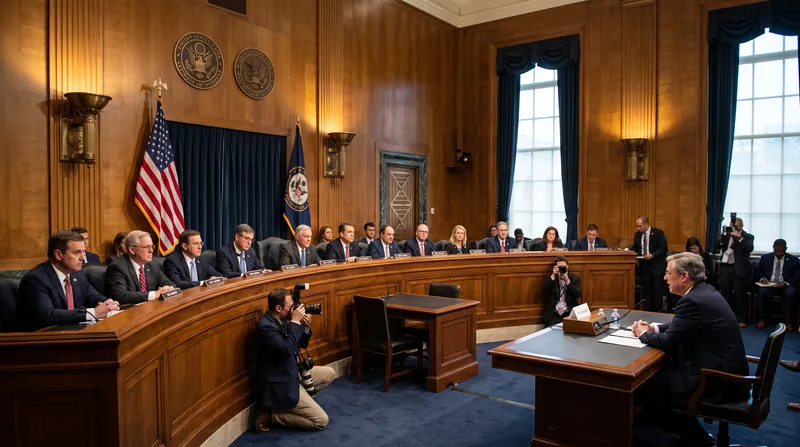
See all →Live Sound Tech
The Inverse Square Law and the Line Array: How Concert Sound Systems Deliver Uniform Volume Across a Stadium
5 sources
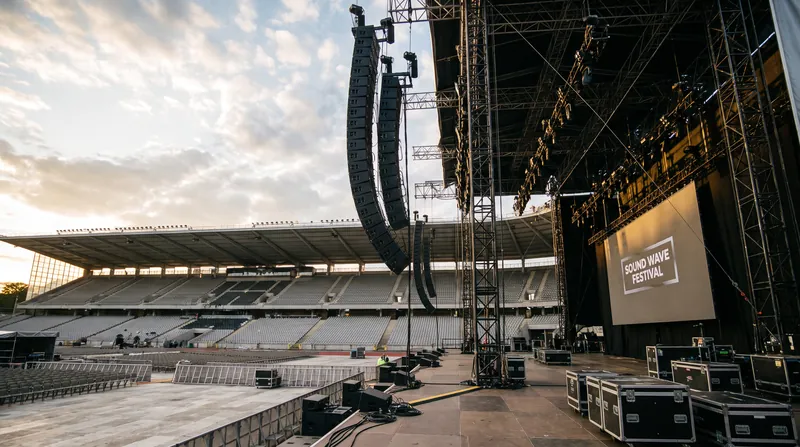
Concert Tech
How Hologram Concerts and LED Wristbands Actually Turn Stadium Crowds Into Video Screens
5 sources
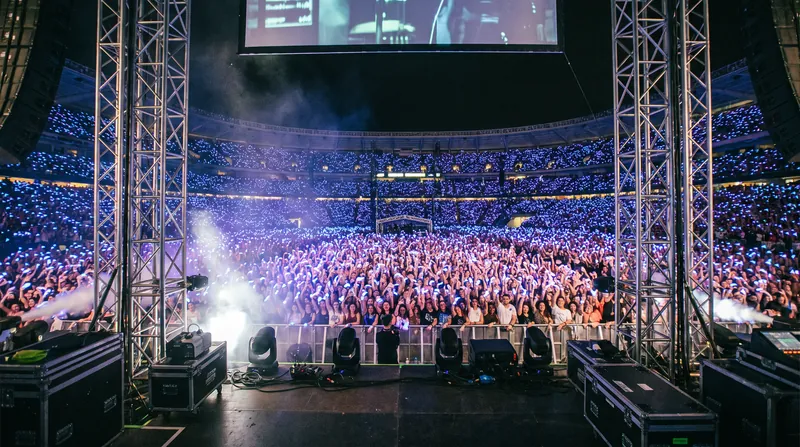
Concert Logistics
The Leapfrog System: How Stadium Tours Move 3,000-Ton Stages Overnight
6 sources
Acoustic Science
The 15-Minute Limit: How 100 dBA Concert Noise Exceeds Safe Exposure in Minutes
8 sources
Comments
Every angle. Every day.
Get Entertainment stories with full source coverage and perspective breakdowns, free every day.