
The Virtual Creator Boom: How VTubers Crossed Over to Mainstream Entertainment
Once dismissed as a niche internet subculture, virtual creators have evolved into a multi-billion-dollar industry, commanding massive audiences, lucrative brand deals, and real-world stadium tours.
By Jana Rami
Share this story
In short
- Virtual creators generated over 50 billion hours of watch time on YouTube in 2025.
- The VTuber market is projected to grow from $3.8 billion to $14.6 billion by 2034.
- Major brands like McDonald's and games like Fortnite are partnering with virtual influencers.
The roar of the crowd at Makuhari Messe in Chiba, Japan, or the sprawling lines outside Los Angeles' Dodger Stadium might look like the buildup to a massive pop concert. But the fans packed into these venues aren't waiting for a flesh-and-blood musician or a legendary athlete.
They are waiting for a digital avatar, projected onto a massive screen, to wave hello. This is the modern reality of the VTuber—or Virtual YouTuber—phenomenon. Once dismissed as a niche internet subculture confined to the corners of Japanese streaming sites, virtual creators have decisively crossed over into the global entertainment mainstream in 2026, bringing millions of highly engaged fans with them.[1][3]
The numbers behind this digital revolution are staggering. According to YouTube's latest Culture & Trends Report, VTubing content now generates over 50 billion hours of watch time annually, cementing it as a foundational pillar of modern digital media.
The global market for virtual streaming platforms and talent was valued at $3.8 billion in 2025 and is projected to surge past $14.6 billion by 2034. What began as a quirky experiment in digital puppetry has evolved into a sprawling, multi-billion-dollar creative economy that is forcing traditional entertainment giants to rewrite their playbooks.
At its core, VTubing is a fusion of live broadcasting and real-time animation. Creators use motion-capture software—ranging from simple smartphone cameras to highly sophisticated, full-body studio rigs—to map their real-time facial expressions and physical movements onto an animated 2D or 3D avatar. The result is a live, interactive cartoon character. The human performer behind the avatar provides the voice, the personality, the comedic timing, and the gaming skills, while the digital shell provides the aesthetic. It is a seamless blend of voice acting, live streaming, and improvisational theater.[1][3]
For years, the industry was dominated by a specific "otaku" aesthetic, heavily influenced by anime tropes and Japanese pop-idol culture. But as the medium has matured and expanded globally, the visual boundaries have shattered. Today's virtual creators range from hyper-realistic 3D humans and stylized cyberpunk hackers to anthropomorphic animals and abstract, shape-shifting entities. This visual diversity has allowed the format to appeal to a much broader demographic, pulling in viewers who might never have engaged with traditional anime content.
The crossover into mainstream Western culture has accelerated rapidly over the last 18 months. In early 2026, the blockbuster video game Fortnite launched a massive, highly publicized collaboration with Kizuna AI, the digital performer widely considered the pioneer of the VTuber format. The partnership brought dedicated character skins, emotes, and in-game musical events to millions of Western gamers. Industry analysts view this as a watershed moment, signaling a major shift in how traditional Western gaming giants view and value virtual influencers.
Brands far outside the gaming and tech spheres are also taking notice of the immense purchasing power of VTuber audiences. In Japan, top-tier virtual talents like Hoshimachi Suisei have starred in national advertising campaigns for McDonald's, appearing seamlessly alongside traditional J-pop heavyweights and human actors. These corporate partnerships prove that mainstream advertisers no longer view virtual avatars as a gimmick, but as highly effective, brand-safe ambassadors capable of moving massive amounts of product to a dedicated, digitally native consumer base.[1]
Meanwhile, Western streaming platforms are actively restructuring their ecosystems to accommodate the virtual boom. Twitch hosted its first official "Holoday" event in late 2025, executing a front-page takeover featuring talents from the massive VTuber agency Hololive Production. The platform also launched dedicated virtual creator tags and promotional weeks, acknowledging that avatars are driving some of the highest engagement metrics on the site. Platforms are realizing that to capture Gen Z and Generation Alpha, they must natively support virtual identities.[2]
Independent creators are also shattering records and proving the format's standalone viability. Ironmouse, a Puerto Rican VTuber and founding member of the VShojo agency, made headlines when she became the most-subscribed streamer on Twitch in 2024. During her record-breaking subathons, she raised millions of dollars for the Immune Deficiency Foundation, drawing mainstream media coverage and proving that virtual creators can wield massive philanthropic power. Her success story highlights one of the medium's most profound and transformative advantages: absolute physical accessibility.[3]
Diagnosed with a severe immune disorder that left her largely bedridden and isolated, Ironmouse used her virtual avatar to build a global community and a thriving entertainment career without ever needing to leave her medical isolation. This democratization of performance is a key driver of the trend. Virtual avatars remove physical appearance, age, geographic location, and physical disability as barriers to entry in the highly visual, often superficial world of online entertainment. It allows raw talent and charisma to shine through unhindered.[3]
"The platform highlights that using virtual avatars can be set up with little technical effort, and that physical appearance is becoming less important for fans to connect with streamers," noted a recent Streams Charts analysis of YouTube's internal data. For many creators, the avatar acts as a highly effective protective shield against the intense scrutiny, physical judgment, and harassment that often plagues traditional on-camera internet celebrities, allowing them to maintain strict boundaries between their private lives and their public personas.
The economics of the industry have also evolved dramatically, shifting from simple ad revenue to massive intellectual property empires. Agencies like Cover Corporation, which manages Hololive, and AnyColor, which manages Nijisanji, operate more like Disney or Marvel than traditional talent management firms. These companies generate hundreds of millions of dollars not just from digital streams, but from physical merchandise, trading card games, mobile apps, and sold-out stadium concerts where fans wave glow sticks at holographic projections of their favorite characters.[1]
Because the avatar is a digital asset, it is infinitely scalable. A single virtual creator can theoretically perform a live concert in Tokyo, stream a video game to an audience in North America, and appear in a promotional campaign in Europe simultaneously. As motion-capture technology becomes cheaper and artificial intelligence integration allows for real-time translation and lip-syncing, the line between traditional influencers and virtual creators will only continue to blur. Ultimately, the VTuber boom proves that modern audiences do not need a flesh-and-blood face to form a genuine, lasting connection.[3]
The rise of virtual creators also reflects a broader shift in how younger generations interact with the internet. For audiences raised on video games, customizable avatars, and digital spaces like Roblox and Minecraft, interacting with a virtual character feels entirely natural. The "uncanny valley" effect—the unease people sometimes feel when looking at artificial humans—is largely bypassed by using stylized, animated designs that lean into their fictional nature rather than attempting perfect photorealism. Viewers willingly suspend their disbelief to participate in the shared narrative.[3]
As the industry looks toward the 2030s, the potential applications for virtual avatars are expanding beyond pure entertainment. Educational VTubers are emerging to teach complex subjects, while corporate mascots are being upgraded into interactive, live-streaming brand ambassadors. In an era of heavily filtered, hyper-curated social media where reality is often distorted, millions of viewers are finding a refreshing honesty in virtual creators. By wearing a digital mask, these performers are paradoxically delivering some of the most authentic and engaging content on the internet.[3]
Jargon, explained
- VTuber
- A content creator who uses a motion-captured animated avatar, typically 2D or 3D, instead of showing their real face on camera.
- Motion Capture (Mo-cap)
- Technology that records human movement and facial expressions in real-time, mapping them onto a digital character model.
- Parasocial Relationship
- A one-sided psychological bond where an audience member feels a close, personal connection to a media personality or virtual creator.
- Lore
- The fictional backstory, world-building, and ongoing narrative universe surrounding a virtual creator's character.
Common questions
Do VTubers use AI to talk?
While some experimental channels use AI, the vast majority of mainstream VTubers are real human performers using motion capture technology to animate their avatars and speak in real-time.
Why do creators choose to be VTubers?
Using an avatar offers privacy, protects creators from real-world harassment, allows them to portray fantastical characters, and removes physical appearance or disability as a barrier to success.
How do VTubers make money?
They generate revenue through platform subscriptions, live viewer donations, merchandise sales, brand sponsorships, and even physical stadium concert ticket sales.
Can anyone become a VTuber?
Yes. While top agencies use expensive 3D studio rigs, independent creators can start with accessible 2D avatars and basic smartphone facial-tracking applications.
Competing readings
The Agency Model
Corporate giants view VTubers as highly scalable, merchandise-friendly intellectual properties.
Companies like Cover Corporation and AnyColor approach virtual talent much like Disney approaches its character roster. Because the avatar is a digital asset, it can be seamlessly integrated into video games, printed on millions of trading cards, and projected into multiple stadium concerts simultaneously. The human performer provides the soul, but the agency owns the highly monetizable shell, creating a multi-billion-dollar merchandising ecosystem that traditional human influencers struggle to match.
The Creator's Sanctuary
Independent performers embrace avatars for privacy, safety, and physical accessibility.
For many performers, the avatar is a shield against the intense scrutiny and harassment that often plagues traditional internet celebrities. It allows creators to separate their private lives from their public personas completely. Furthermore, it democratizes the entertainment space—creators with physical disabilities, chronic illnesses, or those who simply do not fit conventional beauty standards can build massive audiences based purely on their charisma, vocal talent, and gaming skills.
The Platform Strategy
Tech giants are restructuring their algorithms to capture the massive VTuber audience.
Platforms like YouTube and Twitch no longer view virtual creators as a novelty; they see them as a primary engine for future growth. By integrating dedicated VTuber tags, hosting front-page takeover events, and optimizing their algorithms to push virtual content, these platforms are actively courting the highly engaged, merchandise-buying audiences that follow virtual idols. They recognize that the next generation of internet users natively understands and prefers avatar-based interaction.
- Virtual Entertainment Agencies
- Corporate giants view VTubers as highly scalable, merchandise-friendly intellectual properties.
- Independent Creators
- Independent performers embrace avatars for privacy, safety, and physical accessibility.
- Mainstream Platforms
- Tech giants view virtual creators as a massive driver of engagement and new demographic acquisition.
- Digital Audiences
- Fans embrace the parasocial connection and lore-driven storytelling of virtual idols.
Perspectives this story doesn't cover
- Traditional On-Camera Streamers
- Voice Acting Unions
Sources
Source coverage
3 outlets
4 viewpoints surfaced



- [1]The Japan TimesVirtual Entertainment Agencies
Virtual idols, real fans: Hololive's bet on the future of pop
Read on The Japan Times → - [2]Twitch BlogMainstream Platforms
VTuber Week and the First Holoday
Read on Twitch Blog → - [3]Factlen Editorial TeamIndependent Creators
Synthesis by Factlen editorial team
Read on Factlen Editorial Team →
More in Entertainment
See all →Digital Culture
The Viral Rise of 'Slow Content': Why Millions Are Watching Ambient, Unedited Life
4 sources

Analog Culture
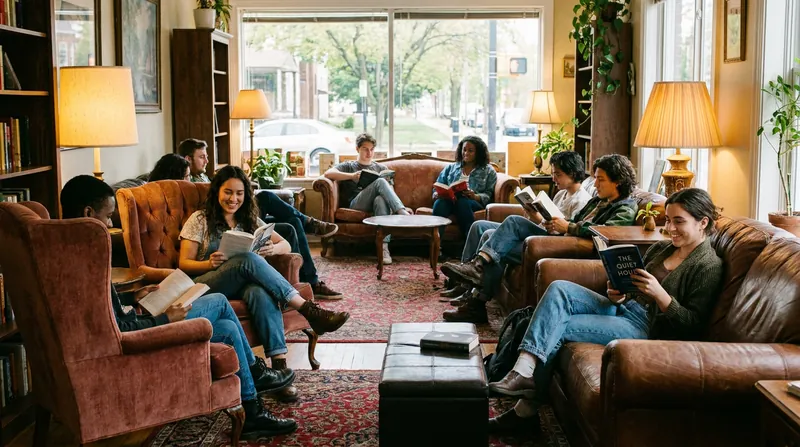
How 'Silent Reading Parties' Became the Ultimate Low-Pressure Social Trend
2 sources
Ugly Art Movement
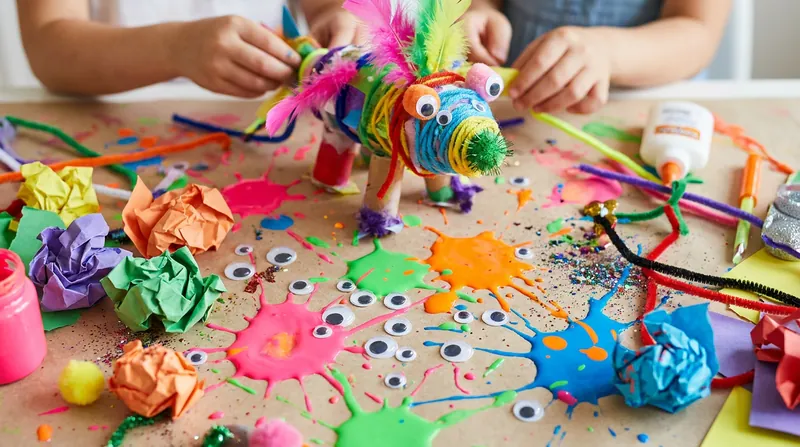
Why the 'Ugly Art' Movement is Becoming the Ultimate Antidote to Burnout
2 sources
Reading Culture
The 'Introvert Happy Hour': How Silent Book Clubs Became a Global Antidote to Loneliness
3 sources

Comments
Every angle. Every day.
Get Entertainment stories with full source coverage and perspective breakdowns, free every day.