
The Economics of 'Seichi Junrei': How Anime Tourism is Revitalizing Rural Japan
Once an accidental byproduct of fandom, anime pilgrimages have evolved into a deliberate economic engine, injecting billions of yen into Japan's aging rural municipalities.

Share this story
In 2007, the quiet town of Washinomiya in Saitama Prefecture experienced an unprecedented phenomenon. Thousands of young tourists suddenly began arriving at the local Washinomiya Shrine, a site that had previously seen little foot traffic outside of New Year's Day. The catalyst was not a historical discovery, but a television broadcast: the shrine had been featured in the opening credits of the hit anime series 'Lucky Star.' What began as a spontaneous fan movement has, nearly two decades later, matured into a highly structured economic engine for rural Japan.[1][3]
This practice is known as 'seichi junrei,' or holy site pilgrimage. Originally a term reserved for religious journeys, it has been fully co-opted by pop culture enthusiasts traveling to the real-world locations that inspired their favorite animated shows. Today, seichi junrei is no longer an accidental byproduct of fandom; it is a deliberate, multi-billion yen industry that is helping to keep aging rural municipalities afloat.[2]
The stakes for these towns are existential. Japan is facing a severe demographic crisis, with rural areas bearing the brunt of population decline and youth flight to megacities like Tokyo and Osaka. Local tax bases are shrinking, and traditional industries like agriculture and regional manufacturing are struggling to find successors. In this landscape, the sudden influx of domestic and international tourists driven by anime represents a vital lifeline.[1][4]
The mechanism of anime tourism has evolved significantly from the days of 'Lucky Star.' In the past, studios would quietly use real locations as reference material, and fans would play detective to find them after the broadcast. Today, the process is highly collaborative and often begins in pre-production. Local governments and regional tourism boards actively pitch their towns to animation studios, offering logistical support, location scouting assistance, and even production subsidies in exchange for being featured.[4]
This formalized approach is championed by organizations like the Anime Tourism Association, which publishes an annual list of the '88 Anime Holy Spots.' Modeled after the traditional Shikoku pilgrimage, this list serves as a definitive guide for fans and a highly coveted marketing tool for municipalities. Inclusion on the list guarantees a surge in foot traffic, prompting towns to prepare by printing specialized maps, erecting character standees, and stocking exclusive merchandise.
The economic impact of a successful integration can be staggering. Yamanashi Prefecture, the setting for the cozy outdoor series 'Laid-Back Camp' (Yuru Camp), provides a textbook example. Following the show's premiere, the prefecture saw a massive spike in winter camping—a previously niche activity. Local campsites reported a 300% increase in off-season bookings, and regional businesses began selling out of the specific camping gear and local delicacies featured in the show.
Crucially, the financial benefits extend beyond direct tourism spending through Japan's 'Furusato Nozei' (hometown tax) system. This program allows taxpayers to redirect a portion of their income tax to rural municipalities in exchange for local gifts. Towns featured in anime have cleverly leveraged this by offering exclusive, limited-edition anime merchandise as tax return gifts, resulting in millions of dollars in direct municipal funding from fans who may not even have the time to visit in person.[1][2]
Saga Prefecture utilized a similar strategy with 'Zombie Land Saga,' an anime specifically commissioned to promote the region. By weaving local history, agricultural products, and regional landmarks into a comedic story about zombie idols, the prefecture successfully rebranded itself to a younger demographic. The resulting tourism boom demonstrated that anime could be used not just as a backdrop, but as an active marketing vehicle for regional identity.[2][3]
Beyond the economics, seichi junrei fosters a unique form of cultural exchange. Rural towns, often populated predominantly by the elderly, are suddenly hosting young, passionate fans from across the globe. While language barriers exist, the shared appreciation for the town's beauty bridges the generational divide. Elderly residents frequently volunteer as guides, sharing the real history of the locations, while fans leave behind elaborate, hand-drawn 'ema' (wooden prayer plaques) at local shrines.[3][4]
However, the sudden arrival of thousands of tourists is not without friction. Overtourism has become a pressing concern, most famously at the railway crossing in Kamakura featured in the 1990s classic 'Slam Dunk.' The site has drawn such massive crowds of international tourists attempting to recreate the iconic opening shot that it has caused traffic hazards and disrupted the daily lives of local residents.[1]
Incidents of trespassing on private property, littering, and noise complaints have forced municipalities to rethink their approach. The challenge lies in balancing the economic windfall with the quality of life for residents who never asked to live in a tourist destination. Academic researchers studying 'contents tourism' note that without proper management, the initial goodwill between fans and locals can quickly sour.[3]
To mitigate these issues, towns are implementing smart tourism strategies. This includes distributing multi-language etiquette guides, establishing designated photo zones away from dangerous traffic, and using augmented reality (AR) apps to route tourists away from residential neighborhoods and toward commercial districts where their spending has the most impact.[1]
The most successful municipalities are those that view anime tourism not as a temporary gold rush, but as a top-of-funnel marketing strategy. The goal is to use the anime to get tourists in the door, but rely on traditional Japanese hospitality—omotenashi—local cuisine, and natural beauty to convert them into repeat visitors long after the show has finished airing.[4]
As the global appetite for Japanese animation continues to grow, the seichi junrei phenomenon shows no signs of slowing. For rural Japan, it represents a rare and powerful tool for revitalization—a modern narrative overlay that breathes new economic life into ancient streets, proving that the worlds built on screen can have a profound impact on the real one.[2][4]
Key terms
- Seichi Junrei
- Literally 'holy site pilgrimage'; the act of visiting real-world locations that serve as the setting or inspiration for narrative media.
- Contents Tourism
- An academic term for tourism driven by pop culture, including film, television, literature, and video games.
- Furusato Nozei
- Japan's 'hometown tax' system, allowing taxpayers to donate to rural municipalities in exchange for tax deductions and local gifts.
- Omotenashi
- The traditional Japanese concept of wholehearted hospitality and mindfulness toward guests.
Frequently asked
What does 'seichi junrei' mean?
Historically meaning 'holy site pilgrimage' for religious journeys, the term is now widely used in Japan to describe fans traveling to real-world locations featured in anime, manga, or films.
How do towns make money from anime tourism?
Revenue comes from direct tourist spending on lodging, food, and exclusive merchandise, as well as through Japan's 'Hometown Tax' system, where fans donate to the municipality in exchange for anime-themed gifts.
Do anime studios choose these locations randomly?
While it used to be informal, today it is often a deliberate partnership. Local governments actively pitch their towns to studios, offering logistical support and funding in exchange for being featured.
What are the downsides for the local towns?
Overtourism is the primary challenge. Massive influxes of fans can lead to traffic hazards, trespassing, and noise complaints, forcing towns to implement strict crowd management and etiquette guidelines.
Viewpoints in depth
Local Municipalities
Rural governments view anime tourism as a critical tool for economic survival.
For towns facing severe population decline and shrinking tax bases, anime tourism is not just a novelty—it is a lifeline. Local governments actively court animation studios, viewing the resulting tourism as a way to inject outside capital into local businesses like restaurants, inns, and transit systems. Furthermore, by tying exclusive anime merchandise to the Furusato Nozei (hometown tax) system, municipalities can secure vital funding from fans nationwide, regardless of whether those fans physically visit the town.
Anime Production Studios
Studios leverage real locations for authentic world-building and financial support.
Animation studios benefit from these partnerships on multiple fronts. Creatively, using real-world locations provides highly detailed, grounded reference material that elevates the visual quality of the show. Financially, partnering with regional tourism boards often unlocks production subsidies, location scouting assistance, and free marketing. This symbiotic relationship helps studios offset the notoriously high costs of animation production while guaranteeing a built-in promotional push from the host municipality.
Cultural Heritage Researchers
Academics warn of the delicate balance between economic revitalization and community disruption.
Sociologists and tourism researchers emphasize that 'contents tourism' is a double-edged sword. While the economic benefits are clear, the sudden influx of tourists into quiet residential areas can severely disrupt daily life. Researchers point out that successful anime tourism requires proactive management—such as designated photo zones and clear etiquette guides—to prevent the initial economic boom from devolving into overtourism that alienates the very residents the initiatives were meant to help.
- Local Municipalities
- View anime tourism as a vital economic lifeline and a way to combat demographic decline through new tax revenue and business.
- Anime Production Studios
- See regional partnerships as a way to secure production subsidies while providing highly authentic, grounded settings for their narratives.
- Cultural Heritage Researchers
- Focus on the sociological impact, balancing the benefits of cultural exchange against the risks of overtourism and community disruption.
Perspectives this story doesn't cover
- Elderly residents who do not directly benefit from tourism businesses
Sources
Source coverage
4 outlets
3 viewpoints surfaced




- [1]The Japan TimesLocal Municipalities
How anime pilgrimages are saving Japan's rural towns
Read on The Japan Times → - [2]NHK WorldCultural Heritage Researchers
Seichi Junrei: The Economic Power of Pop Culture
Read on NHK World → - [3]Journal of Tourism and Cultural ChangeCultural Heritage Researchers
Contents tourism and local community response in Japan
Read on Journal of Tourism and Cultural Change → - [4]Factlen Editorial Team
Synthesis by Factlen editorial team
Read on Factlen Editorial Team →
More in Entertainment
See all →Webtoon Adaptations
How South Korean Webtoons Became the Anime Industry's New Gold Mine
3 sources

Anime Economics
How Global Streaming is Rewriting the Rules of Anime Production
4 sources
Animation Production
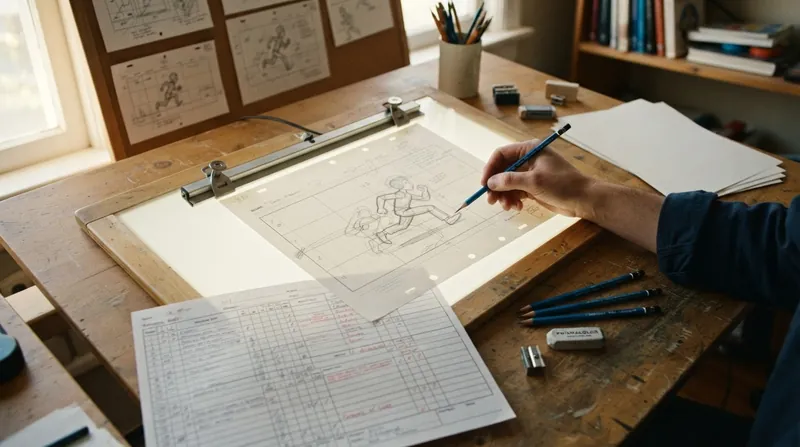
How Anime Directors Use Timing Sheets on Threes and Fours to Fund Climax Sequences
4 sources
Animation Production
Afureko Post-Recording Forces Anime Into Three-Frame Mouth Cycles Instead of Phonetic Lip Sync
3 sources

Comments
Every angle. Every day.
Get Entertainment stories with full source coverage and perspective breakdowns, free every day.