
GuideNational Security and Defense StrategyRevision 1Updated
The Architecture of National Security and Defense Strategy
A comprehensive guide to how modern states engineer their defense apparatus, from multi-domain operations and nuclear deterrence to defense economics and infrastructure resilience.
By Hunter Cole

Share this story
In short
- The 2025 and 2026 strategic frameworks of the U.S., UK, and Australia prioritize great power competition and integrated deterrence over counterinsurgency.
- Global military expenditure reached a record $2,443 billion in 2023, with the U.S. and China accounting for half of the total.
- The U.S. is undertaking a $946 billion modernization of its Nuclear Command, Control, and Communications network to survive cyber and electromagnetic attacks.
National security and defense strategy form the foundational architecture that states use to protect their sovereignty, project power, and manage global risks. As geopolitical competition intensifies, the frameworks governing military force, intelligence collection, and strategic deterrence are undergoing their most significant realignment since the end of the Cold War.[14]
Modern defense strategy extends far beyond conventional battlefield tactics and troop deployments. It encompasses economic resilience, cyber defense, nuclear command structures, and the integration of artificial intelligence into autonomous weapons systems. Understanding this architecture requires examining how nations allocate resources and prepare for conflicts spanning multiple domains simultaneously.[14]
This guide synthesizes the core components of contemporary national security. By analyzing the strategic doctrines, budget allocations, and technological investments of major global powers, it provides a comprehensive overview of how modern states engineer their defense apparatus to navigate an increasingly volatile international system.[14]
The Strategic Environment and Great Power Competition
The United States, the United Kingdom, and Australia have recently overhauled their foundational security documents to address a multipolar threat landscape. The 2025 U.S. National Security Strategy and the 2026 National Defense Strategy explicitly prioritize great power competition, finalizing a decade-long shift away from counterinsurgency operations toward deterring peer adversaries.[1][2]
This strategic pivot is mirrored across allied nations and reflects a hardening global posture. The UK's 2025 National Security Strategy and Australia's 2024 National Defence Strategy emphasize integrated deterrence and regional stability, particularly in the Indo-Pacific. These frameworks acknowledge that the Euro-Atlantic and Indo-Pacific security environments are deeply interconnected.[6][8]
The Office of the Director of National Intelligence reinforced this assessment in its unclassified threat report, noting that nation-states and non-state actors increasingly exploit overlapping vulnerabilities. "We face an increasingly complex threat environment that is affecting us here at home, and our interests abroad," the ODNI warned.[11]
European defense posture has similarly transformed. The European Parliamentary Research Service notes that recent U.S. strategies demand greater burden-sharing from NATO allies. The alliance's own strategic concepts now bluntly state that the Euro-Atlantic area is no longer at peace, driving a renewed focus on territorial defense and high-readiness conventional forces.[5][14]
Defense Economics and Global Military Expenditure
Strategic priorities are ultimately expressed through defense budgets, and recent data indicates a massive global rearmament cycle. According to the Stockholm International Peace Research Institute, global military expenditure reached a record $2,443 billion in 2023. This represented a 6.8 percent year-on-year increase in real terms, the steepest annual rise recorded since 2009.[10]
The financial burden of national security is heavily concentrated among a few major powers. The United States and China accounted for roughly half of all global military spending, allocating $916 billion and an estimated $296 billion, respectively. Total global military expenditure consumed 2.3 percent of the world's gross domestic product.[10]
The top five spenders—the United States, China, Russia, India, and Saudi Arabia—together accounted for 61 percent of world military spending. Russia's military spending grew by 24 percent in 2023 to an estimated $109 billion, equivalent to 5.9 percent of its GDP. Concurrently, Ukraine increased its spending by 51 percent to $64.8 billion.[10]
Alliance spending is also surging. In 2023, military expenditure by NATO member states reached $1,341 billion, constituting 55 percent of global spending. Eleven of the 31 NATO members met the alliance's target of spending 2 percent of GDP on defense, an increase of four nations from the previous year.[10]
Within the United States, the defense budget is analyzed closely for shifts in procurement and research. The Center for Strategic and International Studies notes that the 2026 National Defense Strategy drives radical changes in specific technology investments, particularly in space and cyber domains, while maintaining continuity in overall conventional force structure.[3]
Intelligence Architecture and Covert Operations
Information dominance is the prerequisite for effective defense planning and execution. The U.S. intelligence apparatus operates on a budget exceeding $100 billion annually, strictly partitioned to prevent mission overlap. This funding is divided between the National Intelligence Program for strategic priorities and the Military Intelligence Program for tactical, warfighter-focused operations.[9][14]
This massive apparatus relies on a standardized, six-phase intelligence cycle to convert raw data into finished strategic assessments. The phases—planning, collection, processing, analysis, dissemination, and evaluation—ensure that information gathering is driven by specific policy requirements and delivered to decision-makers at the speed of relevance.[14]
Operating globally requires navigating complex legal and statutory boundaries. The United States conducts its overseas national security operations through two distinct frameworks: Title 10 of the U.S. Code for traditional military operations, and Title 50 for covert intelligence activities. These statutes dictate who authorizes an operation and which congressional committees oversee it.[9][14]
As cyber warfare and counterterrorism operations evolve, the boundary between military action and covert intelligence is increasingly blurred. Cyber operations often require military infrastructure but are executed under intelligence authorities, forcing policymakers to continuously reinterpret Cold War-era legal frameworks for digital-age conflicts that unfold in milliseconds.[14]
Nuclear Deterrence and Command Systems
Strategic deterrence remains the ultimate backstop of national security, designed to prevent existential threats through the promise of unacceptable retaliation. The architecture governing the U.S. nuclear triad is structured around OPLAN 8010, the overarching strategic war plan that defines target categories and execution options across five distinct phases of escalation.[14]
OPLAN 8010 integrates non-kinetic options, such as cyber and space effects, into the early stages of conflict to provide flexible deterrent options before crossing the nuclear threshold. The plan categorizes targets into four broad groups: nuclear forces, conventional military forces, leadership command structures, and war-supporting industrial infrastructure.[14]
Connecting presidential authority to the nuclear triad is the Nuclear Command, Control, and Communications network. The U.S. military is currently undertaking a $946 billion modernization of this critical system. The focus is shifting from legacy physical relays to resilient, space-based digital architectures designed to survive coordinated electromagnetic and cyberattacks.[14]
Adversaries are pursuing similar modernizations, though with different doctrinal foundations. The command and control systems of Russia and China rely on distinct architectures to ensure authorized use while preventing accidental launch. Understanding these mechanical and procedural safeguards reveals the operational philosophies and risk tolerances guiding each nation's strategic forces.[14]
Multi-Domain Operations and Autonomous Defense
Future conflicts will not be confined to a single physical sphere. The concept of Multi-Domain Operations mandates the seamless integration of land, sea, air, space, and cyberspace capabilities. The RAND Corporation emphasizes that the greatest strategic value is achieved by converging capabilities from multiple domains simultaneously to exploit adversary vulnerabilities.[12]
This convergence requires fundamentally rethinking traditional air defense. Facing rapid depletion of expensive interceptors against massed drone and missile attacks, the Pentagon is accelerating a shift toward Integrated Air and Missile Defense. This networked doctrine decouples sensors from shooters, allowing an interceptor launched from a naval vessel to be guided by a space-based sensor.[13][14]
Artificial intelligence is rapidly accelerating these multi-domain capabilities. The U.S. Army has launched Project Griffin, a pilot program to deploy autonomous AI agents capable of detecting and neutralizing cyber threats at machine speed. This agentic cyber defense shifts the human role from executing individual actions to supervising autonomous network behaviors.[14]
However, the integration of AI into kinetic systems remains highly controversial. The architecture of Lethal Autonomous Weapons Systems continues to widen the gap between U.S. defense policy and international humanitarian law. While current doctrine mandates a human-in-the-loop for lethal force decisions, the speed of modern warfare is pushing systems toward greater autonomy.[14]
Infrastructure Resilience and Energy Security
Power projection abroad requires secure, uninterrupted infrastructure at home. The Department of Defense is increasingly treating domestic energy resilience as a core national security imperative, recognizing that civilian power grids are highly vulnerable to state-sponsored cyberattacks, ransomware syndicates, and extreme weather events.[2][11][14]
To sever critical defense infrastructure from these civilian vulnerabilities, the military is rapidly deploying localized energy microgrids across its installations. By integrating renewable energy generation and advanced battery storage, these microgrids ensure that military bases can sustain essential command and control operations even if the regional civilian grid collapses entirely.[14]
Taking this energy independence a step further, the U.S. Army has committed $2.2 billion to deploy commercial nuclear microreactors at five major domestic bases. These contractor-owned and operated reactors are designed to provide continuous, carbon-free power for decades, fundamentally altering the logistics, security profile, and environmental footprint of military installations.[14]
The protection of critical infrastructure extends to the digital realm. The ODNI report highlights that non-state cyber criminals and state proxies are actively targeting U.S. water utilities, payment processors, and transportation networks. Securing these systems requires a whole-of-government approach that bridges the gap between military cyber commands and civilian homeland security agencies.[11][14]
Geographic Posture and Force Design
A nation's strategic geography fundamentally dictates its military force design and procurement priorities. The Congressional Research Service highlights that the United States, protected by two oceans but committed to global security alliances, must maintain an expeditionary force structure. This geographic reality requires massive, sustained investments in strategic airlift, sealift, and forward-deployed logistics networks.[7]
In contrast, regional powers can optimize their forces for anti-access and area denial strategies. Adversaries in the Indo-Pacific have heavily invested in medium-range ballistic missiles, hypersonic glide vehicles, and asymmetric naval assets. These systems are specifically designed to exploit the tyranny of distance, aiming to push U.S. and allied carrier strike groups beyond critical operational perimeters.[7][14]
The 2026 National Defense Strategy addresses this geographic challenge by emphasizing the deployment of combat-credible forces positioned forward to deter aggression before it escalates. This posture requires a delicate balance: maintaining robust armored readiness in Europe to counter Russian land forces, while simultaneously shifting advanced maritime and aerospace assets to the Indo-Pacific theater.[2][3]
Force design also dictates personnel requirements. As technology grows more complex, the military is shifting away from massed infantry toward highly specialized technical roles. Recruiting and retaining personnel capable of operating advanced cyber tools, autonomous systems, and nuclear command architectures has become a primary constraint on force readiness, forcing militaries to rethink compensation models.[9][14]
The Defense Industrial Base and Supply Chains
National security is intrinsically linked to a nation's industrial capacity and economic resilience. Recent conventional conflicts have exposed severe, systemic limitations in the Western defense industrial base, particularly regarding the rapid production of unguided artillery shells, precision-guided munitions, and solid rocket motors. The assumption that modern wars would be short engagements has been challenged by the reality of industrial-scale attrition.[14]
Both the 2025 National Security Strategy and the 2026 National Defense Strategy explicitly identify supply chain fragility as a critical national security vulnerability. The frameworks mandate aggressive efforts to onshore or friend-shore the production of critical components, including advanced semiconductors, rare earth minerals, and specialized aerospace metallurgy.[1][2]
This industrial realignment is a global trend among allied nations. The Australian 2024 Integrated Investment Program explicitly allocates billions of dollars to establish domestic guided weapons and explosive ordnance manufacturing. Australian defense planners recognize that reliance on long, easily contested trans-Pacific supply lines represents an unacceptable risk during a major regional contingency.[8]
This industrial realignment is a global trend among allied nations.
Rebuilding this industrial base requires sustained, predictable funding to incentivize private sector investment. However, the defense procurement process is often hampered by bureaucratic friction and unpredictable budget cycles. To bridge the gap between commercial innovation and military fielding, defense departments are increasingly utilizing alternative acquisition pathways to rapidly integrate commercial technologies.[3][14]
Space as a Contested Warfighting Domain
The militarization of space represents the most significant expansion of the operational environment in a generation. Space is no longer merely a sanctuary for communication and observation; it is an active, contested warfighting domain. Both the U.S. Space Force and allied space commands are rapidly developing doctrines to protect orbital assets from kinetic anti-satellite weapons and electronic jamming.[9][14]
The reliance on space-based assets for GPS navigation, missile warning, and secure communications means that a conflict in orbit would immediately degrade terrestrial military capabilities. To mitigate this risk, defense strategies are shifting away from relying on a few large, exquisite satellites toward deploying proliferated constellations of hundreds of smaller, cheaper satellites in low Earth orbit.[3][14]
This proliferated architecture ensures that the network can survive localized losses and continue providing critical data to multi-domain forces. As the cost of commercial space launch plummets, the barrier to entry for space operations is lowering, allowing both allied nations and near-peer adversaries to rapidly expand their orbital footprint and challenge established space superiority.[14]
Comparison
| Nation | Core Strategy Document | Primary Geographic Focus | Key Modernization Priority |
|---|---|---|---|
| United States | 2026 National Defense Strategy | Indo-Pacific & Euro-Atlantic | Multi-Domain Operations & NC3 |
| United Kingdom | 2025 National Security Strategy | Euro-Atlantic with Indo-Pacific tilt | Integrated Deterrence & Cyber |
| Australia | 2024 National Defence Strategy | Indo-Pacific | Maritime Denial & Domestic Munitions |
Key terms
- Multi-Domain Operations (MDO)
- The synchronized execution of military activities across land, sea, air, space, and cyberspace to achieve a decisive advantage.
- Title 10
- The section of the U.S. Code that outlines the role of the armed forces and provides the legal basis for traditional military operations.
- Title 50
- The section of the U.S. Code that governs war and national defense, providing the legal authority for covert intelligence activities.
- OPLAN 8010
- The overarching U.S. strategic war plan that dictates the employment of nuclear and non-kinetic deterrent forces.
- Anti-Access/Area Denial (A2/AD)
- A military strategy designed to prevent an adversary from entering or operating within a specific geographic region.
Reader questions
What is the difference between Title 10 and Title 50 operations?
Title 10 of the U.S. Code governs traditional military operations conducted by the armed forces, while Title 50 provides the legal authority for covert intelligence activities. The distinction determines which congressional committees provide oversight and who holds the ultimate authority to execute the mission.
How does OPLAN 8010 structure strategic deterrence?
OPLAN 8010 is the overarching U.S. war plan that organizes nuclear and non-kinetic deterrent options across five phases of escalation. It categorizes targets into four groups: nuclear forces, conventional forces, leadership, and war-supporting infrastructure, allowing the President to scale responses before crossing the nuclear threshold.
What is the purpose of the Military Intelligence Program (MIP)?
The MIP funds intelligence activities specifically designed to support tactical, warfighter-focused operations at the operational level. It operates distinctly from the National Intelligence Program (NIP), which focuses on broader, strategic national priorities.
Why is the military investing in nuclear microreactors?
The military is deploying commercial nuclear microreactors to domestic bases to ensure continuous, carbon-free power independent of the civilian grid. This protects critical command infrastructure from regional blackouts caused by cyberattacks or extreme weather.
Where opinion splits
Strategic Defense Planners
Focuses on capability overmatch, modernization, and integrated deterrence against peer adversaries.
This viewpoint argues that the return of great power competition requires massive investments in next-generation technologies, including hypersonic weapons, AI, and space-based assets. Planners emphasize that deterrence only holds if adversaries believe the military possesses the capability and the will to decisively win a multi-domain conflict. They advocate for increased defense budgets and the rapid onshoring of critical supply chains to reduce vulnerabilities.
Arms Control and Security Analysts
Focuses on the structural risks of global rearmament, autonomous weapons, and nuclear modernization.
Analysts in this camp warn that the current trajectory of global military expenditure—reaching $2.4 trillion—fuels a classic security dilemma, where defensive investments by one nation are perceived as offensive threats by another. They highlight the destabilizing potential of Lethal Autonomous Weapons Systems and the risks of integrating AI into nuclear command and control, arguing for updated international treaties to manage these emerging technologies.
What changed
- · Revision 1Published.
Related explainers
- The National Intelligence Program and Military Intelligence Program: How the U.S. Intelligence Budget is Divided
- The Five Phases of OPLAN 8010: How the U.S. Nuclear War Plan Defines Target Categories and Execution Options
- How the US Military is Using Microgrids to Secure National Security and the Civilian Grid
- The Architecture of Lethal Autonomous Weapons Systems and the Human-in-the-Loop Doctrine
- Evidence Pack: The Architecture of the U.S. Army's Autonomous AI Cyber Defense Initiative
- Decoding the Legal Boundary Between U.S. Military Operations and Covert Intelligence
- US Army General in Europe Suddenly Removed From Command Amid Strategic Pivot
- Defining the Intelligence Cycle: The Six Phases That Structure National Security Analysis
- Architecture of the US NC3 System Linking Presidential Authority to the Nuclear Triad
- How Concurrent Multi-Domain Attacks Are Forcing a Rethink of U.S. Air Defense Architecture
- The Architecture of Nuclear Command and Control: How the US, Russia, and China Manage Strategic Launch
- US Army Commits $2.2 Billion to Deploy Commercial Nuclear Microreactors at Five Domestic Bases
- Strategic Defense Planners
- Focuses on capability overmatch, modernization, and integrated deterrence against peer adversaries.
- Security Analysts & Researchers
- Focuses on the structural shifts in global military expenditure, multi-domain operations, and intelligence architecture.
- Oversight & Intelligence Community
- Focuses on the legal boundaries, threat assessments, and congressional oversight of defense activities.
Perspectives this story doesn't cover
- Civilian communities near targeted military infrastructure
- International humanitarian law organizations regarding autonomous weapons
Sources
Source coverage
14 outlets
3 viewpoints surfaced











- [1]The White HouseStrategic Defense Planners
National Security Strategy of the United States of America
Read on The White House → - [2]U.S. Department of DefenseStrategic Defense Planners
2026 National Defense Strategy
Read on U.S. Department of Defense → - [3]Center for Strategic and International StudiesSecurity Analysts & Researchers
The 2026 National Defense Strategy by the Numbers: Radical Changes, Moderate Changes, and Some Continuities
Read on Center for Strategic and International Studies → - [4]Brookings InstitutionSecurity Analysts & Researchers
Breaking down Trump’s 2025 National Security Strategy
Read on Brookings Institution → - [5]European Parliamentary Research ServiceOversight & Intelligence Community
The 2025 US National Security Strategy
Read on European Parliamentary Research Service → - [6]GOV.UKStrategic Defense Planners
National Security Strategy 2025: Security for the British People in a Dangerous World
Read on GOV.UK → - [7]Congressional Research ServiceOversight & Intelligence Community
Defense Primer: Geography, Strategy, and U.S. Force Design
Read on Congressional Research Service → - [8]Australian Department of DefenceStrategic Defense Planners
2024 National Defence Strategy and 2024 Integrated Investment Program
Read on Australian Department of Defence → - [9]Congressional Research ServiceOversight & Intelligence Community
Defense Primer: The Department of Defense
Read on Congressional Research Service → - [10]Stockholm International Peace Research Institute (SIPRI)Security Analysts & Researchers
Trends in World Military Expenditure, 2023
Read on Stockholm International Peace Research Institute (SIPRI) → - [11]Office of the Director of National IntelligenceOversight & Intelligence Community
Annual Threat Assessment of the U.S. Intelligence Community
Read on Office of the Director of National Intelligence → - [12]RAND CorporationSecurity Analysts & Researchers
Understanding Multi-Domain Operations
Read on RAND Corporation → - [13]War on the RocksSecurity Analysts & Researchers
A Sailor's Take on Multi-Domain Operations
Read on War on the Rocks → - [14]Factlen Editorial TeamSecurity Analysts & Researchers
Synthesis by Factlen editorial team
Read on Factlen Editorial Team →

More in Defense & Security
See all →Baltic Security
Moscow Issues Nuclear Threat to NATO Over Potential Kaliningrad Isolation
5 sources

Grid Defense
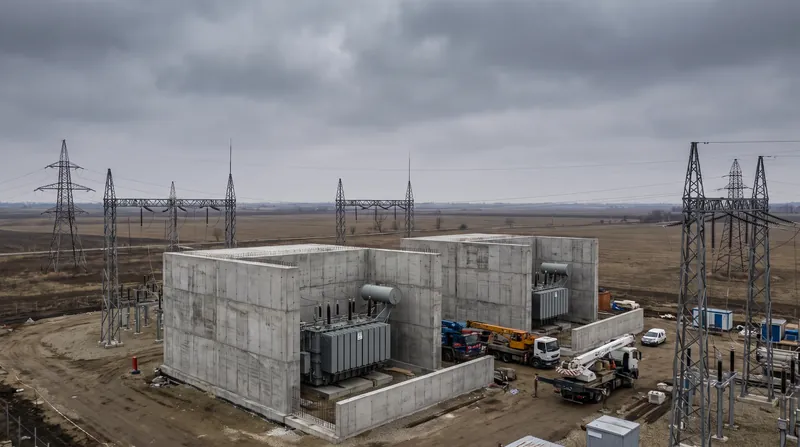
Lithuania Fortifies Key Power Substation Near Kaliningrad With Concrete 'Sarcophagi' Against Drone Attacks
7 sources
Military Doctrine
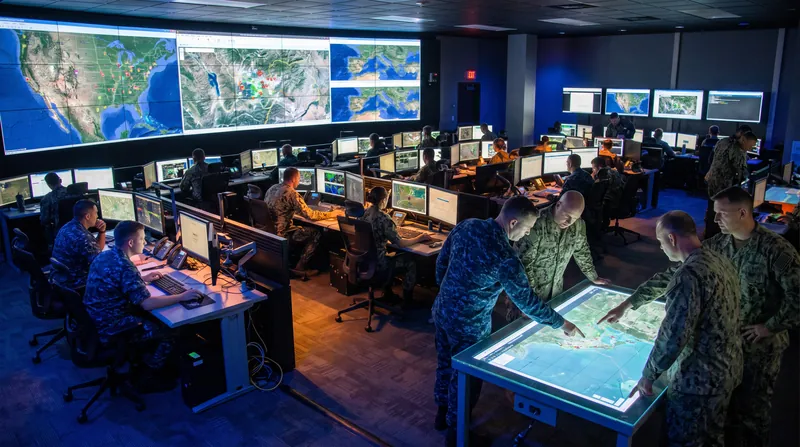
The Find, Fix, Track, Target, Engage, and Assess Sequence: How the Military Executes the Joint Targeting Cycle
6 sources
International Law
The Two Exceptions to the UN Charter's Prohibition on the Use of Force: How Article 51 and Chapter VII Authorize Military Action
8 sources

Comments
Every angle. Every day.
Get Defense & Security stories with full source coverage and perspective breakdowns, free every day.