
GuideModern Military Strategy and Defense OperationsRevision 1Updated
Modern Military Strategy and Defense Operations
As Western militaries pivot back to near-peer competition, doctrine is shifting from traditional joint warfare to multi-domain operations. This transition requires forces to seamlessly integrate land, sea, air, space, and cyber capabilities while surviving in an era of contested logistics.
By Hao Li

Share this story
Modern military strategy is undergoing its most profound transformation since the end of the Cold War. After two decades focused heavily on counterinsurgency and asymmetric conflicts, Western militaries are aggressively pivoting back to the harsh reality of large-scale combat operations against near-peer adversaries.
This shift is not merely a change in target, but a fundamental rewiring of how armed forces conceptualize the battlefield. The traditional boundaries that separated land, sea, and air combat have dissolved, replaced by a fluid environment where space and cyberspace are equally critical domains.
In 2022, the United States Department of Defense codified this reality in its National Defense Strategy, explicitly prioritizing the deterrence of revisionist powers. The strategy demands a highly adaptable force capable of operating seamlessly across every domain simultaneously, setting the baseline for future military development.[3]
The resulting doctrinal shift has forced a severe reckoning within military institutions worldwide. Planners are now grappling with the immense logistical, technological, and conceptual hurdles required to field a force that can survive and win in an era of hyper-connected, multidimensional warfare.
The Evolution of Modern Doctrine
For much of the late twentieth century, military doctrine was built around the concept of joint warfare. This approach prioritized the integration of a nation's separate military branches—such as the army, navy, and air force—into a single unified command structure to maximize combat effectiveness.[11]
Joint warfare proved highly effective during the Gulf War and subsequent operations, allowing commanders to synchronize overwhelming firepower. However, the rapid proliferation of advanced sensors, long-range precision fires, and offensive cyber capabilities has rendered the traditional joint framework insufficient for modern, high-intensity conflicts.[11][12]
Today, technologically advanced adversaries can contest superiority in domains that were previously considered safe sanctuaries. A modern military can no longer assume it will have uninterrupted satellite communications, secure logistics networks, or uncontested airspace when facing a well-equipped, near-peer opponent on the modern battlefield.[6]
In response, the United Kingdom's Ministry of Defence published the Integrated Operating Concept in 2020. This framework acknowledges that the distinction between peace and war has blurred significantly, requiring a posture of continuous competition and seamless integration across all instruments of state power.[2]
The UK doctrine emphasizes that future advantage will not come from platform superiority alone, but from the ability to integrate sensors and effectors across all domains faster than the adversary. This conceptual leap laid the vital groundwork for what is now widely known as multi-domain operations.[2]
The Three Levels of War
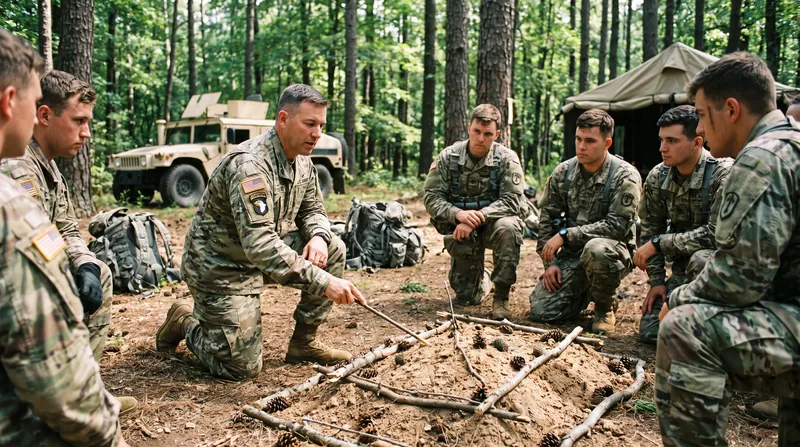
To understand how these new doctrines are applied, it is essential to grasp the traditional framework that governs military planning. Modern military theory divides warfare into three distinct but deeply interconnected tiers: the strategic, operational, and tactical levels of war.[9][13]
The strategic level sits at the absolute apex, where national leadership determines the overarching political and military objectives of a conflict. It is at this level that a nation decides whether to go to war, what resources to commit, and what the ultimate end state must look like.[9][13]
At the opposite end is the tactical level, which deals with the immediate, visceral realities of combat. This is the domain of battles and engagements, where individual units, from infantry squads to fighter squadrons, execute specific missions to defeat enemy forces on the ground, in the air, or at sea.[13]
Bridging the massive gap between these two extremes is the operational level of war. Formally introduced into US Army doctrine in 1982, the operational level is where theater commanders design campaigns and major operations, ensuring that tactical victories actually translate into meaningful strategic success.[13]
Operational art is the cognitive tool commanders use to sequence battles over time and space. Without a coherent operational strategy, a military might win every single tactical engagement but still lose the war because those isolated victories did not achieve the national political objectives.[6][13]
The advent of multi-domain warfare has severely compressed these traditional levels. A single tactical action in cyberspace, such as disrupting an adversary's financial network, can now generate immediate strategic consequences, forcing commanders to rethink how authority and decision-making are delegated across the force.[6][14]
Multi-Domain Operations Explained
Multi-Domain Operations (MDO) represents the current pinnacle of Western military thought. In 2022, the US Army officially codified MDO in Field Manual 3-0, defining it as the combined arms employment of capabilities from all domains to exploit relative advantages and defeat enemy forces.[10][14]
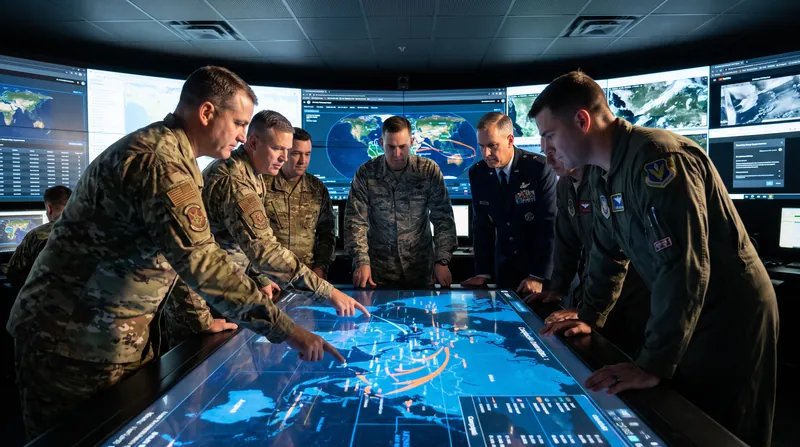
The five recognized domains—land, maritime, air, space, and cyberspace—are no longer treated as separate theaters of action. Instead, MDO demands that a commander seamlessly synchronize effects across all five to overwhelm an adversary's decision-making cycle and shatter their operational cohesion.[8][10]
For example, a multi-domain strike might involve a cyberattack to blind an enemy radar, followed by a space-based sensor cueing a land-based missile to destroy a maritime target. This level of convergence requires an unprecedented degree of network integration and secure data sharing across services.[8]
NATO has also fully embraced this paradigm. The alliance's Allied Command Transformation is actively developing an MDO concept to orchestrate military activities across all environments, ensuring that the 32 member nations can operate as a single, cohesive force in a rapidly escalating crisis.[1]
The 2022 NATO Strategic Concept explicitly underscores the need to deter and defend across all domains and directions. It recognizes that authoritarian actors are increasingly utilizing hybrid tactics, blending conventional military force with cyber warfare and disinformation to destabilize the Euro-Atlantic area.[1][9]
Implementing MDO, however, is a monumental technological challenge. It requires secure, high-bandwidth communication networks that can survive intense electronic warfare, as well as artificial intelligence systems capable of processing vast amounts of sensor data in real time to provide actionable intelligence.[8][14]
The Reality of Contested Logistics
The most sophisticated multi-domain strategy is entirely dependent on a military's ability to sustain its forces in the field. This brings planners to the most daunting challenge of modern warfare: the harsh reality of contested logistics in a near-peer conflict.[10][14]
For decades, Western militaries operated with the comfortable assumption of a safe rear area. Supply depots, maintenance facilities, and transportation networks were largely immune to direct attack, allowing for highly efficient, centralized logistics operations that maximized throughput and minimized cost.[5][14]
The proliferation of long-range precision strike capabilities and pervasive drone surveillance has completely shattered that assumption. Today, every node in a supply chain, from a forward arming and refueling point to a strategic seaport thousands of miles away, is a highly vulnerable potential target.[5]
Contested logistics forces militaries to accept that they will operate under constant observation and threat of disruption. Commanders must plan for degraded communications, destroyed fuel reserves, and severed transportation routes as the default state of operations, rather than an unexpected exception.[14]
To survive, logistics networks must transition from pure efficiency to robust resilience. This means dispersing stockpiles across numerous smaller locations, utilizing autonomous delivery vehicles, and empowering forward units to conduct field-expedient repairs without relying on a vulnerable centralized supply chain.[14]
The ability to sustain power projection under these conditions is now viewed as a primary deterrent. As defense analysts frequently note, an adversary is far less likely to initiate a conflict if they know the opposing force can maintain its operational endurance despite relentless attacks on its supply lines.[14]
The Industrial Base Bottleneck
The challenge of sustainment extends far beyond the immediate battlefield, reaching deep into the domestic defense industrial base. Recent conflicts have clearly demonstrated that the consumption rates of modern munitions far exceed the peacetime production capacities of Western manufacturing facilities.[4][5]
A comprehensive analysis by the Center for Strategic and International Studies highlighted severe vulnerabilities in the US defense supply chain. The report warned that in a major regional conflict, the US military could exhaust its stockpiles of critical precision-guided munitions in a matter of weeks.[4]
The industrial base, optimized for peacetime efficiency and lean manufacturing, struggles to rapidly surge production. Bottlenecks in raw materials, specialized components like solid rocket motors, and a critical shortage of skilled manufacturing labor severely constrain the ability to replenish expended stocks.[4]
This reality has forced a massive reevaluation of procurement strategies. Militaries are increasingly seeking to balance their inventories of exquisite, highly expensive weapon systems with much larger quantities of "good enough," mass-producible munitions that can be manufactured quickly during a crisis.[4][5]
The preliminary lessons from the conventional warfighting in Ukraine strongly underscore this point. The conflict has proven that sheer mass—in artillery, drones, and basic supplies—remains a decisive factor, challenging the assumption that technological superiority alone can guarantee a swift and decisive victory.[5]
The challenge is compounded by the highly proprietary nature of modern defense technology. Unlike the mass mobilization of the mid-twentieth century, today's advanced systems rely on classified software and specialized microelectronics that cannot be easily outsourced to civilian manufacturers during a sudden crisis.[4][14]
To mitigate this, defense departments are aggressively exploring open-architecture designs and modular procurement strategies. By standardizing interfaces and decoupling software from hardware, militaries hope to rapidly integrate commercial innovations and expand the pool of available suppliers when traditional production lines are overwhelmed.[4][7]
Autonomous Systems and AI
To offset the severe challenges of mass and contested logistics, military strategists are turning to artificial intelligence and autonomous systems. These technologies promise to fundamentally alter the character of warfare by exponentially increasing the speed of decision-making and significantly reducing the risk to human personnel.[12][14]
Autonomous weapon systems, which can identify, select, and engage targets without human intervention, represent a highly controversial but rapidly advancing frontier. While fully autonomous lethal systems remain restricted by policy in many nations, semi-autonomous and highly automated defensive systems are already widespread.[12]
Defense analysts note that autonomous systems offer significant operational advantages, particularly in environments where electronic warfare severs communication links to human operators. A drone swarm capable of navigating and engaging targets independently can overwhelm traditional air defenses through sheer numbers and coordinated action.[7][14]
Beyond lethal applications, AI is completely revolutionizing military logistics and intelligence gathering. Machine learning algorithms can predict maintenance failures before they occur, optimize supply routes in real time, and sift through terabytes of satellite imagery to identify concealed enemy positions faster than any human analyst.[7][14]
However, the integration of AI introduces profound new vulnerabilities into the force structure. Algorithms can be deceived by adversarial data poisoning, and the reliance on autonomous systems raises complex ethical and legal questions regarding accountability and the strict adherence to international humanitarian law.[12][14]
Despite these valid concerns, the strategic imperative remains entirely clear. Militaries that fail to adopt and integrate artificial intelligence risk being hopelessly outpaced by adversaries who can process information and execute multi-domain operations at machine speed, rendering traditional human-in-the-loop systems obsolete.[7][14]
Mission-Level Simulations
As the sheer complexity of multi-domain operations grows, militaries are increasingly relying on advanced wargaming and mission-level simulations. These synthetic environments allow commanders to test new operational concepts and validate tactics without the prohibitive costs and physical risks of live-fire exercises.[7]
Simulations provide a critical sandbox for exploring the cascading effects of contested logistics and cyber disruptions. By modeling the interactions between thousands of individual entities, planners can identify hidden vulnerabilities in their supply chains before they are disastrously exposed in actual combat.[7][14]
Furthermore, these virtual environments are absolutely essential for training the artificial intelligence algorithms that will power future autonomous systems. Machine learning models require vast amounts of data to recognize patterns and make accurate targeting decisions, much of which is generated through iterative simulation runs.[7][12]
The ultimate goal is to create a perfect digital twin of the operational environment, where real-time sensor data feeds directly into the simulation. This would allow commanders to forecast the outcomes of various tactical decisions instantaneously, providing a decisive cognitive advantage over the adversary.[7][14]
The ultimate goal is to create a perfect digital twin of the operational environment, where real-time sensor data feeds directly into the simulation.
The Future of Joint Warfare
The convergence of multi-domain operations, contested logistics, and artificial intelligence is reshaping the very definition of joint warfare. Success in future conflicts will require a level of interoperability that extends far beyond military branches to include allied nations and commercial partners.[1][11]
The 2022 National Defense Strategy emphasizes the concept of integrated deterrence, which relies on the seamless combination of military, economic, and diplomatic power. This requires a massive cultural shift within military institutions, breaking down the bureaucratic silos that have traditionally separated the services.[3][11]
Training and education must rapidly evolve to produce leaders capable of thinking across domains and levels of war simultaneously. A tactical commander must understand the strategic implications of their actions, while strategic planners must grasp the technical limitations of cyber and space assets.[6][11]
Furthermore, the heavy reliance on commercial technology—from satellite constellations to cloud computing—means that the private sector is now an active participant in the operational environment. Defending these commercial networks is now just as critical as defending traditional military infrastructure and bases.[3][8]
Frequently asked
What is the difference between joint and multi-domain operations?
Joint operations involve different military branches (like the Army and Navy) working together. Multi-domain operations expand on this by integrating non-military assets and operating across space and cyberspace simultaneously.
Why is the operational level of war important?
It serves as the crucial bridge between high-level political strategy and ground-level tactical combat, ensuring that individual battles actually contribute to winning the overall conflict.
How does contested logistics change military planning?
It forces militaries to abandon the idea of a 'safe rear area,' requiring them to disperse supply depots, utilize autonomous delivery systems, and prepare for constant disruption of their supply chains.
Are fully autonomous weapons currently used in combat?
While highly automated defensive systems like the Phalanx CIWS have been used for decades, the deployment of offensive weapons that select and engage targets entirely without human oversight remains a developing and highly debated frontier.
What changed
- · Revision 1Published.
Related explainers
- U.S. Military Sustainment: Dividing Labor Between the J-4, DLA, and Tactical Units
- Evidence Pack: The Architecture of Prolonged Field Care and the End of the 'Golden Hour'
- Evidence Pack: The Architecture and Feasibility of Hypersonic Glide Vehicles as Air-to-Air Platforms
- Evidence Pack: How Extended Deployments Strain Carrier Crews as USS George Washington Relieves the Lincoln
- Situation, Mission, Execution, Sustainment, and Command: The Five-Paragraph Structure of a U.S. Military Operations Order
- Saab Unveils Stealthy Supersonic 'Fighter Drone' Concept as European Counterpart to US CCA Program
- Evidence Pack: The Architecture of AI-Generated Exploits Targeting Siemens S7 PLCs
- Evidence Pack: The Architecture of U.S. Military Reallocation from NATO to the Indo-Pacific
- Evidence Pack: Comparing Fuel Cell, Stirling, and Lithium-Ion Submarine Propulsion Systems
- Evidence Pack: The Architecture, Economics, and Feasibility of the Golden Dome Missile Defense System
- The Ten Classes of Supply: How the Military Categorizes Sustainment and Where the System is Breaking Down
- Evidence Pack: The Legal Architecture of the DOJ's Plan to Revive Maritime Prize Courts
- Multi-Domain Integrationists
- Advocates for seamless sensor-to-shooter connectivity across all domains.
- Logistics Realists
- Focuses on the industrial base and the physical realities of sustainment.
- Autonomy Advocates
- Emphasizes the necessity of removing the human bottleneck from combat operations.
Sources
Source coverage
14 outlets
3 viewpoints surfaced










- [1]Allied Command TransformationMulti-Domain Integrationists
Multi-Domain Operations in NATO – Explained
Read on Allied Command Transformation → - [2]Ministry of Defence
The Integrated Operating Concept
Read on Ministry of Defence → - [3]U.S. Department of Defense
Fact Sheet: 2022 National Defense Strategy
Read on U.S. Department of Defense → - [4]Center for Strategic and International StudiesLogistics Realists
Empty Bins in a Wartime Environment: The Challenge to the U.S. Defense Industrial Base
Read on Center for Strategic and International Studies → - [5]Royal United Services InstituteLogistics Realists
Preliminary Lessons in Conventional Warfighting from Russia’s Invasion of Ukraine: February–July 2022
Read on Royal United Services Institute → - [6]Modern War InstituteMulti-Domain Integrationists
War Has Changed, and the Army's Conceptualization of Operational Art Must Follow Suit
Read on Modern War Institute → - [7]War on the RocksAutonomy Advocates
Supporting Joint Warfighting with Mission-Level Simulations
Read on War on the Rocks → - [8]Air UniversityMulti-Domain Integrationists
Multi-Domain Operations: Bridging the Gaps for Dominance
Read on Air University → - [9]Wikipedia
Military strategy
Read on Wikipedia → - [10]Wikipedia
Multi-domain operations
Read on Wikipedia → - [11]Wikipedia
Joint warfare
Read on Wikipedia → - [12]Wikipedia
Lethal autonomous weapon
Read on Wikipedia → - [13]Wikipedia
Operational level of war
Read on Wikipedia → - [14]Factlen Editorial TeamAutonomy Advocates
Synthesis by Factlen editorial team
Read on Factlen Editorial Team →
More in Defense & Security
See all →Military Doctrine
The Strategic, Operational, and Tactical Levels of War: How Military Objectives Are Defined and Linked
5 sources
Baltic Security
Finnish Maritime Sensors Detect Ukrainian Strike on Russian Warship in Baltic Sea
4 sources

Defense Logistics
Pentagon Cannot Account for Millions of F-35 Spare Parts, Watchdog Report Finds
6 sources
Defense Manufacturing
Pakistan Successfully Tests First Domestically Developed Fa'az Air-to-Air Missile
4 sources
Comments
Every angle. Every day.
Get Defense & Security stories with full source coverage and perspective breakdowns, free every day.