
Pakistan Successfully Tests First Domestically Developed Fa'az Air-to-Air Missile
The Pakistan Air Force has completed the maiden flight test of its indigenous Fa'az missile, marking a major step toward reducing reliance on foreign defense suppliers. Launched from a JF-17 fighter, the weapon features an advanced terminal guidance system designed to engage aerial targets at extended ranges.

Share this story
The Pakistan Air Force successfully conducted the first flight test of its domestically developed Fa'az air-to-air missile on November 3, 2026. The weapon was launched from a JF-17 Thunder fighter jet, marking a major milestone for the nation's aerospace industry.[1][4]
The Inter-Services Public Relations, the military's media wing, announced the successful launch alongside video footage of the event. The test puts Pakistan among a relatively small group of nations capable of developing and fielding their own advanced air-to-air missile systems.[1][4]
According to the military's statement, the Fa'az missile is equipped with a state-of-the-art terminal guidance system. This technology improves the weapon's ability to track and intercept maneuvering aircraft during the final phase of flight, increasing its effectiveness in modern aerial combat.[2][3]
The military stated that the new weapon system will significantly enhance the operational flexibility of the Pakistan Air Force. Senior military officers, scientists, and engineers witnessed the launch, which the government described as evidence of the technical maturity and self-reliance of Pakistan's defense sector.[1][2]
Technical Specifications and Variants
While the military did not formally disclose the missile's exact operational range or speed during the test announcement, the Fa'az program has been publicly known for several years. The state-owned defense conglomerate Global Industrial & Defense Solutions is the primary developer behind the weapon.[4]
The manufacturer previously displayed mockups of two distinct variants of the missile at the International Defense Industry Fair in Turkey in 2023. These included the Fa'az-RF, an active radar-guided missile, and the Fa'az-IIR, which utilizes an imaging infrared seeker to lock onto targets.[4]
Video footage of the November test showed a red-painted Fa'az-IIR variant being launched from a pylon under the wing of the JF-17. The imaging infrared seeker provides a distinct advantage in highly contested environments, as it is generally more resistant to traditional electronic warfare jamming than radar-guided weapons.[4]
Manufacturer specifications published by the defense conglomerate indicate that both variants of the medium-range missile possess an operational range exceeding 100 kilometers. The weapons are designed to reach maximum speeds of approximately Mach 3.5 and can operate at altitudes up to 6,000 feet above sea level.[4]
The company also advertised specific seeker detection ranges for the two models during their initial unveiling. The active radar-guided Fa'az-RF features a detection range of 25 kilometers, while the infrared-guided Fa'az-IIR boasts a slightly longer detection range of 40 kilometers.[4]
Reducing Reliance on Foreign Suppliers
The successful development of the Fa'az missile represents a strategic shift for Pakistan, which currently relies heavily on imported air-to-air weapons. The Pakistan Air Force inventory is largely built around the American AIM-120 AMRAAM and various Chinese systems, including the PL-15 and PL-12 missiles.[4]
A homegrown beyond-visual-range alternative makes Pakistan significantly less dependent on outside suppliers for its core aerial defense capabilities. Defense analysts note that domestic production shields the military from potential export restrictions, sanctions, or shifting geopolitical alliances that can disrupt supply chains.[4]
Producing the missile domestically also makes it easier for the air force to maintain, upgrade, and integrate its fighter fleet without requiring external approvals or end-user agreements. This autonomy is particularly crucial as Pakistan continues to modernize its JF-17 Thunder and J-10CE fighter squadrons.[4]
The Fa'az design appears to share some aesthetic and technological traits with the Chinese SD-10A, the export version of the PL-12 weapon, which is produced under license by the Pakistan Aeronautical Complex. However, the manufacturer maintains that the Fa'az is locally developed and that Pakistan holds the intellectual property rights.[4]
Beyond the immediate tactical advantages, the Fa'az program carries significant economic implications for Pakistan. Procuring advanced air-to-air missiles from international markets requires substantial foreign exchange reserves, which places a heavy burden on the national economy during periods of financial constraint.[4]
A Broader Push for Missile Modernization
The Fa'az test is part of a broader, accelerated push by Pakistan to advance its missile technology and conventional strike capabilities. The air-to-air launch marks the country's third major missile test in less than a month, highlighting a concentrated effort to expand domestic defense manufacturing.[1][2]
In early October 2026, the Pakistan Army successfully test-fired an extended-range version of its indigenously developed Fatah-IV ground-launched cruise missile. The military stated that the system features advanced avionics and modern navigational aids, allowing it to engage targets at extended ranges with improved precision.[1][2]
A week later, on October 13, Pakistan conducted a successful test of the Fatah-2 Extended Range ballistic missile, which the military described as a hypersonic weapon system. The media wing noted that the missile's unique trajectory and maneuverability features were designed to penetrate enemy missile defense systems.[1][2]
These surface-to-surface tests, combined with the new air-to-air capability, demonstrate a comprehensive approach to modernizing Pakistan's strategic deterrent. The military has consistently emphasized that these developments are intended to strengthen the country's overall defense posture and ensure operational readiness across all domains.[1][2]
By shifting procurement to domestic conglomerates, the military can reinvest its budget into the local economy, supporting high-tech engineering jobs and fostering specialized research. This approach aligns with broader government directives to reduce the import bill and build a sustainable, self-reliant defense industrial base.[4]
Regional Dynamics and the Aerospace Race
The push for beyond-visual-range supremacy is heavily influenced by the ongoing technological competition in South Asia. The 2019 aerial skirmish between Pakistan and India underscored the critical importance of long-range air-to-air missiles in modern conflicts, prompting both nations to accelerate their respective development programs.[4]
Neighboring India is simultaneously advancing its own indigenous family of beyond-visual-range weapons, known as the Astra series. The Astra Mk-2, which boasts an expected range of 200 kilometers, is slated to enter service in the near future, progressively replacing Russian and French missiles in the Indian Air Force.
As both nations field increasingly sophisticated fighter aircraft, the ability to strike targets from greater distances has become a primary focus of their defense strategies. The introduction of the Fa'az missile ensures that Pakistan maintains parity in this critical domain, providing a credible deterrent against regional adversaries.[4]
Looking ahead, Pakistan's defense industry is reportedly working on a longer-range variant, the Fa'az-2, which is expected to push the weapon's reach up to 180 kilometers. While the military has not confirmed a timeline for this upgraded version, its development signals a long-term commitment to aerospace innovation.[4]
The integration of the Fa'az missile onto the JF-17 Thunder platform also highlights the modularity of the aircraft's avionics. By successfully interfacing a new, indigenous terminal guidance system with the fighter's existing architecture, Pakistani engineers have demonstrated a high level of technical proficiency that will benefit future aerospace projects.[1][2]
The successful maiden flight of the Fa'az ultimately reflects a maturing defense industrial base capable of delivering complex, high-technology systems. As Pakistan continues to refine its domestic manufacturing capabilities, the nation is positioning itself not only to secure its own airspace but potentially to enter the global arms export market.[4]
Key points
- The Pakistan Air Force successfully completed the maiden flight test of its domestically developed Fa'az air-to-air missile from a JF-17 Thunder fighter.
- The weapon features a state-of-the-art terminal guidance system designed to track and intercept maneuvering aircraft at extended ranges.
- The successful test marks a strategic shift for Pakistan, reducing its reliance on imported American and Chinese beyond-visual-range missiles.
- The Fa'az launch follows two successful surface-to-surface missile tests in October, highlighting a broader push to modernize the nation's conventional strike capabilities.
Open questions
- The exact operational range and speed demonstrated during the November 3 flight test, as the military did not release specific telemetry data.
- The timeline for when the Fa'az missile will officially enter mass production and be fully integrated across all Pakistan Air Force fighter squadrons.
- How much of the Fa'az design relies on licensed technology from the Chinese SD-10A missile versus entirely indigenous engineering.
Timeline
July 2023
Global Industrial & Defense Solutions publicly unveils mockups of the Fa'az-RF and Fa'az-IIR missiles at a defense exhibition in Turkey.
October 6, 2026
The Pakistan Army successfully test-fires an extended-range version of its indigenously developed Fatah-IV ground-launched cruise missile.
October 13, 2026
Pakistan conducts a successful test of the Fatah-2 Extended Range hypersonic ballistic missile.
November 3, 2026
The Pakistan Air Force completes the maiden flight test of the Fa'az air-to-air missile from a JF-17 Thunder fighter jet.
- Pakistan Military Leadership
- Views the Fa'az missile as a critical step toward strategic autonomy and operational flexibility.
- Defense Analysts
- Focuses on the technical capabilities of the missile and the economic benefits of reducing foreign dependence.
- Regional Observers
- Focuses on the implications of the test for the South Asian aerospace balance and the ongoing arms race.
Perspectives this story doesn't cover
- Indian Defense Officials
- International Arms Control Advocates
Sources
Source coverage
4 outlets
3 viewpoints surfaced




- [1]DawnPakistan Military Leadership
Pakistan successfully tests its first indigenously developed air-to-air missile Fa'az: ISPR
Read on Dawn → - [2]The Express TribunePakistan Military Leadership
Pakistan conducts maiden flight test of locally developed Fa'az air-to-air missile
Read on The Express Tribune → - [3]Geo NewsPakistan Military Leadership
Pakistan successfully tests first indigenously developed Fa'az air-to-air missile
Read on Geo News → - [4]The War ZoneDefense Analysts
Pakistan Joins Air-to-Air Missile Club With Successful Test Of Fa’az
Read on The War Zone →

More in Defense & Security
See all →Air Defense Logistics
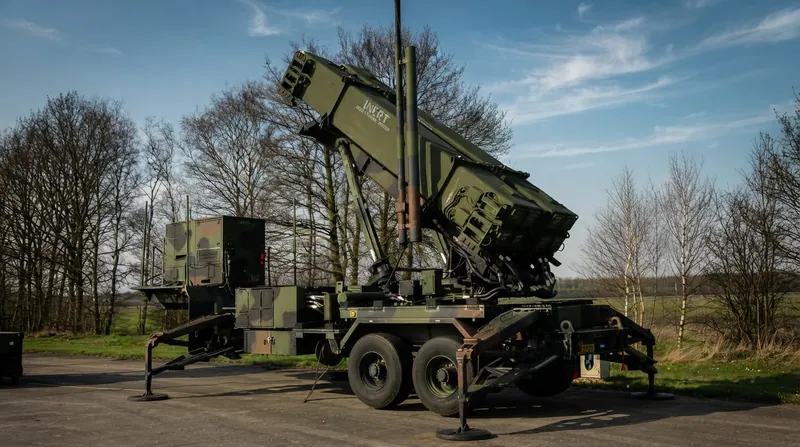
US Selects Poland to Host $253 Million European Patriot Missile Maintenance Hub
8 sources
AUKUS Alliance
U.S. Navy Selects USS Colorado as First Nuclear Submarine for Australia's AUKUS Rotational Force
7 sources

Missile Procurement
Denmark Commits to Long-Range Strike Arsenal With Dual Purchase of Missiles
6 sources

Defense Procurement
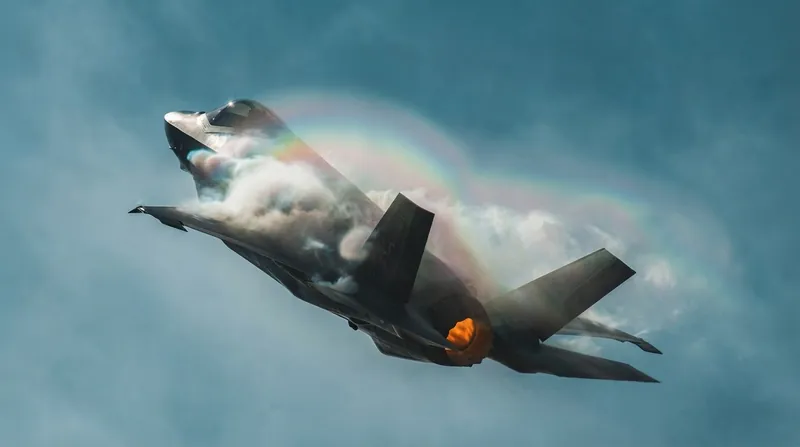
Pentagon and Lockheed Martin Finalize 10-Year Framework for 850 F-35 Fighter Jets
12 sources
Comments
Every angle. Every day.
Get Defense & Security stories with full source coverage and perspective breakdowns, free every day.