
India Commits $5.7 Billion to Next-Generation Corvettes in Domestic Fleet Expansion
India's Ministry of Defence has awarded a $5.7 billion contract to two domestic shipyards for eight next-generation corvettes, marking a major step in its indigenous naval modernization. The 4,950-ton stealth vessels will enhance anti-submarine and coastal defense capabilities amid growing regional security concerns in the Indo-Pacific.
By Layla Zaher

Share this story
On November 2, India's Ministry of Defence finalized a ₹53,866.5 crore ($5.7 billion) agreement to construct eight next-generation corvettes, cementing one of the largest domestic shipbuilding initiatives in the nation's history. The contracts, awarded to Garden Reach Shipbuilders & Engineers and Goa Shipyard Limited, represent a decisive shift toward indigenous defense manufacturing.[1][3]
The stealth combatants will replace an aging fleet of single-role corvettes, assuming a multi-domain mission profile that spans anti-submarine warfare, coastal defense, and the protection of critical sea lanes. With approximately 90 percent of India's trade moving by sea and a coastline stretching over 11,000 kilometers, maritime security remains a foundational economic priority.[1][5]
Under the competitive bidding framework, Kolkata-based Garden Reach Shipbuilders will construct five of the vessels for approximately ₹32,000 crore, while Goa Shipyard will build the remaining three. The first hulls are slated for launch in late 2029, with deliveries to the Indian Navy expected to commence by 2031.[3]
The program marks a structural milestone for India's defense sector. It is the first time a warship class has been entirely designed in-house by the Indian Navy and awarded to domestic public sector shipyards through an open competitive process rather than direct nomination.[1][3]
"The induction of these ships will significantly enhance the Indian Navy's operational capabilities in safeguarding maritime trade routes," the Ministry of Defence stated following the signing ceremony. The ministry emphasized that the platforms will conduct anti-surface and anti-submarine operations while maintaining a persistent maritime presence.[2]
Technical Specifications and Armament
The next-generation corvettes will displace 4,950 tons, measuring 127.4 meters in length with a beam of 17.6 meters. Powered by a combined diesel and gas turbine cross-connect propulsion system driving two controllable pitch propellers, the vessels will reach maximum speeds of 26 knots.[1][3]
Each corvette will operate with a crew complement of 11 officers and 139 sailors. The design incorporates an aviation hangar capable of accommodating a multi-role helicopter or unmanned aerial vehicles, extending the ship's reconnaissance and anti-submarine reach far beyond its immediate radar horizon.[3]
The armament suite reflects a heavy emphasis on multi-role lethality and layered defense. The corvettes will carry 16 medium-range surface-to-air missiles housed across two eight-cell vertical launch units, alongside medium-range anti-ship missiles and 324 mm torpedo tubes.[1][3]
For close-in engagements, the vessels will mount an OTO Melara 76 mm Super Rapid Gun Mount and an AK-630 Close-In Weapon System. These will be supplemented by 12.7 mm stabilized remote-controlled guns integrated with an electro-optic-based fire control system.[3]
To counter subsurface and aerial threats, the ships will integrate an electro-optical infrared search and track system alongside a multi-function surveillance, track, and guidance radar. This sensor architecture allows the corvettes to operate effectively in heavily contested electronic warfare environments.[3]
Naval analysts note that the corvettes will likely be among the first surface combatants equipped with the turbojet-propelled NASM-MR anti-ship missile currently under development by India's Defence Research and Development Organisation. The new subsonic missile offers a lighter, cost-effective alternative to the heavy BrahMos supersonic cruise missiles standard on larger Indian destroyers.[3]
The Strategic Indo-Pacific Calculus
The $5.7 billion procurement is a direct response to shifting power dynamics in the Indian Ocean Region. As China expands its naval footprint across the Indo-Pacific and deepens military cooperation with Pakistan, New Delhi is accelerating its fleet expansion to maintain regional deterrence.[1]
Chief of the Naval Staff Admiral Dinesh Tripathi stated earlier this year that India aims to field a 200-ship navy by 2035, a substantial increase from its current inventory of 145 vessels and submarines. The eight new corvettes will form the backbone of the surface fleet's medium-weight combat tier.[1]
The corvette deal runs parallel to other massive capital injections aimed at securing India's maritime borders. New Delhi is currently finalizing an $8 billion agreement with Germany to build six advanced conventional submarines equipped with air-independent propulsion technology.[1]
"In terms of the documents, it has already been finalized and the German side has agreed to it," German ambassador to New Delhi Jasper Wieck told reporters in September regarding the submarine program. "It is now up to the Indian side to complete and conclude its internal processes."[1]
India is also upgrading its naval aviation capabilities. On October 29, a French Rafale Marine fighter jet successfully landed on India's newest indigenous aircraft carrier, INS Vikrant, marking a critical compatibility trial for the $7.5 billion contract to acquire 26 of the advanced fighters.[1][5]
Economic Impact and Domestic Industry
Beyond military capability, the Ministry of Defence framed the $5.7 billion expenditure as a catalyst for the domestic economy. The government projects the construction phase will generate 7.2 million person-days of employment directly within the Garden Reach and Goa shipyards over the next decade.[2][5]
The ripple effect through the private sector is expected to be even larger. An estimated 46 million person-days of work will flow to ancillary industries and micro, small, and medium enterprises tasked with supplying raw materials, subsystems, and specialized components.[2][5]
Defence Minister Rajnath Singh highlighted the economic scale of the initiative on social media, noting that the project will give a massive impetus to India's indigenous shipbuilding ecosystem. The program forces tighter collaboration between public sector yards and private industrial partners.[2]
By mandating high levels of indigenous content, New Delhi is actively reducing its historical reliance on Russian and Western defense contractors. The corvette program requires local shipyards to upgrade their integration capabilities and project management timelines to meet the Navy's strict 2031 delivery schedule.[3][5]
Both primary shipyards plan to utilize private partners to speed up the construction of the vessels. Garden Reach brings recent experience from building the Project 17A Nilgiri-class frigates, while Goa Shipyard is currently finalizing the last two Talwar-class frigates for the fleet.[3]
Operational Integration and Future Acquisitions
Once commissioned, the corvettes will operate within surface action groups, providing escort duties for larger capital ships and conducting independent littoral patrols. Their endurance and advanced sensor suites will allow the Indian Navy to maintain a persistent presence in strategic chokepoints.[3][5]
The Ministry of Defence is already looking past the corvette program to heavier surface combatants. In late October, the Defence Acquisition Council approved the procurement of additional major naval platforms, which industry analysts expect will include four 10,000-ton next-generation destroyers.[3]
The Navy is also advancing its amphibious assault capabilities. The service recently invited bids from select shipyards for the construction of four Landing Platform Docks, a project that has already seen Spain's Navantia team up with Indian engineering giant Larsen & Toubro.[3]
As the first steel is cut for the new corvette fleet, the success of the program will test the capacity of India's domestic shipyards to deliver complex stealth combatants on schedule. The execution of this $5.7 billion contract will dictate the pace and credibility of India's maritime expansion through the next decade.[1][3]
Key points
- India signed a ₹53,866.5 crore ($5.7 billion) deal with Garden Reach Shipbuilders and Goa Shipyard for eight next-generation corvettes.
- The 4,950-ton stealth vessels will feature medium-range anti-ship missiles, surface-to-air missiles, and advanced aviation facilities.
- Deliveries are expected to begin in 2031, replacing the Indian Navy's aging fleet of single-role corvettes.
- The project is projected to generate over 53 million person-days of employment across Indian shipyards and supply chains over the next decade.
Unanswered questions
- Which specific private sector partners and MSMEs will be selected by Garden Reach Shipbuilders and Goa Shipyard to supply the critical subsystems for the corvettes.
- Whether the turbojet-propelled NASM-MR anti-ship missile will complete its development and testing cycle in time to be integrated onto the first hulls by 2029.
- How the Indian Navy plans to distribute the eight corvettes across its Eastern and Western Naval Commands once deliveries commence in 2031.
How we got here
2016
The Indian Navy issued a Request for Information for seven next-generation corvettes equipped with surface-to-surface missiles.
June 2022
The Defence Acquisition Council approved the project and increased the procurement requirement to eight vessels.
October 28, 2026
The Cabinet Committee on Security granted final clearance for the indigenous shipbuilding program.
November 2, 2026
The Ministry of Defence signed the $5.7 billion construction contracts with Garden Reach Shipbuilders and Goa Shipyard.
Late 2029
The first hulls of the next-generation corvettes are scheduled to be launched.
2031
Deliveries of the completed stealth combatants to the Indian Navy are expected to commence.
- Indian Defense Establishment
- Argues the procurement is essential for safeguarding maritime trade routes and achieving self-reliance in warship design.
- Domestic Defense Industry
- Views the $5.7 billion contract as a transformative catalyst for local shipyards, ancillary suppliers, and job creation.
- Regional Security Analysts
- Frames the fleet expansion as a necessary counterweight to China's growing naval presence in the Indo-Pacific.
Perspectives this story doesn't cover
- Reactions from regional competitors, particularly China and Pakistan, regarding India's accelerated naval buildup.
- Perspectives from the MSMEs and ancillary industries expected to absorb the 46 million person-days of supply chain work.
Sources
Source coverage
5 outlets
3 viewpoints surfaced





- [1]Defense NewsRegional Security Analysts
India orders next-gen corvettes for $5.7b under broad naval modernization push
Read on Defense News → - [2]The Indian ExpressIndian Defense Establishment
Rs 53,866 crore, 8 new warships: India signs major Navy deal
Read on The Indian Express → - [3]Naval NewsIndian Defense Establishment
Indian Navy Places Orders for Eight Next Generation Corvettes
Read on Naval News → - [4]Defense MirrorDomestic Defense Industry
India Signs $5.65B Deal for Eight Next-Generation Navy Corvettes
Read on Defense Mirror → - [5]Naval TodayDomestic Defense Industry
India inks $5.6B contracts for eight next-gen corvettes
Read on Naval Today →

More in Defense & Security
See all →Air Defense Logistics
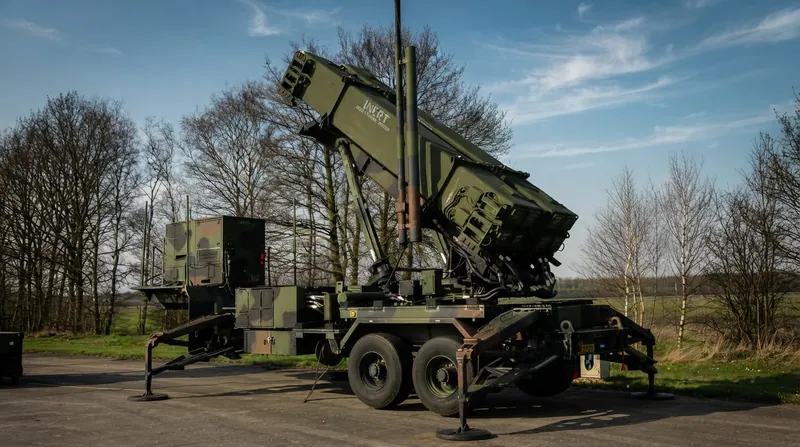
US Selects Poland to Host $253 Million European Patriot Missile Maintenance Hub
8 sources
AUKUS Alliance
U.S. Navy Selects USS Colorado as First Nuclear Submarine for Australia's AUKUS Rotational Force
7 sources

Missile Procurement
Denmark Commits to Long-Range Strike Arsenal With Dual Purchase of Missiles
6 sources
Defense Procurement
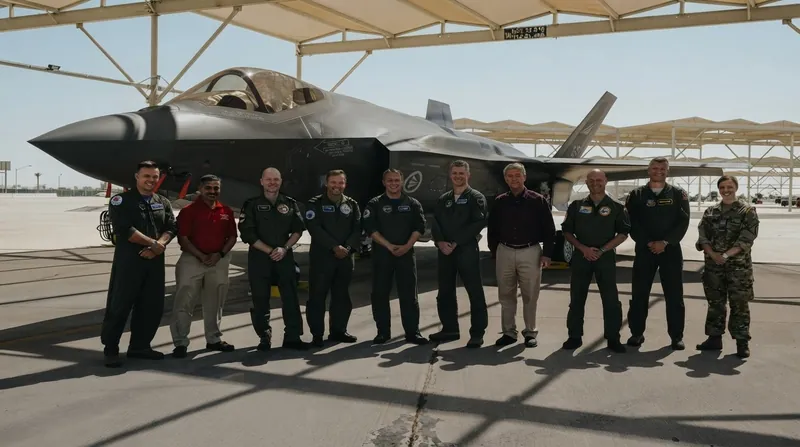
Pentagon and Lockheed Martin Finalize 10-Year Framework for 850 F-35 Fighter Jets
12 sources
Comments
Every angle. Every day.
Get Defense & Security stories with full source coverage and perspective breakdowns, free every day.