
Germany Commissions MBDA to Develop Airborne Laser Pod for Tactical Combat Aircraft
Germany has awarded MBDA a contract to build an airborne laser weapon demonstrator for its fighter jets. The system aims to provide a cost-effective defense against drone swarms and incoming missiles without depleting conventional munitions.
By Hunter Cole

Share this story
Germany’s defense procurement agency has formally contracted MBDA Deutschland to develop a technology demonstrator for an airborne laser weapon. The system is designed to be mounted on tactical combat aircraft, marking a significant shift in the Luftwaffe’s approach to aerial engagements and drone defense.[1][2][3]
The Federal Office of Bundeswehr Equipment, Information Technology and In-Service Support (BAAINBw) initiated the project to address the growing threat of unmanned aerial systems. MBDA will build a podded laser capable of tracking and destroying drones and missiles in flight at the speed of light.[3][4]
"The new initiative aims to eventually equip Luftwaffe combat aircraft with a laser capable of shooting down drones and missiles," noted a program overview from the initial announcement. The demonstrator will test the feasibility of integrating high-energy lasers into the constrained environment of a fighter jet.[1][3]
The initiative directly targets the unsustainable economics of modern air defense. Currently, Western air forces routinely expend advanced air-to-air missiles costing between $400,000 and $1.2 million to intercept loitering munitions that cost less than $30,000 to manufacture, creating a severe financial imbalance.[1][5]
Reversing the economic asymmetry
Beyond the financial imbalance, tactical aircraft face a severe magazine depth problem. A standard Eurofighter Typhoon carries a maximum of six to eight medium-range missiles, limiting its endurance against saturated drone swarm attacks before it must return to base to rearm.[4][5]
An airborne laser fundamentally alters this equation by providing a nearly limitless magazine, constrained only by the aircraft's fuel and power generation capabilities. Each laser shot costs only the price of the aviation fuel required to generate the electricity, typically measured in tens of dollars per engagement.[4][5]
The MBDA demonstrator will take the form of an external pod, similar in size to a standard external fuel tank or electronic warfare pod. This modular approach allows the system to be integrated onto existing platforms without requiring extensive, permanent airframe modifications.[2]
Engineers at MBDA Deutschland will focus on miniaturizing the laser source, beam director, and power management systems. The pod must generate sufficient kilowatt-class power while managing the intense thermal loads produced by the laser firing sequence in a highly compact space.[2][3]
"The challenge is not just generating the laser, but keeping the beam focused on a moving target while the aircraft itself is maneuvering at high speeds," noted a defense technology analyst reviewing the German procurement documents. Precision tracking is critical for the laser to burn through a target's casing.[1][4]
Navigating thermal and atmospheric hurdles
Airborne directed energy weapons face unique physical constraints compared to their ground-based or naval counterparts. The system must compensate for atmospheric turbulence, engine vibration, and the immense aerodynamic forces acting on the pod at transonic speeds, all of which can distort the laser beam.[1][2]
Cooling remains the primary technical bottleneck for airborne lasers. Current solid-state lasers are roughly 30 percent efficient, meaning a 50-kilowatt weapon generates more than 100 kilowatts of waste heat that must be dissipated quickly to prevent system failure and structural damage to the pod.[2][4]
MBDA's design will incorporate advanced thermal management systems, potentially utilizing ram air cooling or liquid cooling loops integrated into the pod's aerodynamic shell. The demonstrator phase will validate whether these cooling mechanisms can sustain repeated engagements during high-tempo combat operations.[3]
The German Ministry of Defense views this technology as a bridge to the Future Combat Air System (FCAS), a joint European sixth-generation fighter program scheduled for deployment in the 2040s. Lessons learned from the MBDA pod will inform the integrated directed energy weapons planned for the FCAS platform.[3][4]
In the interim, the Luftwaffe intends to test the demonstrator on its existing fleet of Eurofighter Typhoons. The aircraft's robust power generation capabilities make it a suitable testbed for the high electrical demands of a tactical laser system, allowing for rapid prototyping and field testing.[1][4]
Building on naval directed energy success
Germany's push into airborne lasers follows successful trials of directed energy weapons in the maritime domain. Between 2022 and 2023, the German Navy tested a 20-kilowatt laser weapon demonstrator, also co-developed by MBDA, aboard the air defense frigate Sachsen.[2]
During those trials in the Baltic Sea, the naval laser successfully engaged multiple drone targets, proving the viability of the tracking and beam-combining technology. The airborne program aims to shrink that ship-sized architecture into a fighter-compatible form factor while maintaining lethal output.[2]
The United States Air Force previously pursued a similar capability under the Self-Protect High Energy Laser Demonstrator (SHiELD) program. Initiated in 2016, SHiELD aimed to mount a defensive laser pod on an F-15 fighter to shoot down incoming surface-to-air missiles.[1]
However, the Pentagon scaled back the SHiELD program in 2024 after encountering significant integration challenges, particularly regarding the pod's weight and aerodynamic drag. Germany’s renewed effort suggests European contractors believe they have solved or bypassed these earlier engineering hurdles using newer components.[1][4]
MBDA's approach benefits from recent advancements in commercial fiber laser technology, which has significantly reduced the size and weight of laser modules over the past five years. These commercial off-the-shelf components are now being ruggedized for the extreme conditions of the military aviation environment.[2][3]
Tactical implications for contested airspace
If successful, the airborne laser pod will initially serve a defensive role, protecting strike packages from incoming anti-aircraft missiles. A laser can blind missile seekers or physically destroy the munition's control surfaces at the speed of light, providing an active defense shield for the aircraft.[1][5]
As the technology matures and power output increases, the system's role will expand to offensive counter-air missions. A fighter equipped with a high-power laser could silently disable enemy drones and cruise missiles from several kilometers away, preserving its kinetic missiles for high-value, heavily armored targets.[4][5]
The proliferation of cheap, autonomous drones in recent conflicts has accelerated the urgency of this development. Defense planners recognize that traditional air defense networks are easily saturated by swarms designed specifically to exhaust interceptor inventories and overwhelm radar operators.[1][4]
"We are moving from an era of missile scarcity to one of energy abundance," a European defense procurement official explained. "The side that can field reliable directed energy first will hold a decisive logistical advantage in any prolonged aerial campaign."[3][4]
The BAAINBw contract covers the initial design and component testing phase, which is expected to run through 2027. Ground testing of the integrated pod will follow, leading to captive flight trials to assess the system's aerodynamic impact on the host aircraft without firing the weapon.[2]
Live-fire testing against airborne targets is tentatively scheduled for the end of the decade. These trials will determine the effective range of the laser under various weather conditions, as cloud cover, smoke, and high humidity can severely degrade beam cohesion and reduce the weapon's lethality.[1][3]
Live-fire testing against airborne targets is tentatively scheduled for the end of the decade.
Ultimately, the MBDA demonstrator represents a critical pivot in European defense strategy. By investing in scalable, reusable effector technology, Germany is laying the groundwork for a more resilient and economically sustainable air force architecture capable of countering next-generation autonomous threats.[4][5]
Key points
- Germany's BAAINBw contracted MBDA Deutschland to build an airborne laser demonstrator.
- The podded system will be designed to shoot down drones and missiles from tactical aircraft.
- The initiative addresses the unsustainable cost of using expensive missiles against cheap drones.
- Testing will focus on overcoming severe thermal and aerodynamic challenges at transonic speeds.
Unanswered questions
- The exact power output target for the final operational laser pod.
- How effectively the system will maintain beam cohesion through heavy cloud cover or precipitation.
- Whether the pod will be integrated into the Eurofighter Typhoon long-term or reserved exclusively for the Future Combat Air System (FCAS).
How we got here
2016
The US Air Force initiates the SHiELD airborne laser program to protect fighter jets from incoming missiles.
2022-2023
The German Navy successfully tests a 20-kilowatt laser weapon demonstrator aboard the frigate Sachsen.
2024
The Pentagon scales back the SHiELD program due to significant integration and aerodynamic challenges.
November 2026
Germany awards MBDA the contract to develop an airborne laser demonstrator for tactical combat aircraft.
2027
Expected conclusion of the initial design and component testing phase for the MBDA laser pod.
- Defense Planners
- Focuses on the unsustainable cost-exchange ratio of using expensive missiles against cheap drones and the need for deeper magazines.
- Aerospace Engineers
- Emphasizes the severe physical constraints of integrating high-power lasers into aircraft, particularly regarding thermal management and aerodynamics.
- Strategic Analysts
- Views the development as a fundamental shift in aerial warfare tactics, moving from kinetic scarcity to energy abundance.
Perspectives this story doesn't cover
- Arms Control Advocates
- Commercial Aviation Regulators
Sources
Source coverage
5 outlets
3 viewpoints surfaced





- [1]The War Zone (TWZ)Defense Planners
Airborne Laser Weapon For Tactical Aircraft Being Developed By Germany
Read on The War Zone (TWZ) → - [2]Aviation WeekAerospace Engineers
MBDA Secures German Airborne Laser Demo
Read on Aviation Week → - [3]Defence Industry EuropeAerospace Engineers
MBDA to build airborne laser demonstrator for Germany to assess future aircraft weapons capability
Read on Defence Industry Europe → - [4]Army RecognitionStrategic Analysts
MBDA Begins Developing Airborne Laser Pod That Reveals How Germany Is Preparing for a New Era of Aerial Warfare
Read on Army Recognition → - [5]Defense ExpressDefense Planners
Germany Orders MBDA to Develop Airborne Laser Weapon Pod for Fighters, Aims to Kill Drones Without Burning Through Scarce Missiles
Read on Defense Express →
More in Defense & Security
See all →Directed Energy
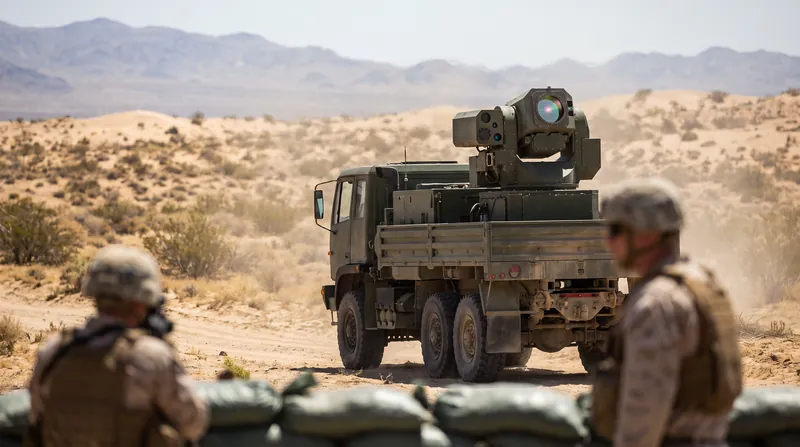
U.S. Military Schedules Directed Energy 'Shoot-Off' to Select Operational Counter-Drone Lasers
7 sources

Directed Energy
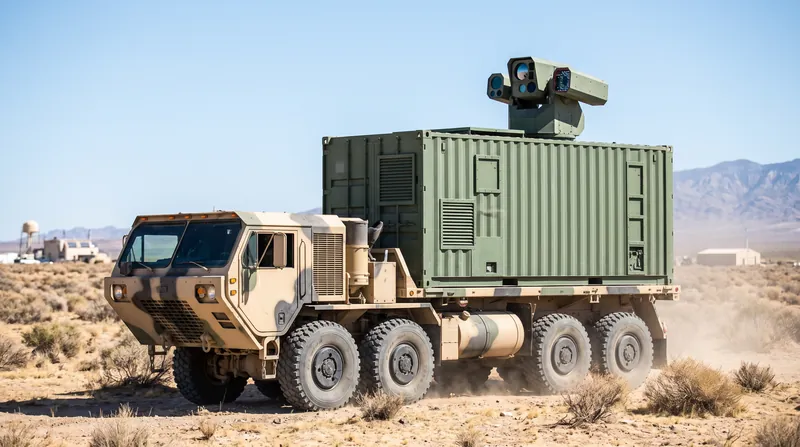
Pentagon Commits $847M to Operational Laser Weapons to Counter Drone and Missile Threats
7 sources
Autonomous Combat Aircraft
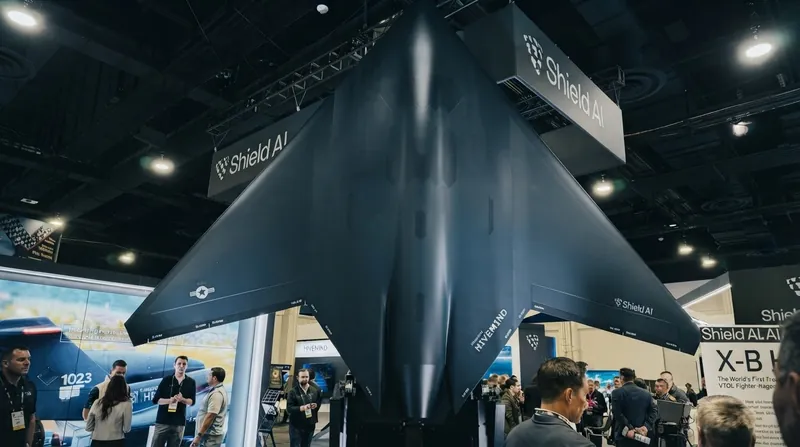
Shield AI Unveils Full-Scale X-BAT VTOL Autonomous Fighter Drone Prototype
6 sources
Air Defense
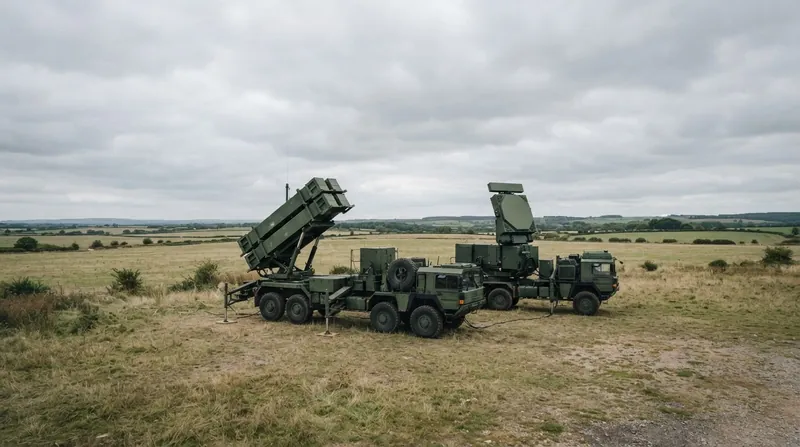
US Approves $2.1 Billion Sale of 500 Patriot Interceptors to Ukraine for Long-Term Defense
7 sources
Comments
Every angle. Every day.
Get Defense & Security stories with full source coverage and perspective breakdowns, free every day.