
full timeline
Russia–Ukraine war
Diplomatic delegations from Ukraine, Russia, and the United States have reached a consensus on a major release of captives following initial negotiations in the Middle East.
Follow Russia–Ukraine war in the Factlen app and get an alert when there is news. Get the app
Share this story
Latest report
Ukraine and Russia Agree to Major Prisoner Swap as Trilateral Peace Talks Open in Abu Dhabi
Diplomatic delegations from Ukraine, Russia, and the United States have reached a consensus on a major release of captives following initial negotiations in the Middle East. The summit, aimed at establishing long-term security frameworks and de-escalating the five-year conflict, represents the highest-level direct contact between the adversaries since early 2026.
- Ukrainian and Russian delegations agreed to a large-scale prisoner exchange during the first day of US-mediated talks in Abu Dhabi.
- The November 10 meetings mark the first direct diplomatic engagement between the two nations since February 2026.
- Discussions heavily focused on postwar security guarantees, with Ukraine demanding real tools to prevent future Russian aggression.
- European officials were excluded from the main trilateral room but held parallel coordination meetings with the Ukrainian delegation.
The first day of US-mediated trilateral peace talks in the United Arab Emirates has produced an agreement between Ukraine and Russia to conduct a large-scale prisoner exchange. The November 10, 2026, meeting in Abu Dhabi marks the first direct diplomatic engagement between the two warring nations in nine months.[2]
The negotiations, which lasted approximately four and a half hours, brought together senior intelligence and diplomatic officials from Kyiv, Moscow, and Washington. The primary agenda focused on humanitarian measures, postwar security guarantees, and potential steps toward de-escalation in a conflict now approaching its fifth year.[1][2]
"Following the first day of the trilateral talks, there is an important outcome of our delegation's work: an agreement has been reached on a large-scale prisoner exchange in the near future," a source close to the Ukrainian negotiating team told Ukrainska Pravda.[2]
While the exact number of detainees to be exchanged was not immediately disclosed, the humanitarian track has consistently served as a rare area of functional cooperation between the two sides. Previous rounds of negotiations in the Emirati capital earlier in 2026 successfully facilitated the release of hundreds of captives.[3]
Security Guarantees and De-escalation
Ukrainian President Volodymyr Zelenskyy characterized the opening day of the talks as "constructive and quite substantive." He confirmed that the delegations had discussed the parameters of the prisoner release alongside the foundational requirements for long-term security and the necessity of immediate de-escalation steps.[4]
"We discussed in detail the substance of security guarantees for Ukraine and the foundations for their long-term effectiveness," Zelenskyy stated following the conclusion of the first session. "Real tools are needed to block any recurrence of the war."[4]
Zelenskyy noted that he had provided Ukraine's delegation with clear instructions for further dialogue, both in the trilateral format scheduled for Wednesday and in broader talks over the coming days. He emphasized that Kyiv is committed to productive, high-quality, and honest work to bring peace closer.[4]
The Ukrainian delegation is led by Rustem Umerov, head of the Foreign Intelligence Service. The negotiating team also includes Presidential Office chief Kyrylo Budanov, parliamentary faction leader Davyd Arakhamia, First Deputy Head of the Presidential Office Serhiy Kyslytsia, and Deputy Chief of Defense Intelligence Vadym Skibitskyi.[2][3]
Umerov explicitly identified four key priorities for the Ukrainian delegation heading into the summit. These include ending the hostilities, securing reliable postwar security guarantees, ensuring Ukraine's economic recovery and development, and advancing critical humanitarian measures such as the prisoner exchange.[3]
Their presence underscores Kyiv's focus on securing binding commitments that would prevent future Russian aggression once hostilities cease. Prior to arriving in the UAE, Budanov emphasized that the delegation intended to place significant emphasis on the humanitarian track and the complex logistics of repatriating detained personnel.[3]
The Russian delegation is headed by presidential aide Vladimir Medinsky, who has represented Moscow in previous negotiations since the full-scale invasion began in February 2022. The Kremlin has historically demanded that Ukraine withdraw its forces from the four eastern and southern regions that Moscow illegally annexed in September 2022.[3]
The Role of the United States and Europe
The Abu Dhabi summit is being mediated by US special envoys Steve Witkoff and Jared Kushner, who have spent the past several months holding separate consultations with Russian and Ukrainian leadership. The US objective is to establish a framework that bridges the significant territorial and political gaps between the two capitals.[3]
Notably absent from the direct negotiating table are representatives from the European Union and NATO. The Kremlin has consistently rejected European participation in the core talks, insisting on maintaining a strictly trilateral format with Washington and Kyiv to discuss the future of the conflict.[1]
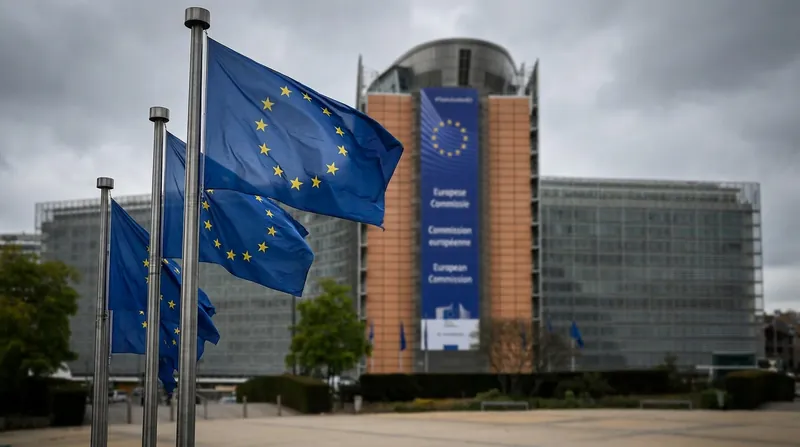
Despite their exclusion from the main room, European officials traveled to the UAE to hold parallel discussions. Prior to sitting down with the Russian delegation, Ukrainian negotiators met with representatives from the United Kingdom, France, Germany, Italy, and the European Commission to coordinate their diplomatic strategy.[3]
The Ukrainian delegation, with the backing of its European partners, is insisting that Russia's military campaign against Ukraine must end before discussions can move to the broader future security architecture of Europe. This sequencing remains a major point of contention between the negotiating parties.[1]
European leaders have expressed concern that bilateral or trilateral agreements might bypass their own security interests. The European Commission has publicly emphasized that any future peace arrangements must respect Ukraine's sovereignty and independent decision-making, while reaffirming NATO's central role in the continent's collective defense.[1]
Building on Recent Diplomatic Momentum
The resumption of direct talks follows a brief, localized cessation of hostilities in late October 2026. A US-brokered humanitarian ceasefire in the Russian-occupied Ukrainian city of Oleshky provided a rare diplomatic opening, which Washington has sought to leverage into broader negotiations.
The current meetings represent the fourth round of trilateral talks held this year, following sessions in January and February. Diplomatic efforts largely stalled throughout the spring and summer as the United States shifted its foreign policy focus toward the conflict with Iran, leaving the Ukraine negotiations in a prolonged freeze.[3]
The diplomatic push in the Middle East coincides with intensified military operations along the 1,200-kilometer front line. In the days leading up to the summit, both sides launched massive drone and missile barrages targeting energy infrastructure and military positions, underscoring the urgency of the talks.
The human and economic toll of the conflict continues to mount as the fighting drags on. With millions of Ukrainians displaced and vast swaths of the country's infrastructure damaged or destroyed, the pressure to find a negotiated settlement has steadily increased on all parties involved.
Next Steps and Unresolved Questions
The trilateral talks are scheduled to resume on the morning of November 11. Ukrainian officials have indicated that they plan to propose specific de-escalatory steps during the second day of negotiations, though expectations for an immediate, comprehensive ceasefire remain low among international observers.[2][4]
A central unresolved issue is how any postwar security guarantees would be enforced. Ukraine argues that an immediate ceasefire is the necessary first step toward negotiating a wider settlement, while Russia has previously rejected pauses in fighting that do not include political concessions from Kyiv.[1]
Furthermore, the exact mechanisms of the agreed-upon prisoner swap remain to be finalized. Negotiators must still determine the ratios of the exchange, the specific categories of personnel to be released, and the logistical timeline for their safe transfer across the active front lines.[2]
As the war grinds through its fifth winter, the Abu Dhabi meetings represent a critical test of whether the United States can leverage humanitarian agreements into a broader peace settlement. For now, the promised prisoner exchange stands as the sole tangible breakthrough from the renewed diplomatic engagement.[2][3]
Sources
- [1]Ukrinform — Release of POWs, security guarantees discussed on first day of Abu Dhabi talks Read on Ukrinform →
- [2]Ukrainska Pravda — Abu Dhabi talks yield deal on major prisoner swap – source Read on Ukrainska Pravda →
- [3]The New Voice of Ukraine — Ukraine, Russia agree on major prisoner swap in UAE talks Read on The New Voice of Ukraine →
- [4]Ukrainian News Agency — Zelenskyy on first day of talks in Abu Dhabi: Humanitarian measures and security guarantees for Ukraine were discussed Read on Ukrainian News Agency →
What to watch
- The Kremlin hopes the upcoming G20 summit in Miami will help the world's largest economies return to equal cooperation and dialogue.
- The delivery of 500 newly manufactured Patriot air defense interceptors to Ukraine is pending, with fulfillment not expected until the 2030s.
- A German court is proceeding with the trial of a former Ukrainian special forces officer accused of orchestrating the 2022 Nord Stream pipeline bombings.
- American and Gulf investors are positioning to acquire the global operations of Russian energy giant Lukoil for up to $22 billion, requiring a U.S. Treasury legal mechanism to bypass sanctions.
- Romania and Bulgaria have formally petitioned NATO to establish a joint Black Sea military command to protect allied commercial shipping.
Where things stand
US, Russia, and Ukraine Convene in Abu Dhabi for Peace Talks
Key point: Delegations from the U.S., Russia, and Ukraine have gathered in Abu Dhabi for a renewed round of trilateral peace negotiations aimed at ending the nearly five-year conflict.
AIThe diplomatic maneuver was coordinated from Helsinki and Oslo to ensure Ukraine's core demands reached the Kremlin.From: Nordic Leaders Stubb and Støre Hold Joint Talks With Putin Ahead of Abu Dhabi Peace Summit Delegations from the United States, Russia, and Ukraine are convening in Abu Dhabi ahead of a fresh round of trilateral peace talks set to begin on Tuesday. The U.S.-mediated negotiations aim to end the nearly five-year conflict and establish a post-war security architecture. U.S. officials have framed the upcoming summit as a new starting point for defining a final end to the war.
U.S. negotiators Jared Kushner and Steve Witkoff are leading the mediation efforts for the Trump administration. Ukrainian intelligence chief Rustem Umerov stated that Kyiv's delegation will hold separate coordination meetings with European and NATO officials who have traveled to the UAE capital. In response to the European presence, Kremlin spokesperson Dmitry Peskov reaffirmed that the formal negotiations remain strictly trilateral between Moscow, Kyiv, and Washington, with Europe relying on its own communication channels.
The summit marks the first direct negotiations between the warring parties since previous talks stalled nine months ago. However, the U.S. administration's willingness to discuss a broader European security architecture has alarmed Western officials and analysts. Critics warn that the proposed framework echoes Kremlin talking points and hands Moscow an early strategic victory by validating its long-standing demands before discussions even open.
The renewed diplomatic push comes as the Trump administration seeks to reassert its role as a global power broker following recent midterm elections. While European diplomats are excluded from the core trilateral table at Russia's insistence, their active presence in Abu Dhabi underscores the continent's vested interest in the outcome. Allied nations continue to emphasize that any lasting settlement must include robust security guarantees for Ukraine and the broader region.
Ukraine and EU Hold Strategic Talks Ahead of Abu Dhabi Peace Summit
Key point: Ukrainian and European officials are coordinating their negotiating positions in trilateral meetings ahead of the Abu Dhabi peace summit.
Ukrainian and European officials are holding separate strategic talks to coordinate their positions ahead of the upcoming peace negotiations in Abu Dhabi. The Ukrainian negotiating delegation has officially departed for the Emirati capital, where they will engage in trilateral meetings with their European counterparts before the broader summit begins.
Ukrainian President Volodymyr Zelenskyy confirmed that Kyiv and the European Union have successfully aligned their stances in preparation for the high-stakes talks. Defense Minister Rustem Umerov outlined that the negotiations will feature a trilateral format, emphasizing that these preliminary coordination meetings are specifically designed to keep Europe actively involved in the diplomatic process and prevent any bilateral agreements that exclude European interests.
This strategic alignment formalizes the recent decision to include European diplomats in the Abu Dhabi peace negotiations, ensuring that the European Union maintains a direct role alongside the United States and other international mediators. The coordinated diplomatic push also follows the recent disclosure of leaked Russian records indicating 400,000 military fatalities, a significant revelation that Ukrainian and European officials may leverage to press for more favorable terms and demonstrate the unsustainability of the conflict for Moscow.
The Abu Dhabi summit represents a critical juncture in international efforts to negotiate an end to the war in Ukraine. By securing a unified front with European allies before engaging with other parties, Kyiv aims to solidify Western support and prevent any peace settlement that might bypass broader European security architecture or compromise Ukrainian territorial integrity.
European Diplomats to Join Ukraine Peace Negotiations in Abu Dhabi
Key point: European officials will join the upcoming US-mediated peace negotiations between Russia and Ukraine in Abu Dhabi to ensure the continent's security interests are represented.
European diplomats will participate in the upcoming United States-mediated peace negotiations between Ukraine and Russia in Abu Dhabi. French Foreign Minister Jean-Noël Barrot and European Commission President Ursula von der Leyen confirmed that European representatives will join the discussions scheduled for November 10 and 11.
Barrot stated that France will be present, emphasizing that no agreement affecting European security can be conceived without the continent's involvement. Germany will be represented by Günter Sautter, foreign and security policy adviser to Chancellor Friedrich Merz, while national security advisers from the United Kingdom and France are also expected to attend.
The inclusion of European officials alters the initial framework of the talks, which were previously expected to involve only Kyiv, Moscow, and Washington. Despite the European announcements, Kremlin spokesman Dmitry Peskov insisted on Monday that the core negotiations remain a trilateral process mediated by the US, relegating European involvement to separate communication channels.
The diplomatic push follows recent comments by US President Donald Trump predicting an imminent agreement with Russia. Ukrainian President Volodymyr Zelenskyy has actively supported European participation, arguing that allies must help guarantee the continent's security as the conflict continues to exact a heavy toll, highlighted by recently leaked records disclosing 400,000 Russian military fatalities.
British and French Troops Lead Postwar Ukraine Mission Exercises in Poland
Key point: Britain and France are leading 2,800 troops from 11 nations in Polish military exercises to prepare for a postwar deployment in Ukraine.
The negotiating positions of Kyiv and Moscow remain fundamentally opposed on issues of territorial sovereignty and European security architecture.From: Ukraine and Russia Agree to Major Prisoner Swap as Trilateral Peace Talks Open in Abu Dhabi British and French forces are preparing to lead 2,800 troops from 11 nations in a two-week military exercise in Poland. The drills are designed to rehearse the logistics and operations of a potential postwar deployment to Ukraine.
The multinational training will test the coalition's ability to move, protect, and supply a deployment force tasked with rebuilding Ukraine's military infrastructure once the conflict concludes. The exercises mark the first joint training of this specific multinational force.
These preparations coincide with upcoming United States-mediated peace talks in Abu Dhabi, signaling that European allies are actively planning for a post-conflict security environment. The drills underscore a commitment by London, Paris, and other European capitals to guarantee Ukraine's long-term stability and military readiness following any negotiated settlement.
European Envoys to Join US-Mediated Ukraine Peace Talks in Abu Dhabi
Key point: French Foreign Minister Jean-Noël Barrot announced that European representatives will join the upcoming US-mediated peace talks between Russia and Ukraine in Abu Dhabi.
European envoys, including representatives from France, will participate in the upcoming US-mediated peace talks between Ukraine and Russia in Abu Dhabi, French Foreign Minister Jean-Noël Barrot announced on Sunday. The negotiations are scheduled to take place on November 10 and 11.
Speaking to RTL radio, Barrot confirmed that Europe would be "well represented" at the meetings. While he did not specify who would attend on behalf of France, he emphasized that Paris would ensure the continent's voice is heard during the discussions.
The inclusion of European diplomats marks a shift from the previously planned trilateral format, which was expected to involve only officials from the United States, Ukraine, and Russia. Moscow had previously suggested there would be no place for European representatives at the negotiating table.
The diplomatic push follows recent remarks by US President Donald Trump, who predicted a major agreement with Russia that could encompass all of Europe. The comments raised concerns among European allies about being sidelined in decisions affecting the continent's security architecture, prompting Ukrainian President Volodymyr Zelensky to advocate for their direct involvement.
Timeline
September 2026
Poland Confirms Sabotage of Starlink Ground Station as Russian Drones Crash in NATO-Member Romania
AIAIAITrump Urges Ukraine to Halt Strikes on Russian Refineries to Ease Global Diesel Shortage
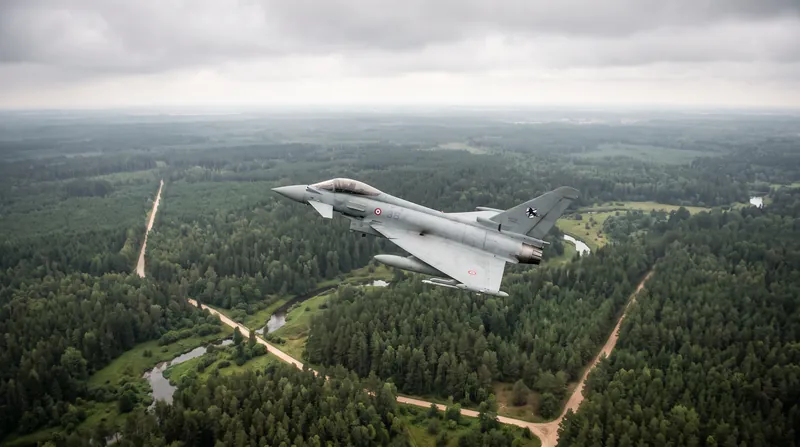
AIAIAINATO Jets Down Drone Over Lithuania as Russian Warship Fires on Danish Helicopter
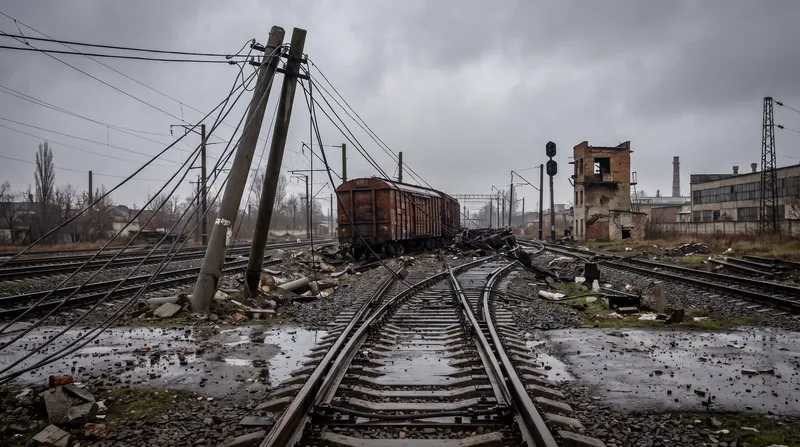
Russia Strikes Western Ukraine Rail Infrastructure, Citing NATO Military Cargo
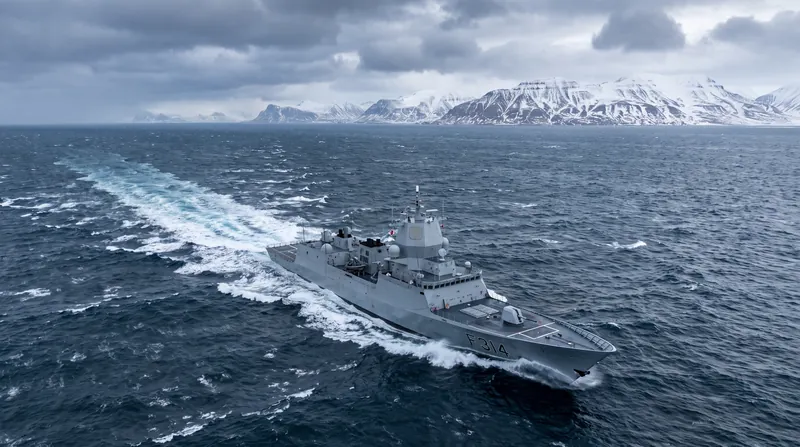
NATO Allies Disrupt Russian Submarine Drill Targeting Arctic Undersea Cables
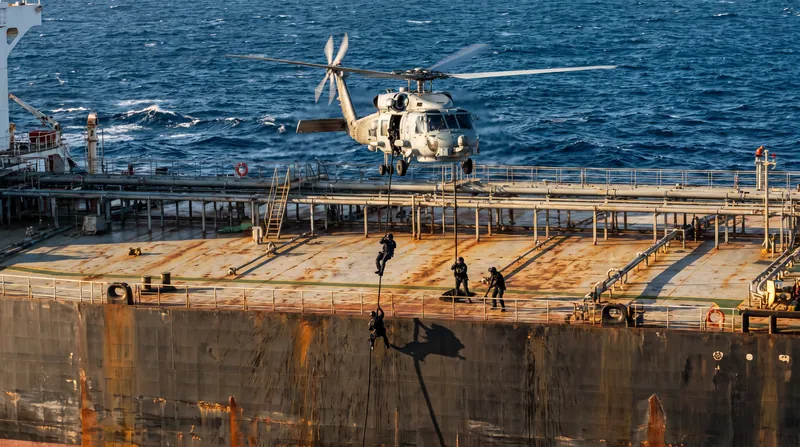
EU Commandos Board Sixth Russian 'Shadow Fleet' Tanker Following Putin's Threat
European Intelligence Agencies Attribute Pan-Continental Sabotage Campaign to Russian Military Intelligence
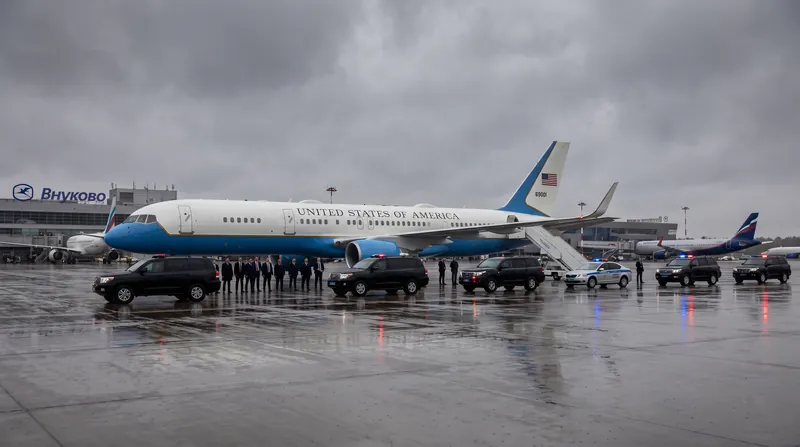
AIUS Envoys Arrive in Moscow for Peace Talks as Putin Orders 72-Hour Pause on Kyiv Strikes
North Korea Deploys 8,500 Personnel and Drone Operators to Russia's Kursk Region

August 2026
Ukraine's New 300km-Range Ballistic Missile Set for Combat Debut
Russian Sabotage Campaign Targets European Defense Industry, Testing NATO's Article 5 Threshold
AIEU's 1,600-Entity Expansion Shifts Sanctions From Sectoral Bans to Corporate Networks
Patriot Makers Hedge on Ukraine Production Deal Despite Trump's Licensing Promise
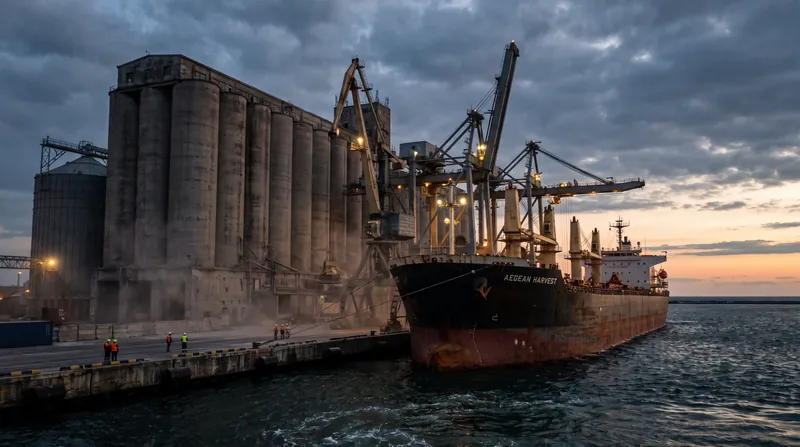
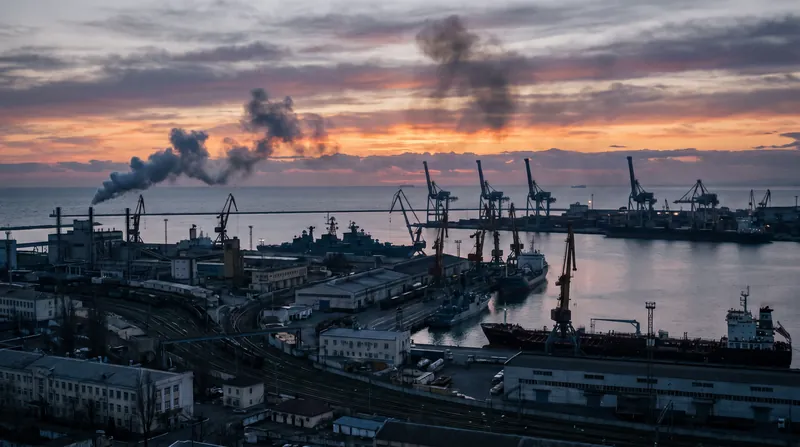
Massive Ukrainian Drone and Missile Strike Hits Russia's Black Sea Naval Base and Grain Terminals in Novorossiysk
AIUS Senate Passes Bill Imposing 100% Tariffs on Russian Oil and Gas Importers
July 2026
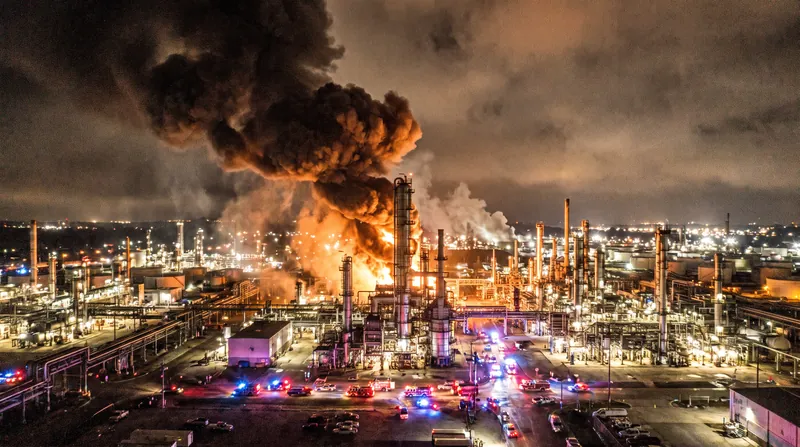
Ukraine Drone Attacks Cause Widespread Fuel Crisis and Export Ban Across Russia
AI
How the story developed
The conflict's recent phase escalated in the summer of 2026. On June 26, the European Union extended its full economic sanctions against Russia until July 2027. Ukraine increasingly relied on domestic weaponry, launching a drone swarm that struck a St. Petersburg oil terminal on July 4. By July 28, Ukrainian long-range drone strikes had crippled up to 25 percent of Russia's oil refining capacity, forcing Moscow to ban gasoline exports. On August 13, a coordinated swarm of 15 Ukrainian domestic weapon systems struck Russia's Novorossiysk naval base, damaging four warships. Concurrently, European intelligence agencies detected a pan-continental sabotage campaign targeting defense infrastructure, which they formally attributed to Russian military intelligence on September 9. NATO responded to the shadow war by disrupting a Russian submarine drill targeting Arctic undersea cables on September 13 and downing an explosive-laden drone over Lithuania on September 16.
Diplomatic maneuvering intensified alongside the battlefield developments. On July 5, U.S. President Donald Trump and Russian President Vladimir Putin discussed a framework to end the war. By September 5, U.S. envoys arrived in Moscow for peace talks, prompting a reciprocal 72-hour halt in airstrikes over the Russian and Ukrainian capitals. However, tensions emerged between Washington and Kyiv. On September 21, Trump urged Ukrainian President Volodymyr Zelenskyy to halt strikes on Russian refineries to ease a global diesel shortage. The U.S. proposed a three-part diplomatic framework on September 27, including an energy ceasefire and a Black Sea grain corridor. On October 10, the U.S. Treasury waived sanctions on Russian diesel following a Trump-Putin agreement, a move Zelenskyy condemned. Trump announced an immediate bilateral "energy ceasefire" on October 11, but Russian forces struck the Ukrainian power grid hours later on October 12. Ukraine officially abandoned the U.S.-brokered truce on October 15, resuming strikes on Russian oil facilities.
The collapse of the energy truce triggered a severe diplomatic rift. On October 14, SpaceX imposed an unannounced 160 km/h speed limit on its military-grade Starshield satellite network in Ukraine, grounding high-speed interceptor drones. SpaceX CEO Elon Musk claimed the restriction was implemented because Ukraine violated terms of service by using the network for offensive strikes, an accusation Ukrainian officials rejected. The White House directed the restriction and temporarily suspended battlefield intelligence sharing to pressure Kyiv into halting refinery strikes, drawing accusations of betrayal from Zelenskyy. Trump publicly condemned the Ukrainian strikes as a "disgrace" on October 17 and invoked national security waivers to suspend a sweeping new congressional Russia sanctions package. SpaceX restored the Starshield network to full capacity on October 24, and the U.S. fully resumed ballistic missile early warning sharing on October 26 following emergency diplomatic meetings in Oslo.
Both nations simultaneously expanded their military capabilities and alliances. On September 1, Russia deployed 8,500 North Korean military personnel and drone operators to the Kursk region. Moscow initiated an additional mobilization wave on September 29, expanding the North Korean deployment to 18,000 troops in exchange for establishing Shahed drone manufacturing facilities inside North Korea. The public disclosure of captured North Korean soldiers by Ukraine led South Korea to recall its ambassador on October 10; Seoul claimed the disclosure violated intelligence-sharing agreements, a claim Ukraine denied. Meanwhile, Ukraine debuted its domestically built 300-kilometer range FP-7 ballistic missile in combat on October 3. Ukrainian drone strikes also forced emergency shutdowns at three major Yandex data centers on October 14, degrading Russian artificial intelligence development and prompting the Kremlin to authorize the use of foreign cloud providers on November 4.
Maritime security deteriorated sharply in the Black Sea. A Russian drone strike sank a Turkish-operated commercial grain vessel off the Romanian coast on October 6. Suspected Russian drone strikes hit two more commercial vessels in Bulgaria's exclusive economic zone on October 13, and two commercial tankers caught fire in Romanian territorial waters on October 15. In response, Romania and Bulgaria formally petitioned NATO to establish a joint Black Sea military command, and Romanian F-16s intercepted and destroyed two drones over the country's territorial waters on October 17. NATO deployed additional surveillance aircraft and mobile radar units to the region on October 21 to secure commercial shipping routes.
Despite the escalating violence, a path to formal negotiations emerged in late October. U.S. Special Envoy Steve Witkoff met Putin in St. Petersburg on October 21, coinciding with Russia's unilateral release of detained American citizen Stephen Hubbard. On October 24, First Lady Melania Trump brokered a localized humanitarian ceasefire in the Russian-occupied city of Oleshky. Ukraine confirmed on October 26 that a trilateral peace summit with the United States and Russia would take place in Abu Dhabi. Ahead of the summit, European Union officials formally rejected a White House proposal for a comprehensive bilateral security deal with Russia on November 6, demanding direct European involvement in any settlement.