
full timeline
Iraq–Kurdish oil and border dispute
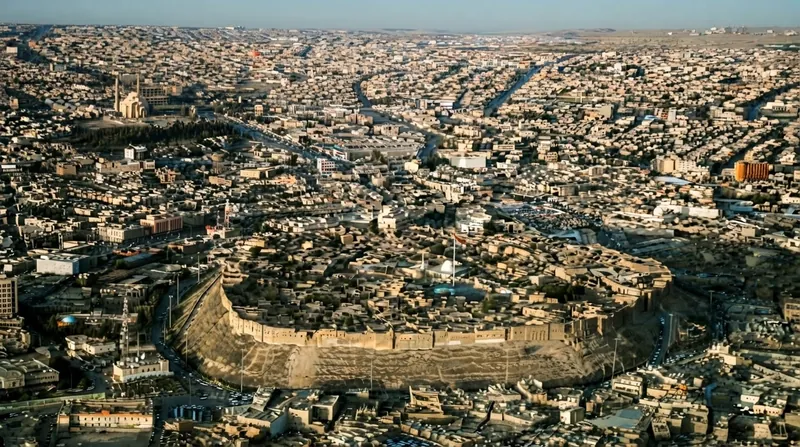
Massive crowds gathered at the Erbil Citadel on Thursday to reject federal orders transferring control of the Kurdistan Region's oilfields and border checkpoints to the Iraqi military.
Follow Iraq–Kurdish oil and border dispute in the Factlen app and get an alert when there is news. Get the app
Share this story
Latest report
Tens of Thousands Protest in Erbil as Baghdad Moves to Seize Kurdish Oil and Border Crossings
Massive crowds gathered at the Erbil Citadel on Thursday to reject federal orders transferring control of the Kurdistan Region's oilfields and border checkpoints to the Iraqi military. The demonstrations mark a sharp escalation in the standoff over regional autonomy and resource management.
- Tens of thousands of Iraqi Kurds protested at the Erbil Citadel on Thursday against federal orders to seize regional oilfields and border crossings.
- The demonstrations follow Baghdad's directives for military and federal authorities to take physical control of the Kurdistan Region's independent revenue sources.
- Kurdish officials warn the seizures would economically suffocate the region and violate the 2005 Iraqi Constitution's guarantees of autonomy.
- The standoff raises the risk of armed confrontation between federal forces and Kurdish Peshmerga units stationed at key infrastructure sites.
Tens of thousands of Iraqi Kurds poured into the streets of Erbil on Thursday morning, converging on the city's historic citadel to protest the federal government's aggressive push to dismantle regional autonomy. The demonstrations follow Baghdad's recent orders directing military and federal authorities to seize control of the Kurdistan Region's oilfields and border crossings.[1][5][6]
Crowds carrying the sun-emblazoned Kurdistan flag filled the avenues leading to the Erbil Citadel, chanting slogans against what they described as an unconstitutional power grab by the central government. Local security forces maintained a heavy presence, but the massive rally remained largely peaceful through the afternoon.[4][5]
The immediate catalyst for the unrest was a series of directives issued by federal authorities, specifically targeting the economic lifelines of the Kurdistan Regional Government. Protesters explicitly rejected the recent decisions attributed to federal figures like Ali al-Zaidi, which mandate the handover of independent revenue sources to Baghdad.[3]
"This is not just about oil or customs duties; this is an attempt to erase our constitutional rights and suffocate us economically," said one protest organizer quoted during the Thursday demonstrations. The sentiment reflects a deep-seated fear that Baghdad intends to roll back the autonomy the region has held since the 1990s.[1][2]
The Federal Seizure Orders
The protests mark a volatile new chapter in a rapidly escalating standoff that began when the Iraqi federal government ordered the military to secure Kurdish-controlled energy infrastructure. Baghdad insists the move is necessary to enforce federal court rulings that previously invalidated the regional government's independent oil and gas law.[1][2]
Under the new federal directives, Iraqi security forces and federal customs officials are instructed to take physical control of all international border crossings in the northern provinces. This includes the critical Ibrahim Khalil crossing with Turkey, which processes billions of dollars in bilateral trade annually.[5][6]
The seizure orders also target the region's lucrative oilfields, which have historically produced roughly 400,000 barrels per day. Baghdad has long argued that all hydrocarbon resources belong to the sovereign state and must be managed exclusively by the federal Ministry of Oil.[1][6]
Kurdish officials have vehemently rejected the federal deployment, calling it a violation of the 2005 Iraqi Constitution, which guarantees the region a share of national revenues and administrative control over its internal affairs. The regional government has warned that any unilateral military action by federal forces will be met with resistance.[2][3]
The financial stakes for Erbil are existential. Independent oil exports and border customs represent the vast majority of the regional government's operating budget, funding everything from infrastructure projects to the salaries of the Peshmerga security forces and civil servants.[1][5]
Economic Strangulation Fears
Without these revenue streams, the regional government would be entirely dependent on federal budget transfers from Baghdad. Those transfers have been notoriously unreliable in recent years, frequently delayed or withheld entirely during political disputes between the two capitals.[2][6]
The current crisis traces its roots back to a landmark 2022 ruling by the Iraqi Federal Supreme Court, which declared the region's independent energy sector unconstitutional. Since then, Baghdad has systematically tightened the financial screws on Erbil, culminating in the recent orders for physical seizure.[1][2]
Thursday's demonstration drew participants from across the four parts of the broader Kurdish diaspora, highlighting the deep cultural and political resonance of the Erbil standoff. Organizers emphasized that the rally was a unified display of resistance against systemic marginalization.[4]
"We are here to tell Baghdad that the Kurdistan Region is not a province they can simply occupy by decree," a demonstrator told local media near the citadel. The massive turnout underscores the domestic pressure on Kurdish leadership to hold the line against federal encroachment.[3][5]
The federal government's aggressive posture is widely seen as being driven by Iran-aligned political factions in Baghdad, who have long sought to weaken the pro-Western regional government. These factions currently dominate the federal parliament and have consistently pushed for a more centralized Iraqi state.[2][3]
Regional and Global Stakes
The standoff has triggered alarm bells in Western capitals, particularly in Washington, which views the Kurdistan Region as a crucial stabilizing partner in the Middle East. US diplomats have reportedly been working behind the scenes to broker a de-escalation, though those efforts have yet to yield a breakthrough.[1][2]
Turkey also finds itself in a delicate position. While Ankara maintains a complex relationship with Kurdish nationalism, it relies heavily on the Ibrahim Khalil border crossing for trade and has significant investments in the region's energy sector.[5][6]
A federal takeover of the border could disrupt the flow of goods and complicate Turkey's own military operations against Kurdish militants in northern Iraq. However, Ankara has historically supported Baghdad's claims to territorial sovereignty when it aligns with its own security interests.[1][6]
The threat of armed conflict remains a distinct possibility if federal troops attempt to forcibly execute the seizure orders. The Peshmerga, the region's official military force, are heavily armed and deeply entrenched around key infrastructure sites.[2][5]
Memories of the 2017 crisis loom large over the current standoff. Following the region's controversial independence referendum that year, federal forces launched a lightning offensive that stripped Erbil of control over the oil-rich province of Kirkuk.[1][2]
A Test of Constitutional Limits
Kurdish leaders argue that the current federal push goes far beyond the 2017 territorial rebalancing, striking at the core of the region's recognized constitutional status. They accuse Baghdad of weaponizing the federal judiciary to achieve political objectives.[3][6]
In Baghdad, federal officials maintain that they are simply enforcing the law and restoring sovereign control over national assets. They argue that the region's independent oil sales have cost the national treasury billions of dollars over the past decade.[1][2]
The dispute over oil revenues is further complicated by the ongoing suspension of northern Iraqi crude exports through the Iraq-Turkey pipeline. The pipeline has been offline since early 2023 following an international arbitration ruling in Baghdad's favor, costing both sides heavily.[1][6]
The regional government has attempted to mitigate the financial damage by selling crude to local refineries and relying on border customs, making the federal government's move to seize those checkpoints particularly devastating.[5][6]
For the citizens of Erbil, the prospect of federal troops returning to the region's borders evokes painful memories of past conflicts. Many protesters expressed deep frustration that their economic stability remains perpetually hostage to political disputes in the federal capital.[4][5]
The choice of the Erbil Citadel as the focal point for Thursday's demonstration was highly symbolic. The ancient fortress, which has continuously overlooked the city for millennia, served as a visual anchor for Kurdish claims to historical endurance in the face of external pressure.[3][6]
Sources
- [1]Associated Press — Thousands protest in Irbil as Baghdad moves to seize Kurdish oil and border control Read on Associated Press →
- [2]Devdiscourse — Iraqi Kurds protest against Baghdad leader's moves to assert central control Read on Devdiscourse →
- [3]Channel8 — Erbil Protests Begin Near Citadel as Citizens Reject Ali al-Zaidi Decisions Read on Channel8 →
- [4]Welat TV — Thousands of people from different communities and across the four parts of Kurdistan joined in a large demonstration in Erbil Read on Welat TV →
- [5]964media — Large crowds carrying Kurdistan flags gathered at Erbil Citadel on Thursday morning to protest the federal government's orders on the Kurdistan Region's border crossings and oil fields Read on 964media →
- [6]Minute Mirror — An Erbil rally drew tens of thousands of people to the city's historic citadel on Thursday, in protest at Baghdad's new moves on oil and border crossings Read on Minute Mirror →
What to watch
- Whether the standoff will lead to armed confrontation between federal forces and Kurdish Peshmerga units stationed at key infrastructure sites.
Charts, maps and images
Timeline
November 2026
Tens of Thousands Protest in Erbil as Baghdad Moves to Seize Kurdish Oil and Border Crossings
Iraq Orders Military and Federal Seizure of Kurdish-Controlled Oilfields and Border Crossings
How the story developed
The dispute escalated on November 24 when Iraqi Prime Minister Ali al-Zaidi directed federal authorities to take immediate physical control of all international border crossings and disputed oilfields within the Kurdistan region.
The sweeping mandates stripped the Kurdistan Regional Government in Erbil of its authority to independently approve crude oil exports, targeting the region's independent revenue sources.
The federal takeover orders followed an investigation by federal authorities into a massive oil-smuggling network. The network is allegedly linked to Iran-backed militias.
In response to the directives, Kurdish Prime Minister Masrour Barzani rejected the mandates as unconstitutional, stating that Erbil was blindsided by the federal orders.