
full timeline
Birthright citizenship legal challenges
U.S.
Follow Birthright citizenship legal challenges in the Factlen app and get an alert when there is news. Get the app
Share this story
Latest report
Second Federal Judge Blocks Trump's Renewed Executive Order on Birthright Citizenship
U.S. District Judge Christopher Cooper has issued an injunction against the president's second attempt to restrict birthright citizenship. The ruling marks the latest judicial roadblock for an administration policy previously struck down by the Supreme Court.
- U.S. District Judge Christopher Cooper blocked the enforcement of the president's second executive order restricting birthright citizenship on November 25, 2026.
- The ruling marks the second federal injunction against the revised directive, which targets children born to undocumented immigrants.
- The administration drafted the second order after the Supreme Court rejected its initial attempt to alter the application of the 14th Amendment.
- The Department of Justice is expected to appeal the injunctions, aiming to force a definitive Supreme Court ruling on the Citizenship Clause.
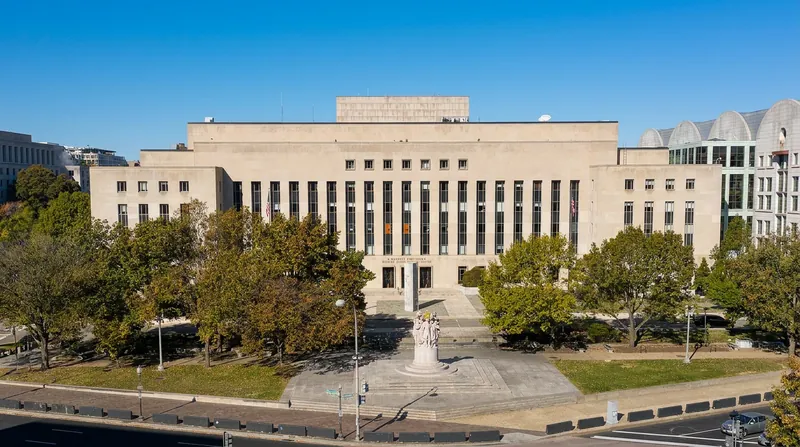
A federal judge in Washington, D.C., has temporarily halted the enforcement of President Donald Trump’s second executive order aimed at restricting birthright citizenship. U.S. District Judge Christopher Cooper issued the injunction on Wednesday, November 25, 2026.[2]
The ruling marks the second time a federal district court has blocked this specific directive. It represents another significant judicial roadblock for an administration that has made the reinterpretation of the 14th Amendment a central pillar of its immigration policy.[1][6]
The executive order attempts to limit the number of people eligible for automatic citizenship upon birth on American soil. It specifically targets children born to parents who are in the United States without legal authorization or on temporary visas.[4][7]
Judge Cooper’s injunction prevents the federal government from implementing the restrictions while the underlying lawsuits proceed through the courts. The administration had intended to begin enforcing the new citizenship criteria by the end of the calendar year.[2][3]
The Second Executive Attempt
This latest legal battle follows the U.S. Supreme Court’s rejection of the administration’s initial effort to impose similar restrictions. Following that defeat, the White House drafted a revised executive order designed to bypass the high court’s previous objections.[4][5]
The revised directive relies on a narrower interpretation of the 14th Amendment’s Citizenship Clause. The administration argues that children of undocumented immigrants are not subject to the jurisdiction of the United States in a political or legal sense.[1][3]
Legal scholars note that this argument challenges more than a century of established jurisprudence. Since the landmark 1898 Supreme Court decision in United States v. Wong Kim Ark, the federal judiciary has consistently interpreted the clause to grant citizenship to nearly all children born within U.S. borders.[2][5]
The administration maintains that the 1898 ruling applied specifically to legal permanent residents, leaving the status of undocumented immigrants unresolved. The second executive order was explicitly crafted to force the federal courts to address this perceived legal ambiguity.[1][7]
The Judicial Response
Judge Cooper’s ruling aligns with a separate injunction issued earlier by another federal district judge. Both courts concluded that the plaintiffs—a coalition of civil rights organizations and immigration advocates—are likely to succeed on the merits of their constitutional claims.[1][6]
The available court filings and initial reports do not contain direct quotations from Judge Cooper’s written opinion or administration officials responding to the Wednesday ruling. However, the legal mechanisms underpinning the injunction are clear from the case history.[2][3]
The plaintiffs successfully argued that altering the fundamental application of the 14th Amendment requires a constitutional amendment, not an executive action. They contend that the president lacks the statutory authority to unilaterally redefine citizenship criteria under Title 8 of the U.S. Code.[3][7]
The Department of Justice is expected to appeal Judge Cooper’s injunction to the U.S. Court of Appeals for the District of Columbia Circuit. This appeal will likely be consolidated with the government's challenge to the first injunction blocking the revised order.[2][6]
Constitutional Stakes
The 14th Amendment was ratified in 1868 following the American Civil War, primarily to ensure citizenship for formerly enslaved Black Americans. The text of Section 1 establishes the baseline for American citizenship.[4][5]
"All persons born or naturalized in the United States, and subject to the jurisdiction thereof, are citizens of the United States and of the State wherein they reside."[3][5]
For decades, the phrase "subject to the jurisdiction thereof" has been understood to exclude only the children of foreign diplomats and enemy combatants occupying U.S. territory. The executive order seeks to expand that exclusion to millions of foreign nationals.[1][3]
If the administration’s interpretation ultimately prevails at the Supreme Court, it would fundamentally restructure the U.S. immigration system. It would create a new class of stateless individuals born within the country who hold no legal right to remain.[4][7]
Demographers estimate that hundreds of thousands of children are born to undocumented parents in the United States each year. Under the blocked executive order, these children would inherit the immigration status of their parents rather than receiving automatic American citizenship.[2][6]
The Path to the Supreme Court
The administration has openly acknowledged that the executive order is designed to trigger a definitive Supreme Court review. By issuing a second, narrower directive, the White House hopes to secure a different outcome from a conservative judicial majority.[1][5]
The Supreme Court’s previous rejection of the initial order did not definitively settle the underlying constitutional question regarding undocumented immigrants. The justices ruled on procedural and statutory grounds, leaving the door open for a more targeted executive action.[4][5]
Legal analysts expect the consolidated appeals to move rapidly through the appellate courts. The administration is likely to request an expedited hearing, aiming to place the case on the Supreme Court’s docket for the 2027 term.[2][3]
In the interim, the dual injunctions ensure that the current application of birthright citizenship remains intact. Hospitals and federal agencies will continue to issue birth certificates and recognize the citizenship of all children born on U.S. soil, regardless of their parents' status.[6][7]
Political and Social Fallout
The ongoing litigation has intensified the national debate over immigration enforcement and executive authority. Proponents of the order argue it removes a major incentive for illegal immigration and restores the original intent of the 39th Congress, which drafted the amendment.[1][4]
Opponents counter that the policy is unconstitutional and would create a permanent underclass of marginalized residents. They warn that stripping birthright citizenship would severely complicate the integration of immigrant families into American society.[3][7]
The legal standoff also places significant pressure on Congress, which has failed to pass comprehensive immigration reform for more than two decades. Lawmakers from both parties are closely monitoring the judicial proceedings, recognizing that a Supreme Court ruling could force legislative action.[2][5]
Sources
- [1]The Washington Times — Another judge blocks Trump's second birthright citizenship order Read on The Washington Times →
- [2]Washington Examiner — Judge Christopher Cooper blocks Trump's second attempt at limiting birthright citizenship Read on Washington Examiner →
- [3]Newsweek — Federal Judge Blocks Trump's Birthright Citizenship Order - Newsweek Read on Newsweek →
- [4]Arab News — Trump's newest order curtailing birthright citizenship is blocked by second judge Read on Arab News →
- [5]South China Morning Post — US judge on Wednesday blocked enforcement of US president's second executive order after Supreme Court rejected his initial effort Read on South China Morning Post →
- [6]Anadolu Agency — Second US judge blocks Trump's new birthright citizenship orders Read on Anadolu Agency →
- [7]TRT World — Second US judge blocks Trump's latest orders curtailing birthright citizenship - TRT World Read on TRT World →
What to watch
- The Department of Justice is expected to appeal the injunctions, aiming to force a definitive Supreme Court ruling on the Citizenship Clause.
Timeline
November 2026
Second Federal Judge Blocks Trump's Renewed Executive Order on Birthright Citizenship
September 2026
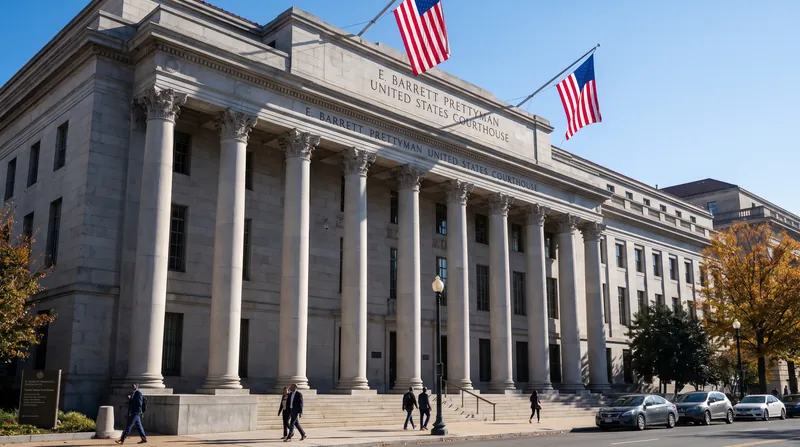
Federal Judge Blocks Second Executive Order Narrowing Birthright Citizenship
How the story developed
The administration made an initial attempt to alter the application of the 14th Amendment regarding birthright citizenship.
The Supreme Court rejected this first executive order, striking down the administration's initial policy.
Following the Supreme Court's rejection, the administration drafted a second executive order narrowing birthright citizenship.
By September 3, 2026, a federal court enjoined the administration's second attempt to restrict birthright citizenship, citing long-standing Supreme Court precedent on the Fourteenth Amendment.