
full timeline
Bank of Korea interest rate policy
South Korea's central bank raised its key interest rate by a quarter percentage point on Thursday, breaking a prolonged pause.
Follow Bank of Korea interest rate policy in the Factlen app and get an alert when there is news. Get the app
Share this story
Latest report
Bank of Korea Lifts Benchmark Rate to 3.25% as Inflation and Housing Pressures Persist
South Korea's central bank raised its key interest rate by a quarter percentage point on Thursday, breaking a prolonged pause. The move targets stubborn consumer price growth and rising household debt tied to the Seoul housing market.
- The Bank of Korea raised its benchmark interest rate by 25 basis points to 3.25% on Thursday, ending a prolonged pause.
- Policymakers cited stubbornly high core inflation and a dangerous surge in household debt tied to Seoul's housing market as the primary drivers.
- Record-breaking export growth, driven by global demand for AI chips and automobiles, provided the economic headroom necessary to tighten policy.
- The move signals a divergence from Western central banks, aligning South Korea with a broader Asian trend of prioritizing currency and price stability.
The Bank of Korea officially raised its benchmark interest rate by a quarter percentage point to 3.25% on Thursday morning, concluding its final monetary policy meeting of 2026 with a hawkish pivot. The November 26 decision breaks a prolonged holding pattern that had kept the base rate anchored at 3.0% for consecutive sessions.[1][2]
Policymakers cited stubbornly persistent consumer price inflation and a troubling resurgence in household debt as the primary catalysts for the unexpected hike. The move pushes South Korean borrowing costs to a two-year high, surprising a segment of market participants who had confidently anticipated another freeze through the end of the calendar year.[2][5]
"The board judged that it is warranted to raise the base rate by 0.25 percentage points, as inflation remains above the target level and household debt growth requires monitoring," the Bank of Korea stated in its official release. The language underscored a growing institutional anxiety over macroeconomic imbalances.[4][6]
South Korea's consumer price index has consistently defied expectations of a smooth, uninterrupted glide path back to the central bank's mandated 2.0% target. Core inflation, which strips out highly volatile food and energy prices to reveal underlying trends, remained uncomfortably elevated through the autumn months of 2026.[1][3]
Housing market pressures
The rapid resurgence of the Seoul real estate market played a decisive role in Thursday's policy shift. Apartment prices in the capital region have climbed sharply since the spring, triggering a corresponding surge in mortgage demand that threatened to undermine broader financial stability.[5]
South Korean household debt, already ranking among the highest in the developed world relative to gross domestic product, expanded at an alarming pace in the third quarter. Regulators have grown increasingly concerned that keeping rates at 3.0% was inadvertently fueling a speculative property bubble in prime urban districts.[2][5]
By lifting the base rate to 3.25%, Governor Rhee Chang-yong and the monetary policy board are attempting to aggressively cool mortgage lending without triggering a broader credit crunch. The central bank faces a highly delicate balancing act between managing long-term financial stability and supporting fragile domestic consumption.[1][6]
Retail sales and domestic demand have shown persistent signs of sluggishness throughout 2026, burdened by the cumulative weight of previous tightening cycles. Higher borrowing costs will immediately translate into heavier monthly interest burdens for millions of variable-rate mortgage holders across the heavily indebted nation.[3][5]
Export engine provides cover
The Bank of Korea's willingness to tighten policy stems largely from the continued, exceptional resilience of the nation's export sector. South Korea's broader economic growth has been heavily insulated by robust global demand for advanced semiconductors, automobiles, and artificial intelligence infrastructure.[4][6]
Annual exports recently crossed the historic $1 trillion threshold, driven by a sustained boom in high-bandwidth memory chip sales to global technology giants. This formidable external performance gave policymakers the essential economic headroom required to prioritize inflation fighting over domestic stimulus measures.[4][6]
"The domestic economy is expected to continue its growth trend, supported by exports, although the recovery of consumption remains modest," the central bank noted in its revised economic outlook. The institution maintained a relatively optimistic forecast for overall gross domestic product expansion heading into 2027.[4][6]
Currency dynamics also factored heavily into the monetary policy board's complex calculus. The South Korean won has faced intermittent downward pressure against the US dollar throughout the year, complicating the central bank's efforts to contain imported inflation in a resource-poor economy.[3][7]
Currency and global divergence
A weaker currency makes imported energy, raw materials, and agricultural goods significantly more expensive, directly feeding into domestic consumer prices. By lifting the benchmark rate to 3.25%, the Bank of Korea actively narrows the interest rate differential with the United States Federal Reserve.[7]
The move highlights a growing divergence in global monetary policy as 2026 draws to a close. While several Western central banks have signaled a clear willingness to ease financial conditions, Asian institutions are increasingly focused on defending their currencies and managing localized asset bubbles.[5][7]
The Bank of Japan, for instance, has recently seen hawkish board members push for further rate hikes to combat domestic inflation. South Korea's decision aligns closely with this regional trend of prioritizing price stability and financial system resilience over aggressive growth maximization.[7]
Financial markets reacted swiftly to the unexpected tightening on Thursday morning. South Korean government bond yields ticked upward across the curve, while the won strengthened marginally against major trading partners in early Seoul trading immediately following the central bank's announcement.[1][4]
Impact on the real economy
For the average South Korean consumer, the rate hike compounds an already challenging cost-of-living environment. Food prices, particularly for staple agricultural products and fresh produce, have remained stubbornly high due to a series of extreme weather events earlier in the year.[2][3]
Small and medium-sized enterprises, which employ the vast majority of the South Korean workforce, are particularly vulnerable to the rising cost of capital. Unlike massive industrial conglomerates with access to global bond markets, these smaller businesses rely heavily on domestic bank loans tied directly to the base rate.[3][6]
Commercial banks are widely expected to raise their prime lending rates in lockstep with the central bank's move over the coming days. This rapid transmission mechanism means the intended cooling effect on credit growth will likely materialize well before the end of the fourth quarter.[5][6]
The government has simultaneously introduced strict macroprudential measures to tighten lending standards, working in tandem with the central bank's monetary policy. Stricter debt-service ratio limits were implemented in September to deliberately curb the explosive growth of household borrowing.[2][5]
Looking ahead to 2027
Attention now turns to the Bank of Korea's forward guidance for the upcoming year. The central bank's post-meeting statement offered few guarantees about the terminal rate, emphasizing repeatedly that future policy decisions will remain strictly dependent on incoming macroeconomic data.[1][3]
Analysts are sharply divided on whether the 3.25% level represents the definitive peak of the current tightening cycle. Some economists argue that the cooling effect on the housing market will become evident by early 2027, allowing policymakers to safely transition back to a neutral stance.[2][4]
Others warn that structural labor shortages and shifting global supply chains could keep baseline inflation elevated for the foreseeable future. If core price growth fails to decelerate toward the 2.0% target, the central bank may be forced to maintain restrictive settings far longer than markets currently price in.[3][7]
Sources
- [1]The Korea Herald — BOK raises rate to 3.25% in final hike of year Read on The Korea Herald →
- [2]The Korea Times — [BREAKING] BOK raises key rate by quarter point to 3.25% as inflation concerns mount Read on The Korea Times →
- [3]Korea JoongAng Daily — BOK resumes rate hikes as inflation persists Read on Korea JoongAng Daily →
- [4]The Chosun Daily — Bank of Korea Raises Base Rate to 3.25% Amid Strong Growth Read on The Chosun Daily →
- [5]Livemint — South Korea raises rates to 2-year high as inflation and housing prices remain a worry Read on Livemint →
- [6]Digital Today — Bank of Korea raises base rate to 3.25% by 0.25 point, citing growth and inflation pressures Read on Digital Today →
- [7]Traders Union — South Korea central bank raises benchmark rate as inflation stays above target Read on Traders Union →
Charts, maps and images
Timeline
November 2026
Bank of Korea Lifts Benchmark Rate to 3.25% as Inflation and Housing Pressures Persist
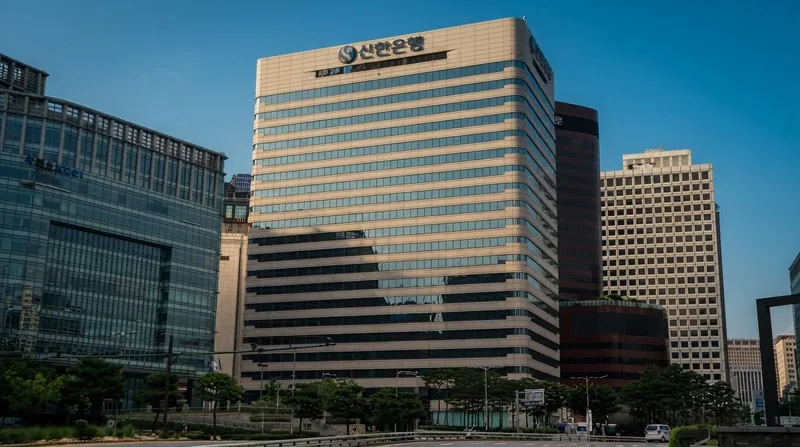
October 2026
Bank of Korea Holds Benchmark Rate at 3 Percent While Leaving Door Open for Future Hikes
AI
How the story developed
The Bank of Korea's monetary policy trajectory previously involved a streak of consecutive interest rate increases. This tightening cycle was temporarily halted on October 22, when the central bank maintained its base rate at 3.0 percent. Policymakers used the pause to assess the impact of elevated borrowing costs on domestic growth and inflation.
During the October hold, the central bank faced the challenge of balancing the need to control prices against the risks posed by South Korea's heavily leveraged household sector. Data showed that core inflation had held steady at 3.3 percent in September, remaining well above the central bank's target of 2 percent.
Despite the pause, the central bank indicated that the tightening cycle might not be over. Governor Rhee Chang-yong confirmed that six of the seven board members remained open to raising rates further if inflation persisted.
The conditions monitored by the board ultimately led to the end of the pause the following month, as the central bank shifted its focus back to addressing persistent economic pressures.