
full timeline
US federal cyber intrusions
A highly capable threat actor has infiltrated the US Air Force's flagship Cloud One computing platform, disrupting operations tied to missile tracking and North American radar.
Follow US federal cyber intrusions in the Factlen app and get an alert when there is news. Get the app
Share this story
Latest report
Hackers Breach US Air Force Cloud One Platform Amid String of Federal Cyber Intrusions
A highly capable threat actor has infiltrated the US Air Force's flagship Cloud One computing platform, disrupting operations tied to missile tracking and North American radar. The breach expands a cascading cybersecurity crisis that previously compromised FBI and Department of Agriculture databases.
- Hackers have successfully breached Cloud One, the US Air Force's flagship cloud computing platform.
- The compromised infrastructure is directly tied to North American radar operations and missile tracking systems.
- The intrusion has disrupted active military operations, forcing regional command centers to rely on manual fail-safes.
- This marks the third major federal cyber intrusion in recent weeks, following breaches at the FBI and Department of Agriculture.
The foundational constraint of modern military readiness is the absolute security of its distributed data, a condition that no longer holds across the United States defense apparatus. Hackers have successfully breached Cloud One, the flagship cloud computing platform utilized by the United States Air Force. The intrusion marks a severe escalation in an ongoing wave of federal cyberattacks in late 2026.[2]
The compromised infrastructure is not a peripheral administrative network. Cloud One serves as a central nervous system for the Air Force, hosting over 100 mission-critical applications directly tied to missile tracking systems and North American radar operations. The breach has already begun disrupting active military operations, forcing at least 12 regional command centers to revert to manual fail-safes.[1][4]
This infiltration expands a cascading cybersecurity crisis that has paralyzed multiple federal agencies over the last 14 days. Prior to the Air Force breach, attackers successfully penetrated the Federal Bureau of Investigation's criminal databases, exposing over 4 million records, and exfiltrated sensitive agricultural payment routing data. The progression from civilian agencies to core military infrastructure indicates a highly capable threat actor.[5]
Cloud One was designed to consolidate hundreds of legacy military applications into a single, secure commercial cloud environment. By centralizing these assets, the Air Force intended to improve real-time data sharing for its 320,000 active-duty personnel. Instead, that centralization has provided attackers with a concentrated target, turning a logistical advantage into a profound strategic vulnerability.[2]
The Next Web, citing initial reports from Reuters, confirmed the breach on November 27, 2026, noting that the intrusion bypassed at least 3 layers of advanced multi-factor authentication. The timeline of the unauthorized access remains under investigation, leaving commanders uncertain about how long adversaries have operated inside the network before detection.[3]
Escalating Federal Intrusions
The Air Force compromise cannot be viewed in isolation. It represents the third major pillar of the federal government to fall to cyber intrusions in recent weeks. The attackers have demonstrated an ability to pivot across vastly different network architectures, from law enforcement to agriculture, and now to defense.[5]
When hackers breached the FBI criminal database earlier this month, security officials warned that the stolen credentials might be leveraged for secondary attacks. It remains unclear if the Cloud One breach utilized access tokens harvested from those previous federal intrusions. However, the rapid succession of these events suggests a coordinated campaign rather than isolated incidents.[7]
The disruption of operations tied to North American radar is particularly alarming for homeland defense. These systems operate 24 hours a day to detect incoming aerospace threats, ranging from intercontinental ballistic missiles to unauthorized aircraft entering sovereign airspace. Any degradation in their reliability directly impacts the response time of the North American Aerospace Defense Command.[1]
"Hackers breach US Air Force's flagship cloud platform, disrupting operations," reported The Times of India, highlighting the immediate tactical consequences of the network failure. Military personnel have been forced to rely on isolated legacy systems to maintain basic situational awareness. This transition inherently slows decision-making processes during a period of heightened global tension.[4]
The financial and logistical scale of Cloud One makes the breach a monumental failure of defense procurement. The platform manages everything from routine personnel logistics to highly sensitive tactical deployments, handling over 85 percent of the Air Force's tactical data routing. Securing a perimeter of this magnitude requires constant vigilance, which the attackers successfully circumvented.[2]
Operational Disruptions And Containment
Containment efforts are currently underway, but isolating a cloud environment deeply integrated into global military operations presents massive logistical hurdles. Shutting down compromised nodes risks blinding forward-deployed units that rely on Cloud One for real-time intelligence. Commanders must weigh the risk of continued data exfiltration against the immediate danger of operational blindness.[4]
The Irish Times noted that the breach occurred amid a broader "string of cyber incidents" targeting Western infrastructure. This pattern has prompted emergency audits across the Department of Defense, as officials scramble to identify whether other centralized platforms share the same vulnerabilities. Threat hunting teams are currently analyzing over 50 terabytes of network logs to trace the intrusion.[7]
Cybernews highlighted the flagship nature of the Cloud One platform, emphasizing that it was specifically engineered to withstand state-sponsored cyber warfare. The fact that it was breached raises fundamental questions about the viability of the Pentagon's broader $9 billion Joint Warfighting Cloud Capability initiative. If the flagship system cannot repel intruders, the entire cloud migration strategy may require reevaluation.[2]
The identity of the attackers remains officially unconfirmed, though the sophistication required to penetrate Cloud One points toward an advanced persistent threat, typically associated with nation-state actors. The intelligence community is currently analyzing the malware signatures and command-and-control infrastructure used in the attack to establish attribution.[6]
Previous breaches of the FBI and Department of Agriculture were characterized by stealthy data exfiltration rather than destructive ransomware. If the Air Force breach follows the same pattern, the primary objective is likely espionage—mapping radar blind spots, understanding missile tracking algorithms, and identifying the operational readiness of specific squadrons.[1][5]
Strategic Vulnerabilities Exposed
The reliance on commercial cloud providers for military operations has long been a subject of debate among defense strategists. While commercial clouds offer unparalleled scalability and computing power, they also introduce complex supply chain risks. The Cloud One breach materializes the worst-case scenario envisioned by critics of the Pentagon's modernization efforts.[2]
The Jerusalem Post reported that the incident is part of a broader string of cyber incidents, suggesting a systemic weakness in how federal agencies authenticate users and manage access controls. The attackers appear to be exploiting a common denominator across these disparate networks, potentially a widely used third-party software integration or a fundamental flaw in identity management.[5]
As the investigation deepens, the Air Force faces the daunting task of purging the attackers from a network that spans the globe. This process is painstakingly slow and requires taking critical systems offline for forensic analysis. During this window, the military's ability to coordinate large-scale, multi-domain operations is significantly degraded.[4]
The exposure of missile tracking data presents a unique strategic risk. If adversaries can access the telemetry and tracking algorithms used by the Air Force, they can develop countermeasures to evade detection. This intelligence could fundamentally alter the balance of power in contested regions, rendering existing defense systems less effective.[1]
Lawmakers have already begun demanding answers from the Department of Defense regarding the failure of Cloud One's defenses. Congressional oversight committees are expected to convene emergency hearings within 48 hours to assess the damage and determine whether the Pentagon requires additional funding or new statutory authorities to secure its networks.[3]
Rebuilding The Digital Perimeter
The immediate priority for the Air Force is establishing a secure, out-of-band communication network to coordinate the incident response. Until the extent of the compromise is fully understood, commanders cannot trust the integrity of the data flowing through Cloud One. This lack of trust is the most corrosive effect of a successful cyber intrusion.[4]
The Times of Israel emphasized the flagship status of the compromised platform, noting its central role in the Air Force's future operational concepts. The breach forces a reckoning within the defense establishment about the pace of digital transformation. The drive for connectivity and efficiency has clearly outstripped the military's ability to secure its digital borders.[6]
Moving forward, the Pentagon will likely mandate a return to more segmented network architectures, sacrificing some interoperability for the sake of resilience. The concept of zero trust—where no user or device is inherently trusted, even if they are already inside the network—will transition from a theoretical goal to an immediate operational necessity.[2]
The cascading nature of these federal breaches highlights the interconnectedness of modern government infrastructure. A vulnerability in a civilian agency's network can serve as a stepping stone to highly classified military systems. Securing the nation's digital infrastructure requires a holistic approach that transcends traditional bureaucratic boundaries.[5]
The breach of Cloud One serves as a stark warning that the digital domain is now the primary vector for strategic conflict. The United States Air Force, tasked with dominating the skies and space, must now prove it can defend its own foundational networks. The outcome of this containment effort will dictate the future of military cloud computing.[1]
Sources
- [1]The Independent — Hackers breach flagship Air Force cloud system tied to missile tracking and North American radar Read on The Independent →
- [2]Cybernews — Hackers breach US Air Force flagship Cloud One computing platform Read on Cybernews →
- [3]The Next Web — Hackers breached the US Air Force's Cloud One platform, Reuters reports Read on The Next Web →
- [4]The Times of India — Hackers breach US Air Force's flagship cloud platform, disrupting operations Read on The Times of India →
- [5]The Jerusalem Post — Hackers breach US Air Force flagship Cloud One computing platform amid string of cyber incidents Read on The Jerusalem Post →
- [6]The Times of Israel — Hackers breach US Air Force flagship Cloud One computing platform Read on The Times of Israel →
- [7]The Irish Times — Hackers breach US Air Force's flagship Cloud One computing platform Read on The Irish Times →
What to watch
- Federal investigators are working to determine if the attack was executed by a nation-state or a criminal syndicate.
Charts, maps and images
Timeline
November 2026
Hackers Breach US Air Force Cloud One Platform Amid String of Federal Cyber Intrusions
Federal Cyber Intrusions Expose FBI Criminal Database and Agriculture Payment Records
How the story developed
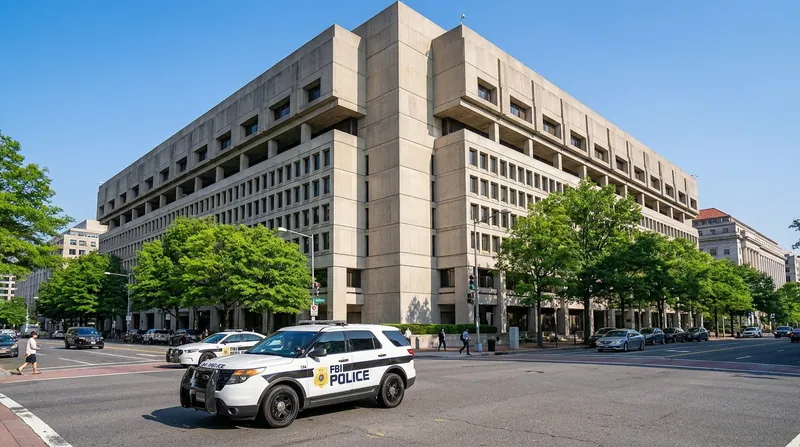
The cascading cybersecurity crisis began when hackers successfully breached the Federal Bureau of Investigation's National Crime Information Center on November 21. The database is utilized by over 18,000 law enforcement agencies to track warrants and stolen property.
Alongside the FBI intrusion, the hackers also breached a United States Department of Agriculture financial payment system on November 21. The compromised agricultural network is responsible for processing billions of dollars in farm subsidies and crop insurance payouts.
The dual intrusions into the law enforcement and agricultural databases prompted a sweeping federal investigation into the exposure of sensitive data and financial records.
Following the initial breaches at the FBI and the Department of Agriculture, the crisis expanded further, culminating in the third major federal cyber intrusion targeting the military's cloud infrastructure.