
full timeline
ICC Philippine drug war investigation
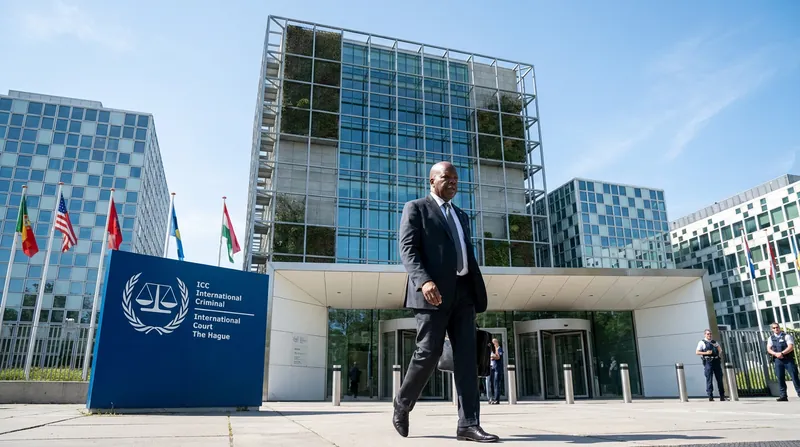
The International Criminal Court will open its trial of Rodrigo Duterte on November 30, marking the first time an Asian former head of state faces the tribunal.
Follow ICC Philippine drug war investigation in the Factlen app and get an alert when there is news. Get the app
Share this story
Latest report
ICC Prepares Historic Crimes Against Humanity Trial for Former Philippine President Rodrigo Duterte
The International Criminal Court will open its trial of Rodrigo Duterte on November 30, marking the first time an Asian former head of state faces the tribunal. Prosecutors plan to call 100 witnesses to detail the systematic killings of his administration's anti-drug campaign.
- Rodrigo Duterte's crimes against humanity trial opens November 30 at the ICC, marking the first time an Asian former head of state faces the tribunal.
- Prosecutors plan to call around 100 witnesses to prove the systematic nature of the killings during his anti-drug campaign.
- The court restricted daily sessions to four hours to accommodate the 81-year-old's age, having previously ruled him fit to stand trial.
- Domestic accountability efforts in the Philippines have stalled, with only four cases reaching local courts according to Human Rights Watch.
Former Philippine President Rodrigo Duterte will stand trial at the International Criminal Court on November 30, 2026, facing charges of crimes against humanity. The proceedings in The Hague mark the first time an Asian former head of state will be tried by the international tribunal. The 81-year-old leader is required to attend in person.[2][4]
Duterte is accused of orchestrating a widespread and systematic attack against civilians between November 2011 and March 2019. The charges encompass murder and attempted murder during his tenure as mayor of Davao City and later as president. Prosecutors allege these crimes were committed under the guise of his administration's deadly anti-drug campaign.[1][2]
The trial opens 20 months after Philippine authorities arrested Duterte in March 2025 and transferred him to ICC custody. Trial Chamber III, led by Presiding Judge Joanna Korner alongside Judges Keebong Paek and Nicolas Guillou, will oversee the case. The chamber has scheduled hearings to run until the court's winter recess on December 18.[3][4]
On the opening day, the judges will verify that Duterte understands the three counts against him before asking him to enter a plea. The court will not read the 56 specific incidents underlying the charges aloud. Following the plea, the prosecution will deliver a two-hour and 15-minute opening statement.[3][4]
Adapting the courtroom schedule
To accommodate Duterte's advanced age, the chamber has restricted the trial schedule to four hours each weekday. Proceedings will run from 10 a.m. to 4 p.m. local time, divided into four one-hour sessions with extended recesses. The defense had previously sought to delay the trial, citing the former president's declining health.[4]
In a November 25 pretrial brief, Duterte's lawyers argued he suffers from cognitive impairments, including difficulty recalling recent discussions and the names of relatives. Despite these claims, the chamber ruled in October 2026 that he remains fit to stand trial. The judges determined he possesses a reasonable understanding of the proceedings.[4]
The chamber emphasized that Duterte's meaningful participation depends on his ability to instruct his legal team, even if his cognitive abilities are not at their peak. The court has stated it will ensure the proceedings are conducted fairly and that the rights of all trial participants are respected.[4]
Following the prosecution's opening remarks, the Common Legal Representatives of Victims will have 90 minutes to address the court. More than 500 victims have been authorized to participate in the trial through their legal counsel. The defense has been allotted one hour for its initial statement, though it may reserve its full presentation for later.[3]
A massive evidentiary undertaking
The evidentiary phase represents a massive logistical undertaking for the prosecution, which anticipates calling approximately 100 witnesses over the course of the trial. The first five witnesses are scheduled to testify before the December 18 recess. The prosecution must prove the charges beyond a reasonable doubt.[3]
Prosecutors plan to present evidence detailing 56 separate incidents that resulted in around 85 murders and two attempted murders. These incidents are intended to demonstrate the systematic nature of the killings. The court has directed both sides to provide a schedule of forthcoming witnesses four weeks before each evidentiary block.[3][4]
The victims' legal representatives will play a crucial role in shaping the narrative, ensuring the human cost of the anti-drug campaign is documented. These representatives will present the views and concerns of the 500 authorized participants directly to the judges. Their opening statement will focus on the systemic trauma inflicted on impoverished communities.[3]
The trial's first evidentiary block in 2027 is scheduled from January 12 to February 19, followed by subsequent blocks in March and April. The court has instructed the parties to coordinate witness appearances tightly to prevent gaps in testimony. Translators will provide real-time interpretation to ensure Duterte understands the testimonies.[3]
Stalled domestic accountability
The ICC's pursuit of the case highlights the stark contrast with domestic accountability efforts in the Philippines. According to a November 24 report by Human Rights Watch, domestic investigations into the extrajudicial killings have largely stalled since Duterte's transfer to The Hague. The rights group noted that police abuses continue under the current administration.[1]
President Ferdinand Marcos Jr. established a Justice Department task force in 2022 to investigate the drug war killings, but progress has been minimal. Human Rights Watch found that only four cases have reached the Philippine courts. Families of victims face severe barriers, including the burden of uncovering evidence themselves.[1]
"President Marcos' pledge to hold police accountable for past and ongoing abuses in its anti-drug campaign has been a failure," said Lian Buan, a Southeast Asia researcher at Human Rights Watch.[1]
Victims' families have expressed deep concerns that the government's witness protection program cannot keep them safe from police retaliation. Meetings between victims' groups and the Justice Department have tapered off as trust in the domestic process erodes.[1]
The broader scope of the investigation
The scope of the ICC's investigation extends beyond Duterte himself. In May 2026, the court unsealed an arrest warrant for Ronald Dela Rosa, the former national police chief who oversaw the implementation of the anti-drug campaign. Dela Rosa, who faces similar crimes against humanity charges, has since gone into hiding.[1]
The mechanics of the killings often followed a predictable pattern, according to human rights investigators. Police would conduct clearance operations in targeted neighborhoods, frequently resulting in the deaths of individuals featured on unverified drug watchlists. The prosecution intends to show that these operations were directed from the highest levels of the government.[1]
During Duterte's presidency, thousands of people from marginalized communities were killed by police or allied armed individuals. Official government figures acknowledge over 6,000 deaths, while human rights groups estimate the toll is significantly higher. The charging document alleges that Dela Rosa and other co-perpetrators executed a common plan to neutralize suspected criminals.[1][2]
International pressure and jurisdiction
The trial opens during a period of intense geopolitical pressure on the International Criminal Court. The institution has faced severe pushback from non-member states regarding its jurisdictional reach. Rights groups have called the Duterte trial a defining test for international accountability and the court's ability to prosecute former leaders.[2]
The Philippine government's official stance on the trial remains complex. While the Marcos administration facilitated Duterte's arrest in 2025, domestic political factions continue to debate the ICC's jurisdiction. The Philippines formally withdrew from the Rome Statute in 2019, but the court retains jurisdiction over crimes committed while the country was a member.[2]
The long road to a verdict
Legal experts anticipate the trial will last several years, given the volume of witnesses and the complexity of proving a systematic state policy. The defense will have the opportunity to cross-examine all 100 prosecution witnesses before presenting its own evidentiary case. Duterte remains presumed innocent until a final judgment is rendered.[3]
The court has established strict protocols for the handling of evidence, requiring parties to use electronic registration numbers for all materials. Judges have also set deadlines for the prosecution's applications to introduce prior recorded testimony. These procedural steps aim to streamline the massive evidentiary record.[3]
Public access to the trial has been a point of contention, particularly regarding language barriers for the Philippine public. The ICC will broadcast the hearings with a 30-minute delay on its website and social media channels. Advocates have pushed the court to ensure the public feed includes translations in Cebuano or Tagalog.[2]
As the November 30 start date approaches, the focus remains on the initial plea and the prosecution's opening narrative. The trial will test the ICC's capacity to prosecute a former head of state for domestic policies executed under the banner of law enforcement.[2][4]
The outcome will set a major precedent for international criminal law. It will determine the evidentiary threshold required to link a head of state's public rhetoric and policy directives to systematic killings carried out by local police forces.[2]
Sources
- [1]Human Rights Watch — Philippines: As ICC Tries Duterte, Stalled Justice at Home Read on Human Rights Watch →
- [2]CNA — A decade after Duterte's drug war, the Philippines confronts its bloody legacy as ICC trial looms Read on CNA →
- [3]The Varsitarian — The drug war goes to trial: ICC proceedings vs. Duterte set Nov. 30 Read on The Varsitarian →
- [4]ABS-CBN News — ANC: Duterte to stand trial before ICC for crimes against humanity starting Nov. 30 Read on ABS-CBN News →
What to watch
- Former President Rodrigo Duterte's crimes against humanity trial is scheduled to open at the International Criminal Court on November 30.
Charts, maps and images
Timeline
November 2026
ICC Prepares Historic Crimes Against Humanity Trial for Former Philippine President Rodrigo Duterte
October 2026
Philippines Offers $786,000 Bounty for Fugitive Senator Wanted by ICC
How the story developed
The International Criminal Court initiated proceedings regarding alleged crimes against humanity committed during the Philippine government's anti-drug crackdown.
The tribunal sought Senator Ronald dela Rosa, the former national police chief, in connection with the campaign.
By 21:34 UTC on October 24, the Philippine government offered a 50 million peso, or $786,000, reward for information leading to Dela Rosa's capture.
Authorities declared the fugitive senator armed and dangerous, issuing a one-week ultimatum for his surrender ahead of proceedings at The Hague.