
full timeline
Global hunger crisis
The FAO and WFP warn that acute food insecurity will deteriorate across 16 regions through May 2027, driven by climate shocks, entrenched conflicts, and a 62 percent collapse in humanitarian funding.
Follow Global hunger crisis in the Factlen app and get an alert when there is news. Get the app
Share this story
Latest report
UN Expands Global Hunger Watch List to 16 Hotspots Amid El Niño and Funding Cuts
The FAO and WFP warn that acute food insecurity will deteriorate across 16 regions through May 2027, driven by climate shocks, entrenched conflicts, and a 62 percent collapse in humanitarian funding.
- The UN expanded its global hunger hotspot list from 13 to 16, adding Southern Africa, the Central American Dry Corridor, northeastern Uganda, and Chad.
- Sudan, South Sudan, Somalia, Nigeria, and Yemen remain the highest-concern areas, with famine conditions already confirmed in parts of North Darfur.
- A severe El Niño weather pattern threatens to push an additional 49 million people into acute food insecurity by the end of 2027.
- Humanitarian funding for the five most critical hotspots plummeted by 62 percent between 2022 and 2025, severely restricting emergency relief operations.
The United Nations has expanded its global hunger watch list from 13 to 16 critical hotspots, warning that a severe El Niño and entrenched conflicts will drive acute food insecurity between December 2026 and May 2027. The updated assessment signals a deteriorating global baseline.[1][3]
The Food and Agriculture Organization (FAO) and the World Food Programme (WFP) issued the joint alert on Friday. They identified Southern Africa, the Central American Dry Corridor, northeastern Uganda, and Chad as the newest regions facing critical shortages over the next six months.[1][3]
These additions reflect a collision of climate shocks and regional instability. Chad was added primarily due to the massive spillover of refugees fleeing the ongoing war in neighboring Sudan, which remains one of the world's most severe and underfunded humanitarian crises.[1][3]
"El Niño is intensifying, threatening crops and harvests in already vulnerable regions and increasing the risk of acute food insecurity," said FAO Director-General Qu Dongyu in a statement accompanying the report. He noted the weather pattern's immediate threat to agricultural cycles.[1]
Qu emphasized that preventive action could still mitigate the damage if donor nations act quickly. "Yet the worst outcomes are not inevitable," he added, urging immediate humanitarian intervention before the traditional lean seasons begin in the Southern Hemisphere.[1]
The Five Highest-Risk Zones
Sudan, South Sudan, Somalia, parts of Nigeria, and Yemen remain the five areas of greatest concern. These nations have consistently occupied the highest alert tier since 2022, driven almost entirely by armed violence, economic collapse, and restricted humanitarian access.[1][3]
In Sudan, famine conditions have already been confirmed in parts of North Darfur following 19 months of civil war. The agencies warned that 13 specific areas across North Darfur and South Kordofan face a continued risk of famine through January 2027.[1][3]
The Sudanese conflict has displaced over 12 million people since April 2023, including 8.8 million internally. This massive population movement has devastated domestic agricultural production and severed commercial supply lines for basic staples across the entire region.[2]
Yemen faces similar structural barriers to food access. Ongoing fighting and severe shipping disruptions in the Red Sea have hindered aid deliveries, while a steep decline in dedicated humanitarian funding since 2022 has crippled the WFP's relief operations there.[1][4]
Across all 16 recognized hotspots, conflict and armed violence were identified as the primary drivers of acute food insecurity in 12 regions. War not only destroys standing crops but actively prevents humanitarian agencies from reaching starving populations safely.[1][3]
The Climate Multiplier
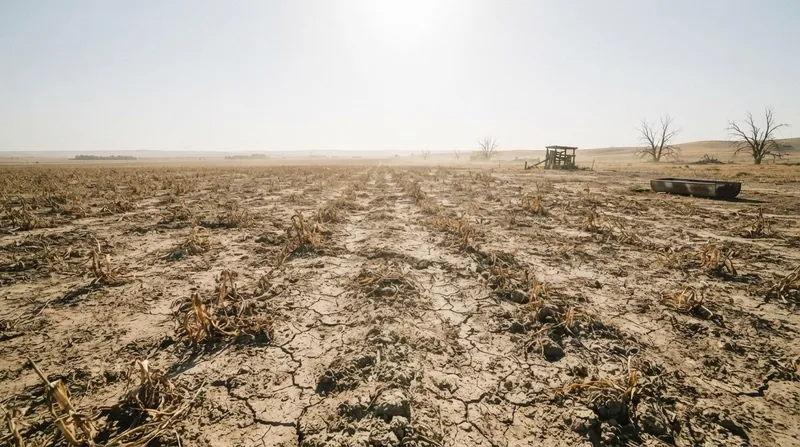
While war drives the most acute localized crises, the El Niño climate phenomenon is rapidly expanding the broader map of hunger. The cyclical weather pattern brings severe, prolonged droughts to some regions and devastating, unpredictable floods to others.[1][3]
Conor Elliott, an FAO emergencies and resilience official, warned of a "very, very strong El Niño effect" over the coming months. He noted this disruption could push an additional 49 million people globally into acute food insecurity by the end of 2027.[2][4]
In Southern Africa, drier and hotter conditions are threatening planting seasons and future harvests. Up to 3 million people in Zimbabwe, 2.6 million in Malawi, and 1.8 million in Mozambique are projected to face high levels of acute food insecurity through March 2027.[1][3]
The Central American Dry Corridor is experiencing similar agricultural devastation. The 2026 Primera season, which serves as the region's primary crop cycle, was the driest recorded in four decades, resulting in crop losses exceeding 75 percent in many rural areas.[1]
In Guatemala alone, 3.2 million people are projected to face severe food shortages between October 2026 and February 2027. Domestic food stocks are already running out, meaning the traditional lean season will begin months earlier than usual for subsistence farmers.[1]
A Collapse in Humanitarian Funding
As the geographic scope of the crisis expands, the financial resources available to address it are shrinking rapidly. Soaring global food, energy, and transport costs have simultaneously eroded the purchasing power of vulnerable families and the budgets of aid agencies.[4][5]
Humanitarian funding for food security and nutrition in the five highest-concern hotspots fell by 62 percent between 2022 and 2025. Total international contributions dropped from $5.1 billion to just $2.0 billion over that three-year period, forcing brutal operational cuts.[1][3]
The joint FAO-WFP anticipatory action plan, designed to protect 9 million people across 22 countries from El Niño's worst effects, currently faces a $125 million funding shortfall. This deficit prevents agencies from distributing drought-resistant seeds and early cash transfers.[1][2]
Without immediate cash injections, agencies are forced to cut daily rations and prioritize only the most desperate cases. This triage approach often leaves millions of severely hungry people without any assistance until their situation becomes visibly life-threatening.[1][4]
"This is not a problem of operational ability, it is a question of whether world leaders have the political courage to act decisively," the agencies noted in their joint appeal, demanding safe and unimpeded access to affected populations across conflict zones.[2]
Shifting Regional Dynamics
The updated UN report also reclassified several ongoing crises based on recent data. Four nations—Afghanistan, the Democratic Republic of the Congo, Haiti, and Palestine—were categorized as areas of "very high concern," placing them just below the top emergency tier.[1][2]
In the Gaza Strip, food security has shown marginal improvement following an October 2025 ceasefire agreement. However, the agencies cautioned that these gains remain highly fragile, while acute food insecurity in the West Bank is expected to worsen significantly.[1]
Lebanon was the only nation removed from the hotspot list in this November assessment. While severe economic challenges remain, the country's food security outlook stabilized enough over the past six months to drop below the threshold for acute early warning.[2]
The addition of northeastern Uganda highlights how localized climate shocks can destabilize previously secure regions. Unpredictable rainfall patterns have severely reduced crop yields, leaving subsistence farming communities without their usual safety nets or surplus grain to sell.[1][2]
The Cost of Inaction
The UN agencies are urging donor governments to shift their funding models from reactive emergency response to anticipatory action. Providing communities with drought-resistant seeds, veterinary support for livestock, and early cash transfers can preserve local economies before a shock hits.[1]
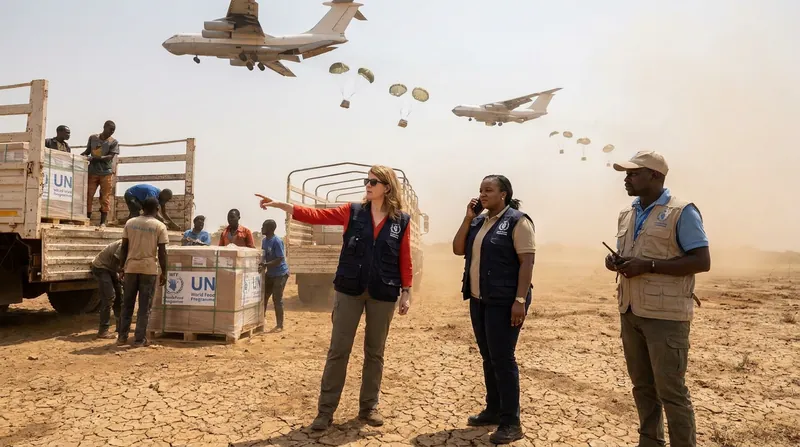
This preventative approach is highly cost-effective, but it requires capital before a crisis makes international headlines. When funding arrives only after famine conditions are declared, the logistical costs of air-dropping food and treating severe malnutrition consume the majority of the budget.[1][2]
Sources
- [1]World Food Programme — El Niño Adds New Hunger Hotspots as Conflict Continues to Drive Risk of Famine, Warn FAO and WFP Read on World Food Programme →
- [2]ReliefWeb — El Niño Adds New Hunger Hotspots as Conflict Continues to Drive Risk of Famine, Warn FAO and WFP Read on ReliefWeb →
- [3]Anadolu Agency — El Nino, conflicts expected to worsen hunger in 16 hotspots, UN warns Read on Anadolu Agency →
- [4]CBC News — War, fuel costs and aid cuts raise famine risk across 16 hotspots, UN agencies warn Read on CBC News →
- [5]Malay Mail — UN warns of worsening hunger in 16 hotspots as conflicts and El Nino take their toll Read on Malay Mail →
What to watch
- Acute food insecurity is expected to deteriorate across 16 regions through May 2027.
- A severe El Niño weather pattern threatens to push an additional 49 million people into acute food insecurity by the end of 2027.
Charts, maps and images
Timeline
November 2026
UN Expands Global Hunger Watch List to 16 Hotspots Amid El Niño and Funding Cuts
AI
June 2026
UN Report Identifies 13 Hunger Hotspots to Trigger Predictive Famine Relief
How the story developed
By June 26, 2026, 266 million people across 47 countries were facing high levels of acute food insecurity. Thirteen global hotspots were identified where hunger was expected to worsen between June and November of that year.
Armed conflict emerged as the primary driver of the crisis. This factor alone affected 12 of the 13 initially identified hotspots.
Financial constraints significantly impacted relief efforts. Humanitarian food assistance funding dropped by an estimated 59 percent between 2022 and 2025.
In response to the worsening conditions and funding drops, relief efforts pivoted toward anticipatory action and predictive modeling. This approach aims to distribute aid before crises reach their peak, with Ready-to-Use Therapeutic Food remaining the primary scientific intervention utilized for severe acute malnutrition.