full timeline
EU combustion engine ban
German Chancellor Friedrich Merz and French President Emmanuel Macron have struck a compromise to reduce the bloc's 2035 emissions target for new cars from 100 percent to 80 percent.
Follow EU combustion engine ban in the Factlen app and get an alert when there is news. Get the app
Share this story
Latest report
Germany and France Agree on Deal to Weaken European Union's 2035 Combustion Engine Ban
German Chancellor Friedrich Merz and French President Emmanuel Macron have struck a compromise to reduce the bloc's 2035 emissions target for new cars from 100 percent to 80 percent. In exchange for the looser limits, Germany will support strict "Buy European" requirements for electric vehicle subsidies.
- Germany and France have agreed to push for an 80 percent emissions reduction target for new cars by 2035, down from the original 100 percent ban.
- The deal allows automakers to continue selling petrol, diesel, and hybrid vehicles without needing to offset the remaining 20 percent of emissions.
- In exchange, Germany will support French demands to restrict public electric vehicle subsidies to models manufactured within the European Union.
- The agreement also grants carmakers a five-year window, from 2028 to 2032, to meet the interim 2030 emissions reduction targets.
For European car buyers, the looming 2035 zero-emission mandate has meant preparing for a market where only battery-electric vehicles are available on showroom floors. For environmental advocates, that hard deadline is the only mechanism capable of forcing automakers to abandon fossil fuels and meet the continent's climate targets.[1][2]
Now, the European Union’s two largest economies have struck a compromise that rewrites the timeline for both consumers and manufacturers. German Chancellor Friedrich Merz and French President Emmanuel Macron have agreed to push for a significant weakening of the 2035 combustion engine phaseout.[1][3]
The proposed deal drops the required tailpipe emissions reduction for new cars to 80 percent, ensuring that petrol, diesel, and hybrid vehicles will remain on dealership lots well into the next decade. In exchange, Germany will back France’s demand for strict "Buy European" requirements that limit public electric vehicle subsidies to models built within the EU.[1][4]
The original legislation, adopted in 2023, required a 100 percent reduction in carbon dioxide emissions from new cars and vans by 2035 compared to 2021 levels. That target effectively functioned as a complete ban on the sale of new internal combustion engines across the 27-nation bloc.[3]
Facing intense pressure from the automotive industry, the European Commission proposed a revision in December 2025 that lowered the requirement to a 90 percent reduction. Under that plan, carmakers could offset the remaining 10 percent by using low-carbon European steel, synthetic e-fuels, and biofuels.[1][3]
The new Franco-German agreement goes substantially further than the Commission's concession. Berlin and Paris are demanding an additional 10 percentage points of flexibility without any requirement for compensation, bringing the mandatory reduction down to 80 percent.[1]
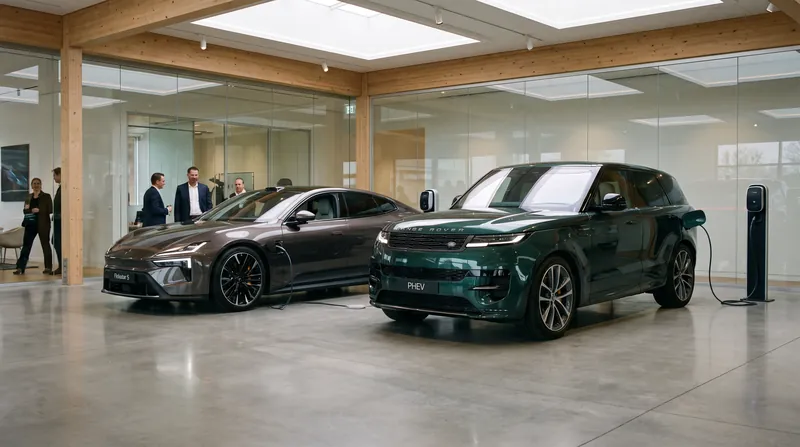
For a prospective buyer in 2035, this means a much wider array of powertrain options will remain legally available. Dealerships will be able to stock traditional combustion engines, plug-in hybrids, and range-extender models alongside fully electric vehicles, rather than transitioning to an electric-only lineup.[1][2]
The compromise breaks a months-long deadlock between the two governments, who had previously blocked each other's automotive policies. Germany, home to Volkswagen, BMW, and Mercedes-Benz, wanted looser emissions rules but strongly opposed protectionist measures that could spark trade wars.[1][2]
France, meanwhile, advocated for strict rules to protect domestic manufacturing and initially opposed any further weakening of the climate targets. By swapping concessions, the two nations have effectively secured the majority needed to push the changes through the EU Council.[1][2]
The "Buy European" provisions will directly affect how consumers finance their next vehicle purchase. Public subsidies and tax incentives for electric vehicles will be heavily restricted to models manufactured within the European Union, making imported Chinese vehicles significantly more expensive for the average buyer.[1][2]
Beyond the 2035 deadline, the agreement also relaxes the interim emissions targets set for the end of this decade. Current regulations require automakers to achieve a 55 percent reduction in fleet emissions by 2030, a hurdle that many manufacturers are currently struggling to clear.[3]
The European Commission had proposed assessing compliance over a three-year period from 2030 to 2032. Merz and Macron are now pushing for a broader five-year transition window, stretching from 2028 to 2032, to evaluate whether carmakers have met the 55 percent threshold.[3]
This extended timeframe gives manufacturers significantly more scope to balance their sales mix and avoid billions of euros in potential fines. It allows them to offset slower electric vehicle adoption in the near term with projected sales growth in the early 2030s.[3]
Environmental organizations warn that the political compromise will have severe consequences for the continent's carbon footprint. The clean transport group Transport & Environment projects that the revised rules will substantially depress the market share of zero-emission vehicles.[1][2]
"Even the Commission's proposal, which preserves a larger part of the original emissions target, does not guarantee that electric cars will dominate the market in 2035," the Transport & Environment organization noted in its analysis. The Franco-German push for 80 percent would drive that figure even lower.[1][2]
The group estimates that car carbon dioxide emissions between 2025 and 2050 will be roughly 10 percent higher than they would have been under the original 100 percent reduction mandate. For policymakers, the deal represents a calculated trade-off between achieving climate neutrality and preserving the European industrial base.[1][2]
The final shape of the regulations now depends on upcoming negotiations in Brussels, where Merz and Macron are expected to present their joint position to EU leaders. Until the legislation is formally amended, the automotive market remains caught between the existing ban and the political reality of its reversal.[1][2]
Sources
- [1]Clean Energy Wire — France and Germany strike deal to further weaken EU combustion engine phaseout – media Read on Clean Energy Wire →
- [2]oEnergetice.cz — France is likely to join Germany. Both countries want to further weaken the ban on sales of new cars with combustion engines Read on oEnergetice.cz →
- [3]Hürriyet Daily News — Germany, France seek softer EU car emissions rules Read on Hürriyet Daily News →
- [4]Carbon Pulse — France, Germany reach deal to ease EU car emissions rules -media Read on Carbon Pulse →
Charts, maps and images
Timeline
October 2026
Germany and France Agree on Deal to Weaken European Union's 2035 Combustion Engine Ban
August 2026
EU Scraps 2035 Combustion Engine Ban, Pivoting to 90% Fleet Emissions Target