full timeline
Alzheimer's disease gene therapy research
Researchers have successfully used an experimental gene therapy to convert the high-risk APOE4 Alzheimer's gene into the safer APOE3 variant in human cells.
Follow Alzheimer's disease gene therapy research in the Factlen app and get an alert when there is news. Get the app
Share this story
Latest report
Gene Therapy Converts High-Risk APOE4 Gene to Low-Risk APOE3 in Alzheimer's Patient Cells
Researchers have successfully used an experimental gene therapy to convert the high-risk APOE4 Alzheimer's gene into the safer APOE3 variant in human cells. Concurrently, scientists discovered how APOE4 actively damages brain blood vessels, revealing a reversible mechanism that could lead to new treatments.
- University of Bristol researchers successfully converted the high-risk APOE4 Alzheimer's gene into the lower-risk APOE3 variant in human immune cells.
- The experimental gene therapy is designed to be administered through the bloodstream, allowing it to bypass the blood-brain barrier.
- In a parallel discovery, Mount Sinai scientists revealed that APOE4 actively damages brain blood vessels by turning support cells into scar tissue.
- The Mount Sinai team demonstrated that this vascular damage and subsequent amyloid buildup can be reversed by blocking the TGF-β signaling pathway.
Researchers at the University of Bristol have successfully used an experimental gene therapy to convert the high-risk APOE4 Alzheimer's gene into the lower-risk APOE3 variant in human cells. The technique, tested on immune blood cells derived from Alzheimer's patients, alters the genetic signature without disrupting the rest of the cell's DNA, offering a potential way to slow or prevent the disease in the roughly one in four individuals who carry the risk gene.[1]
The mechanism behind the Bristol therapy focuses on direct genetic conversion rather than downstream symptom management. Dr. Kevin Kemp and his research team targeted the APOE4 gene in human immune cells taken from patients who already live with Alzheimer's disease. By using these specific human cells, the researchers were able to observe genetic responses that closely mimic real-life human biology, ensuring the therapy's effects were isolated to the targeted gene.[1]
A critical advantage of this approach is its delivery method. The experimental therapy is designed to be administered directly through the bloodstream, allowing it to bypass the blood-brain barrier and reach the entire brain. "Our research is still at an early stage, but we're really excited by the results we've seen so far," Kemp said. "By targeting the high-risk APOE4 gene, we hope to tackle one of the key risk factors for Alzheimer's and ultimately develop a new treatment for the disease."[1][2]
APOE4 is the most significant known genetic risk factor for late-onset Alzheimer's, a condition that accounts for 60 to 70 percent of all dementia cases. While the APOE gene normally helps the brain clear toxic amyloid proteins, the APOE4 variant is less effective and actively contributes to disease progression. Liberty Harrison, CEO of BRACE Dementia Research, which funded the Bristol study, noted that therapies preventing APOE4 from triggering the disease "represent a major unmet clinical need and are urgently required."[1][2]
As the Bristol team works to edit the gene, a parallel breakthrough in September 2026 at the Icahn School of Medicine at Mount Sinai has illuminated exactly how APOE4 damages the brain in the first place. The deterioration of small blood vessels in the brains of the 7 million older adults in the United States with Alzheimer's was previously viewed as a late-stage consequence of the disease. The Mount Sinai research reveals it is instead an active, APOE4-driven process.[3][4]
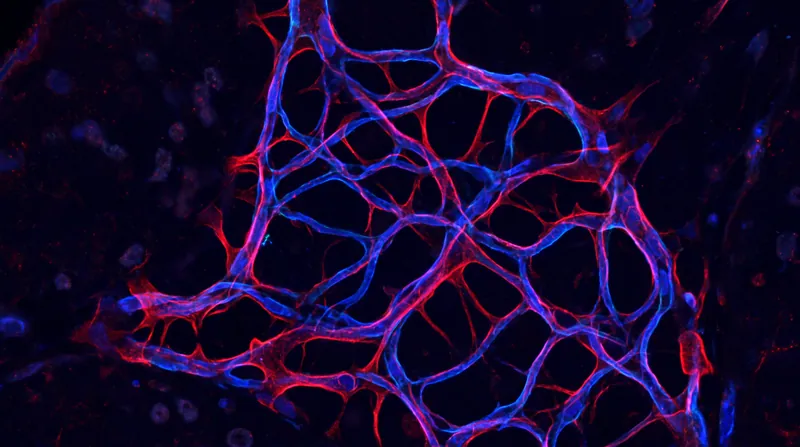
Using a single-cell transcriptomic atlas of the human brain's vasculature, the Mount Sinai researchers mapped gene activity across the cells that build and support blood vessels. They discovered that APOE4 forces pericytes—cells that normally stabilize small vessels and maintain the blood-brain barrier—to transform into scar-forming myofibroblast-like cells. This cellular shift drives fibrosis in the vessel walls and traps amyloid proteins around the vessels, compromising blood flow.[3]
"We show that APOE4 converts blood-vessel support cells into scar-producing cells, causing amyloid or abnormal protein buildup to accumulate around the brain's vessels," said Braxton R. Schuldt, a researcher in the Blanchard Laboratory at Mount Sinai. By pinpointing this exact cellular transformation, the team identified a structural failure that precedes widespread neurodegeneration.[3]
Crucially, the Mount Sinai team demonstrated that this vascular damage can be undone. By blocking TGF-β signaling—a pathway that governs cell communication and tissue remodeling—the researchers restored pericyte coverage and reduced both fibrosis and vascular amyloid in aged APOE4 mice. "Damage to the brain's blood vessels is not simply a late consequence of Alzheimer's disease; it is a biologically active process caused by APOE4 that may be reversible," said Dr. Joel W. Blanchard, an associate professor of neuroscience at Mount Sinai.[3]
Together, these two developments reframe APOE4 from an unavoidable genetic destiny to a treatable target. Whether by converting the gene itself to the safer APOE3 variant before it can cause harm, or by blocking the downstream vascular damage it initiates via the TGF-β pathway, researchers are opening new avenues to protect the brain's circulation and preserve cognitive function in high-risk patients.[1][3][4]
Sources
- [1]BRACE Dementia Research — Bristol researchers take major step towards Alzheimer's gene therapy Read on BRACE Dementia Research →
- [2]The Carer — Bristol Researchers Take Major Step Towards Alzheimer's Gene Therapy Read on The Carer →
- [3]Mount Sinai — Mount Sinai Researchers Identify How APOE4 Gene Damages Brain Blood Vessels in Alzheimer's Disease Read on Mount Sinai →
- [4]Factlen Editorial Team — Synthesis by Factlen editorial team Read on Factlen Editorial Team →
Charts, maps and images
Timeline
September 2026
Gene Therapy Converts High-Risk APOE4 Gene to Low-Risk APOE3 in Alzheimer's Patient Cells
APOE4 Gene Actively Damages Brain Vessels in Alzheimer's, Mechanism Shown to Be Reversible by Blocking TGF-β Signaling
AI