
World Leaders at UN General Assembly Warn Selective Enforcement of International Law Is Eroding Global Order
Heads of state at the 81st UN General Assembly warned that inconsistent application of international law is fracturing the multilateral system. Leaders from across the globe argued that shielding powerful nations and their allies from accountability is normalizing impunity and paralyzing conflict resolution.

- Reform Advocates and Global South
- Argues that the multilateral system is structurally biased and demands consistent application of international law across all nations.
- Multilateral System Defenders
- Maintains that the UN Charter and international legal institutions remain the essential foundation for global peace, despite current enforcement challenges.
- Geopolitical Analysts
- Observes that great power rivalry and the structural veto power of the Security Council are actively paralyzing collective security mechanisms.
Perspectives this story doesn't cover
- Specific justifications from the UN Security Council's permanent members regarding their recent vetoes
- Perspectives from states currently facing international sanctions on the effectiveness of those measures
Why it matters
When the rules governing warfare, sovereignty, and human rights are applied only to weaker states, the institutions designed to prevent global conflict lose their authority. This erosion of trust directly impacts international security, as paralyzed diplomatic channels leave emerging crises unchecked and embolden unilateral military actions.
The foundational premise of the United Nations—that a single set of rules governs all 193 member states equally—is collapsing under the weight of geopolitical alliances. While the UN Security Council's five permanent members continue to assert that the multilateral system is functioning as designed, a succession of world leaders at the 81st UN General Assembly in September 2026 presented a starkly different reality, warning that the selective enforcement of international law is actively dismantling the global order.[1][4]
Addressing the assembly in New York, heads of state from across four regions—Europe, the Middle East, Africa, and the Caribbean—argued that rules cannot remain credible if they are strictly enforced against some nations but ignored when politically powerful states or their allies are involved. The debate, convened under the theme of "Restoring Trust, Managing Transformation," became a referendum on the widening chasm between the UN's declared principles and its capacity to enforce them.[1][2][4]
French President Emmanuel Macron framed the current geopolitical trajectory as a choice between international justice and a return to unrestricted power. "There cannot be peace without justice," Macron told the assembly, asking whether member states wanted a civilized international society or a regression to "the law of the jungle." He voiced explicit support for the International Court of Justice and opposed what he characterized as an emerging order of impunity.[1]
The debate over the conflict in Gaza served as the primary catalyst for the broader critique of multilateral norms. Qatar's Amir Sheikh Tamim bin Hamad Al Thani stated that a just international order is impossible while the Palestinian situation remains a blind spot, insisting that "the law must apply equally to all." Jordan's King Abdullah II pointed out that the international community possesses mechanisms—including sanctions, asset freezes, embargoes, and diplomatic isolation—but has failed to use them consistently, noting that "resolutions end where they begin, on paper."[1]
The debate over the conflict in Gaza served as the primary catalyst for the broader critique of multilateral norms.
This inconsistency is not merely a diplomatic grievance; it is paralyzing the 15-member Security Council charged with maintaining collective security. The Middle East Council on Global Affairs noted that the veto power wielded by the council's permanent members is routinely used to block action whenever it conflicts with their strategic calculations. As a result, international law is interpreted through a lens of flexibility for great powers, contrasting sharply with the strict enforcement demanded of smaller states.[4]
Several leaders warned that the failure to apply rules uniformly in the Middle East is damaging the credibility of the entire multilateral system, with implications for conflicts across the globe. Ghanaian President John Mahama cautioned against "a dangerous drift towards unilateralism, lawlessness and the erosion of multilateral norms," urging the international community to stop obscuring civilian suffering through diplomatic language.[1]
The structural inequality of the current system was a recurring theme throughout the week. India has consistently argued that international institutions must become more representative, warning that rules must be applied consistently if the multilateral system is to retain the confidence of the Global South. Guyana's President Irfaan Ali echoed this sentiment, stating that while climate disasters and food insecurity are severe crises, the weakening of multilateralism itself may be the most troubling development.[1]
Seeking to quantify the disparity in international responses, Slovenian Prime Minister Janez Janša proposed the creation of an independent mechanism to compare major crises with the diplomatic, humanitarian, and legal actions taken to address them. The review's purpose, he explained, would not be to dictate political conclusions, but to empirically reveal patterns of selectivity in how the international community enforces its own laws.[1]
The authority of the two primary global legal bodies—the International Court of Justice and the International Criminal Court—depends entirely on the recognition, cooperation, and compliance of national governments. As the 81st session continues, the consensus among the broader assembly is that the era of deep uncertainty described by UN leadership is being driven not just by metastasizing conflicts, but by a loss of confidence in the system itself. The question remains whether the institutions established eight decades ago can adapt before their foundational rules are entirely eroded.[1][2][3][4]
What to know
- World leaders at the 81st UN General Assembly warned that the selective enforcement of international law is fracturing the global order.
- Heads of state argued that shielding powerful nations and their allies from accountability normalizes impunity and paralyzes conflict resolution.
- French President Emmanuel Macron framed the crisis as a choice between international justice and a return to "the law of the jungle."
- Leaders from the Global South highlighted the inconsistent use of sanctions and diplomatic isolation, demanding equal application of the UN Charter.
- Slovenian Prime Minister Janez Janša proposed an independent mechanism to empirically track patterns of selectivity in global crisis response.
Where opinion splits
Global South and Non-Aligned Nations
Argues that the multilateral system is structurally biased and demands consistent application of international law.
Leaders from Africa, the Caribbean, and the broader Global South contend that the current international order disproportionately shields powerful nations and their allies from accountability. They point to the inconsistent use of sanctions, asset freezes, and diplomatic isolation, arguing that international law is strictly enforced against weaker states but treated as flexible guidelines for great powers. This camp advocates for structural reform of the UN Security Council and the establishment of independent mechanisms to track and expose patterns of selectivity in global crisis response.
Permanent Security Council Members
Maintains that the current institutional framework, while flawed, remains the only viable mechanism for preventing global conflict.
While acknowledging the crisis of trust, the permanent members of the Security Council often frame their use of veto power and strategic alliances as necessary for maintaining geopolitical stability. This perspective argues that the UN was designed to reflect the realities of global power dynamics, and that bypassing established mechanisms or forcing strict enforcement against major powers could lead to direct confrontation between nuclear-armed states, ultimately causing greater harm to the international order.
International Legal Institutions
Warns that the erosion of compliance is dismantling the mechanisms of global justice.
Proponents of the International Court of Justice and the International Criminal Court emphasize that these bodies possess no independent enforcement mechanisms and rely entirely on the cooperation of national governments. They warn that when politically powerful states actively undermine or ignore court rulings, it normalizes impunity and strips the international community of its primary tools for prosecuting war crimes, genocide, and crimes against humanity, effectively returning global relations to a system governed solely by military strength.
Sources
Source coverage
4 outlets
3 viewpoints surfaced




- [1]SocialNews.XYZReform Advocates and Global South
UNGA warns selective enforcement of international law eroding global order
Read on SocialNews.XYZ → - [2]UN Meetings Coverage and Press ReleasesMultilateral System Defenders
Amid Widening Global Fault Lines, Power of Law Must Prevail over Law of Power, Secretary-General Urges, as General Assembly Kicks Off High-Level Debate
Read on UN Meetings Coverage and Press Releases → - [3]Anadolu AjansıReform Advocates and Global South
UNGA 2026: Leaders address global challenges as debate continues
Read on Anadolu Ajansı → - [4]Middle East Council on Global AffairsGeopolitical Analysts
The UN and the Fracturing of the World Order
Read on Middle East Council on Global Affairs →
Comments

More in Law & Justice
See all →Insanity Defense
M'Naghten, Irresistible Impulse, Durham, and MPC: The Four Legal Standards for the Insanity Defense
6 sources
International Justice
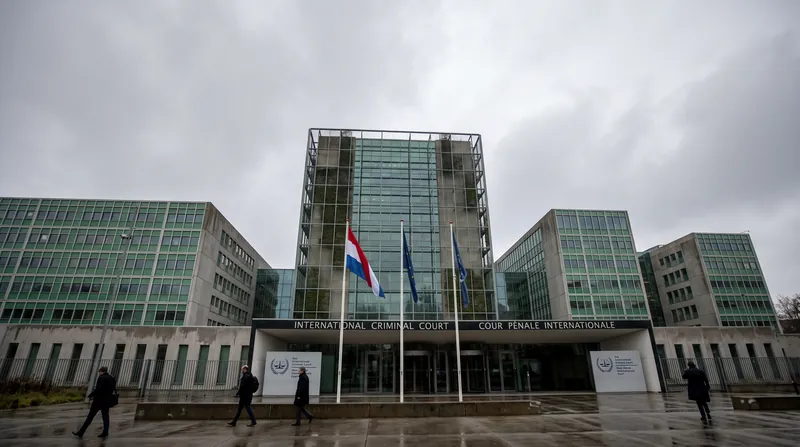
ICC Overhauls Tech and Finance Systems to Withstand Imminent US Sanctions
4 sources
Anti-Commandeering
The Two Anti-Commandeering Doctrines That Limit Federal Power Over States
6 sources
Fourth Amendment
Reasonable Suspicion vs. Probable Cause: How the Fourth Amendment Divides Police Stops and Arrests
8 sources

Every angle. Every day.
Get Law & Justice stories with full source coverage and perspective breakdowns delivered to your inbox.