
Waymo Robotaxis Show 68% Lower Crash Rate Than Human Drivers in Major IIHS Study
An independent study by the Insurance Institute for Highway Safety found that Waymo's driverless vehicles are involved in significantly fewer police-reportable crashes than human drivers, offering strong evidence for the safety of Level 4 automation.
By Tao Yang

- Independent Safety Researchers
- Focus on objective data, standardized reporting, and the need for better long-term tracking systems.
- Autonomous Vehicle Developers
- Emphasize the massive reductions in injury and severe crashes, highlighting the superiority of sensor suites over human attention.
- Industry Analysts
- Acknowledge the safety gains but highlight important caveats, such as the lack of freeway driving and the advantage of empty vehicles.
Perspectives this story doesn't cover
- City Planners
- Auto Insurance Underwriters
For nearly two decades, the autonomous vehicle industry has promised that removing the human element from the driver's seat would drastically reduce traffic accidents. Yet, as robotaxis became a common sight in select American cities, a handful of high-profile mishaps and viral videos of confused vehicles left the public skeptical. Now, the Insurance Institute for Highway Safety (IIHS) has provided the most comprehensive, independent validation of that original promise. In a sweeping analysis of real-world data, the IIHS found that Waymo's driverless vehicles crash significantly less often than human drivers navigating the exact same streets.[1][7]
The headline figures from the study mark a major milestone for Level 4 automation. According to the IIHS, Waymo vehicles were involved in 68 percent fewer police-reportable crashes than human drivers. The safety margins widen even further when looking at specific types of collisions. Waymo's fleet recorded an 85 percent reduction in single-vehicle crashes and an 81 percent drop in crashes that resulted in injuries. For an industry that has struggled to quantify its safety benefits against a backdrop of intense regulatory scrutiny, the independent confirmation serves as a powerful vindication of the technology.[1][4]
To reach these conclusions, researchers analyzed an unprecedented volume of data. The study examined roughly 50 million miles of Waymo driverless operation between 2021 and 2024 across four major deployment zones: San Francisco, Los Angeles, Phoenix, and Austin. They then compared that dataset against 222 billion miles logged by human drivers in those exact same cities over the same period. By isolating the geographic areas, the IIHS ensured that the autonomous vehicles were being judged against the specific traffic patterns, weather conditions, and road complexities of their operational domains.[3][5]
Achieving a true apples-to-apples comparison, however, required the IIHS to navigate a significant data collection hurdle. Under federal regulations, autonomous vehicle operators are required to report virtually every physical contact their vehicles make, down to a scraped bumper, a bumped curb, or a minor parking lot ding. Human drivers, by contrast, rarely call the police for minor fender benders. Most states only require an official report if a crash involves an injury or property damage exceeding a specific threshold, typically around $1,000. Comparing the raw data would therefore artificially inflate the autonomous crash rate.[2][6]
To correct for this reporting bias, IIHS researchers manually evaluated the narratives of 736 autonomous vehicle crash reports submitted to the National Highway Traffic Safety Administration. They determined that only 22 percent of those incidents were severe enough that a reasonable human driver would have reported them to the police. By stripping out the minor scrapes, the researchers leveled the playing field. The adjusted data revealed that Waymo vehicles recorded just 1.28 crashes per million miles traveled, compared to a human benchmark of 4.06 crashes per million miles.[1][2][6]
The underlying technology driving these improvements relies on a sensor suite that fundamentally outpaces human perception. Waymo vehicles utilize a combination of LiDAR, radar, and high-resolution cameras to build a continuous, 360-degree map of their surroundings. Unlike human drivers, this hardware and software stack does not suffer from fatigue, distraction, or impairment. It never checks a smartphone, never drives drunk, and never experiences a lapse in attention. This constant vigilance is particularly effective at preventing rear-end collisions; the study noted that Waymo's rate of rear-ending another vehicle was 91 percent lower than the human average.[6][8]
The underlying technology driving these improvements relies on a sensor suite that fundamentally outpaces human perception.
While the overall numbers are highly encouraging, the safety benefits varied significantly by region. In Phoenix, where Waymo has operated the longest and the roads are generally wider and grid-like, the robotaxis boasted a 76 percent lower crash rate than humans. Los Angeles saw a 71 percent reduction, and San Francisco recorded a 35 percent drop. In Austin, the newest market in the study, Waymo actually had a 4 percent higher crash rate than human drivers, though researchers cautioned that the sample size of miles driven in the Texas capital was still too small to draw definitive conclusions.[4][5]
The study also highlighted several important caveats regarding the nature of autonomous operations. For instance, the dramatic 81 percent reduction in injury crashes is partially influenced by the fact that Waymo vehicles frequently drive empty while en route to pick up passengers. If a vehicle has no human occupants, the baseline risk of an occupant injury is inherently zero. While this still represents a net benefit to public health by removing potential victims from the road, it slightly skews the direct comparison of driving skill.[2][7]
Furthermore, the operational design domain of Waymo's fleet inherently limits its exposure to certain types of accidents. During the study period, Waymo did not operate its driverless vehicles on interstates or freeways. Highways account for roughly 22 percent of police-reported crashes for human drivers. While highway driving is generally considered simpler for autonomous systems due to the lack of pedestrians and intersections, the higher speeds result in different crash dynamics. By sticking to surface streets, Waymo vehicles operated in a more complex environment, but one where crashes tend to occur at lower speeds.[2][7]
Indeed, the data shows that half of Waymo's crashes occurred on streets with speed limits under 25 miles per hour, compared to just 8 percent of human crashes. This lower-speed environment naturally contributes to the reduced severity of the collisions that do occur. However, researchers also uncovered one unexpected vulnerability: despite relying on LiDAR and radar—sensors that do not depend on visible light—Waymo vehicles actually had a slightly higher share of their crashes in dark conditions than human drivers did.[2][6]
The IIHS study focused almost exclusively on Waymo because it is currently the only operator with enough publicly reported, unsupervised miles to generate statistically significant findings. Other companies in the dataset, such as General Motors' Cruise and Amazon's Zoox, either halted operations during the study period or had not yet accumulated enough driverless miles. Tesla was entirely excluded from the 2021-2024 dataset, as its supervised "Full Self-Driving" system requires an attentive human driver and does not qualify as Level 4 automation.[2][4]
While the findings are a massive win for Waymo, the IIHS warned that the current federal framework for monitoring autonomous vehicle safety is inadequate for the future. Lead author Eric Teoh emphasized that manually reading through hundreds of crash narratives to determine severity is not a sustainable methodology. As robotaxi fleets expand to more cities and log billions of miles, regulators will need a standardized, automated system for tracking and categorizing autonomous vehicle collisions to ensure these safety margins hold at scale.[1][5]
Ultimately, the IIHS report shifts the narrative surrounding autonomous vehicles from anecdotal skepticism to empirical validation. The data proves that, within their designated operational areas, Level 4 robotaxis are already outperforming the average human driver by a wide margin. As the technology continues to refine its handling of edge cases and expands into new environments, the promise of drastically reducing the human toll of traffic accidents is finally moving from a futuristic concept to a measurable reality.[3][8]
What we don’t know
- How Waymo's crash rates will compare once the vehicles begin operating regularly on high-speed freeways.
- Whether the 4% higher crash rate in Austin is a statistical anomaly due to small sample size or indicative of unique local challenges.
- How federal regulators will standardize crash reporting for autonomous vehicles as the industry scales nationwide.
Key points
- Waymo's driverless vehicles were involved in 68% fewer police-reportable crashes than human drivers across four major U.S. cities.
- The IIHS study analyzed 50 million miles of autonomous driving, comparing it against 222 billion miles logged by human drivers.
- Researchers found an 85% reduction in single-vehicle crashes and an 81% drop in crashes resulting in injuries.
- The study excluded minor fender benders to ensure a fair comparison, as human drivers rarely report minor scrapes to the police.
Viewpoints in depth
Independent Safety Researchers
Focus on objective data, standardized reporting, and the need for better long-term tracking systems.
Safety organizations acknowledge the impressive 68 percent reduction in crashes but warn that the current data collection methodology is flawed. Manually filtering out minor scrapes from NHTSA reports is not a scalable way to monitor safety as autonomous fleets expand nationwide. They advocate for a unified federal reporting system that clearly delineates crash severity, ensuring that regulators can continuously monitor Level 4 systems without relying on subjective narrative reviews.
Autonomous Vehicle Developers
Emphasize the massive reductions in injury and severe crashes, highlighting the superiority of sensor suites over human attention.
Waymo and its proponents view this data as absolute vindication of their cautious, sensor-heavy approach to autonomous driving. They emphasize that their vehicles never get tired, distracted, or impaired, which directly translates to the 81 percent reduction in injury crashes. From their perspective, the technology is already saving lives and preventing property damage, arguing that the data supports allowing these systems to scale more rapidly into new cities and more complex driving domains.
Industry Analysts
Acknowledge the safety gains but highlight important caveats, such as the lack of freeway driving and the advantage of empty vehicles.
Automotive journalists and industry skeptics point out that the comparison between robotaxis and human drivers isn't perfectly equal. They note that Waymo vehicles currently avoid high-speed freeways, often drive empty (which inherently reduces human injury exposure), and operate primarily in well-mapped areas with favorable weather. They argue that until autonomous vehicles can navigate the full spectrum of human driving environments—including snow, heavy rain, and complex highway interchanges—the 'safer than humans' claim remains conditional.
Why this matters
For years, the promise of self-driving cars has been clouded by high-profile mishaps and a lack of standardized data. This independent verification proves that autonomous vehicles are already measurably safer than human drivers in complex urban environments, paving the way for broader public acceptance and expansion.
Sources
Source coverage
8 outlets
3 viewpoints surfaced








- [1]IIHSIndependent Safety Researchers
Waymo's driverless vehicles have crash rates that are 68% lower than human drivers, new IIHS research shows
Read on IIHS → - [2]ElectrekIndustry Analysts
IIHS finds Waymo 68% safer than an average human
Read on Electrek → - [3]The DriveIndustry Analysts
Waymo Driverless Cars Crash 68% Less Than Humans, IIHS Study Finds
Read on The Drive → - [4]PCMagIndustry Analysts
How Safe Is Your Waymo? Report Finds They Crash 68% Less Than Human Drivers
Read on PCMag → - [5]CarScoopsIndustry Analysts
Waymo Crashes 68% Less Than Humans, Then You Reach Austin
Read on CarScoops → - [6]TechSpotAutonomous Vehicle Developers
Waymo robotaxis crashed 68% less often than human drivers in independent safety study
Read on TechSpot → - [7]AxiosIndependent Safety Researchers
Study: Waymo Driverless Cars Safer Than Human Drivers
Read on Axios → - [8]WaymoAutonomous Vehicle Developers
Waymo Driver compared to human benchmarks
Read on Waymo →
Comments
More in Automotive & Transportation
See all →EV Safety Recalls
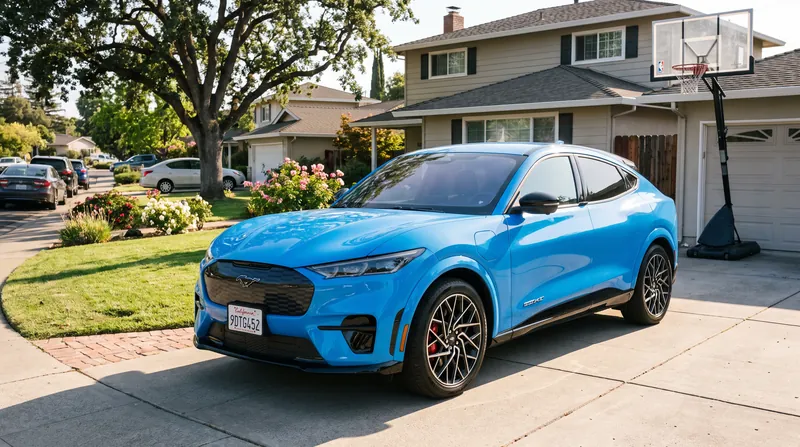
Ford Recalls 86 Mustang Mach-E EVs Over Battery Software Fire Risk
6 sources
Auto Industry
Volkswagen Takes €6 Billion Writedown on Porsche Stake Amid Sales and Margin Declines
4 sources
Hypercar Development
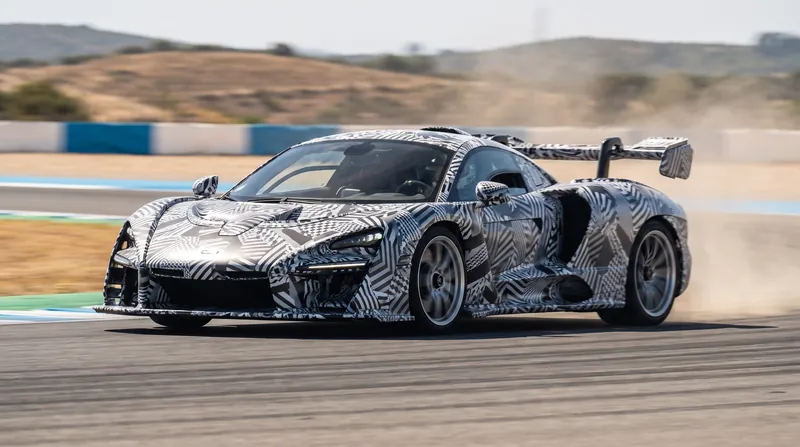
F1 Champion Lando Norris Tests McLaren MCL-HY Hypercar Prototype at Portimão
5 sources
Vehicle Dynamics
The Slip Angle and the Cornering Force: How the Difference Between Front and Rear Tire Angles Dictates Understeer and Oversteer
5 sources
Every angle. Every day.
Get Automotive & Transportation stories with full source coverage and perspective breakdowns delivered to your inbox.