
UN Security Council Extends Darfur Arms Embargo for Two Months After Nationwide Expansion Stalls
The United Nations Security Council unanimously adopted a brief technical rollover of the existing Sudan sanctions regime until December 11. The short-term extension follows the collapse of a United States proposal to expand the arms embargo across the entire country.

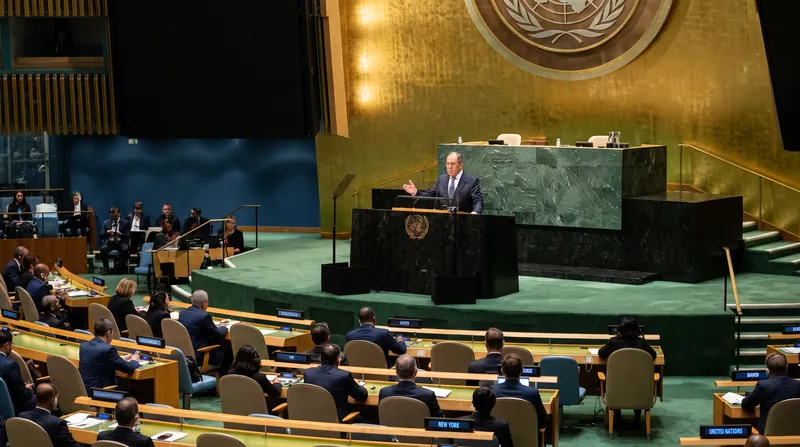
On October 8, the fifteen members of the United Nations Security Council unanimously adopted Resolution 2830, extending the existing arms embargo on Sudan's Darfur region for exactly sixty-four days. The vote secured a brief technical rollover after a broader diplomatic initiative collapsed.[6]
The United States had spent weeks drafting and negotiating a proposal that would have expanded the weapons restrictions across the entirety of Sudan. That effort stalled when veto-holding members Russia and China opposed the nationwide expansion, forcing Washington to withdraw the draft.[2][4]
Rather than let the existing sanctions lapse entirely, the Council approved the two-month extension until December 11, 2026. The short-term measure is designed to provide diplomats with a narrow window to continue negotiations over how to restrict the flow of foreign military hardware into the country.[2][6]
"This extension is not a lapse in our resolve," stated Massad Boulos, the United States senior advisor for Arab and African affairs. He characterized the two-month window as an opportunity for diplomacy to deliver tangible results, while reaffirming Washington's commitment to a nationwide embargo.[4]
The Dispute Over Expansion
The diplomatic fracture centers on how the international community should respond to a civil war that has fundamentally changed shape. The original sanctions, established under Resolution 1591 in 2005, were designed specifically to contain violence in the western region of Darfur.[2][6]
Washington argued that the Darfur-only restrictions no longer reflect the reality of a conflict that has engulfed the entire nation. The United States specifically sought to use a nationwide embargo to target the escalating deployment of armed drones and dual-use technology by both primary combatants.[2][4]
Russia and China pushed back against the expansion, advocating instead for a standard one-year renewal of the existing Darfur parameters. The two nations argued that broadening the embargo to the entire country would undermine the Sudanese government's inherent right to self-defense.[2][4]
The Sudanese military leadership formally protested the proposed expansion during the preliminary negotiations. The government asserted that a total embargo would constitute unacceptable external interference and contravene the guarantees provided by the United Nations Charter regarding a sovereign state's ability to defend its territory.[5]
Monitoring and Enforcement
Alongside the arms restrictions, the newly adopted Resolution 2830 extends the mandate of the Panel of Experts assisting the Sudan Sanctions Committee until January 11, 2027. This panel is responsible for monitoring compliance and investigating the financing of armed groups.[1][6]
The sanctions framework includes targeted travel bans and asset freezes against designated individuals and entities operating within the conflict zone. While the embargo has historically struggled to halt the physical flow of weapons into Darfur, it provides the legal mechanism for United Nations experts to document breaches.[2][4]
By identifying the specific foreign companies and recruitment networks violating the embargo, the panel lays the groundwork for future targeted sanctions. United Nations experts continue to investigate arms shipments to identify the external actors actively supplying the warring parties with military personnel and logistical support.[4]
Those foreign supply lines have sustained a war that is now in its fourth year. The conflict between the Sudanese Armed Forces and the paramilitary Rapid Support Forces erupted in April 2023 and has since devastated the nation's infrastructure and civilian population.[3][4]
The Humanitarian Toll
The human cost of the protracted fighting has reached catastrophic levels across multiple provinces. The conflict has killed tens of thousands of people and displaced millions of residents, driving a deepening humanitarian crisis that has pushed several communities into outright famine.[3][4]
The Sudanese Armed Forces currently maintain control over the central and eastern regions of the country. Meanwhile, the rival Rapid Support Forces hold sway over the vast Darfur region in the west, as well as significant portions of the southern territories.[3][4]
Darfur itself, an arid region roughly the size of Spain, has experienced some of the most severe violence of the entire war. Displacement camps have been repeatedly invaded, and ethnic massacres have reportedly killed thousands of civilians in single, coordinated operations.[3]
The introduction of increasingly sophisticated weaponry has accelerated the destruction in these vulnerable areas. Armed drones have been deployed across the battlefield to conduct strikes that have damaged civilian infrastructure, taking a particularly deadly toll on noncombatants caught between the warring factions.[3][4]
The December Deadline
The Security Council now faces a rigid timeline to resolve the fundamental disagreement over the scope of the embargo. The December 11 expiration date guarantees that the debate over foreign military support will return to the chamber before the end of the year.[2][6]
Boulos emphasized that external military support to the warring parties must end, warning that continued weapons supplies are actively prolonging the conflict. He noted that the influx of hardware undermines ongoing diplomatic efforts to secure a humanitarian truce and a lasting ceasefire.[4]
The two-month technical rollover follows a similar one-month extension that was unanimously adopted by the Council in September. These consecutive short-term renewals highlight the deep divisions within the international community regarding the most effective mechanism for de-escalating the crisis.[2]
As the negotiations continue behind closed doors, the warring factions on the ground continue to receive the ammunition and military technology required to sustain high-intensity operations. The outcome of the December vote will determine whether the United Nations attempts to sever those supply lines nationwide.[3][4]
The diplomatic maneuvering at the United Nations coincides with shifting alliances on the battlefield in North Darfur. The Sudanese government recently announced that more than 100 fighters from a faction of the Sudan Liberation Forces movement had formally defected to join the national army.[5]
That defecting force, previously allied with the Rapid Support Forces, reportedly arrived in the Al-Tineh area equipped with combat vehicles and military hardware. The realignment underscores the volatile nature of the conflict as international diplomats struggle to impose a unified arms control framework.[5]
Key points
- The UN Security Council extended the existing arms embargo on Sudan's Darfur region for two months, until December 11.
- A United States proposal to expand the weapons restrictions across the entirety of Sudan was withdrawn due to opposition from Russia and China.
- Opponents of the expansion argued that a nationwide embargo would undermine the Sudanese government's inherent right to self-defense.
- The short-term technical rollover provides diplomats with additional time to negotiate a consensus on restricting foreign military support.
What we don’t know
- Whether the United States can secure the necessary diplomatic concessions from Russia and China to pass a nationwide embargo before the December deadline.
- How the two-month extension will impact the immediate flow of foreign-supplied drones and dual-use technology to the warring factions.
- If the Panel of Experts will recommend new targeted sanctions against the specific foreign recruitment networks identified in their recent investigations.
How we got here
March 2005
The UN Security Council adopts Resolution 1591, establishing an arms embargo and targeted sanctions specifically for the Darfur region.
April 2023
Full-scale civil war erupts between the Sudanese Armed Forces and the paramilitary Rapid Support Forces, spreading violence far beyond Darfur.
September 2026
The Security Council adopts a one-month technical rollover of the sanctions after failing to reach consensus on a nationwide expansion.
October 8, 2026
The Council unanimously approves Resolution 2830, extending the Darfur embargo for two months after the US withdraws its broader draft.
December 11, 2026
The newly established expiration date for the sanctions regime, forcing another vote on the embargo's scope.
- United States Diplomats
- Argues that the Darfur-only embargo is obsolete and must be expanded nationwide to stop the flow of drones and advanced weapons fueling the broader war.
- Russian and Chinese Delegations
- Argues that expanding the embargo nationwide infringes on Sudan's sovereignty and undermines the national government's inherent right to self-defense.
- Sudanese Military Leadership
- Maintains that a nationwide arms embargo constitutes external interference and violates the state's right to defend its territory against paramilitary forces.
Perspectives this story doesn't cover
- Sudanese Civilians in Darfur
- Regional Arms Suppliers
Sources
Source coverage
6 outlets
3 viewpoints surfaced




- [1]XinhuaRussian and Chinese Delegations
UN Security Council approves another technical rollover of Sudan sanctions
Read on Xinhua → - [2]Sudan TribuneUnited States Diplomats
UN Security Council extends Sudan sanctions for two months after US drops arms embargo push
Read on Sudan Tribune → - [3]Arab NewsRussian and Chinese Delegations
UN extends Darfur arms embargo by two months
Read on Arab News → - [4]The NationalUnited States Diplomats
China and Russia want to keep the sanctions confined to the region
Read on The National → - [5]Middle East MonitorSudanese Military Leadership
UN Security Council extends Sudan sanctions until 11th December
Read on Middle East Monitor → - [6]United NationsSudanese Military Leadership
Unanimously Adopting Resolution 2830 (2026), Security Council Renews Sudan Sanctions Regime for Two Months, Panel of Experts' Mandate for Three
Read on United Nations →
More in Defense & Security
See all →Nuclear Deterrence
Lithuania Advances Constitutional Amendment to Lift Ban on Nuclear Weapons
7 sources

International Law
Why the Six Cumulative Conditions in Geneva Protocol I Exclude Private Military Contractors From Mercenary Status
4 sources

Air Defense
Taiwan Takes Delivery of First US F-16V Fighter Jets to Bolster Air Defenses
7 sources

Defense Budget
Japan Denies Plan to Triple Defense Spending to 3.5% of GDP Following Bond Market Shock
5 sources
Comments
Every angle. Every day.
Get Defense & Security stories with full source coverage and perspective breakdowns, free every day.