
Ukraine Seeks EU Waiver to Fund U.S.-Made Patriot Missiles With €90 Billion Loan
Kyiv has formally requested to use €2 billion from a European Union support facility to purchase PAC-3 interceptors. The move requires a special derogation from the bloc's strict 'Buy European' procurement rules.
By Layla Zaher

Share this story
The binding constraint for Ukraine's latest air defense request is a European Union procurement rule that caps non-European content at 35 percent. To tap the EU's €90 billion support loan for U.S.-made PAC-3 Patriot interceptors, Kyiv requires a formal derogation from Brussels. That waiver is currently under review by member states, with envoys scheduled to decide on September 7, 2026.
Ukraine has formally asked to redirect over €2 billion from the loan's defense tranche to acquire the Lockheed Martin-built missiles, marking the first time it has sought to use the macro-financial facility for American heavy weapons. "We will keep supporting Ukraine, including with European air defence and PAC-3 Patriot systems," European Commission President Ursula von der Leyen stated on September 2, confirming the request alongside NATO Secretary General Mark Rutte.[1][2][3]
The €90 billion Ukraine Support Loan, finalized by the Council of the EU in April 2026 after months of delay, sets aside roughly €60 billion for defense procurement and €30 billion for budget support through 2027. The facility was designed with a strict preference to stimulate the continent's defense industrial base. The core regulation stipulates that weapons bought with the funds cannot source more than 35 percent of their value from outside the EU or the European Economic Area, though Ukrainian domestic production counts on equal footing with European manufacture.[1][6][8]
Because the PAC-3 Missile Segment Enhancement (MSE) round is manufactured entirely in the United States by Lockheed Martin and Raytheon, it misses this threshold completely. Buying it demands an official exemption, turning a procedural vote in Brussels into a critical node in Ukraine's autumn air-defense architecture. The 35 percent cap operates as a ceiling over an item-by-item waiver process, leaving the burden of proof entirely on the borrower. Kyiv cannot draw down the funds for American hardware without explicit, documented clearance from the bloc's member states.[6]
Kyiv must submit an individual application for every derogation, which the European Commission evaluates against four specific benchmarks. The Commission assesses whether a European-made equivalent answers the urgent frontline requirement, whether European producers can deliver the necessary volume, whether manufacturing lead times are short enough, and whether the price tag is acceptable. A waiver is not a blanket carve-out; it applies only to a specific purchasing timeline and delivery batch, requiring fresh paperwork whenever Ukraine submits another payment request.[6]
Ukraine has navigated this regulatory architecture before. In April 2026, Kyiv secured an exemption for the loan's initial defense tranche—valued at €5.9 billion and dedicated entirely to unmanned systems—to purchase Chinese-made drone components. That waiver covered electric motors, flight controllers, and batteries that European industry could not supply at the required scale or cost. Since June, the EU has disbursed €8.5 billion from the loan to fund drones, missiles, and fighter jets from European manufacturers, demonstrating that the facility is actively moving capital when the origin rules are met.[1][2][6][8]
However, the Patriot request has triggered a structural debate regarding the long-term intent of the fund. France and several other member states argue that European financing must prioritize the continent's own defense industry to reduce dependency on foreign suppliers. Paris has pushed to attach strict expiry dates to these specific derogations, ensuring that European factories eventually absorb the orders currently filled by American and Chinese suppliers. They view the loan as a dual-purpose instrument meant to recapitalize Europe.[6][7]
The tension between short-term battlefield survival and long-term industrial sovereignty defines the current policy node. A recent European Court of Auditors report highlighted this friction, noting that between February 2022 and June 2023, 78 percent of EU governments' defense acquisitions were sourced outside the bloc, with the U.S. alone representing 63 percent. While EU officials acknowledge the necessity of buying foreign equipment to meet urgent frontline requirements, they emphasize the need for parallel investments in domestic capacity to reverse that trend.[7]
The urgency of the request stems directly from the operational environment. Russia has maintained a sustained campaign of ballistic and cruise missile strikes against Ukrainian cities and energy infrastructure. The Patriot system remains the primary layer of defense capable of reliably intercepting ballistic warheads. Ukrainian President Volodymyr Zelenskyy stated in August 2026 that the country requires approximately 300 Patriot interceptors to maintain coverage through the upcoming winter, warning that domestic stockpiles are critically low and alternative systems cannot defeat the threat.[2][3][4]
Even if the derogation is granted by the member states, the exact capability the €2 billion yields depends entirely on the procurement pricing structure, which is controlled by Washington. The PAC-3 MSE is priced at approximately $4 million to $5 million per unit for the U.S. military, based on a September 2025 Pentagon order for 1,970 missiles worth $9.8 billion. If Ukraine were granted access to that domestic rate, €2 billion ($2.32 billion) could theoretically fund between 460 and 580 interceptors.[4][5]
Export prices, however, are historically higher and vary significantly based on the terms of the Foreign Military Sale. Germany paid roughly $6.61 million per missile in late 2024, a rate that would reduce Ukraine's yield to approximately 315 units. A recent foreign military sale clearance for Saudi Arabia in January 2026 priced the missiles at up to $12.3 million each, a ceiling that would limit Ukraine's purchase to roughly 190 interceptors, drastically reducing the defensive umbrella. The final contract price will determine how far the European capital actually stretches.[4][5]
The variance between 190 and 580 missiles dictates how many cities and critical infrastructure nodes can remain under continuous anti-ballistic coverage. A European Commission spokesperson noted that while the final say rests with the member states, the hope is that the waiver will soon be granted, adding that 'it may make sense' to buy outside the bloc 'when you have a short-term urgent need.' The immediate priority is ensuring that the interceptors arrive before the winter heating season begins.[4][5][7]
To address the underlying capability gap, the EU and Ukraine are concurrently working on Freyja, a joint project to develop a European anti-ballistic missile defense system. Von der Leyen mentioned the initiative as a separate area of cooperation outside the immediate loan disbursement.
Until that European architecture matures and enters production, the September 7 vote will determine whether European capital can flow to American production lines to bridge the immediate vulnerability gap and keep Ukraine's airspace defended. The outcome will set a precedent for how the remaining €60 billion defense tranche is managed.[3]
Key points
- Ukraine has formally requested to use €2 billion from an EU loan to purchase U.S.-made PAC-3 Patriot interceptors.
- The request requires a special waiver because the EU loan caps non-European content at 35 percent to protect domestic industry.
- EU member state envoys are scheduled to vote on the derogation on September 7, 2026.
- The exact number of missiles Ukraine receives will depend heavily on the export price approved by Washington.
What we don’t know
- Whether the EU member states will attach a strict expiry date to the Patriot procurement waiver during their September 7 vote.
- The exact unit price the U.S. government will authorize for the PAC-3 MSE interceptors, which dictates the total volume Ukraine will receive.
- How quickly Lockheed Martin can deliver the interceptors once the funding and export clearances are approved.
How we got here
April 2026
The Council of the EU finalizes the €90 billion Ukraine Support Loan and grants an initial waiver for Chinese drone components.
June 2026
The EU begins disbursing funds from the loan, allocating €8.5 billion for drones, missiles, and fighter jets.
August 2026
Ukrainian President Volodymyr Zelenskyy states the country needs 300 Patriot interceptors for the winter, while France pushes for expiry dates on procurement waivers.
September 2, 2026
European Commission President Ursula von der Leyen confirms receipt of Ukraine's formal request to use loan funds for PAC-3 interceptors.
September 7, 2026
EU member state envoys are scheduled to vote on granting the procurement derogation for the U.S.-made missiles.
- Immediate Security Advocates
- Prioritize short-term battlefield survival over industrial policy, arguing that funds should buy whatever capability is available immediately.
- European Defense Industrialists
- Argue that EU funds must strictly build European manufacturing capacity to ensure long-term sovereignty.
- Pragmatic Institutionalists
- Support temporary waivers for critical systems while simultaneously funding long-term European alternatives.
Perspectives this story doesn't cover
- U.S. Defense Contractors
- Ukrainian Frontline Air Defense Operators
Sources
Source coverage
8 outlets
3 viewpoints surfaced








- [1]Defense NewsImmediate Security Advocates
Ukraine asks EU to fund first Patriot missiles buy
Read on Defense News → - [2]EuractivPragmatic Institutionalists
Ukraine asks EU for billions to buy Patriot air defence systems
Read on Euractiv → - [3]Kyiv PostImmediate Security Advocates
Ukraine has asked the European Commission to provide several billion euros from the EU's €90 billion support loan
Read on Kyiv Post → - [4]Euromaidan PressImmediate Security Advocates
Ukraine has asked the EU to spend billions from its support loan on Patriot air-defense missiles
Read on Euromaidan Press → - [5]Defense ExpressPragmatic Institutionalists
Ukraine Requests €2B From EU Loan for Patriot Missiles, But Price Ranges From $5M to $12.3M
Read on Defense Express → - [6]Defence UkraineEuropean Defense Industrialists
The Origin Rule and Ukraine's Patriot Exemption: France, the 35 Per Cent Cap, and the Interceptor Europe Does Not Build
Read on Defence Ukraine → - [7]The GuardianEuropean Defense Industrialists
Ukraine asks for exemption from Buy European procurement rules to acquire US-made Patriot interceptors
Read on The Guardian → - [8]European CommissionPragmatic Institutionalists
The Ukraine Support Loan is a €90 billion limited recourse loan
Read on European Commission →

More in Defense & Security
See all →Air Defense
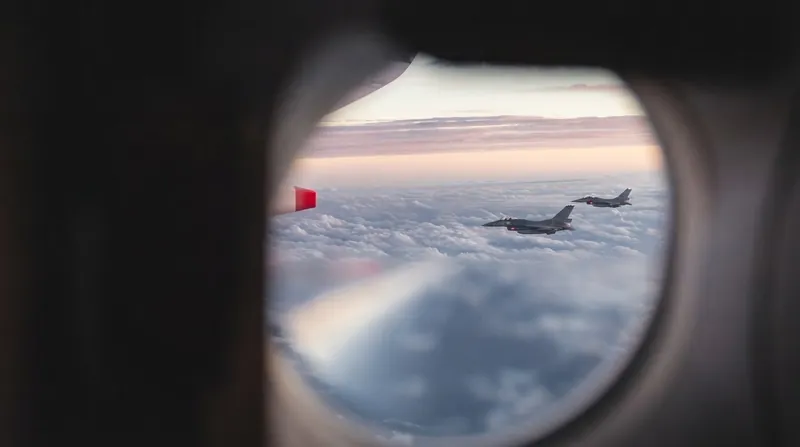
Taiwan Takes Delivery of First US F-16V Fighter Jets to Bolster Air Defenses
7 sources
UNSC Reform
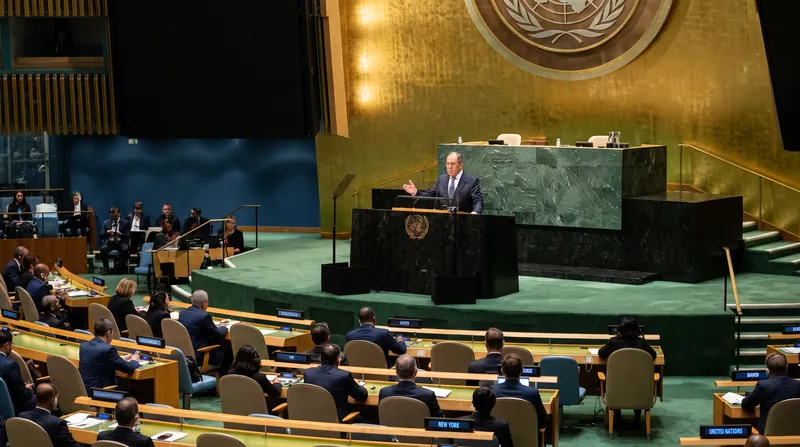
Russia Threatens UN Security Council Veto on Permanent Seats for Germany and Japan
5 sources
Defense Budget
Japan Denies Plan to Triple Defense Spending to 3.5% of GDP Following Bond Market Shock
5 sources
Air Defense
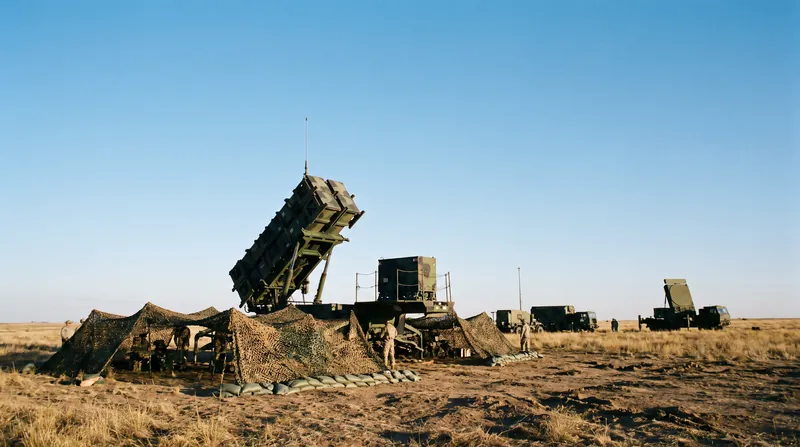
US Approves License for Ukraine to Produce Patriot Air Defense Missiles Domestically
5 sources
Comments
Every angle. Every day.
Get Defense & Security stories with full source coverage and perspective breakdowns, free every day.